Last & First Men
Last & First Men
Last & First Men
Olaf Stapledon
Science Fiction, Philosophy
Pub: 1995
In: 2010-07-23

Last & First Men

  • Olaf Stapledon
  • 9780844629957
  • 1995
  • 2010-07-23
  • Science Fiction, Philosophy

Summary:

"No book before or since has ever had such an impact upon my imagination," declared Arthur C. Clarke of Last and First Men.


This masterpiece of science fiction by British philosopher and writer Olaf Stapledon (1886–1950) is an imaginative, ambitious history of humanity's future that spans billions of years.


Together with its follow-up, Star Maker, it is regarded as the standard by which all earlier and later future histories are measured.


The protagonist of this compelling novel is humanity itself, stripped down to sheer intelligence. It evolves through the ages: rising to pinnacles of civilization, teetering on the brink of extinction, surviving onslaughts from other planets and a decline in solar energy, and constantly developing new forms, new senses, and new intellectual abilities.


From the present to five billion years into the future, this romance of humanity abounds in profound and imaginative thought.

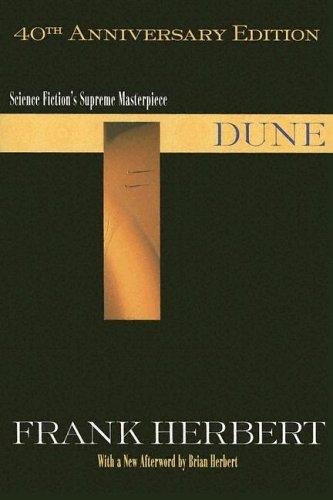
Dune
Dune
Dune
Frank Herbert
Dune #1
Science Fiction, Philosophy
Pub: 2005
In: 2010-07-23

Dune

  • Frank Herbert
  • 9780441013593
  • Dune - Book #1
  • 2005
  • 2010-07-23
  • Science Fiction, Philosophy

Summary:

EDITORIAL REVIEW: The all-time science fiction masterpiece...now in a special hardcover edition."Unique...I know nothing comparable to it except *Lord of the Rings*."--Arthur C. ClarkeHere is the novel that will be forever considered a triumph of the imagination. Set on the desert planet Arrakis, Dune is the story of the boy Paul Atreides, who would become the mysterious man known as Maud'dib. He would avenge the traitorous plot against his noble family--and would bring to fruition humankind's most ancient and unattainable dream.A stunning blend of adventure and mysticism, environmentalism and politics, *Dune* won the first Nebula Award, shared the Hugo Award, and formed the basis of what is undoubtedly the grandest epic in science fiction. Frank Herbert's death in 1986 was a tragic loss, yet the astounding legacy of his visionary fiction will live forever.
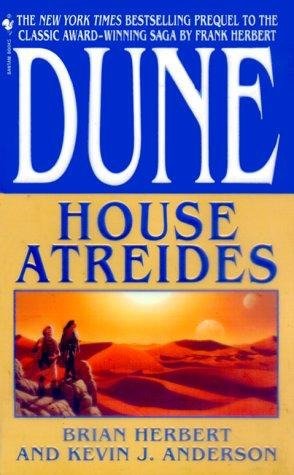
House Atreides
House Atreides
House Atreides
Herbert, Brian
Dune House Trilogy #3
Science Fiction, Philosophy
Pub: 2000
In: 2010-07-23

House Atreides

  • Herbert, Brian
  • 9780553580273
  • Dune House Trilogy - Book #3
  • 2000
  • 2010-07-23
  • Science Fiction, Philosophy

Summary:

SUMMARY:
The "New York Times" bestselling prequel to the classic award-winning saga by Frank Herbert. Frank Herbert's award-winning Dune chronicles captured the imagination of millions of readers worldwide. By his death in 1986, Herbert had completed six novels in the series, but much of his vision remained unwritten. Now, working from his father's recently discovered files, Brian Herbert and bestselling novelist Kevin J. Anderson collaborate on a new novel, the prelude to Dune--where we step onto the planet Arrakis...decades before Dune's hero, Paul Muad'Dib Atreides, walks its sands. Here is the rich and complex world that Frank Herbert created, in the time leading up to the momentous events of Dune. As Emperor Elrood's son plots a subtle regicide, young Leto Atreides leaves for a year's education on the mechanized world of Ix; a planetologist named Pardot Kynes seeks the secrets of Arrakis; and the eight-year-old slave Duncan Idaho is hunted by his cruel masters in a terrifying game from which he vows escape and vengeance. But none can envision the fate in store for them: one that will make them renegades--and shapers of history.

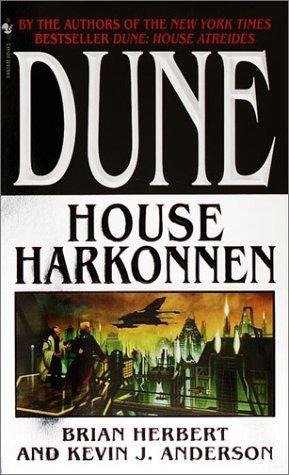
House Harkonnen
House Harkonnen
House Harkonnen
Frank Herbert
Dune House Trilogy #2
Science Fiction, Philosophy
Pub: 2001
In: 2010-07-23

House Harkonnen

  • Frank Herbert
  • 9780553580303
  • Dune House Trilogy - Book #2
  • 2001
  • 2010-07-23
  • Science Fiction, Philosophy

Summary:

SUMMARY: Brian Herbert and Kevin J. Anderson return to the vivid universe of Frank Herbert’s Dune, bringing a vast array of rich and complex characters into conflict to shape the destiny of worlds....As Shaddam sits at last on the Golden Lion Throne, Baron Vladimir Harkonnen plots against the new Emperor and House Atreides — and against the mysterious Sisterhood of the Bene Gesserit. For Leto Atreides, grown complacent and comfortable as ruler of his House, it is a time of momentous choice: between friendship and duty, safety and destiny. But for the survival of House Atreides, there is just one choice — strive for greatness or be crushed.
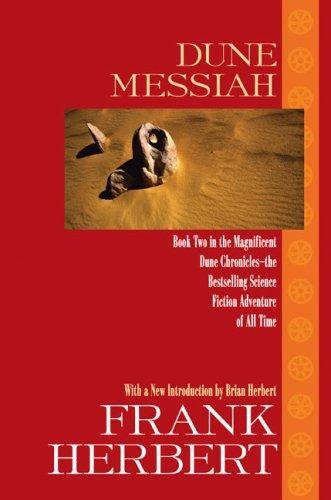
Dune Messiah
Dune Messiah
Dune Messiah
Frank Herbert
Dune #2
Science Fiction, Philosophy
Pub: 2008
In: 2010-07-23

Dune Messiah

  • Frank Herbert
  • 9780441015610
  • Dune - Book #2
  • 2008
  • 2010-07-23
  • Science Fiction, Philosophy

Summary:

SUMMARY: With millions of copies sold worldwide, Frank Herbert's magnificent Dune novels stand among the major achievements of the human imagination as one of the most significant sagas in the history of literary science fiction. Dune Messiahcontinues the story of Paul Atreides, better known-and feared-as the man christened Muad'Dib. As Emperor of the Known Universe, he possesses more power than a single man was ever meant to wield. Worshipped as a religious icon by the fanatical Fremens, Paul faces the enmity of the political houses he displaced when he assumed the throne-and a conspiracy conducted within his own sphere of influence. And even as House Atreides begins to crumble around him from the machinations of his enemies, the true threat to Paul comes to his lover, Chani, and the unborn heir to his family's dynasty.
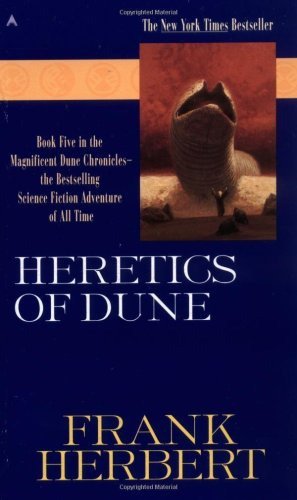
Heretics of Dune
Heretics of Dune
Heretics of Dune
Frank Herbert
Dune #5
Science Fiction, Philosophy
Pub: 2009
In: 2010-07-23

Heretics of Dune

  • Frank Herbert
  • 9780441016778
  • Dune - Book #5
  • 2009
  • 2010-07-23
  • Science Fiction, Philosophy

Summary:

SUMMARY: Leto Atreides, the God Emperor of Dune, is dead. In the fifteen hundred years since his passing, the Empire has fallen into ruin. The great Scattering saw millions abandon the crumbling civilization and spread out beyond the reaches of known space. The planet Arrakis—now called Rakis—has reverted to its desert climate, and its great sandworms are dying. Now, the Lost Ones are returning home in pursuit of power. And as factions vie for control over the remnants of the Empire, a girl named Sheeana rises to prominence in the wastelands of Rakis, sending religious fervor throughout the galaxy. For she possesses the abilities of the Fremen sandriders—fulfilling a prophecy foretold by the late God Emperor...
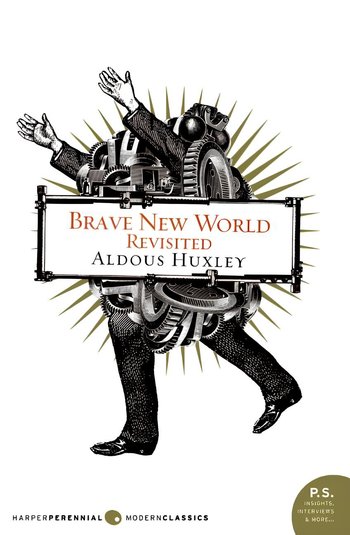
Brave New World
Brave New World
Brave New World
Aldous Huxley
Science Fiction
Pub: 2006
In: 2010-07-23

Brave New World

  • Aldous Huxley
  • 9780756977931
  • 2006
  • 2010-07-23
  • Science Fiction

Summary:

When the novel "Brave New World" first appeared in 1932, its shocking analysis of a scientific dictatorship seemed a projection into the remote future. Here, in one of the most important and fascinating books of his career, Aldous Huxley uses his tremendous knowledge of human relations to compare the modern-day world with his prophetic fantasy. He scrutinizes threats to humanity, such as overpopulation, propaganda, and chemical persuasion, and explains why we have found it virtually impossible to avoid them. "Brave New World Revisited" is a trenchant plea that humankind should educate itself for freedom before it is too late.

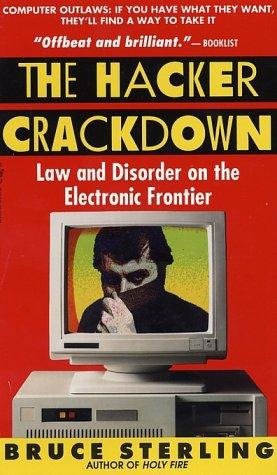
The Hacker Crackdown
Bruce Sterling
Philosophy, Computers
Pub: 1992
In: 2010-08-04

The Hacker Crackdown

  • Bruce Sterling
  • 055356370X
  • 1992
  • 2010-08-04
  • Philosophy, Computers

Summary:

SUMMARY:
A searing probe into computer hacking--a cutting-edge nonfiction book by the bestselling co-author of The Difference Engine. Sterling looks at the issue of computer freedom vs. computer security from all sides: the telephone companies, who are the primary victims; the computer hackers; law enforcement officials; and the civil libertarians, who try to protect First Amendment rights.

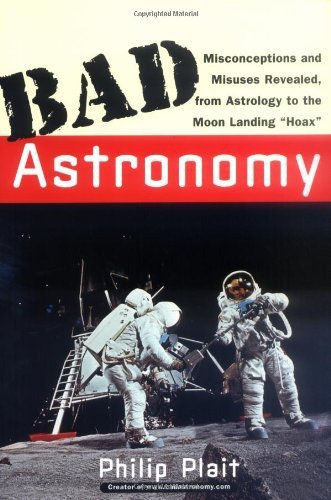
Bad astronomy
Bad astronomy
Bad astronomy
Philip C. Plait
Bad Science, Science, Space
Pub: 2002
In: 2010-08-05

Bad astronomy

  • Philip C. Plait
  • 9780471409762
  • 2002
  • 2010-08-05
  • Bad Science, Science, Space

Summary:

SUMMARY:
Advance praise for Philip Plait s Bad Astronomy "Bad Astronomy is just plain good! Philip Plait clears up every misconception on astronomy and space you never knew you suffered from." --Stephen Maran, Author of Astronomy for Dummies and editor of The Astronomy and Astrophysics Encyclopedia "Thank the cosmos for the bundle of star stuff named Philip Plait, who is the world s leading consumer advocate for quality science in space and on Earth. This important contribution to science will rest firmly on my reference library shelf, ready for easy access the next time an astrologer calls." --Dr. Michael Shermer, Publisher of Skeptic magazine, monthly columnist for Scientific American, and author of The Borderlands of Science "Philip Plait has given us a readable, erudite, informative, useful, and entertaining book. Bad Astronomy is Good Science. Very good science..." --James "The Amazing" Randi, President, James Randi Educational Foundation, and author of An Encyclopedia of Claims, Frauds, and Hoaxes of the Occult and Supernatural "Bad Astronomy is a fun read. Plait is wonderfully witty and educational as he debunks the myths, legends, and 'conspiracies that abound in our society. 'The Truth Is Out There' and it's in this book. I loved it!" --Mike Mullane, Space Shuttle astronaut and author of Do Your Ears Pop in Space?
SUMMARY:
Advance praise for Philip Plait s Bad Astronomy "Bad Astronomy is just plain good! Philip Plait clears up every misconception on astronomy and space you never knew you suffered from." --Stephen Maran, Author of Astronomy for Dummies and editor of The Astronomy and Astrophysics Encyclopedia "Thank the cosmos for the bundle of star stuff named Philip Plait, who is the world s leading consumer advocate for quality science in space and on Earth. This important contribution to science will rest firmly on my reference library shelf, ready for easy access the next time an astrologer calls." --Dr. Michael Shermer, Publisher of Skeptic magazine, monthly columnist for Scientific American, and author of The Borderlands of Science "Philip Plait has given us a readable, erudite, informative, useful, and entertaining book. Bad Astronomy is Good Science. Very good science..." --James "The Amazing" Randi, President, James Randi Educational Foundation, and author of An Encyclopedia of Claims, Frauds, and Hoaxes of the Occult and Supernatural "Bad Astronomy is a fun read. Plait is wonderfully witty and educational as he debunks the myths, legends, and 'conspiracies that abound in our society. 'The Truth Is Out There' and it's in this book. I loved it!" --Mike Mullane, Space Shuttle astronaut and author of Do Your Ears Pop in Space?

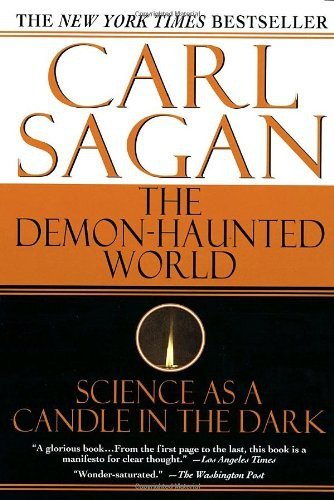
The Demon-haunted World
Carl Sagan
Science, Philosophy, Rational Thinking
Pub: 2008
In: 2010-09-14

The Demon-haunted World

  • Carl Sagan
  • 9781439505281
  • 2008
  • 2010-09-14
  • Science, Philosophy, Rational Thinking

Summary:

How can we make intelligent decisions about our increasingly technology-driven lives if we don't understand the difference between the myths of pseudoscience and the testable hypotheses of science? Pulitzer Prize-winning author and distinguished astronomer Carl Sagan argues that scientific thinking is critical not only to the pursuit of truth but to the very well-being of our democratic institutions.

Casting a wide net through history and culture, Sagan examines and authoritatively debunks such celebrated fallacies of the past as witchcraft, faith healing, demons, and UFOs. And yet, disturbingly, in today's so-called information age, pseudoscience is burgeoning with stories of alien abduction, channeling past lives, and communal hallucinations commanding growing attention and respect. As Sagan demonstrates with lucid eloquence, the siren song of unreason is not just a cultural wrong turn but a dangerous plunge into darkness that threatens our most basic freedoms.

Fuckowski, memorias de un ingeniero
Alfredo de Hoces García-Galán
Rational Thinking
Pub: 2005
In: 2010-09-14

Fuckowski, memorias de un ingeniero

  • Alfredo de Hoces García-Galán
  • 9788493389383
  • 2005
  • 2010-09-14
  • Rational Thinking
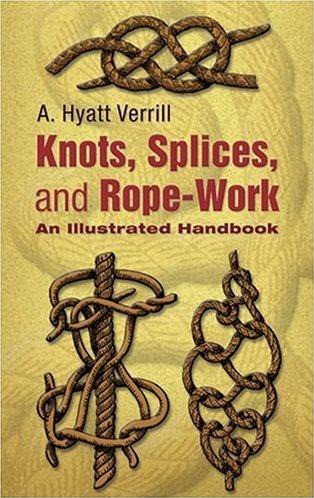
Knots, Splices and Rope Work: An Illustrated Handbook
A. Hyatt Verrill
Skils, Reference
Pub: 2006
In: 2010-09-16

Knots, Splices and Rope Work: An Illustrated Handbook

  • A. Hyatt Verrill
  • 9780486447896
  • 2006
  • 2010-09-16
  • Skils, Reference

Summary:

SUMMARY:
This treasury of practical and ornamental knots ranges from easy half-hitches and bow-lines to intricate rope-work projects, such as rope buckles and cask slings. Detailed instructions accompany the 148 drawings, which show how each knot, tie, or splice is formed as well as its appearance when complete.

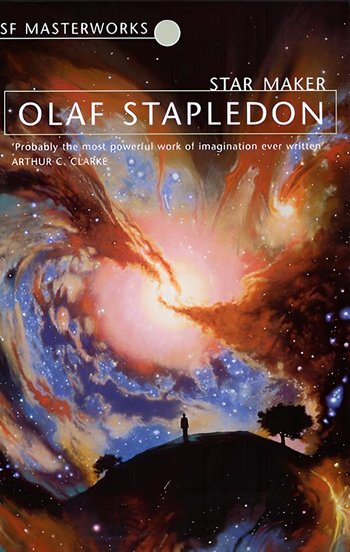
Star Maker
Star Maker
Star Maker
Olaf Stapledon
Fiction, General, Science Fiction, Philosophy
Pub: 1937
In: 2010-09-16

Star Maker

  • Olaf Stapledon
  • 9780486466835
  • 4
  • 1937
  • 2010-09-16
  • Fiction, General, Science Fiction, Philosophy

Summary:

One moment a man sits on a suburban hill, gazing curiously at the stars. The next, he is whirling through the firmament, and perhaps the most remarkable of all science fiction journeys has begun.

Even Stapledon's other great work, LAST AND FIRST MEN, pales in ambition next to STAR MAKER, which presents nothing less than an entire imagined history of life in the universe, encompassing billions of years.


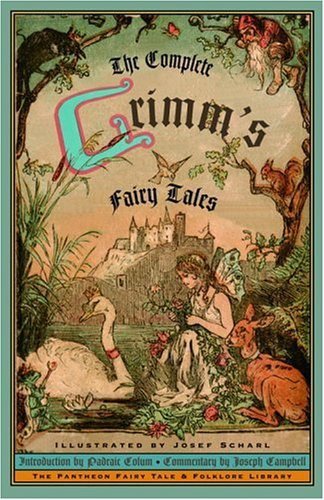
Grimm's Fairy Tales
Grimm's Fairy Tales
Grimm's Fairy Tales
Grimm Brothers
Fantasy
Pub: 2003
In: 2010-09-29

Grimm's Fairy Tales

  • Grimm Brothers
  • 9781593080563
  • 2003
  • 2010-09-29
  • Fantasy

Summary:

SUMMARY:
Grimm's Fairy Tales, by Wilhelm and Jacob Grimm, is part of the Barnes & Noble Classics series, which offers quality editions at affordable prices to the student and the general reader, including new scholarship, thoughtful design, and pages of carefully crafted extras. Here are some of the remarkable features of Barnes & Noble Classics: New introductions commissioned from today's top writers and scholars Biographies of the authors Chronologies of contemporary historical, biographical, and cultural events Footnotes and endnotes Selective discussions of imitations, parodies, poems, books, plays, paintings, operas, statuary, and films inspired by the work Comments by other famous authors Study questions to challenge the reader's viewpoints and expectations Bibliographies for further reading Indices & Glossaries, when appropriateAll editions are beautifully designed and are printed to superior specifications; some include illustrations of historical interest. Barnes & Noble Classics pulls together a constellation of influences—biographical, historical, and literary—to enrich each reader's understanding of these enduring works. With the words “Once upon a time,” the Brothers Grimm transport readers to a timeless realm where witches, giants, princesses, kings, fairies, goblins, and wizards fall in love, try to get rich, quarrel with their neighbors, and have magical adventures of all kinds—and in the process reveal essential truths about human nature. When Jacob and Wilhelm Grimm set out to collect stories in the early 1800s, their goal was not to entertain children but to preserve Germanic folklore—and the hard life of European peasants was reflected in the tales they discovered. However, once the brothers saw how the stories entranced young readers, they began softening some of the harsher aspects to make them more suitable for children. A cornerstone of Western culture since the early 1800s, Grimm’s Fairy Tales is now beloved the world over. This collection of more than 120 of the Grimms’ best tales includes such classics as “Cinderella,” “Snow White,” “Hansel and Grethel,” “Rapunzel,” “Rumpelstiltskin,” “Little Red Riding Hood,” and “The Frog Prince,” as well as others that are no less delightful. Elizabeth Dalton is Professor of English and Comparative Literature at Barnard College. She has published fiction and criticism in The New Yorker, Partisan Review, Commentary, and The New York Times Book Review.

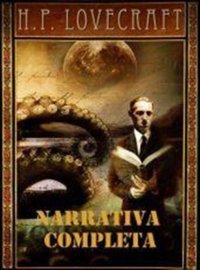
H.P. Lovecraft: Narrativa completa
Howard Phillips Lovecraft
Fantasy, Horror
Pub: 2005
In: 2010-09-30

H.P. Lovecraft: Narrativa completa

  • Howard Phillips Lovecraft
  • 9788477025290
  • 2005
  • 2010-09-30
  • Fantasy, Horror

Summary:

Narrativa de terror

Howard Phillips Lovecraft (1890-1937) fue un ave nocturna y un cazador de sueños. Nació en Providence (Nueva Inglaterra), donde vivió la mayor parte de su corta vida, que dedicó a contemplar las estrellas, leer con avidez cuanto caía en sus manos y, sobre todo, escribir (poesía, ensayo, relatos y una ingente correspondencia). Al refugiarse en su hermético mundo onírico, Lovecraft se embarcó en un viaje sin retorno hacia una nueva dimensión: el miedo cósmico, el «terror de los espacios infinitos», que estremecía a Pascal. Como Poe, Lovecraft abandona definitivamente las invenciones mágicas o legendarias de los góticos: el castillo encantado, los fantasmas, vampiros y brujas, y las sustituye por una nueva mitología fantástica en la que ya no hay Dios ni Diablo, ni seres sobrenaturales, tan sólo híbridos semihumanos y seres extraterrestres o extradimensionales. Y el miedo se convirtió en horror cósmico. A través del sueño y el vuelo de la fantasía H.P.L. compensó su escasa movilidad física y viajó más lejos que nadie. Este primer volumen de su narrativa completa abarca la producción literaria de H.P. Lovecraft entre 1905 y 1926. Influido desde sus comienzos por Edgar Allan Poe, en relatos como “La tumba”, “El extraño” o “Aire frío”, entre 1917 y 1921 escribió casi una veintena de relatos oníricos inspirados en otro de sus grandes maestros: Lord Dunsany. Cuentos de este periodo son “Dagon”, “Polaris”, “La ciudad sin nombre” o “La búsqueda en sueños de la ignota Kadath”. Así mismo, en esta primera etapa de su carrera vio la luz “La llamada de Cthulhu” (1926), pieza básica y fundacional de los Mitos de Cthulhu, subgénero lovecraftiano que cuenta con ilustres precursores, como Arthur Machen o Algernon Blackwood, así como numerosos continuadores, especialmente los escritores que integran el llamado «Círculo de Lovecraft».

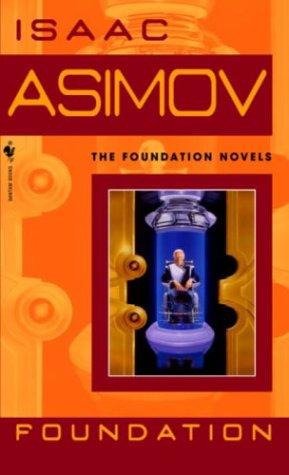
Foundation
Foundation
Foundation
Isaac Asimov
Science Fiction
Pub: 1991
In: 2010-09-30

Foundation

  • Isaac Asimov
  • 9780553293357
  • 1991
  • 2010-09-30
  • Science Fiction

Summary:

SUMMARY:
For twelve thousand years the Galactic Empire has ruled supreme. Now it is dying. But only Hari Sheldon, creator of the revolutionary science of psychohistory, can see into the future--to a dark age of ignorance, barbarism, and warfare that will last thirty thousand years. To preserve knowledge and save mankind, Seldon gathers the best minds in the Empire--both scientists and scholars--and brings them to a bleak planet at the edge of the Galaxy to serve as a beacon of hope for a fututre generations. He calls his sanctuary the Foundation.But soon the fledgling Foundation finds itself at the mercy of corrupt warlords rising in the wake of the receding Empire. Mankind's last best hope is faced with an agonizing choice: submit to the barbarians and be overrun--or fight them and be destroyed.

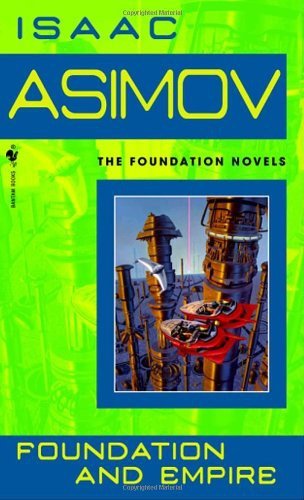
Foundation and Empire
Isaac Asimov
Science Fiction
Pub: 2008
In: 2010-09-30

Foundation and Empire

  • Isaac Asimov
  • 9780553382587
  • 2008
  • 2010-09-30
  • Science Fiction

Summary:

SUMMARY:
The Foundation novels of Isaac Asimov are one of the great masterworks of science fiction. Unsurpassed for their unique blend of nonstop action, daring ideas, and extensive world-building, they chronicle the struggle of a courageous group of men and women to preserve humanity’s light against an inexorable tide of darkness and violence.Led by its founding father, the great psychohistorian Hari Seldon, and taking advantage of its superior science and technology, the Foundation has survived the greed and barbarism of its neighboring warrior-planets. Yet now it must face the Empire—still the mightiest force in the Galaxy even in its death throes. When an ambitious general determined to restore the Empire’s glory turns the vast Imperial fleet toward the Foundation, the only hope for the small planet of scholars and scientists lies in the prophecies of Hari Seldon.But not even Hari Seldon could have predicted the birth of the extraordinary creature called The Mule—a mutant intelligence with a power greater than a dozen battle fleets…a power that can turn the strongest-willed human into an obedient slave.From the Paperback edition.

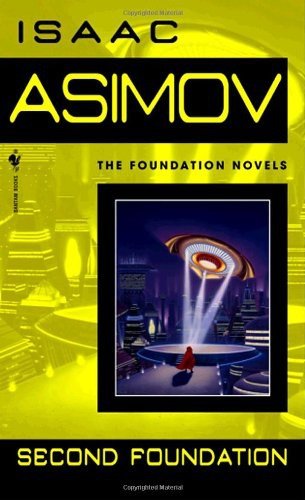
Second Foundation
Second Foundation
Second Foundation
Isaac Asimov
Science Fiction
Pub: 2004
In: 2010-09-30

Second Foundation

  • Isaac Asimov
  • 9780345335500
  • 2004
  • 2010-09-30
  • Science Fiction

Summary:

SUMMARY:
So far the Foundation was safe. But there was a hidden Second Foundation to protect the first. The Mule has yet to find it, but he was getting closer all the time. The men of the Foundation sought it, too, to escape from Mule's mind control. Only Arkady, a 14 year-old girl seemed to have the answer, or did she...?

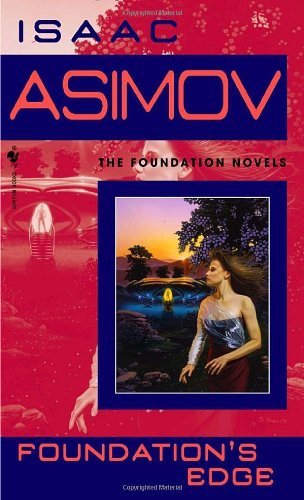
Foundation's Edge
Foundation's Edge
Foundation's Edge
Isaac Asimov
Science Fiction
Pub: 2008
In: 2010-09-30

Foundation's Edge

  • Isaac Asimov
  • 9780606012300
  • 2008
  • 2010-09-30
  • Science Fiction

Summary:

SUMMARY:
Now, 498 years after its founding, the Foundation seemed to be following the Seldon Plan perfectly. Too perfectly. Now an impossible planet -- with impossible powers -- threatens to upset the Seldon Plan for good unless two men, sworn enemies, can work together to save it!

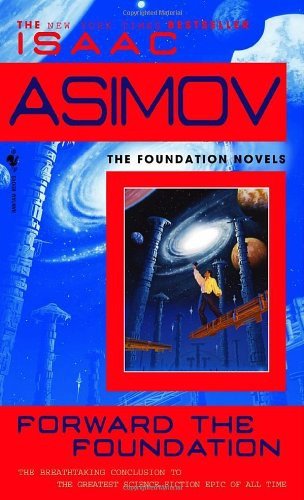
Forward the Foundation
Isaac Asimov
Science Fiction
Pub: 2008
In: 2010-09-30

Forward the Foundation

  • Isaac Asimov
  • 9780385481298
  • 2008
  • 2010-09-30
  • Science Fiction

Summary:

SUMMARY:
A stunning testament to his creative genius. Forward The Foundation is a the saga's dramatic climax -- the story Asimov fans have been waiting for. An exciting tale of danger, intrigue, and suspense, Forward The Foundation brings to vivid life Asimov's best loved characters: hero Hari Seldon, who struggles to perfect his revolutionary theory of psychohistory to ensure the survival of humanity; Cleon II, the vain and crafty emperor of the Galactic Empire,From the Paperback edition.
SUMMARY:
This hardback edition matches the binding and cover design of The Isaac Asimov Collection.

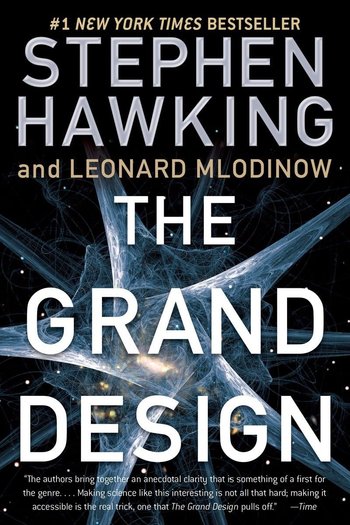
The Grand Design
The Grand Design
The Grand Design
Stephen Hawking, Leonard Mlodinow
Philosophy, Religion, History, Science, Divulgation
Pub: 2010
In: 2010-12-06

The Grand Design

  • Stephen Hawking, Leonard Mlodinow
  • 9780553805376
  • 4
  • 2010
  • 2010-12-06
  • Philosophy, Religion, History, Science, Divulgation

Summary:

THE FIRST MAJOR WORK IN NEARLY A DECADE BY ONE OF THE WORLD’S GREAT THINKERS—A MARVELOUSLY CONCISE BOOK WITH NEW ANSWERS TO THE ULTIMATE QUESTIONS OF LIFE

When and how did the universe begin? Why are we here? Why is there something rather than nothing? What is the nature of reality? Why are the laws of nature so finely tuned as to allow for the existence of beings like ourselves? And, finally, is the apparent “grand design” of our universe evidence of a benevolent creator who set things in motion—or does science offer another explanation?

The most fundamental questions about the origins of the universe and of life itself, once the province of philosophy, now occupy the territory where scientists, philosophers, and theologians meet—if only to disagree. In their new book, Stephen Hawking and Leonard Mlodinow present the most recent scientific thinking about the mysteries of the universe, in nontechnical language marked by both brilliance and simplicity.

In The Grand Design they explain that according to quantum theory, the cosmos does not have just a single existence or history, but rather that every possible history of the universe exists simultaneously. When applied to the universe as a whole, this idea calls into question the very notion of cause and effect. But the “top-down” approach to cosmology that Hawking and

Mlodinow describe would say that the fact that the past takes no definite form means that we create history by observing it, rather than that history creates us. The authors further explain that we ourselves are the product of quantum fluctuations in the very early universe, and show how quantum theory predicts the “multiverse”—the idea that ours is just one of many universes that appeared spontaneously out of nothing, each with different laws of nature.

Along the way Hawking and Mlodinow question the conventional concept of reality, posing a “model-dependent” theory of reality as the best we can hope to find. And they conclude with a riveting assessment of M-theory, an explanation of the laws governing us and our universe that is currently the only viable candidate for a complete “theory of everything.” If confirmed, they write, it will be the unified theory that Einstein was looking for, and the ultimate triumph of human reason.

A succinct, startling, and lavishly illustrated guide to discoveries that are altering our understanding and threatening some of our most cherished belief systems, The Grand Design is a book that will inform—and provoke—like no other.'

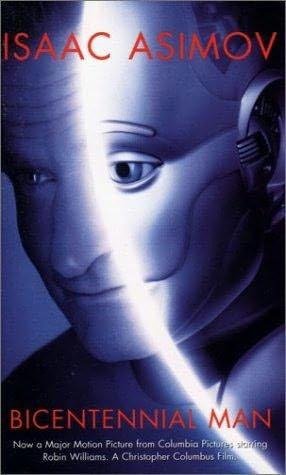
The Bicentennial man and other stories
Isaac Asimov
Science Fiction
Pub: 1976
In: 2010-05-08

The Bicentennial man and other stories

  • Isaac Asimov
  • 9780385121989
  • 1976
  • 2010-05-08
  • Science Fiction

Summary:

EDITORIAL REVIEW:

This classic collection includes the title story, acclaimed as Asimov's single finest Robot tale, and now made into a Hollywood movie starring Robin Williams. Each of the eleven stories here sparkle with characteristic Asimov inventiveness and imagination.

The physics of Star Trek
Lawrence Maxwell Krauss
Science, Star Trek
Pub: 1995
In: 2010-06-03

The physics of Star Trek

  • Lawrence Maxwell Krauss
  • 9780465005598
  • 1995
  • 2010-06-03
  • Science, Star Trek

Summary:

SUMMARY:
Explaining the intricacies of warp speed and showing the difference between a holodeck and a hologram, an easy-to-understand introduction to the arcane world of physics from a renowned physicist uses Star Trek to build and frame his discussion. 125,000 first printing. $75,000 ad/promo.

I Am Legend
I Am Legend
I Am Legend
Richard Matheson
Fantasy, Horror, Philosophy
Pub: 2007
In: 2010-06-04

I Am Legend

  • Richard Matheson
  • 9780765357151
  • 2007
  • 2010-06-04
  • Fantasy, Horror, Philosophy

Summary:

EDITORIAL REVIEW:

Robert Neville may well be the last living man on Earth . . . but he is not alone.

An incurable plague has mutated every other man, woman, and child into bloodthirsty, nocturnal creatures who are determined to destroy him.

By day, he is a hunter, stalking the infected monstrosities through the abandoned ruins of civilization. By night, he barricades himself in his home and prays for dawn....

Richard Matheson’s classic novel has now been transformed by Warner Bros. into a major motion picture starring Academy Award nominee Will Smith. Directed by Francis Lawrence (“Constantine”), the film opens nationwide in December 2007.

The little prince
The little prince
The little prince
Antoine de Saint-Exupéry, Irene Testot-Ferry
Fantasy
Pub: 1995
In: 2009-06-15

The little prince

  • Antoine de Saint-Exupéry, Irene Testot-Ferry
  • 9781853261589
  • 1995
  • 2009-06-15
  • Fantasy

Summary:

SUMMARY:
The highest standards in editing and production have been applied to the Wordsworth Children's Classics, while the low price makes them affordable for everyone. Wordsworth's list covers a range of the best-loved stories for children, from nursery tales, classic fables, and fairy tales to stories that will appeal to older children and adults alike. Many of these volumes have contemporary illustrations, and while they are ideal for shared family reading, their attractive format will also encourage children to read for themselves. Like all Wordsworth Editions, these children's books represent unbeatable value.

The selfish gene
The selfish gene
The selfish gene
Richard Dawkins
Science, Evolution, Rational Thinking, Divulgation
Pub: 2006
In: 2010-06-03

The selfish gene

  • Richard Dawkins
  • 9780199291151
  • 2006
  • 2010-06-03
  • Science, Evolution, Rational Thinking, Divulgation

Summary:

SUMMARY:
Richard Dawkins' brilliant reformulation of the theory of natural selection has the rare distinction of having provoked as much excitement and interest outside the scientific community as within it. His theories have helped change the whole nature of the study of social biology, and have forced thousands of readers to rethink their beliefs about life. In his internationally bestselling, now classic volume, The Selfish Gene, Dawkins explains how the selfish gene can also be a subtle gene. The world of the selfish gene revolves around savage competition, ruthless exploitation, and deceit, and yet, Dawkins argues, acts of apparent altruism do exist in nature. Bees, for example, will commit suicide when they sting to protect the hive, and birds will risk their lives to warn the flock of an approaching hawk. This 30th anniversary edition of Dawkins' fascinating book retains all original material, including the two enlightening chapters added in the second edition. In a new Introduction the author presents his thoughts thirty years after the publication of his first and most famous book, while the inclusion of the two-page original Foreword by brilliant American scientist Robert Trivers shows the enthusiastic reaction of the scientific community at that time. This edition is a celebration of a remarkable exposition of evolutionary thought, a work that has been widely hailed for its stylistic brilliance and deep scientific insights, and that continues to stimulate whole new areas of research today.

2010: odyssey two
2010: odyssey two
2010: odyssey two
Arthur C. Clarke
Science Fiction
Pub: 1999
In: 2010-07-05

2010: odyssey two

  • Arthur C. Clarke
  • 9789985611616
  • 1999
  • 2010-07-05
  • Science Fiction
Myths to live by
Myths to live by
Myths to live by
Joseph Campbell
Philosophy
Pub: 1993
In: 2009-06-15

Myths to live by

  • Joseph Campbell
  • 9780140194616
  • 1993
  • 2009-06-15
  • Philosophy

Summary:

SUMMARY:
The brilliant author of The Masks of God shares his ideas and speculations on our universal myths, in a fascinating, very personal work which explores the enduring power of the myths that influence our lives and examines the myth-making process from the primitive past to the immediate present.

The elegant Univers
The elegant Univers
The elegant Univers
Brian Greene
Science, Divulgation
Pub: 2000
In: 2010-06-03

The elegant Univers

  • Brian Greene
  • 9780375708114
  • 2000
  • 2010-06-03
  • Science, Divulgation

Summary:

SUMMARY:
"[Greene] develops one fresh new insight after another...In the great tradition of physicists writing for the masses, The Elegant Universe sets a standard that will be hard to beat." --George Johnson, The New York Times Book ReviewIn a rare blend of scientific insight and writing as elegant as the theories it explains, Brian Greene, one of the world's leading string theorists, peels away the layers of mystery surrounding string theory to reveal a universe that consists of 11 dimensions where the fabric of space tears and repairs itself, and all matter-from the smallest quarks to the most gargantuan supernovas-is generated by the vibrations of microscopically tiny loops of energy.Green uses everything from an amusement park ride to ants on a garden hose to illustrate the beautiful yet bizarre realities that modern physics is unveiling.    Dazzling in its brilliance, unprecedented in its ability to both illuminate and entertain, The Elegant Universe is a tour de force of science writing-a delightful, lucid voyage through modern physics that brings us closer than ever to understanding how the universe works.

The power of myth
The power of myth
The power of myth
Joseph Campbell, Bill D. Moyers, Betty S. Flowers
Philosophy
Pub: 1991
In: 2009-06-15

The power of myth

  • Joseph Campbell, Bill D. Moyers, Betty S. Flowers
  • 9780385418867
  • 1991
  • 2009-06-15
  • Philosophy

Summary:

SUMMARY:
Finally available in a popularly priced, non-illustrated, smaller-format edition, which is ideal for the college market and general reader alike, this extraordinary best-seller is a brilliant evocation of the noted scholar's teachings on mythology.

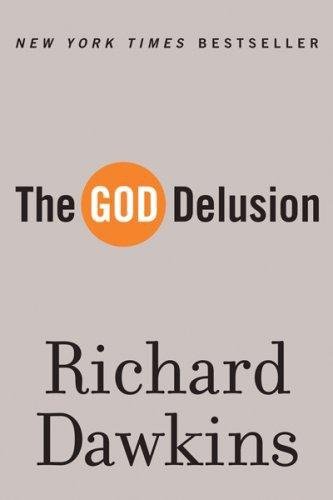
The God Delusion
The God Delusion
The God Delusion
Richard Dawkins
Science, Evolution, Religion, Rational Thinking
Pub: 2008
In: 2010-06-03

The God Delusion

  • Richard Dawkins
  • 9780618918249
  • 2008
  • 2010-06-03
  • Science, Evolution, Religion, Rational Thinking

Summary:

SUMMARY:
In his sensational international bestseller, the preeminent scientist and outspoken atheist Richard Dawkins delivers a hard-hitting, impassioned, but humorous rebuttal of religious belief. With rigor and wit, Dawkins eviscerates the arguments for religion and demonstrates the supreme improbability of the existence of a supreme being. He makes a compelling case that faith is not just irrational, but potentially deadly. In a preface written for the paperback edition, Dawkins responds to some of the controversies the book has incited. This brilliantly argued, provocative book challenges all of us to test our beliefs, no matter what beliefs we hold.

World War Z
World War Z
World War Z
Max Brooks
Fantasy, Horror, Speculative
Pub: 2007
In: 2010-06-03

World War Z

  • Max Brooks
  • 9780307346612
  • 2007
  • 2010-06-03
  • Fantasy, Horror, Speculative

Summary:

EDITORIAL REVIEW:

“The end was near.” —Voices from the Zombie WarThe Zombie War came unthinkably close to eradicating humanity. Max Brooks, driven by the urgency of preserving the acid-etched first-hand experiences of the survivors from those apocalyptic years, traveled across the United States of America and throughout the world, from decimated cities that once teemed with upwards of thirty million souls to the most remote and inhospitable areas of the planet. He recorded the testimony of men, women, and sometimes children who came face-to-face with the living, or at least the undead, hell of that dreadful time. *World War Z* is the result. Never before have we had access to a document that so powerfully conveys the depth of fear and horror, and also the ineradicable spirit of resistance, that gripped human society through the plague years.Ranging from the now infamous village of New Dachang in the United Federation of China, where the epidemiological trail began with the twelve-year-old Patient Zero, to the unnamed northern forests where untold numbers sought a terrible and temporary refuge in the cold, to the United States of Southern Africa, where the Redeker Plan provided hope for humanity at an unspeakable price, to the west-of-the-Rockies redoubt where the North American tide finally started to turn, this invaluable chronicle reflects the full scope and duration of the Zombie War. Most of all, the book captures with haunting immediacy the human dimension of this epochal event. Facing the often raw and vivid nature of these personal accounts requires a degree of courage on the part of the reader, but the effort is invaluable because, as Mr. Brooks says in his introduction, “By excluding the human factor, aren’t we risking the kind of personal detachment from history that may, heaven forbid, lead us one day to repeat it? And in the end, isn’t the human factor the only true difference between us and the enemy we now refer to as ‘the living dead’?”Note: Some of the numerical and factual material contained in this edition was previously published under the auspices of the United Nations Postwar Commission.Eyewitness reports from the first truly global war“I found ‘Patient Zero’ behind the locked door of an abandoned apartment across town. . . . His wrists and feet were bound with plastic packing twine. Although he’d rubbed off the skin around his bonds, there was no blood. There was also no blood on his other wounds. . . . He was writhing like an animal; a gag muffled his growls. At first the villagers tried to hold me back. They warned me not to touch him, that he was ‘cursed.’ I shrugged them off and reached for my mask and gloves. The boy’s skin was . . . cold and gray . . . I could find neither his heartbeat nor his pulse.” —Dr. Kwang Jingshu, Greater Chongqing, United Federation of China“‘Shock and Awe’? Perfect name. . . . But what if the enemy can’t be shocked and awed? Not just won’t, but biologically can’t! That’s what happened that day outside New York City, that’s the failure that almost lost us the whole damn war. The fact that we couldn’t shock and awe Zack boomeranged right back in our faces and actually allowed Zack to shock and awe us! They’re not afraid! No matter what we do, no matter how many we kill, they will never, ever be afraid!” —Todd Wainio, former U.S. Army infantryman and veteran of the Battle of Yonkers“Two hundred million zombies. Who can even visualize that type of number, let alone combat it? . . . For the first time in history, we faced an enemy that was actively waging total war. They had no limits of endurance. They would never negotiate, never surrender. They would fight until the very end because, unlike us, every single one of them, every second of every day, was devoted to consuming all life on Earth.” —General Travis D’Ambrosia, Supreme Allied Commander, Europe*From the Hardcover edition.*

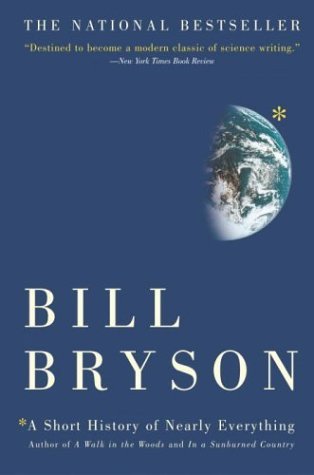
A short history of nearly everything
Bill Bryson
Science, Divulgation
Pub: 2004
In: 2010-06-03

A short history of nearly everything

  • Bill Bryson
  • 9780767908184
  • 2004
  • 2010-06-03
  • Science, Divulgation

Summary:

EDITORIAL REVIEW:

One of the world’s most beloved and bestselling writers takes his ultimate journey -- into the most intriguing and intractable questions that science seeks to answer.In **A Walk in the Woods**, Bill Bryson trekked the Appalachian Trail -- well, most of it. In **In A Sunburned Country**, he confronted some of the most lethal wildlife Australia has to offer. Now, in his biggest book, he confronts his greatest challenge: to understand -- and, if possible, answer -- the oldest, biggest questions we have posed about the universe and ourselves. Taking as territory everything from the Big Bang to the rise of civilization, Bryson seeks to understand how we got from there being nothing at all to there being us. To that end, he has attached himself to a host of the world’s most advanced (and often obsessed) archaeologists, anthropologists, and mathematicians, travelling to their offices, laboratories, and field camps. He has read (or tried to read) their books, pestered them with questions, apprenticed himself to their powerful minds. **A Short History of Nearly Everything*** *is the record of this quest, and it is a sometimes profound, sometimes funny, and always supremely clear and entertaining adventure in the realms of human knowledge, as only Bill Bryson can render it. Science has never been more involving or entertaining.*From the Hardcover edition.*

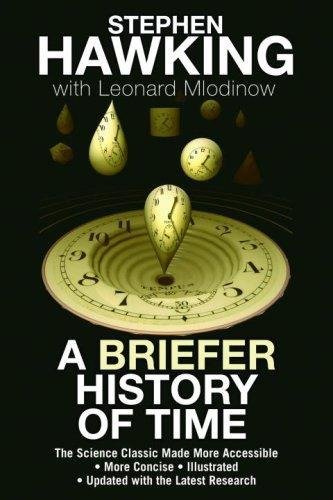
A Briefer History of Time
Stephen W. Hawking, Leonard Mlodinow
Essay, Science, Divulgation
Pub: 2008
In: 2010-06-03

A Briefer History of Time

  • Stephen W. Hawking, Leonard Mlodinow
  • 9780553385465
  • 2008
  • 2010-06-03
  • Essay, Science, Divulgation

Summary:

EDITORIAL REVIEW:

From One of the Most Brilliant Minds of Our TimeComes a Book that Clarifies His Most Important Ideas****Stephen Hawking’s worldwide bestseller, **A Brief History of Time***,* remains one of the landmark volumes in scientific writing of our time. But for years readers have asked for a more accessible formulation of its key concepts—the nature of space and time, the role of God in creation, and the history and future of the universe. Professor Hawking’s response is this new work that will guide nonscientists everywhere in the ongoing search for the tantalizing secrets at the heart of time and space.… ****Although “briefer,” this book is much more than a mere explanation of Hawking’s earlier work. **A Briefer History of Time** both clarifies and expands on the great subjects of the original, and records the latest developments in the field—from string theory to the search for a unified theory of all the forces of physics. Thirty-seven full-color illustrations enhance the text and make** A Briefer History of Time** an exhilarating and must-have addition in its own right to the great literature of science and ideas.**

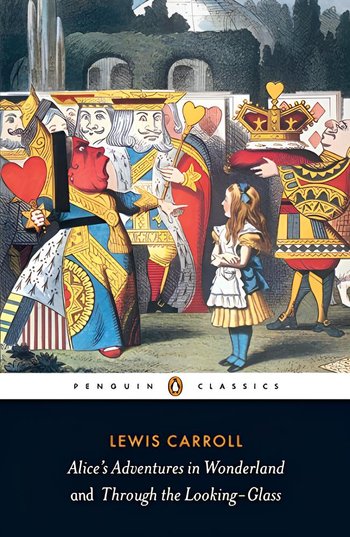
Alice's Adventures in Wonderland and Through the Looking-Glass
Lewis Carroll
Alice's Adventures #0
Classics, Childrens, Young Adult, Adventure, Fantasy, Philosophy
Pub: 1871
In: 2010-07-26

Alice's Adventures in Wonderland and Through the Looking-Glass

  • Lewis Carroll
  • 9780141439761
  • Alice's Adventures - Book #0
  • 1871
  • 2010-07-26
  • Classics, Childrens, Young Adult, Adventure, Fantasy, Philosophy

Summary:

'Contrariwise ... if it was so, it might be; and if it were so, it would be but as it isn't, it ain't. That's logic.'

'I had sent my heroine straight down a rabbit-hole ... without the least idea what was to happen afterwards,' wrote Lewis Carroll, describing how Alice was conjured up one 'golden afternoon' in 1862 to entertain his child-friend Alice Liddell. His dream worlds of nonsensical Wonderland and the back-to-front Looking-Glass kingdom depict order turned upside-down: a baby turns into a pig, time is abandoned at a disordered tea-party and a chaotic game of chess makes a seven-year-old girl a Queen. But amongst the anarchic humour and sparkling word play, puzzles and riddles, are poignant moments of nostalgia for lost childhood. Original and experimental, the Alice books give readers a window on both child and adult worlds.

This is the most comprehensively annotated edition available and includes the manuscript version of Alice's Adventures Under Ground and Carroll's 1887 essay '"Alice" on the Stage'.

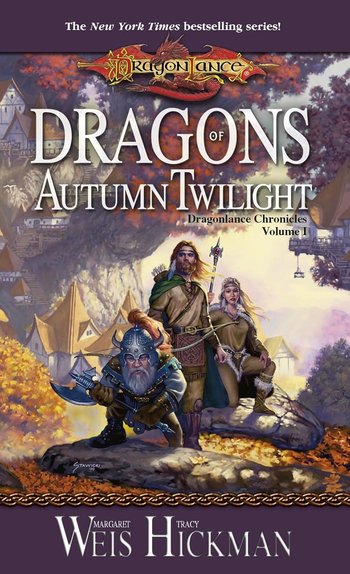
Dragons of Autumn Twilight
Margaret Weis, Tracy Hickman
Dragonlance: Chronicles #1
Fiction, General, Juvenile Fiction, Animals, Dragons; Unicorns & Mythical, Fantasy & Magic, Fantasy
Pub: 1985
In: 2008-12-04

Dragons of Autumn Twilight

  • Margaret Weis, Tracy Hickman
  • 9780880386524
  • Dragonlance: Chronicles - Book #1
  • 4
  • 1985
  • 2008-12-04
  • Fiction, General, Juvenile Fiction, Animals, Dragons; Unicorns & Mythical, Fantasy & Magic, Fantasy

Summary:

With the return of the dragon minions of Takhisis, the Queen of Dragons, the land of Krynn has become more dangerous than ever. But as the nations of Krynn prepare to fight for their homes, their lives, and their freedom, longstanding hatreds and prejudices interfere. When fighting breaks out among the races, it seems the battle is lost before it even begins.

Meanwhile, the heroic Companions have been torn apart by war. A full season will pass before they meet again—if they meet again. Raistlin has made an ominous prediction, one that implies not all of the Companions will survive the fight. His warning, along with sinister dreams, haunt the friends as they search for the weapons that will stop the Dark Queen in her tracks: the mysterious Dragon Orbs and legendary Dragonlance.

Another riveting tale in the Dragonlance Chronicles, Dragons of Winter Night is an action-packed adventure in which the true value of love and friendship is measured against the backdrop of a catastrophic war between good and evil.


They won their first real battle in the war for Krynn, but the war has only just begun for the Companions! Friendships born in conflict will be torn apart. Hope will rest on the shoulders of a disgraced Knight and his two inexperienced companions. Worlds long divided by hatred and prejudice will either band together in a last struggle against darkness - or perish for all time.


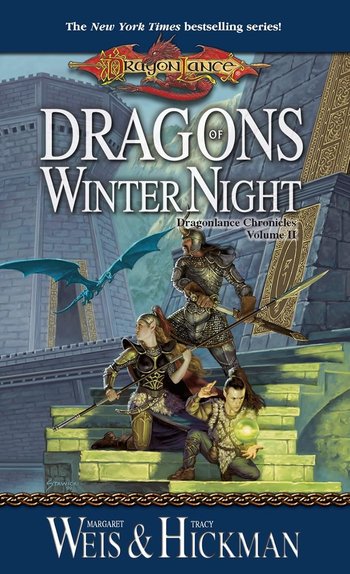
Dragons of Winter Night
Margaret Weis, Tracy Hickman
Dragonlance: Chronicles #2
Fiction, General, Juvenile Fiction, Animals, Dragons; Unicorns & Mythical, Fantasy & Magic, Fantasy
Pub: 1985
In: 2008-12-16

Dragons of Winter Night

  • Margaret Weis, Tracy Hickman
  • 9780394739755
  • Dragonlance: Chronicles - Book #2
  • 4
  • 1985
  • 2008-12-16
  • Fiction, General, Juvenile Fiction, Animals, Dragons; Unicorns & Mythical, Fantasy & Magic, Fantasy

Summary:

Dragons

Creatures of legend. Stories told to children.

But now dragons have returned to Krynn. The darkness of war and destruction threatens to engulf the land.

A small band of heroes brings hope to the land. But the hope is fragile as a rose and many be lost completely, shattered by the bitter winds of winter.

Knights and barbarian, warrior and half-elf, dwarf and kender and dark-souled mage; they begin a perilous search for two artifacts that may help them or lead them to their destruction-

the Dragon Orbs...

and the legendary Dragonlance.

Dragons of Spring Dawning
Margaret Weis, Tracy Hickman
Dragonlance: Chronicles #3
Fiction, General, Juvenile Fiction, Animals, Dragons; Unicorns & Mythical, Fantasy & Magic, Fantasy
Pub: 1999
In: 2008-12-17

Dragons of Spring Dawning

  • Margaret Weis, Tracy Hickman
  • 9780833531650
  • Dragonlance: Chronicles - Book #3
  • 1999
  • 2008-12-17
  • Fiction, General, Juvenile Fiction, Animals, Dragons; Unicorns & Mythical, Fantasy & Magic, Fantasy

Summary:

In this second volume of the Chronicles Trilogy, dragons have returned to Krynn and the darkness of war and destruction engulfs the land. Hope dawns with the coming of spring. Armed at last with the dragonlances, the heroes lead the people in the final desperate battle against the dragons.

Time of the Twins
Time of the Twins
Time of the Twins
Margaret Weis, Tracy Hickman
Dragonlance Legends #1
Fiction, Epic, Dragons & Mythical Creatures, Action & Adventure, Fantasy
Pub: 2001
In: 2008-12-17

Time of the Twins

  • Margaret Weis, Tracy Hickman
  • 9780786918041
  • Dragonlance Legends - Book #1
  • 2001
  • 2008-12-17
  • Fiction, Epic, Dragons & Mythical Creatures, Action & Adventure, Fantasy

Summary:

The first installment in the New York Times–bestselling epic fantasy trilogy about twin rivals Raistlin and Caramon, set in the magical Dragonlance universe. The War of the Lance has ended, and the darkness has passed. Or has it?   Sequestered in the blackness of the dreaded Tower of High Sorcery in Palanthas, and surrounded by nameless creatures of evil, archmage Raistlin Majere weaves a plan to conquer the darkness—to bring it under his control. Two people alone can stop him. One is Crysania, a beautiful and devoted cleric of Paladine, who tries to use her faith to lead Raistlin from the darkness. She is blind to his shadowed designs, and he draws her slowly into his neatly woven trap. The other is Raistlin’s twin, Caramon. Made aware of his brother’s plan, a distraught Caramon travels back in time to the doomed city of Istar in the days before the Cataclysm. There, together with the ever-present kender Tasslehoff, Caramon will make his stand to save Raistlin’s soul.

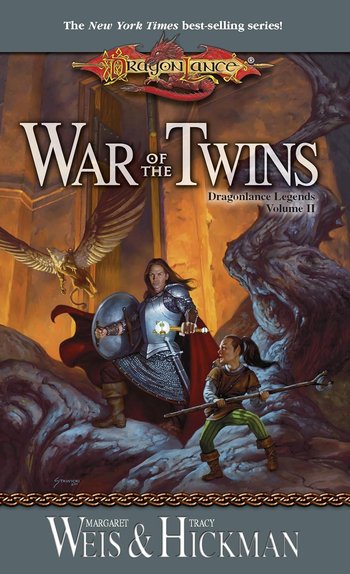
War of the Twins
War of the Twins
War of the Twins
Margaret Weis, Tracy Hickman
Dragonlance Legends #2
Fiction, Epic, Dragons & Mythical Creatures, Action & Adventure, Fantasy
Pub: 1986
In: 2008-12-17

War of the Twins

  • Margaret Weis, Tracy Hickman
  • 9780786918058
  • Dragonlance Legends - Book #2
  • 4
  • 1986
  • 2008-12-17
  • Fiction, Epic, Dragons & Mythical Creatures, Action & Adventure, Fantasy

Summary:

Now one hundred years in the future, the Majere twins and their companions set out to challenge Takhisis, the goddess of evil

One hundred years have passed since the fiery Cataclysm that changed the face of Krynn forever. For one hundred years, the people of Krynn have struggled to survive. But for some, those one hundred years have passed in the blink of an eye.

Catapulted forward in time by Raistlin’s powerful magic, Caramon and Crysania find themselves aiding the mage’s unholy quest to master the Queen of Darkness. To his dismay, Raistlin discovers along the way that the annals of Time are not so easily bent to his will—and neither are the longings of his heart.

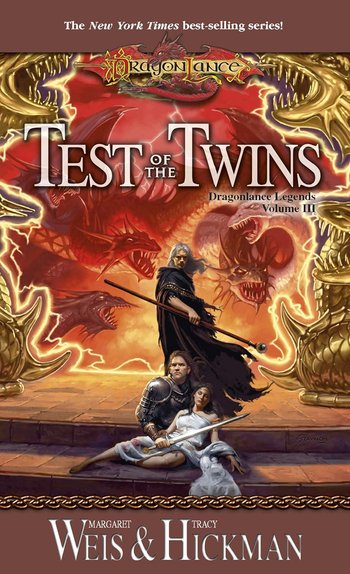
Test of the Twins
Test of the Twins
Test of the Twins
Margaret Weis, Tracy Hickman
Dragonlance Legends #3
Fiction, Epic, Dragons & Mythical Creatures, Action & Adventure, Fantasy
Pub: 2004
In: 2008-12-18

Test of the Twins

  • Margaret Weis, Tracy Hickman
  • 9780786933884
  • Dragonlance Legends - Book #3
  • 2004
  • 2008-12-18
  • Fiction, Epic, Dragons & Mythical Creatures, Action & Adventure, Fantasy

Summary:

The last title in the second Dragonlance novel trilogy, now available for the first time in hardcover.

The third and last title in the second Dragonlance novel trilogy will be released for the first time ever in a trade hardcover edition. Featuring the stunning art and design that graced the cover of the paperback edition, the new version of this series is a follow-up to the release of the Dragonlance novels Chronicles trilogy in hardcover in 2003. It also continues the planned release of all core Weis & Hickman titles in trade hardcover, allowing fans and collectors alike the chance to obtain the entire set.

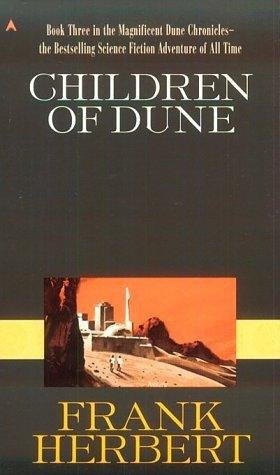
Children of Dune
Children of Dune
Children of Dune
Frank Herbert
Dune #3
Science Fiction, Philosophy
Pub: 1976
In: 2010-01-21

Children of Dune

  • Frank Herbert
  • 9780399116971
  • Dune - Book #3
  • 1976
  • 2010-01-21
  • Science Fiction, Philosophy

Summary:

EDITORIAL REVIEW: **The science fiction masterpiece continues in the “major event,”(* Los Angeles Times*) *Children of Dune*.** With millions of copies sold worldwide, Frank Herbert’s Dune novels stand among the major achievements of the human imagination and one of the most significant sagas in the history of literary science fiction. The Children of Dune are twin siblings Leto and Ghanima Atreides, whose father, the Emperor Paul Muad’Dib, disappeared in the deserts of Arrakis. Like their father, they possess supernormal abilities—making them valuable to their aunt Alia, who rules the Empire. If Alia can obtain the secrets of the twins’ prophetic visions, her rule will be absolute. But the twins have their own plans for their destiny.
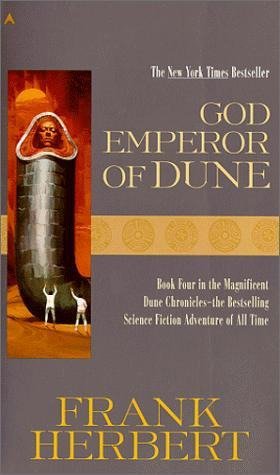
God Emperor of Dune
God Emperor of Dune
God Emperor of Dune
Frank Herbert
Dune #4
Science Fiction, Philosophy
Pub: 1987
In: 2010-01-21

God Emperor of Dune

  • Frank Herbert
  • 9780441294671
  • Dune - Book #4
  • 1987
  • 2010-01-21
  • Science Fiction, Philosophy

Summary:

SUMMARY: THE CROWNING ACHIEVEMENT OF THE MOST SUCCESSFUL SCIENCE FICTION SERIES IN HISTORYWith more than ten million copies sold, Frank Herbert's magnificent DUNE books stand among the major achievements of the imagination. God Emperor of Dune is the astonishing fourth book in the series. Centuries have passed on Dune itself, and the planet is green with life. Leto, the son of Dune's savior, is still alive but far from human, and the fate of all humanity hangs on his awesome sacrifice...
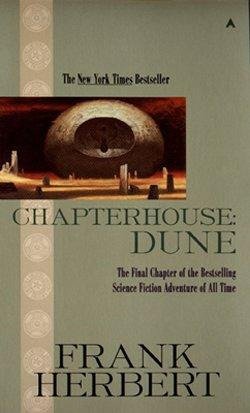
Chapterhouse, Dune
Chapterhouse, Dune
Chapterhouse, Dune
Frank Herbert
Dune #6
Science Fiction, Philosophy
Pub: 1985
In: 2010-01-21

Chapterhouse, Dune

  • Frank Herbert
  • 9780399130274
  • Dune - Book #6
  • 1985
  • 2010-01-21
  • Science Fiction, Philosophy

Summary:

EDITORIAL REVIEW: **A beautiful new hardcover package for the "exciting and gripping" (*Kirkus Reviews*) *New York Times* bestselling science fiction classic.** The desert planet Arrakis, called Dune, has been destroyed. The remnants of the Old Empire have been consumed by the violent matriarchal cult known as the Honored Matres. Only one faction remains a viable threat to their total conquest-the Bene Gesserit, heirs to Dune's power. Under the leadership of Mother Superior Darwi Odrade, the Bene Gesserit have colonized a green world on the planet Chapterhouse, and are turning it into a desert, mile by scorched mile. And once they've mastered breeding sandworms, the Sisterhood will control the production of the greatest commodity in the known galaxy-the spice Melange. But their true weapon remains a man who has lived countless lifetimes-a man who served under the God Emperor Paul Muad'Dib.
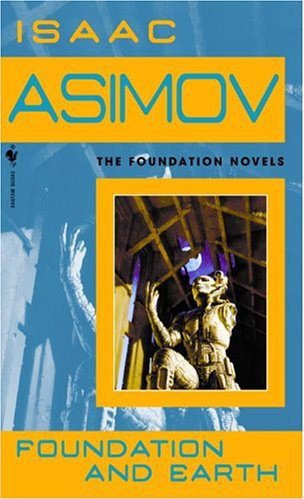
Foundation and Earth
Isaac Asimov
Science Fiction
Pub: 2008
In: 2010-05-08

Foundation and Earth

  • Isaac Asimov
  • 9781439507223
  • 2008
  • 2010-05-08
  • Science Fiction

Summary:

SUMMARY:
The fifth novel in Asimov's popular Foundation series opens with second thoughts. Councilman Golan Trevize is wondering if he was right to choose a collective mind as the best possible future for humanity over the anarchy of contentious individuals, nations and planets. To test his conclusion, he decides he must know the past and goes in search of legendary Earth, all references to which have been erased from galactic libraries. The societies encountered along the way become arguing points in a book-long colloquy about man's fate, conducted by Trevize and traveling companion Bliss, who is part of the first world/mind, Gaia.

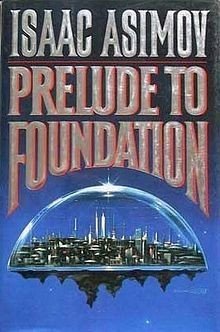
Prelude to foundation
Isaac Asimov
Science Fiction
Pub: 1988
In: 2010-05-09

Prelude to foundation

  • Isaac Asimov
  • 9780385233132
  • 1988
  • 2010-05-09
  • Science Fiction

Summary:

SUMMARY: It is the year 12,020 G.E. and Emperor Cleon I sits uneasily on the Imperial throne of Trantor. Here in the great multidomed capital of the Galactic Empire, forty billion people have created a civilization of unimaginable technological and cultural complexity. Yet Cleon knows there are those who would see him fall - those whom he would destroy if only he could read the future.Hari Seldon has come to Trantor to deliver his paper on psychohistory, his remarkable theory of prediction. Little does the young Outworld mathematician know that he has already sealed his fate and the fate of humanity. For Hari possesses the prophetic power that makes him the most wanted man in the Empire... the man who holds the key to the future - an apocalyptic power to be know forever after as the Foundation.From the Paperback edition.
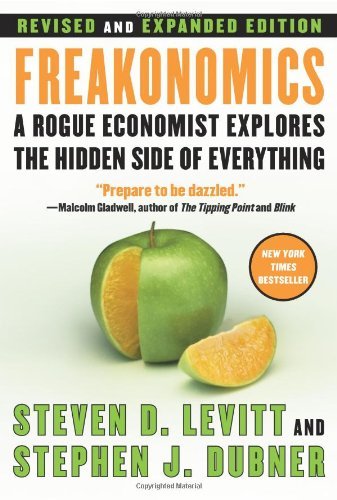
Freakonomics: A Rogue Economist Explores the Hidden Side of Everything
Steven D. Levitt, Stephen J. Dubner
Freakonomics #1
Economics, Rational Thinking, Social Science
Pub: 2009
In: 2010-12-07

Freakonomics: A Rogue Economist Explores the Hidden Side of Everything

  • Steven D. Levitt, Stephen J. Dubner
  • 9780061956270
  • Freakonomics - Book #1
  • 2009
  • 2010-12-07
  • Economics, Rational Thinking, Social Science

Summary:

SUMMARY:
Which is more dangerous, a gun or a swimming pool? What do schoolteachers and sumo wrestlers have in common? Why do drug dealers still live with their moms? How much do parents really matter? What kind of impact did Roe v. Wade have on violent crime?These may not sound like typical questions for an economist to ask. But Steven D. Levitt is not a typical economist. He is a much heralded scholar who studies the stuff and riddles of everyday life-; from cheating and crime to sports and child rearing-; and whose conclusions regularly turn the conventional wisdom on its head. He usually begins with a mountain of data and a simple, unasked question. Some of these questions concern life-and-death issues; others have an admittedly freakish quality. Thus the new field of study contained in this book: freakonomics.Through forceful storytelling and wry insight, Levitt and co-author Stephen J. Dubner show that economics is, at root, the study of incentives-; how people get what they want, or need, especially when other people want or need the same thing. In Freakonomics, they set out to explore the hidden side of ... well, everything. The inner workings of a crack gang. The truth about real-estate agents. The myths of campaign finance. The telltale marks of a cheating schoolteacher. The secrets of the Ku Klux Klan.What unites all these stories is a belief that the modern world, despite a surfeit of obfuscation, complication, and downright deceit, is not impenetrable, is not unknowable, and-; if the right questions are asked-; is even more intriguing than we think. All it takes is a new way of looking. Steven Levitt, through devilishly clever and clear-eyed thinking, shows how to seethrough all the clutter. Freakonomics establishes this unconventional premise: If morality represents how we would like the world to work, then economics represents how it actually does work. It is true that readers of this book will be armed with enough riddles and stories to last a thousand cocktail parties. But Freakonomics can provide more than that. It will literally redefine the way we view the modern world.

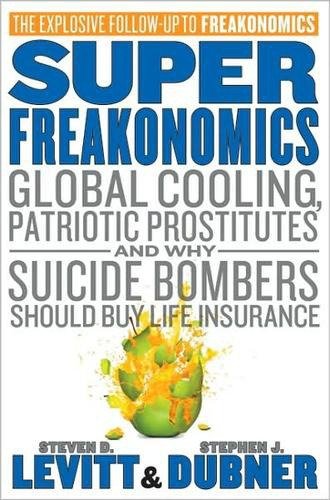
Superfreakonomics
Superfreakonomics
Superfreakonomics
Steven D. Levitt, Stephen J. Dubner
Freakonomics #2
Economics, Rational Thinking, Social Science
Pub: 2009
In: 2010-06-03

Superfreakonomics

  • Steven D. Levitt, Stephen J. Dubner
  • 9780060889579
  • Freakonomics - Book #2
  • 2009
  • 2010-06-03
  • Economics, Rational Thinking, Social Science

Summary:

EDITORIAL REVIEW:

The *New York Times* bestselling *Freakonomics* was a worldwide sensation, selling more than four million copies in thirty-five languages and changing the way we look at the world.

Steven D. Levitt and Stephen J. Dubner return with *Superfreakonomics*, and fans and newcomers alike will find that the *freak*quel is even bolder, funnier, and more surprising than the first.

*SuperFreakonomics* challenges the way we think all over again, exploring the hidden side of everything with such questions as: How is a street prostitute like a department-store Santa? What do hurricanes, heart attacks, and highway deaths have in common? Can eating kangaroo save the planet?

Levitt and Dubner mix smart thinking and great storytelling like no one else. By examining how people respond to incentives, they show the world for what it really is—good, bad, ugly, and, in the final analysis, super freaky. *Freakonomics* has been imitated many times over—but only now, with *SuperFreakonomics*, has it met its match.

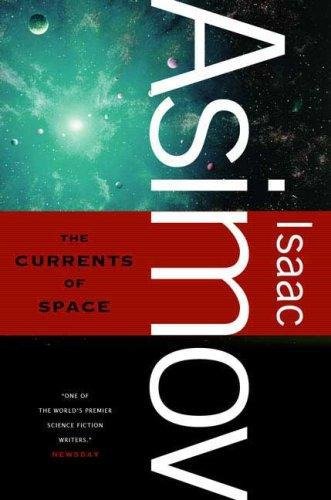
The Currents of Space
Isaac Asimov
Science Fiction
Pub: 2009
In: 2010-05-09

The Currents of Space

  • Isaac Asimov
  • 9780765319166
  • 2009
  • 2010-05-09
  • Science Fiction

Summary:

SUMMARY:
High above the planet Florinia, the Squires of Sark live in unimaginable wealth and comfort.  Down in the eternal spring of the planet, however, the native Florinians labor ceaselessly to produce the precious kyrt that brings prosperity to their Sarkite masters. Rebellion is unthinkable and impossible. Not only do the Florinians no longer have a concept of freedom, any disruption of the vital kyrt trade would cause other planets to rise in protest, ultimately destabilizing trade and resulting in a galactic war. So the Trantorian Empire, whose grand plan is to unite all humanity in peace, prosperity, and freedom, has stood aside and allowed the oppression to continue. Living among the workers of Florinia, Rik is a man without a memory or a past.  He has been abducted and brainwashed. Barely able to speak or care for himself when he was found, Rik is widely regarded as a simpleton by the worker community where he lives.  But as his memories begin to return, Rik finds himself driven by a cryptic message he is determined to deliver:  Everyone on Florinia is doomed . . . the Currents of Space are bringing destruction. But if the planet is evacuated, the power of Sark will end--so some would finish the job and would kill the messenger. The fate of the Galaxy hangs in the balance.

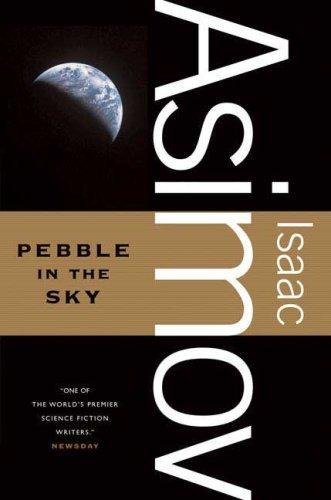
Pebble in the Sky
Pebble in the Sky
Pebble in the Sky
Isaac Asimov
Science Fiction
Pub: 1950
In: 2010-05-09

Pebble in the Sky

  • Isaac Asimov
  • 9780765319135
  • 1950
  • 2010-05-09
  • Science Fiction

Summary:

Review

“One of the world’s premier science fiction writers.”
_--Newsday

_“Isaac Asimov is the greatest explainer of the age.”
--Carl Sagan

“For fifty years it was Isaac Asimov’s tone of address that all the other voices of SF obeyed…. For five decades his was the voice to which SF came down in the end. His was the default voice of SF.”
--The Encyclopedia of Science Fiction

Product Description

One moment Joseph Schwartz is a happily retired tailor in 1949 Chicago. The next he’s a helpless stranger on Earth during the heyday of the first Galactic Empire. Earth, he soon learns, is a backwater, just a pebble in the sky, despised by all the other 200 million planets of the Empire because its people dare to claim it’s the original home of man. And Earth is poor, with great areas of radioactivity ruining much of its soil—so poor that everyone is sentenced to death at the age of sixty.

Joseph Schwartz is sixty-two.

This is young Isaac Asimov’s first novel, full of wonders and ideas, the book that launched the novels of the Galactic Empire, culminating in the Foundation books and novels. It is also one of that select group of SF adventures that since the early 1950s has hooked generations of teenagers on reading science fiction. This is Golden Age SF at its finest.

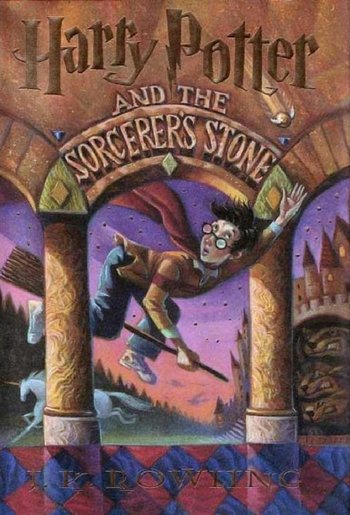
Harry Potter and the Sorcerer’s Stone
J.K. Rowling
Harry Potter #1
Fantasy
Pub: 2009
In: 2009-05-12

Harry Potter and the Sorcerer’s Stone

  • J.K. Rowling
  • Harry Potter - Book #1
  • 2009
  • 2009-05-12
  • Fantasy

Summary:

EDITORIAL REVIEW:

***Get your "A" in gear!***They're today's most popular study guides-with everything you need to succeed in school. Written by Harvard students for students, since its inception *SparkNotes*™ has developed a loyal community of dedicated users and become a major education brand. Consumer demand has been so strong that the guides have expanded to over 150 titles. *SparkNotes*'™ motto is *Smarter, Better, Faster* because:· They feature the most current ideas and themes, written by experts.· They're easier to understand, because the same people who use them have also written them.· The clear writing style and edited content enables students to read through the material quickly, saving valuable time.And with everything covered--context; plot overview; character lists; themes, motifs, and symbols; summary and analysis, key facts; study questions and essay topics; and reviews and resources--you don't have to go anywhere else!

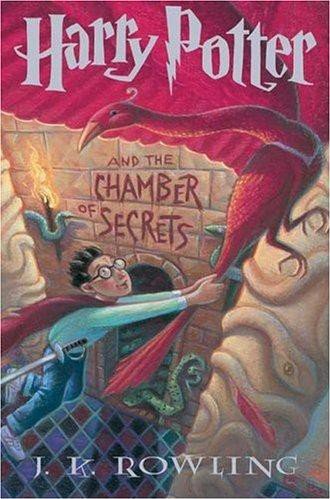
Harry Potter and the Chamber of Secrets
J.K. Rowling
Harry Potter #2
Fantasy
Pub: 2009
In: 2009-05-15

Harry Potter and the Chamber of Secrets

  • J.K. Rowling
  • Harry Potter - Book #2
  • 2009
  • 2009-05-15
  • Fantasy

Summary:

SUMMARY:
Young wizard Harry Potter finds himself back at the miserable Hogwarts School of Witchcraft and Wizardry. He doesn't realize the difficulty of the task that awaits him. Harry must pull out all the stops in order to find his missing friend. No Canadian Rights for the Harry Potter Series HARRY POTTER and all related characters and elements are trademarks of and (c) Warner Bros. Entertainment Inc. Harry Potter publishing rights (c) J. K. Rowling. (s05)

Harry Potter and the Prisoner of Azkaban
J.K. Rowling
Harry Potter #3
Fantasy
Pub: 2009
In: 2009-05-15

Harry Potter and the Prisoner of Azkaban

  • J.K. Rowling
  • Harry Potter - Book #3
  • 2009
  • 2009-05-15
  • Fantasy

Summary:

SUMMARY:
During his third year at Hogwarts School for Witchcraft and Wizardry, Harry Potter must confront the devious and dangerous wizard responsible for his parents' deaths.

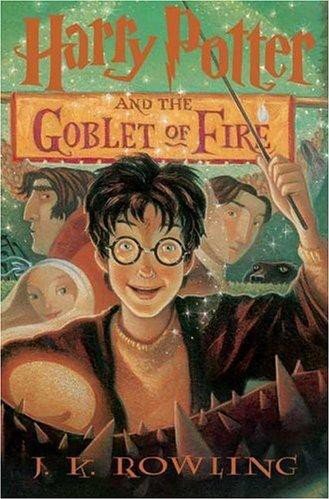
Harry Potter and the Goblet Of Fire
J.K. Rowling
Harry Potter #4
Fantasy
Pub: 2009
In: 2009-05-15

Harry Potter and the Goblet Of Fire

  • J.K. Rowling
  • Harry Potter - Book #4
  • 2009
  • 2009-05-15
  • Fantasy

Summary:

SUMMARY:
The summer holidays are dragging on and Harry Potter can't wait for the start of the school year. It is his fourth year at Hogwarts School of Witchcraft and Wizardry and there are spells to be learnt and (unluckily) Potions and Divination lessons to be attended. But Harry needs to be on his guard at all times - his worst enemy is preparing a terrible fate for him. With characteristic wit, fast-paced humour and marvellous emotional depth, J.K. Rowling has proved herself yet again to be a master storyteller.

Harry Potter and the Order of the Phoenix
J.K. Rowling
Harry Potter #5
Fantasy
Pub: 2009
In: 2009-05-15

Harry Potter and the Order of the Phoenix

  • J.K. Rowling
  • Harry Potter - Book #5
  • 2009
  • 2009-05-15
  • Fantasy

Summary:

EDITORIAL REVIEW:

*I say to you all, once again--in the light of

Lord Voldemort’s return, we are only as strong

as we are united, as weak as we are divided.

Lord Voldemort’s gift for spreading discord and

enmity is very great. We can fight it only by showing

an equally strong bond of friendship and trust.*

So spoke Albus Dumbledore at the end of Harry Potter’s fourth year at Hogwarts. But as Harry enters his fifth year at wizard school, it seems those bonds have never been more sorely tested. Lord Voldemort’s rise has opened a rift in the wizarding world between those who believe the truth about his return, and those who prefer to believe it’s all madness and lies--just more trouble from Harry Potter.

Add to this a host of other worries for Harry…

• A Defense Against the Dark Arts teacher with a personality like poisoned honey

• A venomous, disgruntled house-elf

• Ron as keeper of the Gryffindor Quidditch team

• And of course, what every student dreads: end-of-term Ordinary Wizarding Level exams

…and you’d know what Harry faces during the day. But at night it’s even worse, because then he dreams of a single door in a silent corridor. And this door is somehow more terrifying than every other nightmare combined.

In the richest installment yet of J. K. Rowling’s seven-part story, Harry Potter confronts the unreliability of the very government of the magical world, and the impotence of the authorities at Hogwarts.

Despite this (or perhaps because of it) Harry finds depth and strength in his friends, beyond what even he knew; boundless loyalty and unbearable sacrifice.

Though thick runs the plot (as well as the spine), readers will race through these pages, and leave Hogwarts, like Harry, wishing only for the next train back.

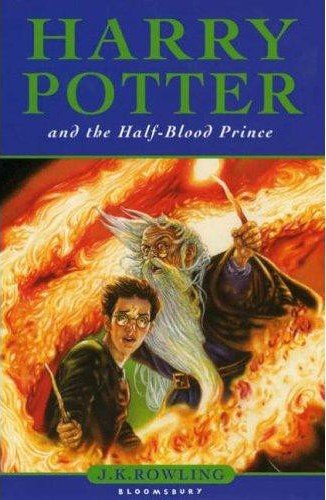
Harry Potter and the Half-Blood Prince
J.K. Rowling
Harry Potter #6
Fantasy
Pub: 2009
In: 2009-05-15

Harry Potter and the Half-Blood Prince

  • J.K. Rowling
  • Harry Potter - Book #6
  • 2009
  • 2009-05-15
  • Fantasy

Summary:

SUMMARY:
'In a brief statement on Friday night, Minister for Magic Cornelius Fudge confirmed that He Who Must Not Be Named has returned to this country and is once more active."It is with great regret that I must confirm that the wizard styling himself Lord - well, you know who I mean - is alive and among us again," said Fudge.These dramatic words appeared in the final pages of Harry Potter and the Order of the Phoenix.In the midst of this battle of good and evil, Harry Potter and the Half-Blood Prince takes up the story of Harry Potter's sixth year at Hogwarts School of Witchcraft and Wizardry, with Voldemort's power and followers increasing day by day . . .

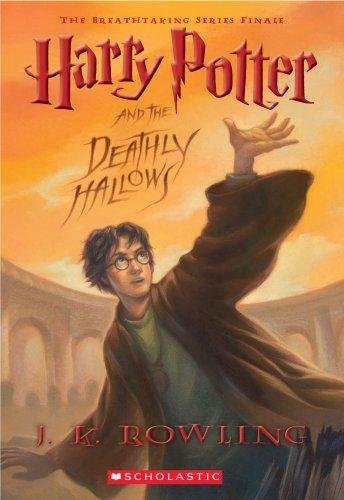
Harry Potter and the Deathly Hallows
J.K. Rowling
Harry Potter #7
Fantasy
Pub: 2009
In: 2009-05-15

Harry Potter and the Deathly Hallows

  • J.K. Rowling
  • Harry Potter - Book #7
  • 2009
  • 2009-05-15
  • Fantasy

Summary:

SUMMARY: Harry Potter is preparing to leave the Dursleys and Privet Drive for the last time. But the future that awaits him is full of danger, not only for him, but for anyone close to him - and Harry has already lost so much. Only by destroying Voldemort's remaining Horcruxes can Harry free himself and overcome the Dark Lord's forces of evil. In this dramatic conclusion to the Harry Potter series, Harry must leave his most loyal friends behind, and in a final perilous journey find the strength and the will to face his terrifying destiny: a deadly confrontation that is his alone to fight. In this thrilling climax to the phenomenally bestselling series, J.K. Rowling reveals all to her eagerly waiting readers.
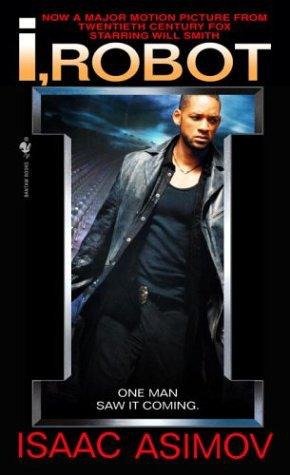
I, Robot
I, Robot
I, Robot
Isaac Asimov
Science Fiction
Pub: 1991
In: 2010-05-08

I, Robot

  • Isaac Asimov
  • 9780553294385
  • 1991
  • 2010-05-08
  • Science Fiction

Summary:

SUMMARY: The three laws of Robotics:1) A robot may not injure a human being or, through inaction, allow a human being to come to harm2) A robot must obey orders givein to it by human beings except where such orders would conflict with the First Law.3) A robot must protect its own existence as long as such protection does not conflict with the First or Second Law.With this, Asimov changed our perception of robots forever when he formulated the laws governing their behavior. In I, Robot, Asimov chronicles the development of the robot through a series of interlinked stories: from its primitive origins in the present to its ultimate perfection in the not-so-distant future--a future in which humanity itself may be rendered obsolete.Here are stories of robots gone mad, of mind-read robots, and robots with a sense of humor. Of robot politicians, and robots who secretly run the world--all told with the dramatic blend of science fact & science fiction that became Asmiov's trademark.
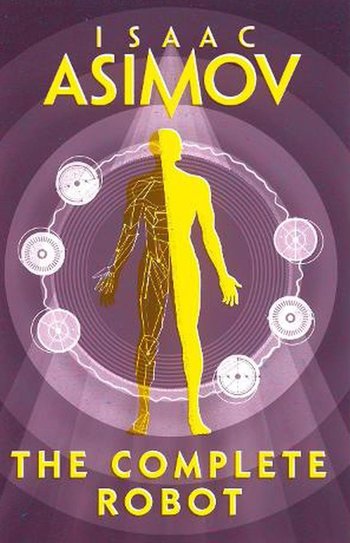
The Complete Robot ISAAC ASIMOV
Isaac Asimov
Science Fiction
Pub: 2018
In: 2010-05-09

The Complete Robot ISAAC ASIMOV

  • Isaac Asimov
  • 9780008277819
  • 5
  • 2018
  • 2010-05-09
  • Science Fiction

Summary:

BRAND NEW, Exactly same ISBN as listed, Please double check ISBN carefully before ordering.

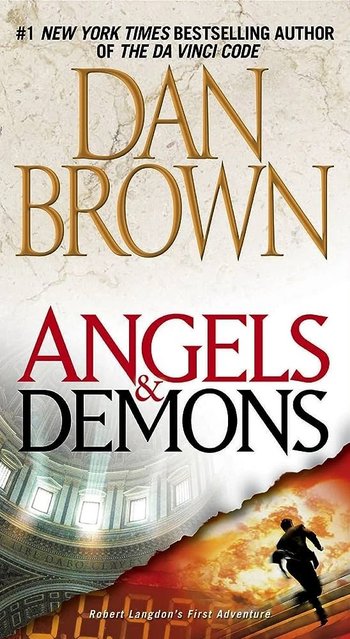
Angels & Demons
Angels & Demons
Angels & Demons
Dan Brown
Robert Langdon #1
Fiction, Thrillers, Suspense, Crime, Historical, Religion, Speculative, Novel, Science Fiction
Pub: 2000
In: 2010-06-04

Angels & Demons

  • Dan Brown
  • 9780743412391
  • Robert Langdon - Book #1
  • 4
  • 2000
  • 2010-06-04
  • Fiction, Thrillers, Suspense, Crime, Historical, Religion, Speculative, Novel, Science Fiction

Summary:

The explosive Robert Langdon thriller from Dan Brown, the #1 New York Times bestselling author of The Da Vinci Code, The Lost Symbol, Inferno, and The Secret of Secrets. An ancient secret brotherhood. A devastating new weapon of destruction. An unthinkable target. When world-renowned Harvard symbologist Robert Langdon is summoned to his first assignment to a Swiss research facility to analyze a mysterious symbol—seared into the chest of a murdered physicist—he discovers evidence of the unimaginable: the resurgence of an ancient secret brotherhood known as the Illuminati...the most powerful underground organization ever to walk the earth. The Illuminati has now surfaced to carry out the final phase of its legendary vendetta against its most hated enemy—the Catholic Church. Langdon’s worst fears are confirmed on the eve of the Vatican’s holy conclave, when a messenger of the Illuminati announces they have hidden an unstoppable time bomb at the very heart of Vatican City. With the countdown under way, Langdon jets to Rome to join forces with Vittoria Vetra, a beautiful and mysterious Italian scientist, to assist the Vatican in a desperate bid for survival. Embarking on a frantic hunt through sealed crypts, dangerous catacombs, deserted cathedrals, and the most secretive vault on earth, Langdon and Vetra follow a 400-year-old trail of ancient symbols that snakes across Rome toward the long-forgotten Illuminati lair...a clandestine location that contains the only hope for Vatican salvation. Critics have praised the exhilarating blend of relentless adventure, scholarly intrigue, and cutting wit found in Brown’s remarkable thrillers featuring Robert Langdon. An explosive international suspense, Angels & Demons marks this hero’s first adventure as it careens from enlightening epiphanies to dark truths as the battle between science and religion turns to war.

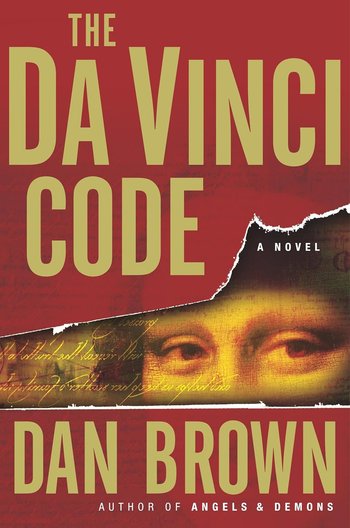
The Da Vinci Code
The Da Vinci Code
The Da Vinci Code
Dan Brown
Robert Langdon #2
Fiction, Thrillers, General, Religion, Speculative, Novel, Science Fiction
Pub: 2003
In: 2009-06-15

The Da Vinci Code

  • Dan Brown
  • 9781400079179
  • Robert Langdon - Book #2
  • 4
  • 2003
  • 2009-06-15
  • Fiction, Thrillers, General, Religion, Speculative, Novel, Science Fiction

Summary:

Alternate covers for 9781400079179 include:
The da Vinci Code, The da Vinci Code, and, The da Vinci Code

An ingenious code hidden in the works of Leonardo da Vinci.
A desperate race through the cathedrals and castles of Europe.
An astonishing truth concealed for centuries . . . unveiled at last.

As millions of readers around the globe have already discovered, The Da Vinci Code is a reading experience unlike any other. Simultaneously lightning-paced, intelligent, and intricately layered with remarkable research and detail, Dan Brown's novel is a thrilling masterpiece—from its opening pages to its stunning conclusion.

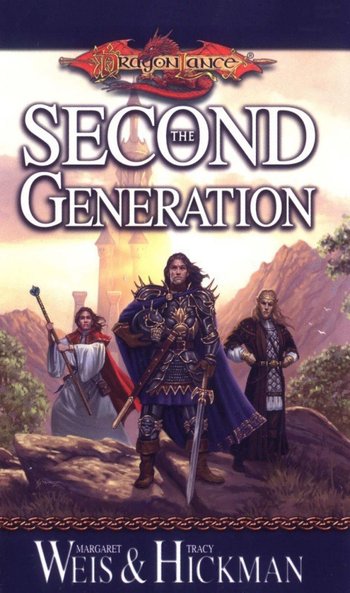
The Second Generation
Margaret Weis, Tracy Hickman
Dragonlance: Chronicles #4
Fantasy
Pub: 2002
In: 2010-07-30

The Second Generation

  • Margaret Weis, Tracy Hickman
  • 9780786926947
  • Dragonlance: Chronicles - Book #4
  • 2002
  • 2010-07-30
  • Fantasy

Summary:

EDITORIAL REVIEW: Years have passed since the end of the War of the Lance. The people of Ansalon have rebuilt their lives, their houses, their families. The Companions of the Lance, too, have returned to their homes, raising children and putting the days of their heroic deeds behind them.But peace on Krynn comes at a price. The forces of darkness are ever vigilant, searching for ways to erode the balance of power and take control. When subtle changes begin to permeate the fragile peace, new lives are drawn into the web of fate woven around all the races. The time has come to pass the sword -- or the staff -- to the children of the Lance.They are the Second Generation.An all-new repackaged paperback edition of a classic **Dragonlance **novel.This book of five novellas bridges the gap between the Chronicles and Legends trilogies and *Dragons of Summer Flame*. While detailing their adventures, *The Second Generation* also sets up key events and characters in future **Dragonlance **novels.
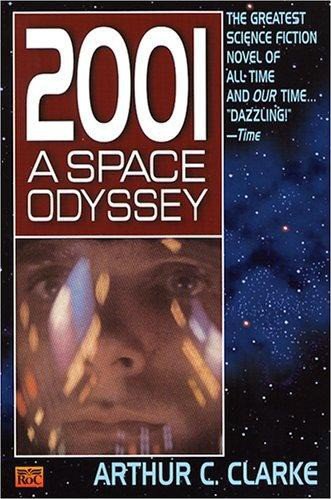
2001: a space odyssey
Arthur C. Clarke
Space Odyssey #1
Science Fiction
Pub: 1999
In: 2010-07-05

2001: a space odyssey

  • Arthur C. Clarke
  • 9780451452733
  • Space Odyssey - Book #1
  • 1999
  • 2010-07-05
  • Science Fiction

Summary:

EDITORIAL REVIEW:

A deluxe hardcover edition of the science fiction classic...now with a new introduction by Arthur C. Clarke!It has been over thirty years since the publication of *2001: A Space Odyssey*, the science fiction classic that changed the way we looked at the stars--and ourselves. From the savannas of Africa at the dawn of mankind to the rings of Saturn as man ventures to the outer rim of our solar system, Arthur C. Clarke takes us on a journey unlike any other.This allegory about humanity's exploration of the universe, and the universe's reaction to humanity, was the basis for Stanley Kubrick's immortal film, and lives on as a hallmark achievement in storytelling.* Special hardcover edition for the new millennium* New introduction by Arthur C. Clarke* Winner of the Science Fiction Writers' Grand Master Award for Life Achievement* Basis of Stanley Kubrick's 1968 movie--chosen by American Film Institute as one of the 100 best films of all time* *2001*'s unforgettable character, HAL the computer, has been revived in Macintosh's TV spots"Full of poetry, scientific imagination, and typical Clarke wit."--*The New Yorker*"Breathtaking."--*Saturday Review*"Brain-boggling."--*Life*"A mind-bender."--*Time*Special Millennial Edition

2061: Odyssey Three
2061: Odyssey Three
2061: Odyssey Three
Arthur C. Clarke
Space Odyssey #3
Science Fiction
Pub: 2008
In: 2010-07-05

2061: Odyssey Three

  • Arthur C. Clarke
  • 9781439507162
  • Space Odyssey - Book #3
  • 2008
  • 2010-07-05
  • Science Fiction

Summary:

EDITORIAL REVIEW:

Arthur C. Clark, creator of one of the world's best-loved science fiction tales, revisits the most famous future ever imagined in this NEW YORK TIMES bestseller, as two expeditions into space become inextricably tangled. Heywood Floyd, survivor of two previous encounters with the mysterious monloiths, must again confront Dave Bowman, HAL, and an alien race that has decided that Mankind is to play a part in the evolution of the galaxy whether it wishes to or not.*From the Paperback edition.*

3001: the final odyssey
Arthur C. Clarke
Space Odyssey #4
Science Fiction
Pub: 1998
In: 2010-07-05

3001: the final odyssey

  • Arthur C. Clarke
  • 9780345423498
  • Space Odyssey - Book #4
  • 1998
  • 2010-07-05
  • Science Fiction

Summary:

One thousand years after the Jupiter mission to explore the mysterious Monolith had been destroyed, after Dave Bowman was transformed into the Star Child, Frank Poole drifted in space, frozen and forgotten, leaving the supercomputer HAL inoperable. But now Poole has returned to life, awakening in a world far different from the one he left behind--and just as the Monolith may be stirring once again. . . .

PHP Pocket Reference (Pocket Reference (O'Reilly))
Rasmus Lerdorf
Programming, Reference
Pub: 2000
In: 2010-12-24

PHP Pocket Reference (Pocket Reference (O'Reilly))

  • Rasmus Lerdorf
  • 9781565927698
  • 2000
  • 2010-12-24
  • Programming, Reference

Summary:

Product Description

PHP is an open-source, HTML-embedded scripting language that allows you to handle tasks such as processing form input and working with databases directly in your HTML pages, rather than through CGI scripts. The PHP Pocket Reference is both a handy introduction to PHP syntax and structure and a quick reference to the vast array of functions provided by PHP. This small book acts as a perfect tutorial for learning the basics of developing Web applications with PHP.

About the Author

started the PHP Project back in 1995 and has been actively involved in PHP development ever since. Also involved in a number of other Open Source projects, Rasmus is a longtime Apache contributor and foundation member. He is the author of the first edition of the PHP Pocket Reference, and the co-author of Programming PHP.

Programming PHP
Programming PHP
Programming PHP
Rasmus Lerdorf, Kevin Tatroe
Programming, Reference
Pub: 2006
In: 2010-12-24

Programming PHP

  • Rasmus Lerdorf, Kevin Tatroe
  • 9781565926103
  • 2006
  • 2010-12-24
  • Programming, Reference

Summary:

PHP is far more than a cult language or open-source icon. It's a remarkably capable language that's well integrated with lots of technologies--notably mSQL and MySQL database servers--and quite easy to learn.
Programming PHP helps you up the PHP learning curve, very nearly guaranteeing that you'll find in its pages an example that illustrates every fundamental aspect of the language and its most important extension modules. Plus, there's some cool advanced stuff, like recipes for manipulating images, working with Extensible Markup Language (XML) content, and generating Adobe Acrobat (PDF) files. Rasmus Lerdorf invented PHP and quarterbacks its ongoing evolution, so there's little question of the content's authority.

The authors use a Talmudic style to explore PHP's capabilities and explain them to their readers, meaning that they like to present code and commentary in close formation, with each enhancing the other. Typically, they'll present a capability generically and show the relevant code. Then they'll dig into variations on the theme, calling attention to required code alterations as they go. This is a book about PHP itself, so practically no attention is paid to PHP Builder or other development tools. Regardless, this book will help you solve programming challenges with PHP, and enable you to write efficient, attractive code. --David Wall

Topics covered: The PHP programming language, for people who are coming to PHP with a bit of programming experience in other languages or who want to expand their existing PHP knowledge beyond the basics. Sections deal with the core language, as well as HTTP session management, database connectivity (to MySQL and Oracle, as well as with PHP Extension and Application Repository--PEAR), graphics file manipulation, XML parsing, and PDF creation. There are instructions for building a PHP extension library in C, as well as a function reference and guide to existing extensions.

VBScript in a nutshell
Paul Lomax, Matt Childs, Ron Petrusha
Programming, Reference
Pub: 2003
In: 2010-12-30

VBScript in a nutshell

  • Paul Lomax, Matt Childs, Ron Petrusha
  • 9780596004880
  • 2003
  • 2010-12-30
  • Programming, Reference

Summary:

Amazon.com Review

Because it applies the concise and popular Nutshell format to Microsoft's preferred scripting language, VBScript in a Nutshell is a valuable learning resource and reference. Focusing on the core language rather than on any specific application, this book teaches how to write clear, efficient VBScript code. Whether developing for the Web, automating Windows, or customizing Microsoft Outlook, this book will help the reader do a better job.

Though it caters to new users, VBScript is mainly a reference book. Each piece of the core VBScript specification (plus the Dictionary and FileSystemObject objects that make up the Microsoft Scripting Runtime) is described in an alphabetized entry. For each statement, function, operator, and object, the book gives a quick description of the element's syntax, concise rules of its proper use, information on returned values (if any), and some examples of the language element used correctly in practice. Two additional sections on each language element will be valuable to novices and anyone stumped by errors: a "Rules at a Glance" section that documents correct usage, and a section called "Programming Tips & Gotchas" that highlights common mistakes. --David Wall

Topics covered: Core VBScript and the most important object models on which it operates, including Microsoft Internet Explorer and the Windows Scripting Host. Tutorial material and reference entries explain structure, syntax, and program design.

Product Description

Lightweight yet powerful, VBScript from Microsoft® is used in four main areas: server-side web applications using Active Server Pages (ASP), client-side web scripts using Internet Explorer, code behind Outlook forms, and automating repetitive tasks using Windows Script Host (WSH). VBScript in a Nutshell, Second Edition delivers current and complete documentation for programmers and system administrators who want to develop effective scripts. Completely updated for VBScript 5.6, WSH 5.6 and ASP 3.0, VBScript In a Nutshell, Second Edition includes updated introductory chapters that will help you keep current with the significant changes since the first edition was published. New chapters introduce the Windows Script Component for creating binary COM components, and the Script Encoder. Regardless of your level of experience programming with VBScript, VBScript in a Nutshell, Second Edition is the book you'll want by your side--the most complete, up-to-date, and easy-to-use language reference available.

Linux in a nutshell: a quick desktop reference
Ellen Siever
Programming, Reference
Pub: 2000
In: 2010-12-30

Linux in a nutshell: a quick desktop reference

  • Ellen Siever
  • 9780596000257
  • 2000
  • 2010-12-30
  • Programming, Reference

Summary:

Amazon.com Review

Into the already crowded Linux desk-reference market (which threatens to push my monitor off my desktop) comes O'Reilly's third edition of Linux in a Nutshell by Ellen Siever and colleagues. The ever-expanding horizon of Linuxology makes the editorial task of circumscribing it in a nutshell impossible--even from the venerable O'Reilly sources. We ask, "What didn't they cut, and do we really need it next to the coffee cup?" The success of this attempt is spotty, at best.

From agetty to znew, this Nutshell book contributes half of its contents to alphabetically arranged synopses of 400 user, programmer, and administrator commands and utilities. The online manual page for "ps"--the process status program--produces over 14 screens of command-line options, environment variables, output formatting statements, utility cross-references, and author credits. The abstracted Nutshell entry contains only three textual pages of command-line options and bare-bones output abbreviations.

We learn that "yes" is an obscure little utility that's used ostensibly for driving scripts like ./configure. When misused, "yes" can create a 5-MB file on your hard drive in one CPU second; but the entry contains neither a warning to that effect nor a description of its relationship to big brother "expect"--which is alarming in its absence from both the alphabetical parade of commands and the index altogether.

Consequently, the first half of the book is intended for the curious and possibly nonexistent subpopulation of well-trained users who want to remind themselves of command-line flags, but would rather not use the online manual pages as a reference.

The meat in this Nutshell is contained sparingly in its second half. Here, it compares favorably with online how-tos for providing technical details of Linux kernel loading and boot parameterization, package management, bash/tcsh/csh shell use, and the underused CVS version-control system. The technical specifics of the popular editors emacs and vi are of marginal use to the experienced administrator whose manual muscle memory is full. The gawk and sed tutorials are somewhat more reference-worthy, and the tome ends with introductions to the barely discussed gnome, JDE, and fvwm2 window managers. The gaping crack in this book is the absence of X11 configuration guidelines, which often takes 80 percent of system configuration time, even for experienced administrators.

If you can't spare a better patch of pine, you might consider wedging 75 percent of this desk reference under your monitor, where it might contribute more to the ergonomics of coding than to the content. The remaining 25 percent will slip into your blotter for easy access. --Peter Leopold

Review

'O'Reilly have a reputation for producing first-rate computing books, and they've reaffirmed it with Linux in a Nutshell. Each page is clean, accessible and full of detailed and well-written text, while the overall structure and choice of content is equally accomplished.' Rating 8/10. Linux Format, December 2000

MySQL pocket reference
George Reese
Programming, Reference
Pub: 2003
In: 2010-12-30

MySQL pocket reference

  • George Reese
  • 9780596004460
  • 2003
  • 2010-12-30
  • Programming, Reference

Summary:

Product Description

To help you be more efficient in your work, this handy pocket reference gives you instant reminders on how to use important MySQL functions, especially in conjunction with key parts of the LAMP open source infrastructure. This powerful database system is so rich in features that no administrator or programmer can stay familiar with all of them. MySQL Pocket Reference is an ideal on-the-job companion, well organized to help you find and adapt the statements you need -- quickly.

Updated for the latest versions of this popular database, this edition covers many complex features that have been added to MySQL 5.0 and 5.1, including a section dedicated to stored procedures and triggers. After a brief introduction on installation and initial setup, the book explains:

  • How to configure MySQL, such as setting the root password
  • MySQL data types, including numerics, strings, dates, and complex types
  • SQL syntax, commands, data types, operators, and functions
  • Arithmetic, comparison and logical operators
  • Aggregate and general functions
  • Stored procedures and triggers, including procedure definition, procedure calls, procedure management, cursors, and triggers

You don't have time to stop and thumb through an exhaustive reference when you're hard at work. This portable and affordable guide is small enough to fit into your pocket, and gives you a convenient reference that you can consult anywhere. When you reach a sticking point and need to get to a solution quickly, the MySQL Pocket Reference is the book you want to have.

About the Author

George Reese has taken an unusual path into business software development. After earning a B.A. in philosophy from Bates College in Lewiston, Maine, George went off to Hollywood where he worked on television shows such as "The People's Court" and ESPN's "Up Close". The L.A. riots convinced him to return to Maine where he finally became involved with software development and the Internet. George has since specialized in the development of Internet-oriented Java enterprise systems and the strategic role of technology in business processes. He is the author of Database Programming with JDBC and Java, 2nd Edition and the world's first JDBC driver, the mSQL-JDBC driver for mSQL. He currently lives in Minneapolis, Minnesota with his wife Monique and three cats, Misty, Gypsy, and Tia. He makes a living as the National Practice Director of Technology Strategy for digital@jwt in Minneapolis.

SQL in a nutshell: a desktop quick reference
Kevin Kline, Daniel Kline
Programming, Reference
Pub: 2001
In: 2010-12-30

SQL in a nutshell: a desktop quick reference

  • Kevin Kline, Daniel Kline
  • 9781565927445
  • 2001
  • 2010-12-30
  • Programming, Reference

Summary:

Amazon.com Review

SQL in a Nutshell applies the classic O'Reilly "Nutshell" format to Structured Query Language (SQL), the elegant descriptive language that's used to create and manipulate stores of data. This book explains the purpose and proper syntax of hundreds of SQL statements, as defined in four major SQL implementations, and details each entry with explanatory text and illustrative examples. Perhaps best of all, authors Kevin and Daniel Kline feature MySQL in their coverage, and give it billing that's equal to that of Oracle, Microsoft SQL Server, and PostgreSQL. Their inclusion of open-source MySQL, which in most situations carries no license fee, is recognition of its growing popularity and suitability for serious database applications; also, it improves this book's appeal to Unix and Linux developers.

The majority of this slender book comprises eminently useful syntax documentation (which is in the style of Unix man pages, with bracketed options and monospace arguments) and the other information that's specific to individual statements and functions. Additionally, it includes a relatively small amount of conceptual information, such as a section on the proper use of NULL values. The material that's not statement-specific also contrasts data-type implementations of the four covered platforms--for example, readers learn that a PostgreSQL int2 value is known as a smallint in ANSI standard SQL. This is a particularly handy reference book, if you use one of the emphasized SQL implementations. --David Wall

Topics covered: Structured Query Language (SQL), as implemented in Oracle, Microsoft SQL Server, MySQL, and PostgreSQL, as well as in ANSI standard SQL (SQL92 and SQL99). After an introduction to data types and relational database fundamentals (the latter is not emphasized), the authors document SQL statements and functions, one by one and alphabetically. They take care to point out differences among the four implementations.

Product Description

For programmers, analysts, and database administrators, SQL in a Nutshell is the essential reference for the SQL language used in today's most popular database products. This new edition clearly documents every SQL command according to the latest ANSI standard, and details how those commands are implemented in Microsoft SQL Server 2008, Oracle 11g, and the MySQL 5.1 and PostgreSQL 8.3 open source database products. You'll also get a concise overview of the Relational Database Management System (RDBMS) model, and a clear-cut explanation of foundational RDBMS concepts -- all packed into a succinct, comprehensive, and easy-to-use format. This book provides:

  • Background on the Relational Database Model, including current and previous SQL standards
  • Fundamental concepts necessary for understanding relational databases and SQL commands
  • An alphabetical command reference to SQL statements, according to the SQL2003 ANSI standard
  • The implementation of each command by MySQL, Oracle, PostgreSQL, and SQL Server
  • An alphabetical reference of the ANSI SQL2003 functions, as well as the vendor implementations
  • Platform-specific functions unique to each implementation

Beginning where vendor documentation ends, SQL in a Nutshell distills the experiences of professional database administrators and developers who have used SQL variants to support complex enterprise applications. Whether SQL is new to you, or you've been using SQL since its earliest days, you'll get lots of new tips and techniques in this book.

Amazon.com Review

SQL in a Nutshell applies the classic O'Reilly "Nutshell" format to Structured Query Language (SQL), the elegant descriptive language that's used to create and manipulate stores of data. This book explains the purpose and proper syntax of hundreds of SQL statements, as defined in four major SQL implementations, and details each entry with explanatory text and illustrative examples. Perhaps best of all, authors Kevin and Daniel Kline feature MySQL in their coverage, and give it billing that's equal to that of Oracle, Microsoft SQL Server, and PostgreSQL. Their inclusion of open-source MySQL, which in most situations carries no license fee, is recognition of its growing popularity and suitability for serious database applications; also, it improves this book's appeal to Unix and Linux developers.

The majority of this slender book comprises eminently useful syntax documentation (which is in the style of Unix man pages, with bracketed options and monospace arguments) and the other information that's specific to individual statements and functions. Additionally, it includes a relatively small amount of conceptual information, such as a section on the proper use of NULL values. The material that's not statement-specific also contrasts data-type implementations of the four covered platforms--for example, readers learn that a PostgreSQL int2 value is known as a smallint in ANSI standard SQL. This is a particularly handy reference book, if you use one of the emphasized SQL implementations. --David Wall

Topics covered: Structured Query Language (SQL), as implemented in Oracle, Microsoft SQL Server, MySQL, and PostgreSQL, as well as in ANSI standard SQL (SQL92 and SQL99). After an introduction to data types and relational database fundamentals (the latter is not emphasized), the authors document SQL statements and functions, one by one and alphabetically. They take care to point out differences among the four implementations.

Product Description

SQL in a Nutshell is a practical and useful command reference to the latest release of the Structured Query Language (SQL99), helping readers learn how their favorite database product supports any standard SQL command. This book presents each of the SQL commands and describes its use in both commercial (Microsoft SQL Server 2000 and Oracle 8i) and open source (MySQL, PostgreSQL 7.0) implementations. Each command reference includes the command syntax (by vendor, if the syntax differs across implementations), a description, and informative examples that illustrate important concepts and uses. SQL in a Nutshell is more than a convenient reference guide for experienced SQL programmers, analysts, and database administrators. It's also a great learning resource for novice and auxiliary SQL users.

Woodwork Joints
Woodwork Joints
Woodwork Joints
William Fairham
Skils, Reference
Pub: 2010
In: 2010-12-30

Woodwork Joints

  • William Fairham
  • 9780982532973
  • 2010
  • 2010-12-30
  • Skils, Reference

Summary:

SUMMARY:
"To be successful in woodwork construction the possession of two secrets is essential - to know the right joint to use, and to know how to make that joint in the right way."WOODWORK JOINTS: HOW THEY ARE SET OUT, HOW MADE AND WHERE USED; WITH FOUR HUNDRED ILLUSTRATIONS AND INDEX; REVISED EDITION, C1920, by William Fairham, is one of the Woodworker Series of handcraft books published by Evans Bros., London, during the first quarter of the 20th Century. Covering both the major and minor woodworking joints, Fairham gives us clear, concise and well illustrated instructions on when to use and how to make joints in Carpentry, Joinery and Cabinet-Making...".written for the practical man...," WOODWORK JOINTS is an essential resource for learning and improving hand tool skills as authored by an experienced woodworker and educator.Toolemera Press facsimile reprints are published to preserve the classic books of crafts and industries. All titles are drawn from our personal library and reproduced as close to the original as possible.

You Might Be a Zombie and Other Bad News
Cracked.com
Humor
Pub: 2010
In: 2010-12-04

You Might Be a Zombie and Other Bad News

  • Cracked.com
  • 9780452296398
  • 2010
  • 2010-12-04
  • Humor

Summary:

SUMMARY:
You're going to wish you never picked up this book. Some facts are too terrifying to teach in school. Unfortunately, Cracked.com is more than happy to fill you in: * A zombie apocalypse? It could happen. 50% of humans are infected with a parasite that can take over your brain. * The FDA wouldn't let you eat bugs, right? Actually, you might want to put down those jelly beans. And that apple. And that strawberry yogurt. * Think dolphins are our friends? Then these sex-crazed thrill killers of the sea have you right where they want you. * The most important discovery in the history of genetics? Francis Crick came up with it while on LSD. * Think you're going to choosewhether or not to buy this book? Scientists say your brain secretly makes all your decisions10 seconds before you even know what they are.

Dawn of the Eagles
Dawn of the Eagles
Dawn of the Eagles
S.D. Perry, Britta Dennison
Star Trek: Terok Nor #3
Science Fiction, Star Trek
Pub: 2008
In: 2010-08-28

Dawn of the Eagles

  • S.D. Perry, Britta Dennison
  • 9780743482523
  • Star Trek: Terok Nor - Book #3
  • 2008
  • 2010-08-28
  • Science Fiction, Star Trek

Summary:

SUMMARY:
Before the Dominion War and the decimation of Cardassia...before the coming of the Emissary and the discovery of the wormhole...before space station Terok Nor became Deep Space 9™...there was the Occupation: the military takeover of an alien planet and the violent insurgency that fought against it. Now that fifty-year tale of warring ideologies, terrorism, greed, secret intelligence, moral compromises, and embattled faiths is at last given its due in the three-book saga of Star Trek's Lost Era...TEROK NORAs violence all across Bajor continues to escalate, Cardassian forces tighten their grip on the captive planet, driving back the resistance at every turn; but on Terok Nor and elsewhere, the winds of change are stirring -- the beginnings of a hurricane that will alter the landscape of the Occupation. And while secret dealings, shifting alliances, and personal demons buoy the wings of revolution, a mysterious shape-shifting life form begins a journey that will decide the fate of worlds.

The Evolution of God
Robert Wright
Religion, Evolution, Philosophy, Rational Thinking
Pub: 2009
In: 2010-12-15

The Evolution of God

  • Robert Wright
  • 9780316053273
  • 2009
  • 2010-12-15
  • Religion, Evolution, Philosophy, Rational Thinking

Summary:

From Publishers Weekly

In his illuminating book, The Moral Animal, Wright introduced evolutionary psychology and examined the ways that the morality of individuals might be hard-wired by nature rather than influenced by culture. With this book, he expands upon that work, turning now to explore how religion came to define larger and larger groups of people as part of the circle of moral consideration. Using a naïve and antiquated approach to the sociology and anthropology of religion, Wright expends far too great an effort covering well-trod territory concerning the development of religions from primitive hunter-gatherer stages to monotheism. He finds in this evolution of religion, however, that the great monotheistic (he calls them Abrahamic, a term not favored by many religion scholars) religions—Christianity, Islam, Judaism—all contain a code for the salvation of the world. Using game theory, he encourages individuals in these three faiths to embrace a non–zero-sum relationship to other religions, seeing their fortunes as positively correlated and interdependent and then acting with tolerance toward other religions. Regrettably, Wright's lively writing unveils little that is genuinely new or insightful about religion. (June)
Copyright © Reed Business Information, a division of Reed Elsevier Inc. All rights reserved.

From

Straddling popular science, ancient history, and theology, this ambitious work sets out to resolve not only the clash of civilizations between the Judeo-Christian West and the Muslim world but also the clash between science and religion. Tracking the continual transformation of faith from the Stone Age to the Information Age, Wright, a self-described materialist, best known for his work on evolutionary psychology, free trade, and game theory, postulates that religious world views are becoming more open, compassionate, and synthesized. Occasionally, his prescriptions can seem obvious—for instance, that members of the different Abrahamic faiths should think of their religions as “having been involved, all along, in the same undertaking.” But his core argument, that religion is getting “better” with each passing aeon, is enthralling.
Copyright ©2008_ Click here to subscribe to The New Yorker_

Shattered Light
Shattered Light
Shattered Light
Michael Schuster
Star Trek: Myriad Universes #3
Science Fiction, Star Trek
Pub: 2010
In: 2010-12-18

Shattered Light

  • Michael Schuster
  • 9781439148419
  • Star Trek: Myriad Universes - Book #3
  • 2010
  • 2010-12-18
  • Science Fiction, Star Trek

Summary:

Product Description

It’s been said that for any event, there are an infinite number of possible out­comes. Our choices determine which outcome will follow, and therefore all possibilities that could happen do happen across alternate realities. In these divergent realms, known history is bent, like white light through a shattered prism—broken into a boundless spectrum of what-might-have-beens. But in those myriad universes, what might have been . . . is what actually occurred.

THE EMBRACE OF COLD ARCHITECTS. “Mister Worf—fire.” With thosewords, William T. Riker defeated the Borg—and destroyed Captain Jean-Luc Picard. Now, a heartsore Captain Riker must carry on the legacy of thecommanding officer and friend whose death he ordered. But crises face himat every turn, from Cardassian aggression to the return of Data’s creator,Noonien Soong. But it is Data’s creation of a daughter, Lal, that may prove to beeveryone’s undoing. . . .

THE TEARS OF ERIDANUS. Commander Hikaru Sulu of the Kumari—finest ship of the Interstellar Guard, the military arm of the Interstellar Union that includes Andor, Earth, and Tellar—is sent to rescue an observation team on a primitive desert planet. The world has many names—40 Eridani A-II, Minshara, T’Khasi, Vulcan—and its savage natives have taken the team hostage, including Sulu’s daughter, Demora. Even as Captain Sulu negotiates with the fierce T’Pau, Demora meets the elderly S’oval, and with him the only hope for the planet’s future. . . .

HONOR IN THE NIGHT. Former Federation president Nilz Baris has died. After losing Sherman’s Planet to the Klingons thanks to poisoned quadrotriticale, the agriculture undersecretary parlayed that defeat into years of political battles with the Klingon Empire, and eventually the Federation’s highest office. Now, the Federation News Service wants the story of his life, a quest that digs up many secrets—including the mystery of why his final words were “Arne Darvin.”

About the Author

DAVID R. GEORGE III wrote the Crucible trilogy for Star Trek's 40th anniversary as well as Olympus Descending for Worlds of Star Trek: Deep Space Nine, Volume Three. He previously visited DS9 in the novels The 34th Rule, set during the timeframe of the series, and in Twilight, set after the finale. His other Star Trek contributions include a first season Voyager episode, "Prime Factors," and one of the_ Lost Era _books, Serpents Among the Ruins, which hit the New York Times bestseller list in Fall, 2003. Currently he is writing a novella for Star Trek: Myriad Universes: Shattered Light, coming in December, 2010, from Gallery Books.

In his almost nonexistent spare time, David enjoys trying his hand at new experiences, from skydiving to auditioning--with his lovely wife, Karen--for "The New Newlywed Game", from hiking a glacier in Alaska to belly dancing in Tunisia, from ocean kayaking in Mexico to having dinner at an actual captain's table somewhere in the Pacific Ocean. Recently, he performed his first wedding ceremony--which he and Karen also wrote--marrying their friends Jen and Ryan Van Riper. David believes that the world is a wide, wondrous place, with exciting adventures waiting around just about every corner.

He remains free on his own recognizance.

STEVE MOLLMANN is studying for a Ph.D. in English at an unknown university at an unknown location in the United States. He is not being coy; at the time this was written, he simply had no idea where he would be by the time you read this. He obtained his M.A. in English at the University of Connecticut, and hopes to pursue a career as a scholar, specializing in British literature, especially its intersection with science and technology. Also in that gap of time, he will have gotten married to his then-fiancÉe, Hayley. He has met Michael Schuster on more than one occasion.

MICHAEL SCHUSTER lives in a picturesque Austrian mountain valley, with half a continent and one entire ocean between him and Steve Mollmann. A bank employee by day, he likes to come up with new (or at least relatively unused) ideas that can be turned into stories with loving care and the occasional nudge. With Steve, he is the co-author of two short stories in the anthology Star Trek: The Next Generation: The Sky's the Limit. Their first novel, The Tears of Eridanus, will be released as part of the collection Star Trek: Myriad Universes: Shattered Light this December. Currently, the two are hard at work building their own universe-sized sandbox to play in. More information about them (including annotations for The Future Begins) can be found at http://www.exploringtheuniverse.net/.

The golden ratio: the story of phi, the world's most astonishing number
Mario Livio
Science
Pub: 2003
In: 2010-10-10

The golden ratio: the story of phi, the world's most astonishing number

  • Mario Livio
  • 9780767908160
  • 2003
  • 2010-10-10
  • Science

Summary:

EDITORIAL REVIEW:

Throughout history, thinkers from mathematicians to theologians have pondered the mysterious relationship between numbers and the nature of reality. In this fascinating book, Mario Livio tells the tale of a number at the heart of that mystery: *phi*, or 1.6180339887...This curious mathematical relationship, widely known as "The Golden Ratio," was discovered by Euclid more than two thousand years ago because of its crucial role in the construction of the pentagram, to which magical properties had been attributed. Since then it has shown a propensity to appear in the most astonishing variety of places, from mollusk shells, sunflower florets, and rose petals to the shape of the galaxy. Psychological studies have investigated whether the Golden Ratio is the most aesthetically pleasing proportion extant, and it has been asserted that the creators of the Pyramids and the Parthenon employed it. It is believed to feature in works of art from Leonardo da Vinci's *Mona Lisa *to Salvador Dali's *The Sacrament of the Last Supper*, and poets and composers have used it in their works. It has even been found to be connected to the behavior of the stock market!*The Golden Ratio* is a captivating journey through art and architecture, botany and biology, physics and mathematics. It tells the human story of numerous phi-fixated individuals, including the followers of Pythagoras who believed that this proportion revealed the hand of God; astronomer Johannes Kepler, who saw phi as the greatest treasure of geometry; such Renaissance thinkers as mathematician Leonardo Fibonacci of Pisa; and such masters of the modern world as Goethe, Cezanne, Bartok, and physicist Roger Penrose. Wherever his quest for the meaning of phi takes him, Mario Livio reveals the world as a place where order, beauty, and eternal mystery will always coexist.*From the Hardcover edition.*

Why Evolution Is True
Jerry A. Coyne
Bad Science, Evolution, Divulgation, Science, Rational Thinking
Pub: 2009
In: 2010-10-10

Why Evolution Is True

  • Jerry A. Coyne
  • 9780670020539
  • 2009
  • 2010-10-10
  • Bad Science, Evolution, Divulgation, Science, Rational Thinking

Summary:

EDITORIAL REVIEW:

**Why evolution is more than just a theory: it is a fact**

In all the current highly publicized debates about creationism and its descendant "intelligent design," there is an element of the controversy that is rarely mentioned-the *evidence*, the empirical truth of evolution by natural selection. Even Richard Dawkins and Stephen Jay Gould, while extolling the beauty of evolution and examining case studies, have not focused on the evidence itself. Yet the proof is vast, varied, and magnificent, drawn from many different fields of science. Scientists are observing species splitting into two and are finding more and more fossils capturing change in the past-dinosaurs that have sprouted feathers, fish that have grown limbs.

*Why Evolution Is True* weaves together the many threads of modern work in genetics, paleontology, geology, molecular biology, and anatomy that demonstrate the "indelible stamp" of the processes first proposed by Darwin. In crisp, lucid prose accessible to a wide audience, *Why Evolution Is True* dispels common misunderstandings and fears about evolution and clearly confirms that this amazing process of change has been firmly established as a scientific truth.

The Two Towers
The Two Towers
The Two Towers
J. R. R. Tolkien
The Lord of the Rings #2
Fantasy
Pub: 2005
In: 2010-07-20

The Two Towers

  • J. R. R. Tolkien
  • 9780618574957
  • The Lord of the Rings - Book #2
  • 2005
  • 2010-07-20
  • Fantasy

Summary:

EDITORIAL REVIEW:

For over fifty years, J.R.R. Tolkien’s peerless fantasy has accumulated worldwide acclaim as the greatest adventure tale ever written.No other writer has created a world as distinct as Middle-earth, complete with its own geography, history, languages, and legends. And no one has created characters as endearing as Tolkien’s large-hearted, hairy-footed hobbits. Tolkien’s The Lord of the Rings continues to seize the imaginations of readers of all ages, and this new three-volume paperback edition is designed to appeal to the youngest of them.In ancient times the Rings of Power were crafted by the Elvensmiths, and Sauron, the Dark Lord, forged the One Ring, filling it with his own power so that he could rule all others. But the One Ring was taken from him, and though he sought it throughout Middle-earth, still it remained lost to him . . .

The Return of the King
J. R. R. Tolkien
The Lord of the Rings #3
Fantasy
Pub: 2005
In: 2010-07-20

The Return of the King

  • J. R. R. Tolkien
  • 9780618574971
  • The Lord of the Rings - Book #3
  • 2005
  • 2010-07-20
  • Fantasy

Summary:

SUMMARY:
For over fifty years, J.R.R. Tolkien’s peerless fantasy has accumulated worldwide acclaim as the greatest adventure tale ever written.No other writer has created a world as distinct as Middle-earth, complete with its own geography, history, languages, and legends. And no one has created characters as endearing as Tolkien’s large-hearted, hairy-footed hobbits. Tolkien’s The Lord of the Rings continues to seize the imaginations of readers of all ages, and this new three-volume paperback edition is designed to appeal to the youngest of them.In ancient times the Rings of Power were crafted by the Elvensmiths, and Sauron, the Dark Lord, forged the One Ring, filling it with his own power so that he could rule all others. But the One Ring was taken from him, and though he sought it throughout Middle-earth, still it remained lost to him . . .

The Hobbit: Or There and Back Again
J. R. R. Tolkien
The Lord of the Rings #0
Fantasy
Pub: 2002
In: 2009-06-15

The Hobbit: Or There and Back Again

  • J. R. R. Tolkien
  • 9780618260300
  • The Lord of the Rings - Book #0
  • 2002
  • 2009-06-15
  • Fantasy

Summary:

SUMMARY:
Written for J.R.R. Tolkien's own children, The Hobbit met with instant critical acclaim when first published more than sixty years ago. Now recognized as a timeless classic with sales of more than 40 million copies worldwide, this introduction to Bilbo Baggins, Gandalf the Wizard, and the spectacular world of Middle-earth tells of the adventures of a reluctant hero, a powerful and dangerous ring, and the cruel dragon Smaug the Magnificent.

The Fellowship of the Ring
J. R. R. Tolkien
The Lord of the Rings #1
Fantasy
Pub: 2005
In: 2010-07-20

The Fellowship of the Ring

  • J. R. R. Tolkien
  • 9780618574940
  • The Lord of the Rings - Book #1
  • 2005
  • 2010-07-20
  • Fantasy

Summary:

SUMMARY:
For over fifty years, J.R.R. Tolkien’s peerless fantasy has accumulated worldwide acclaim as the greatest adventure tale ever written.No other writer has created a world as distinct as Middle-earth, complete with its own geography, history, languages, and legends. And no one has created characters as endearing as Tolkien’s large-hearted, hairy-footed hobbits. Tolkien’s The Lord of the Rings continues to seize the imaginations of readers of all ages, and this new three-volume paperback edition is designed to appeal to the youngest of them.In ancient times the Rings of Power were crafted by the Elvensmiths, and Sauron, the Dark Lord, forged the One Ring, filling it with his own power so that he could rule all others. But the One Ring was taken from him, and though he sought it throughout Middle-earth, still it remained lost to him . . .

First Contact: Or, It's Later Than You Think
Evan Mandery
Science Fiction, Philosophy
Pub: 2010
In: 2010-10-06

First Contact: Or, It's Later Than You Think

  • Evan Mandery
  • 9780061966187
  • 2010
  • 2010-10-06
  • Science Fiction, Philosophy

Summary:

SUMMARY:
A satirical joyride in the tradition of Kurt Vonnegut and Douglas Adams, First Contact introduces us to the hyper-intelligent Rigelians, who admire Woody Allen movies and Bundt cake, and who urge the people of Earth to mend their ways to avoid destruction of their planet. But the president of the United States, a God-fearing, science-doubting fitness fanatic, is skeptical of the evidence presented to him and sets in motion a chain of events that will change the lives of his young attach, an alien scam artist, several raccoons, and a scientist who has predicted the end of the universe. Parrot sketch excluded.

Star Trek: Typhon Pact: Rough Beasts of Empire
David R. George III
Science Fiction, Star Trek
Pub: 2010
In: 2010-12-29

Star Trek: Typhon Pact: Rough Beasts of Empire

  • David R. George III
  • 9781439160817
  • 2010
  • 2010-12-29
  • Science Fiction, Star Trek

Summary:

Product Description

Still on Romulus in pursuit of his goal of reunifying the Vulcans and Romulans, Spock finds himself in the middle of a massive power struggle. In the wake of the assassination of the Praetor and the Senate, the Romulans have cleaved in two. While Empress Donatra has led her nascent Imperial Romulan State to establish relations with the Federation, Praetor Tal’aura has guided the original Romulan Star Empire toward joining the newly formed Typhon Pact. But numerous factions within the two Romulan nations vie for power and undivided leadership, and Machiavellian plots unfold as forces within and without the empires conduct high-stakes political maneuvers. 

Meanwhile, four years after Benjamin Sisko returned from the Celestial Temple, circumstances have changed, his hopes for a peaceful life on Bajor with his wife and daughter beginning to slip away. After temporarily rejoining Starfleet for an all-hands-on-deck battle against the Borg, he must consider an offer to have him return for a longer stint. Beset by troubling events, he seeks spiritual guidance, facing demons new and old, including difficult memories from his time in the last Federation-Tzenkethi war.

About the Author

DAVID R. GEORGE III wrote the Crucible trilogy for Star Trek's 40th anniversary as well as Olympus Descending for Worlds of Star Trek: Deep Space Nine, Volume Three. He previously visited DS9 in the novels The 34th Rule, set during the timeframe of the series, and in Twilight, set after the finale. His other Star Trek contributions include a first season Voyager episode, "Prime Factors," and one of the_ Lost Era _books, Serpents Among the Ruins, which hit the New York Times bestseller list in Fall, 2003. Currently he is writing a novella for Star Trek: Myriad Universes: Shattered Light, coming in December, 2010, from Gallery Books.

In his almost nonexistent spare time, David enjoys trying his hand at new experiences, from skydiving to auditioning--with his lovely wife, Karen--for "The New Newlywed Game", from hiking a glacier in Alaska to belly dancing in Tunisia, from ocean kayaking in Mexico to having dinner at an actual captain's table somewhere in the Pacific Ocean. Recently, he performed his first wedding ceremony--which he and Karen also wrote--marrying their friends Jen and Ryan Van Riper. David believes that the world is a wide, wondrous place, with exciting adventures waiting around just about every corner.

He remains free on his own recognizance.

Product Description

Still on Romulus in pursuit of his goal of reunifying the Vulcans and Romulans, Spock finds himself in the middle of a massive power struggle. In the wake of the assassination of the Praetor and the Senate, the Romulans have cleaved in two. While Empress Donatra has led her nascent Imperial Romulan State to establish relations with the Federation, Praetor Tal’aura has guided the original Romulan Star Empire toward joining the newly formed Typhon Pact. But numerous factions within the two Romulan nations vie for power and undivided leadership, and Machiavellian plots unfold as forces within and without the empires conduct high-stakes political maneuvers. 

Meanwhile, four years after Benjamin Sisko returned from the Celestial Temple, circumstances have changed, his hopes for a peaceful life on Bajor with his wife and daughter beginning to slip away. After temporarily rejoining Starfleet for an all-hands-on-deck battle against the Borg, he must consider an offer to have him return for a longer stint. Beset by troubling events, he seeks spiritual guidance, facing demons new and old, including difficult memories from his time in the last Federation-Tzenkethi war.

About the Author

DAVID R. GEORGE III wrote the Crucible trilogy for Star Trek's 40th anniversary as well as Olympus Descending for Worlds of Star Trek: Deep Space Nine, Volume Three. He previously visited DS9 in the novels The 34th Rule, set during the timeframe of the series, and in Twilight, set after the finale. His other Star Trek contributions include a first season Voyager episode, "Prime Factors," and one of the_ Lost Era _books, Serpents Among the Ruins, which hit the New York Times bestseller list in Fall, 2003. Currently he is writing a novella for Star Trek: Myriad Universes: Shattered Light, coming in December, 2010, from Gallery Books.

In his almost nonexistent spare time, David enjoys trying his hand at new experiences, from skydiving to auditioning--with his lovely wife, Karen--for "The New Newlywed Game", from hiking a glacier in Alaska to belly dancing in Tunisia, from ocean kayaking in Mexico to having dinner at an actual captain's table somewhere in the Pacific Ocean. Recently, he performed his first wedding ceremony--which he and Karen also wrote--marrying their friends Jen and Ryan Van Riper. David believes that the world is a wide, wondrous place, with exciting adventures waiting around just about every corner.

He remains free on his own recognizance.

The Illustrated Longitude
Dava Sobel, William J. H. Andrewes
Science, Divulgation, History
Pub: 2003
In: 2010-11-22

The Illustrated Longitude

  • Dava Sobel, William J. H. Andrewes
  • 9780802775931
  • 2003
  • 2010-11-22
  • Science, Divulgation, History

Summary:

SUMMARY:
A fully illustrated edition of the international best-seller "Longitude." "The Illustrated Longitude" recounts in words and images the epic quest to solve the greatest scientific problem of the eighteenth and three prior centuries: determining how a captain could pinpoint his ship's location at sea. All too often throughout the ages of exploration, voyages ended in disaster when crew and cargo were either lost at sea or destroyed upon the rocks of an unexpected landfall. Thousands of lives and the fortunes of nations hung on a resolution to the longitude problem. To encourage a solution, governments established prizes for anyone whose method or device proved successful. The largest reward of 20,000-- truly a king's ransom-- was offered by Britain's Parliament in 1714. The scientific establishment-- from Galileo to Sir Isaac Newton-- had been certain that a celestial answer would be found and invested untold effort in this pursuit. By contrast, John Harrison imagined and built the unimaginable: a clock that told perfect time at sea, known today as the chronometer. Harrison's trials and tribulations during his forty-year quest to win the prize are the culmination of this remarkable story. "The Illustrated Longitude" brings a new and important dimension to Dava Sobel's celebrated story. It contains the entire original narrative of "Longitude," redesigned to accompany 183 images chosen by William Andrewes-- from portraints of every important figure in the story to maps and diagrams, scientifc instruments, and John Harrison's remarkable sea clocks themselves. Andrewes's elegant captions and sidebars on scientific and historical events tell their own story of longitude, paralleling and illuminating Sobel's memorable tale. Dava Sobel is the author of the best-sellers "Longitude" and "Galileo's Daughter," and the editor and translator of "Letters to Father." She lives in East Hampton, New York. William J. H. Andrewes is a museum consultant specializing in the history of scientific instruments and time measurement. He is the editor of "The Quest for Longitude" and lives in Concord, Massachusetts. Praise for "The Illustrated Longitude" "Two respected tellers of the longitude tale have teamed up! Sobel 's compelling prose is coupled with colorful and detailed illustrations provided by Andrewes. This edition responds to entreaties by readers who loved Sobel's "Longitude" but who wanted pictures to go with it."-- "Mercator's World" "Enormous care has been devoted to the illustrations and captions. Readers will finish this book considerably more educated about geography and navigation."-- "USA Today" "This new illustrated edition of Sobel's 1995 study of Harrison's remarkable instrument strikingly illuminates this largely unknown but crucial discovery."-- "Dallas Morning News" Praise for "Longitude" "As much a tale of intrigue as it is of science .... A book full of gems for anyone interested in history, geography, astronomy, navigation, clockmaking, and-- not the least-- plain old human ambition and greed."-- "Philadelphia Inquirer" "Intricate and elegant .... No novelist could improve on the elements of Dava Sobel's "Longitude.""-- "Newsweek" "Anyone with an interest in history or things maritime should consider "Longitude." This fascinating volume brings alive the eighteenth century."-- "USA Today" "Nearly perfect prose and a magnificent story, an extraordinary book."-- "Washington Post Book World"

The Portable Atheist
Christopher Hitchens
Religion, Philosophy, Rational Thinking
Pub: 2007
In: 2010-08-26

The Portable Atheist

  • Christopher Hitchens
  • 9780306816086
  • 2007
  • 2010-08-26
  • Religion, Philosophy, Rational Thinking

Summary:

EDITORIAL REVIEW:

From the #1 *New York Times* best-selling author of *God Is Not Great*, a provocative and entertaining guided tour of atheist and agnostic thought through the ages--with never-before-published pieces by Salman Rushdie, Ian McEwan, and Ayaan Hirsi Ali.

Christopher Hitchens continues to make the case for a splendidly godless universe in this first-ever gathering of the influential voices--past and present--that have shaped his side of the current (and raging) God/no-god debate. With Hitchens as your erudite and witty guide, you'll be led through a wealth of philosophy, literature, and scientific inquiry, including generous portions of the words of Lucretius, Benedict de Spinoza, Charles Darwin, Karl Marx, Mark Twain, George Eliot, Bertrand Russell, Emma Goldman, H. L. Mencken, Albert Einstein, Daniel Dennett, Sam Harris, Richard Dawkins, and many others well-known and lesser known. And they're all set in context and commented upon as only Christopher Hitchens--"political and literary journalist extraordinaire" (*Los Angeles Times*)--can.

Atheist? Believer? Uncertain? No matter: *The Portable Atheist* will speak to you and engage you every step of the way.

God Is Not Great
God Is Not Great
God Is Not Great
Christopher Hitchens
Religion, Rational Thinking
Pub: 2007
In: 2010-11-28

God Is Not Great

  • Christopher Hitchens
  • 9780771041426
  • 2007
  • 2010-11-28
  • Religion, Rational Thinking

Summary:

SUMMARY:
Christopher Hitchens, described in theLondon Observeras "one of the most prolific, as well as brilliant, journalists of our time" takes on his biggest subject yetthe increasingly dangerous role of religion in the world. In the tradition of Bertrand Russell'sWhy I Am Not a Christianand Sam Harris's recent bestseller,The End Of Faith, Christopher Hitchens makes the ultimate case against religion. With a close and erudite reading of the major religious texts, he documents the ways in which religion is a man-made wish, a cause of dangerous sexual repression, and a distortion of our origins in the cosmos. With eloquent clarity, Hitchens frames the argument for a more secular life based on science and reason, in which hell is replaced by the Hubble Telescope's awesome view of the universe, and Moses and the burning bush give way to the beauty and symmetry of the double helix. From the Hardcover edition.

Sense and Sensibility and Sea Monsters
Ben H. Winters, Jane Austen
Novel, Humor, Horror, Parody
Pub: 2009
In: 2010-09-10

Sense and Sensibility and Sea Monsters

  • Ben H. Winters, Jane Austen
  • 9781594744426
  • 2009
  • 2010-09-10
  • Novel, Humor, Horror, Parody

Summary:

EDITORIAL REVIEW:

From the publisher of *Pride and Prejudice and Zombies* comes a new tale of romance, heartbreak, and tentacled mayhem. *Sense and Sensibility and Sea Monsters* expands the original text of the beloved Jane Austen novel with all-new scenes of giant lobsters, rampaging octopi, two-headed sea serpents, and other biological monstrosities. As our story opens, the Dashwood sisters are evicted from their childhood home and sent to live on a mysterious island full of savage creatures and dark secrets. While sensible Elinor falls in love with Edward Ferrars, her romantic sister Marianne is courted by both the handsome Willoughby and the hideous man-monster Colonel Brandon. Can the Dashwood sisters triumph over meddlesome matriarchs and unscrupulous rogues to find true love? Or will they fall prey to the tentacles that are forever snapping at their heels? This masterful portrait of Regency England blends Jane Austen’s biting social commentary with ultraviolent depictions of sea monsters biting. It’s survival of the fittest—and only the swiftest swimmers will find true love! Wallpaper Illustrations from *Sense and Sensibility and Sea Monsters* (*Right-click on the image and select "Set As Desktop Background"*)

Bad science
Bad science
Bad science
Ben Goldacre
Bad Science, Science, Divulgation, Rational Thinking
Pub: 2009
In: 2010-08-28

Bad science

  • Ben Goldacre
  • 9780007284870
  • 2009
  • 2010-08-28
  • Bad Science, Science, Divulgation, Rational Thinking

Summary:

SUMMARY:
Guardian columnist Dr Ben Goldacre takes us on a hilarious, invigorating and informative journey through the bad science we're fed by the worst of the hacks and the quacks'¦When Dr Ben Goldacre saw someone on daytime TV dipping her feet in an 'Aqua Detox' footbath, releasing her toxins into the water and turning it brown, he thought he'd try the same at home. 'Like some kind of Johnny Ball cum Witchfinder General', using his girlfriend's Barbie doll, he gently passed an electrical current through the warm salt water. It turned brown. In his words: 'before my very eyes, the world's first Detox Barbie was sat, with her feet in a pool of brown sludge, purged of a weekend's immorality.'Dr Ben Goldacre is the author of the 'Bad Science' column in the Guardian and his book is about all the 'bad science' we are constantly bombarded with in the media and in advertising. At a time when science is used to prove everything and nothing, everyone has their own 'bad science' moments ' from the useless pie-chart on the back of cereal packets to the use of the word 'visibly' in cosmetics ads. This book will help people to quantify their instincts ' that a lot of the so-called 'science' which appears in the media and in advertising is just wrong or misleading. Satirical and amusing ' and unafraid to expose the ridiculous ' it provides the reader with the facts they need to differentiate the good from the bad.Full of spleen, this is a hilarious, invigorating and informative journey through the world of 'bad science'.

Star Trek Movie Tie-In
Alan Dean Foster
Science Fiction, Star Trek
Pub: 2010
In: 2010-09-17

Star Trek Movie Tie-In

  • Alan Dean Foster
  • 9781439194874
  • 2010
  • 2010-09-17
  • Science Fiction, Star Trek

Summary:

"Are you willing to settle for an ordinary life? Or do you think you were meant for something better? Something special?"
EDITORIAL REVIEW:

*"Are you willing to settle for an ordinary life?or do you think you were meant for something better? something special?"*

One grew up in the cornfields of Iowa, fighting for his independence,for a way out of a life that promised only indifference, aimlessness,and obscurity.

*"You will forever be a child of two worlds, capable of choosing your own destiny. the only question you face is, which path will you choose?"*

The other grew up on the jagged cliffs of the harsh Vulcan desert, fighting for acceptance, for a way to reconcile the logic he was taught with the emotions he felt.

In the far reaches of the galaxy, a machine of war bursts into existence in a place and time it was never meant to be. On a mission of retribution for the destruction of his planet, its half-mad captain seeks the death of every intelligent being, and the annihilation of every civilized world.

Kirk and Spock, two completely different and unyielding personalities, must find a way to lead the only crew, aboard the only ship, that canstop him.

*"The wait is over."*

Flatland
Flatland
Flatland
Edwin A. Abbot
Science, Philosophy, Humor, Fantasy
Pub: 2007
In: 2011-02-25

Flatland

  • Edwin A. Abbot
  • 9781406847772
  • 2007
  • 2011-02-25
  • Science, Philosophy, Humor, Fantasy

Summary:

Product Description

Enabling Citizens to aspire to multi-dimensions contributing to 'the Enlargement of THE IMAGINATION'

About the Author

English schoolmaster and theologian, best known as the author of the mathematical satire and religious allegory Flatland (1884). He was educated at the City of London School and at St John's College, Cambridge, where he took the highest honors in classics, mathematics and theology, and became fellow of his college. He succeeded G. F. Mortimer as headmaster of the City of London School in 1865 at the early age of twenty-six. He retired in 1889, and devoted himself to literary and theological pursuits. Dr. Abbott's liberal inclinations in theology were prominent both in his educational views and in his books. His Shakespearian Grammar (1870) is a permanent contribution to English philology. In 1885 he published a life of Francis Bacon. His theological writings include three anonymously published religious romances - Philochristus (1878), Onesimus (1882), and Sitanus (1906).

Seize the Fire
Seize the Fire
Seize the Fire
Michael A. Martin
Star Trek: Typhon Pact #2
Science Fiction, Star Trek
Pub: 2010
In: 2010-12-06

Seize the Fire

  • Michael A. Martin
  • 9781439167823
  • Star Trek: Typhon Pact - Book #2
  • 2010
  • 2010-12-06
  • Science Fiction, Star Trek

Summary:

Shortly after revealing its union with the Federation’s newest adversary—a coalition of galactic powers known as the Typhon Pact—the Gorn Hegemony suffers an ecological disaster that destroys the hatchery world of their critically important warrior caste. Fortunately, the Gorn had already been investigating traces of an ancient but powerful “quick terraforming” technology left behind by a long-vanished civilization. This technology, should it prove controllable, promises to restore their delicate biological and social status quo. But when a Gorn soldier prepares to use the technology to reshape the planet Hranrar into a new warrior-caste spawning ground, threatening to extinguish the native Hranrarii, he draws the unwanted attention of a mad Gorn trooper determined to bring the military caste into dominance.

Meanwhile, as the U.S.S. Titan embarks upon a search for this potent technology in the hope of using it to heal the wounds the Federation sustained during the recent Borg crisis, Captain Riker must balance his responsibility for his crew’s safety against the welfare of the Hranrarii and his duty to the Prime Directive. With a menacing Typhon Pact fleet nipping at his heels, Riker must not only stop the Gorn warriors but also plumb the secrets of an ancient terraforming artifact. But of everyone serving aboard Titan, Commander Tuvok may be the only one who understands how dangerous such planet-altering technology can be, even when used with the best of intentions...

Paths of Disharmony
Paths of Disharmony
Paths of Disharmony
Dayton Ward
Star Trek: Typhon Pact #4
Science Fiction, Star Trek
Pub: 2011
In: 2011-01-29

Paths of Disharmony

  • Dayton Ward
  • 9781439160831
  • Star Trek: Typhon Pact - Book #4
  • 2011
  • 2011-01-29
  • Science Fiction, Star Trek

Summary:

On a diplomatic mission to the planet Andor, Captain Picard and the crew of the Enterprise-E bear witness to the rank devastation resulting from the Borg invasion. With the reproductive issues that have long plagued the Andorian people reaching crisis level, avenues of research that at first held great promise have proven largely unhelpful, and may well indeed be worsening the problem.

Despite the Federation's seeming inability to provide assistance and growing doubt over its commitment to a staunch, longtime ally, Andorian scientists now offer renewed hope for a solution. However, many segments of Andorian society are protesting this controversial new approach, and more radical sects are beginning to make their displeasure known by any means available. In response, President Nanietta Bacco has sent the Enterprise crew and a team of diplomats and scientists to Andor to convene a summit, in the hope of demonstrating that the Federation's pledge to helping Andor is sincere. 

But the Typhon Pact is watching, and their interests may very well lead the Andorian people down an even more treacherous path. . . .

About the Author

Dayton Ward served for eleven years in the U.S. Marine Corps before discovering the private sector and the piles of cash to be made there as a software engineer. He got his start in professional writing by placing stories in each of Pocket Books’ first three Star Trek: Strange New Worlds anthologies. He is the author of dozens of Star Trek novels, many written in collaboration with coauthor Kevin Dilmore. He recently penned a tie-in to the cult classic television series The 4400, and is currently at work on a new Star Trek novel to be released in Fall 2010.

Though he currently lives in Kansas City with his wife, Michi, he is a Florida native and still maintains a torrid long-distance romance with his beloved Tampa Bay Buccaneers.

Readers interested in contacting Dayton or learning more about his writing, or who simply need proof that their website is cooler and better looking, are encouraged to venture to his Internet cobweb collection at www.daytonward.com.

Zero Sum Game
Zero Sum Game
Zero Sum Game
David Mack
Star Trek: Typhon Pact #1
Science Fiction, Star Trek
Pub: 2010
In: 2011-02-11

Zero Sum Game

  • David Mack
  • 9781439160794
  • Star Trek: Typhon Pact - Book #1
  • 2010
  • 2011-02-11
  • Science Fiction, Star Trek

Summary:

A spy for the Typhon Pact—a new political rival of the Federation—steals the plans for Starfleet’s newest technological advance: the slipstream drive. To stop the Typhon Pact from unlocking the drive’s secrets, Starfleet Intelligence recruits a pair of genetically enhanced agents: Dr. Julian Bashir, of station Deep Space 9, and Sarina Douglas, a woman whose talents Bashir helped bring to fruition, and whom Bashir thinks of as his long-lost true love.

Bashir and Douglas are sent to infiltrate the mysterious species known as the Breen, find the hidden slipstream project, and destroy it. Meanwhile, light-years away, Captain Ezri Dax and her crew on the U.S.S. Aventine play a dangerous game of cat and mouse with a Typhon Pact fleet that stands between them and the safe retrieval of Bashir and Douglas from hostile territory.

Grandes Ideas De La Ciencia
Isaac Asimov
Essay, Science, Divulgation
Pub: 1999
In: 2009-11-08

Grandes Ideas De La Ciencia

  • Isaac Asimov
  • 9788420639819
  • 1999
  • 2009-11-08
  • Essay, Science, Divulgation

Summary:

En este breve volumen ISAAC ASIMOV pasa revista a las GRANDES IDEAS DE LA CIENCIA a través del examen de las hipótesis y descubrimientos producidos a lo largo de la historia en muy diversos campos del conocimiento: Tales y la ciencia; Pitágoras y el número; Arquímedes y la matemática aplicada; Galileo y la experimentación; Demócrito y los átomos; Lavoisier y los gases; Newton y la inercia; Faraday y los campos; Rumford y el calor; Joule y la energía; Planck y los cuantos; Hipócrates y la medicina; Wöhler y la química orgánica; Linneo y la clasificación; Darwin y la evolución; Russell y la evolución estelar.

El Tío Petros Y La Conjetura De Goldbach
Apostolos Doxiadis
Speculative, Novel, Math
Pub: 2000
In: 2010-07-27

El Tío Petros Y La Conjetura De Goldbach

  • Apostolos Doxiadis
  • 9788440694904
  • 2000
  • 2010-07-27
  • Speculative, Novel, Math

Summary:

Uno de los grandes enigmas de las matemáticas es demostrar la conjetura de Goldbach. Muchos matemáticos lo han intentado pero hasta ahora nadie lo ha conseguido. Petros Papachristos, sin embargo, ha dedicado toda su vida a demostrar esta conjetura. Su sobrino, ha descubierto tardíamente a lo que se ha dedicado su tío y empieza una relación entre ambos que servirá para hacer un repaso a la vida del tío Petros y a una pequeña historia de los enigmas matemáticos más importantes, como el de Fermat.

¿Por qué será que muchos matemáticos, que han buscado la gloria y el reconocimiento, han acabado locos o muriendo muy jóvenes? ¿Qué se esconde realmente tras la figura del tío Petros? ¿Por qué su familia ha intentado que Petros Papachristos quede alejado de ellos?

El Caballero De La Armadura Oxidada
Robert Fisher
Fantasy, Philosophy
Pub: 2010
In: 2011-04-25

El Caballero De La Armadura Oxidada

  • Robert Fisher
  • 9788477206019
  • 2010
  • 2011-04-25
  • Fantasy, Philosophy

Summary:

Product Description

Un historia que despierta la imaginación de una manera tan poderosa y conecta al lector de una forma tan profunda. El caballero de la armadura oxidada es mucho más que un libro, es una experiencia que expande nuestra mente y que nos llega al corazón.

From the Publisher

Knight in Rusty Armor., one of those books that becomes a classic a la Jonathan Livingston Seagull and The Prophet.

The Cosmic Connection
Carl Sagan
Science, Divulgation, Space
Pub: 1981
In: 2011-05-05

The Cosmic Connection

  • Carl Sagan
  • 9780333324745
  • 1981
  • 2011-05-05
  • Science, Divulgation, Space
Basic Writings of Bertrand Russell
Bertrand Russell
History, Politics, Psychology, Classics, Philosophy
Pub: 1959
In: 2011-05-05

Basic Writings of Bertrand Russell

  • Bertrand Russell
  • 9780041920130
  • 1959
  • 2011-05-05
  • History, Politics, Psychology, Classics, Philosophy

Summary:

Few philosophers have had a more profound influence on the course of modern philosophy than Bertrand Russell. The Basic Writings of Bertrand Russell is a comprehensive anthology of Russell’s most definitive essays written between 1903 and 1959. First published in 1961, this remarkable collection is a testament to a philosopher whom many consider to be one of the most influential thinkers of the twentieth century. This is an essential introduction to the brilliance of Bertrand Russell.

Nadie Vio Matrix
Nadie Vio Matrix
Nadie Vio Matrix
Walter Graziano
Speculative
Pub: 2007
In: 2011-06-08

Nadie Vio Matrix

  • Walter Graziano
  • 9789504918042
  • 2007
  • 2011-06-08
  • Speculative
The Voyage of the Beagle
Charles Darwin
Evolution, History
Pub: 1972
In: 2011-06-08

The Voyage of the Beagle

  • Charles Darwin
  • 9781605062822
  • 1972
  • 2011-06-08
  • Evolution, History
Seeing Further
Seeing Further
Seeing Further
Bill Bryson
Science, History
Pub: 2010
In: 2011-06-08

Seeing Further

  • Bill Bryson
  • 9780061999765
  • 2010
  • 2011-06-08
  • Science, History

Summary:

Edited and introduced by Bill Bryson, with original contributions from "a glittering array of scientific writing talent" (Sunday Observer) including Richard Dawkins, Margaret Atwood, Richard Holmes, Martin Rees, Richard Fortey, Steve Jones, James Gleick, and Neal Stephenson, among others, this incomparable book tells the spectacular story of science and the international Royal Society, from 1660 to the present. Seeing Further is also gorgeously illustrated with photographs, documents, and treasures from the Society's exclusive archives. On a damp weeknight in November three hundred and fifty years ago, a dozen men gathered in London. After hearing an obscure twenty-eight-year-old named Christopher Wren lecture on the wonders of astronomy, his rapt audience was moved to create a society to promote the accumulation of useful—and fascinating—knowledge. At that, the Royal Society was born, and with it, modern science. Since then, the Royal Society has pioneered global scientific exploration and discovery. Its members have split the atom, discovered the double helix and the electron, and given us the computer and the World Wide Web. Isaac Newton, Charles Darwin, Albert Einstein, Robert Hooke, Robert Boyle, Joseph Banks, Humphry Davy, John Locke, Alexander Fleming, Stephen Hawking—all have been fellows. Bill Bryson's favorite fellow is the Reverend Thomas Bayes, a brilliant mathematician who devised Bayes' theorem. Its complexity meant that it had little practical use in Bayes' own lifetime, but today his theorem is used for weather forecasting, astrophysics, and even stock-market analysis. A milestone in mathematical history, it exists only because the Royal Society decided to preserve it—just in case. Truly global in its outlook, the Royal Society now is credited with creating modern science. Seeing Further is an unprecedented celebration of its history and the power of ideas, bringing together the very best of science writing.

Every Patient Tells a Story
Lisa Sanders
Medicine, Rational Thinking
Pub: 2009
In: 2011-06-08

Every Patient Tells a Story

  • Lisa Sanders
  • 9780767922470
  • 2009
  • 2011-06-08
  • Medicine, Rational Thinking

Summary:

A riveting exploration of the most difficult and important part of what doctors do, by Yale School of Medicine physician Dr. Lisa Sanders, author of the monthly New York Times Magazine column "Diagnosis," the inspiration for the hit Fox TV series House, M.D. "The experience of being ill can be like waking up in a foreign country. Life, as you formerly knew it, is on hold while you travel through this other world as unknown as it is unexpected. When I see patients in the hospital or in my office who are suddenly, surprisingly ill, what they really want to know is, ‘What is wrong with me?’ They want a road map that will help them manage their new surroundings. The ability to give this unnerving and unfamiliar place a name, to know it–on some level–restores a measure of control, independent of whether or not that diagnosis comes attached to a cure. Because, even today, a diagnosis is frequently all a good doctor has to offer."A healthy young man suddenly loses his memory–making him unable to remember the events of each passing hour. Two patients diagnosed with Lyme disease improve after antibiotic treatment–only to have their symptoms mysteriously return. A young woman lies dying in the ICU–bleeding, jaundiced, incoherent–and none of her doctors know what is killing her. In Every Patient Tells a Story, Dr. Lisa Sanders takes us bedside to witness the process of solving these and other diagnostic dilemmas, providing a firsthand account of the expertise and intuition that lead a doctor to make the right diagnosis.Never in human history have doctors had the knowledge, the tools, and the skills that they have today to diagnose illness and disease. And yet mistakes are made, diagnoses missed, symptoms or tests misunderstood. In this high-tech world of modern medicine, Sanders shows us that knowledge, while essential, is not sufficient to unravel the complexities of illness. She presents an unflinching look inside the detective story that marks nearly every illness–the diagnosis–revealing the combination of uncertainty and intrigue that doctors face when confronting patients who are sick or dying. Through dramatic stories of patients with baffling symptoms, Sanders portrays the absolute necessity and surprising difficulties of getting the patient’s story, the challenges of the physical exam, the pitfalls of doctor-to-doctor communication, the vagaries of tests, and the near calamity of diagnostic errors. In Every Patient Tells a Story, Dr. Sanders chronicles the real-life drama of doctors solving these difficult medical mysteries that not only illustrate the art and science of diagnosis, but often save the patients’ lives.From the Hardcover edition.

The Coke Machine
The Coke Machine
The Coke Machine
Michael Blanding
Economics, Social Science
Pub: 2010
In: 2011-06-08

The Coke Machine

  • Michael Blanding
  • 9781583334065
  • 2010
  • 2011-06-08
  • Economics, Social Science

Summary:

Review

"Blanding roots his tale in the birth of the advertising era, and he is particularly effective in telling the story of how Coke fought to monopolize the sale of soft drinks to school children." --Salon.com

"Like Morgan Spurlock's Super Size Me and Eric Schlosser's Fast Food Nation, The Coke Machine embeds current issues with history, policy, and interviews to reveal the wizard behind the curtain." --Suite101.com

"An eye opening expose which blows the plastic lids off a company known to associate itself with love and happiness... The book lays out the case against Coke in startling clarity." --TowerReview.com

"The book's sixty-three pages of notes attest to [Blanding's] careful research, and lend a vital legitimacy to his allegations--this is much more than an activist's polemic." --[tk] review

"Important and readable... Blanding's painstakingly reported book reminds us that Coke's global success--perhaps like all spectacular global success--came at a price" --The Atlantic

"Every company has a dark side, and you won't believe how dark Coca-Cola's is. After reading this book, good luck having a Coke and smile." --Morgan Spurlock, director of Super Size Me

"Coca-Cola wants to teach the world to sing, but in the process they've trashed water supplies, peddled sugar to generations of kids, and undermined worker rights around the world. Put down your soda, read The Coke Machine and join the global movement to rein in unaccountable corporations." --Barbara Ehrenreich, author of Nickel and Dimed and Brightsided: How the Relentless Promotion of Positive Thinking Has Undermined America

"In The Coke Machine, Michael Blanding takes a tough, unsweetened look at the business practices of this iconic American company. His investigations reveal the costs--in ethics, health, public resources, and sometimes even human life--of Coca-Cola's relentless pressure to expand sales of its products. This book is a terrific introduction to the inner workings of corporate capitalism as it plays out on a global scale." --Marion Nestle, Professor of Nutrition, Food Studies, and Public Health at New York University, and author of Food Politics and What to Eat

"In shocking detail, Blanding uncovers Coke's numerous transgressions against humanity and nature... Blanding's thoroughly detailed, stimulating and challenging study will have many readers saying, 'Give me a Pepsi.'" --BookPage, September 2010

"By this account, Coke's domination of the market begins to look less like a triumph of advertising and more like a symptom of the dark side of globalisation." --The Financial Times, September 20, 2010

Product Description

The Coke Machine takes readers deep inside the Coca-Cola Company and its international franchisees to reveal how they became the number one brand in the world, and just how far they'll go to stay there.

Ever since its "I'd like to teach the world to sing" commercials from the 1970s, Coca-Cola has billed itself as the world's beverage, uniting all colors and cultures in a mutual love of its caramel-sweet sugar water. The formula has worked incredibly well-making it one of the most profitable companies on the planet and "Coca-Cola" the world's second- most recognized word after "hello." However, as the company expands its reach into both domestic and foreign markets, an increasing number of the world's citizens are finding the taste of Coke more bitter than sweet.

Journalist Michael Blanding's The Coke Machine probes shocking accusations about the company's global impact, including:

• Coca-Cola's history of winning at any cost, even if it meant that its franchisees were making deals with the Nazis and Guatemalan paramilitary squads

• How Coke has harmed children's health and contributed to an obesity epidemic through exclusive soda contracts in schools

• The horrific environmental impact of Coke bottling plants in India and Mexico, where water supplies have been decimated while toxic pollution has escalated

• That Coke bottlers stand accused of conspiring with paramilitaries to threaten, kidnap, and murder union leaders in their bottling plants in Colombia

A disturbing portrait drawn from an award-winning journalist's daring, in-depth research, The Coke Machine is the first comprehensive probe of the company and its secret formula for greed.

COKE is a registered trademark of The Coca-Cola Company.
This book is not authorized by or endorsed by The Coca-Cola Company.

Denialism
Denialism
Denialism
Michael Specter
Science, Rational Thinking
Pub: 2009
In: 2011-06-08

Denialism

  • Michael Specter
  • 1594202303
  • 2009
  • 2011-06-08
  • Science, Rational Thinking

Summary:

From Publishers Weekly

Although denialists, according to Specter, come from both ends of the political spectrum, they have one important trait in common: their willingness to replace the rigorous and open-minded skepticism of science with the inflexible certainty of ideological commitment. Specter analyzes the consequences of this inflexibility and draws some startling and uncomfortable conclusions for the health of both individuals and society. For example, though every reputable scientific study demonstrates the safety of major childhood vaccines, opponents of childhood immunization are winning the publicity war; childhood immunizations are tumbling and preventable diseases are increasing, often leading to unnecessary deaths. Specter, a New Yorker science and public health writer, does an equally credible job of demolishing the health claims made by those promoting organic produce and all forms of alternative medicine. Specter is both provocative and thoughtful in his defense of science and rationality—though he certainly does not believe that scientists are infallible. His writing is engaging and his sources are credible, making this a significant addition to public discourse on the importance of discriminating between credible science and snake oil. (Nov. 2)
Copyright © Reed Business Information, a division of Reed Elsevier Inc. All rights reserved.

Product Description

In this provocative and headline- making book, Michael Specter confronts the widespread fear of science and its terrible toll on individuals and the planet.

In Denialism, New Yorker staff writer Michael Specter reveals that Americans have come to mistrust institutions and especially the institution of science more today than ever before. For centuries, the general view had been that science is neither good nor bad-that it merely supplies information and that new information is always beneficial. Now, science is viewed as a political constituency that isn't always in our best interest. We live in a world where the leaders of African nations prefer to let their citizens starve to death rather than import genetically modified grains. Childhood vaccines have proven to be the most effective public health measure in history, yet people march on Washington to protest their use. In the United States a growing series of studies show that dietary supplements and "natural" cures have almost no value, and often cause harm. We still spend billions of dollars on them. In hundreds of the best universities in the world, laboratories are anonymous, unmarked, and surrounded by platoons of security guards-such is the opposition to any research that includes experiments with animals. And pharmaceutical companies that just forty years ago were perhaps the most visible symbol of our remarkable advance against disease have increasingly been seen as callous corporations propelled solely by avarice and greed.

As Michael Specter sees it, this amounts to a war against progress. The issues may be complex but the choices are not: Are we going to continue to embrace new technologies, along with acknowledging their limitations and threats, or are we ready to slink back into an era of magical thinking? In Denialism, Specter makes an argument for a new Enlightenment, the revival of an approach to the physical world that was stunningly effective for hundreds of years: What can be understood and reliably repeated by experiment is what nature regarded as true. Now, at the time of mankind's greatest scientific advances-and our greatest need for them-that deal must be renewed.

In the Beginning-- Was the Command Line
Neal Stephenson
Computers
Pub: 1999
In: 2011-06-08

In the Beginning-- Was the Command Line

  • Neal Stephenson
  • 9780380815937
  • 1999
  • 2011-06-08
  • Computers

Summary:

Amazon.com Review

Neal Stephenson, author of the sprawling and engaging Cryptonomicon, has written a manifesto that could be spoken by a character from that brilliant book. Primarily, In the Beginning ... Was the Command Line discusses the past and future of personal computer operating systems. "It is the fate of manufactured goods to slowly and gently depreciate as they get old," he writes, "but it is the fate of operating systems to become free." While others in the computer industry express similarly dogmatic statements, Stephenson charms the reader into his way of thinking, providing anecdotes and examples that turn the pages for you.

Stephenson is a techie, and he's writing for an audience of coders and hackers in Command Line. The idea for this essay began online, when a shortened version of it was posted on Slashdot.org. The book still holds some marks of an e-mail flame gone awry, and some tangents should have been edited to hone his formidable arguments. But unlike similar writers who also discuss technical topics, he doesn't write to exclude; readers who appreciate computing history (like Dealers of Lightning or Fire in the Valley) can easily step into this book.

Stephenson tackles many myths about industry giants in this volume, specifically Apple and Microsoft. By now, every newspaper reader has heard of Microsoft's overbearing business practices, but Stephenson cuts to the heart of new issues for the software giant with a finely sharpened steel blade. Apple fares only a little better as Stephenson (a former Mac user himself) highlights the early steps the company took to prepare for a monopoly within the computer market--and its surprise when this didn't materialize. Linux culture gets a thorough--but fair--skewering, and the strengths of BeOS are touted (although no operating system is nearly close enough to perfection in Stephenson's eyes).

As for the rest of us, who have gladly traded free will and an intellectual understanding of computers for a clutter-free, graphically pleasing interface, Stephenson has thoughts to offer as well. He fully understands the limits nonprogrammers feel in the face of technology (an example being the "blinking 12" problem when your VCR resets itself). Even so, within Command Line he convincingly encourages us as a society to examine the metaphors of technology--simplifications that aren't really much simpler--that we greedily accept. --Jennifer Buckendorff

From Publishers Weekly

After reading this galvanizing essay, first intended as a feature for Wired magazine but never published there, readers are unlikely to look at their laptops in quite the same mutely complacent way. Stephenson, author of the novel Cryptonomicon, delivers a spirited commentary on the aesthetics and cultural import of computer operating systems. It's less an archeology of early machines than a critique of what Stephenson feels is the inherent fuzziness of graphical user interfacesAthe readily intuitable "windows," "desktops" and "browsers" that we use to talk to our computers. Like Disney's distortion of complicated historical events, our operating systems, he argues, lull us into a reductive sense of reality. Instead of the visual metaphors handed to us by Apple and Microsoft, Stephenson advocates the purity of the command line interface, somewhat akin to the DOS prompt from which most people flee in a technophobic panic. Stephenson is an advocate of Linux, the hacker-friendly operating system distributed for free on the Internet, and of BeOS, a less-hyped paradigm for the bits-and-bytes future. Unlike a string of source code, this essay is user-friendlyAoccasionally to a fault. Stephenson's own set of extended metaphors can get a little hokey: Windows is a station wagon, while Macs are sleek Euro-sedans. And Unix is the Gilgamesh epic of the hacker subculture. Nonetheless, by pointing out how computers define who we are, Stephenson makes a strong case for elegance and intellectual freedom in computing. (Nov.)
Copyright 1999 Reed Business Information, Inc.

N-Space
N-Space
N-Space
Larry Niven
Science Fiction, Known Space
Pub: 1990
In: 2011-06-14

N-Space

  • Larry Niven
  • 9780765318244
  • 1990
  • 2011-06-14
  • Science Fiction, Known Space

Summary:

Arthur C. Clarke was once asked to name his favorite writer. His answer was "Larry Niven." Countless others agree. The Baltimore Sun and Kirkus Reviews have both dubbed Niven "the premier writer of hard SF," and Gregory Benford has hailed him as "the paradigm of SF personality of the last several decades."Now Larry Niven presents us with his undisputed masterwork. N-Space contains, very simply, the best SF of his career--marvelous fiction, a wealth of anecdotes and gossip, plus Niven's own special brand of wit and excitement. N-Space includes: *Excerpts from some of Niven's most loved novels, including The World of Ptavvs, a Gift from Earth, Ringworld, and The Mote in God's Eye *His bets short fiction, including "Bordered in Black," "The Fourth Profession," "Madness Has Its Place," and many others  *Quips like the ever growing list of "Niven's Laws" *Notes from Niven describing his inspirations and building blocks for his writing. *And an introduction by Tom Clancy, one of Niven's biggest fans. Larry Niven is the multiple Hugo and Nebula Award-winning author of the Ringworld series, along with many other science fiction masterpieces. He lives in Chatsworth, California. Arthur C. Clarke was once asked to name his favorite writer. His answer was "Larry Niven." Countless others agree. The Baltimore Sun and Kirkus Reviews have both dubbed Niven "the premier writer of hard SF," and Gregory Benford has hailed him as "the paradigm of SF personality of the last several decades."Now Larry Niven presents us with his undisputed masterwork. N-Space contains, very simply, the best SF of his career—marvelous fiction, a wealth of anecdotes and gossip, plus Niven's own special brand of wit and excitement.N-Space includes:Excerpts from some of Niven's most loved novels, including The World of Ptavvs, a Gift from Earth, Ringworld, and The Mote in God's Eye His best short fiction, including "Bordered in Black," "The Fourth Profession," "Madness Has Its Place," and many others Quips like the ever growing list of "Niven's Laws"Notes from Niven describing his inspirations and building blocks for his writing An Introduction by Tom Clancy, one of Niven's biggest fans "Niven lifts the reader far from the conventional world—and does it with a dash."—Los Angeles Times "Outstanding . . . Hours of entertainment to be had here."—Houston Post"'What Can You Say About Chocolate Covered Manhole Covers?' or, indeed, about any of the provocative ideas that Niven raises in this retrospective collection ranging over three decades of work. This bemusingly titled story is one answer to the question: Why is nobody out there talking to us? 'Bordered in Black' provides a second answer, and 'The Fourth Profession' a third. 'Madness Has Its Place' is a missing tale from the Known Space series, while 'Down in Flames' gives the outline for a story in which all Known Space is destroyed. 'Brenda' is a novella featuring the Sauron Superman described in Mote; it is nicely complemented by 'Building The Mote in God's Eye.' In 'The Return of William Proxmire' the title character uses a time machine to save the health and military career of Robert A. Heinlein. While some of the stories here are classics, most have not previously been collected in book form. Niven's essays on the SF genre and commentaries on the stories make this collection a must for SF fans."—Publishers Weekly"A writer of supreme talent."—Tom Clancy"Great storytelling is still alive in science fiction because of Larry Niven."—Orson Scott Card

Crashlander
Crashlander
Crashlander
Larry Niven
Science Fiction, Known Space
Pub: 1994
In: 2011-06-14

Crashlander

  • Larry Niven
  • 9780345381682
  • 1994
  • 2011-06-14
  • Science Fiction, Known Space

Summary:

Product Description

Crashlander Beowulf Shaeffer has long been one of the most popular characters in Known Space. Now, for the first time ever, Larry Niven brings together all the Beowulf Shaeffer stories--including a brand-new one--in one long tale of exploration and adventure! PLUS--an all-new framing story that pulls together all of Beowulf Shaeffer's adventures and allows Shaeffer and his family to make a clean start at life once and for all!

From the Inside Flap

Crashlander Beowulf Shaeffer has long been one of the most popular characters in Known Space. Now, for the first time ever, Larry Niven brings together all the Beowulf Shaeffer stories--including a brand-new one--in one long tale of exploration and adventure! PLUS--an all-new framing story that pulls together all of Beowulf Shaeffer's adventures and allows Shaeffer and his family to make a clean start at life once and for all!

Betrayer of Worlds
Betrayer of Worlds
Betrayer of Worlds
Larry Niven, Edward M. Lerner
Ringworld Prequel #4
Science Fiction, Known Space
Pub: 2010
In: 2011-06-14

Betrayer of Worlds

  • Larry Niven, Edward M. Lerner
  • 9780765364982
  • Ringworld Prequel - Book #4
  • 2010
  • 2011-06-14
  • Science Fiction, Known Space

Summary:

Review

"Exceptional freshness and suspense . . .  full of startling revelations about human and puppeteer politics."
--_Booklist

_“A new Known Space book, particularly one with new information about Puppeteers and their doings behind the scenes of human history, needs recommending within the science fiction community about as much as a new Harry Potter novel does – well, anywhere.  But Niven and Lerner have produced a novel that can stand on its own as well as part of the Known Space franchise.”
--_Locus
_

"A far-future SF mystery/adventure set two centuries before the discovery of the Ringworld by humans. . . . . Intriguing human and alien characters and lucid scientific detail."
--_Library Journal_

“A very worthy addition to the ongoing Known Space future history.”
--_SciFi.com_

Product Description

Fleeing the supernova chain reaction at the galactic core, the cowardly Puppeteers of the Fleet of Worlds have---just barely---survived. They’ve stumbled from one crisis to the next: The rebellion of their human slaves. The relentless questing of the species of Known Space. The spectacular rise of the starfish-like Gw’oth. The onslaught of the genocidal Pak. 

Catastrophe looms again as past crises return---and converge. Who can possibly save the Fleet of Worlds from its greatest peril yet?

Louis Wu? Trapped in the Wunderland civil war, all he wants is to go home---but the only possible escape will plunge him into unknowable danger. 

Ol’t’ro? The Gw’oth ensemble mind fled across the stars to establish a colony world free from tyranny. But some problems cannot be left behind, and other problems---like the Fleet of Worlds itself---are racing straight at them. 

Achilles? Despite past disgrace, the charismatic Puppeteer politician knows he is destined for greatness. He will do anything to seize power---and to take his revenge on everyone who ever stood in his way.

Nessus? The insane Puppeteer scout is out of ideas, out of resources, with only desperation left to guide him.  

Their hopes and fears, dreams and ambitions are about to collide. And the winner takes . . . worlds.

Juggler of Worlds
Juggler of Worlds
Juggler of Worlds
Larry Niven, Edward M. Lerner
Ringworld Prequel #2
Science Fiction, Known Space
Pub: 2008
In: 2011-06-14

Juggler of Worlds

  • Larry Niven, Edward M. Lerner
  • 9780765357847
  • Ringworld Prequel - Book #2
  • 2008
  • 2011-06-14
  • Science Fiction, Known Space

Summary:

From Booklist

As an agent for the Amalgamated Regional Militia, Simon Ausfaller uses his innate paranoia to ferret out alien conspiracies and protect earth’s colonies from harm. He meets his match in the obsessively protective puppeteers, a race of two-headed extraterrestrials whose impermeable General Products spaceship hulls come with an expensive guarantee of safety. In his latest investigation, Ausfaller probes the reasons why one GP hull apparently failed to protect the humans inside and discovers that tidal waves from a neutron star had some part in their demise. The case quickly becomes more complicated, leading Ausfaller on a trail across multiple worlds that branches into an even deeper mystery—puppeteers everywhere are deserting their posts for unknown but ominous reasons that may also spell disaster for humans. In their second collaboration, Niven and Lerner return to the era of Known Space history predating human discovery of Niven’s iconic Ringworld. They clearly enjoy revisiting aliens familiar from Niven’s menagerie while spinning an elaborate tale of interplanetary intrigue. Their many fans will, too. --Carl Hays

Review

“Niven and Lerner…clearly enjoy revisiting aliens familiar from Niven’s menagerie while spinning an elaborate tale of interplanetary intrigue.  Their many fans will, too.”--_Booklist

"Niven and Lerner...adroitly expand upon familiar ground...and, at the same time, pour it into an entirely new bottle."--Starlog_

"A lively prequel to Niven's 1970 classic, Ringworld. . . .  Fans of hard SF will be well rewarded."--_Publishers Weekly_ on Fleet of Worlds

__ 

"Exceptional freshness and suspense . . .  full of startling revelations about human and puppeteer politics."--_Booklist _on Fleet of Worlds

__ 

"A far-future SF mystery/adventure set two centuries before the discovery of the Ringworld by humans. . . . . Intriguing human and alien characters and lucid scientific detail."--_Library Journal_ on Fleet of Worlds

Fleet of Worlds
Fleet of Worlds
Fleet of Worlds
Larry Niven, Edward M. Lerner
Ringworld Prequel #1
Science Fiction, Known Space
Pub: 2007
In: 2011-06-14

Fleet of Worlds

  • Larry Niven, Edward M. Lerner
  • 9780765357830
  • Ringworld Prequel - Book #1
  • 2007
  • 2011-06-14
  • Science Fiction, Known Space

Summary:

From Publishers Weekly

Niven, winner of multiple Hugo and Nebula awards, and Lerner (_Probe_) offer a lively prequel to Niven's 1970 classic, Ringworld. It's 2650, some 500 years after the human colony ship Long Pass was captured by Citizens, those paranoid, two-headed beings better known as Puppeteers from the Fleet of Worlds. The Citizens of the Concordance have bred and nurtured successive generations of human Colonists from the Long Pass's crew and embryo banks, while lying about their origins, telling stories about an abandoned colony ship adrift in space. When a team of Colonist explorers led by Citizen Nessus to study intelligent life on an ice-covered world also uncovers evidence that the Concordance has lied about the past, they're determined to find the truth. Meanwhile, Concordance Citizens learn that the ruling Conservative policymakers have mishandled secret contacts with Earth and endangered the Fleet. Fans of hard SF will be well rewarded. (Sept.)
Copyright © Reed Business Information, a division of Reed Elsevier Inc. All rights reserved.

From Booklist

Niven's latest foray into Known Space, his favorite imaginary universe, revisits the domain of the puppeteers, the perpetually nervous, two-headed extraterrestrials featured in his Ringworld series. In this collaboration with the author of Moonstruck (2005), Niven steps back a few centuries before Ringworld's discovery to witness the puppeteers' flight from a lethal explosion at the galactic core. To safeguard his species' fleet of migrating worlds from hostile forces, a veteran puppeteer starship pilot enlists an unlikely trio of human scientists for scouting missions ahead of the fleet's path. Raised from embryos apparently discovered on a derelict starship, the humans have known only servitude and a limited culture carefully tailored by their alien hosts. Yet a chance discovery on one of their space treks slices through a web of puppeteer lies and provokes rebellion when the humans learn their true home may be waiting for them on Earth. Lerner may be responsible for the exceptional freshness and suspense of this further chapter of Known Space lore, full of startling revelations about human and puppeteer politics. Hays, Carl

Destroyer of Worlds
Destroyer of Worlds
Destroyer of Worlds
Larry Niven, Edward M. Lerner
Ringworld Prequel #3
Science Fiction, Known Space
Pub: 2009
In: 2011-06-14

Destroyer of Worlds

  • Larry Niven, Edward M. Lerner
  • 9780765361776
  • Ringworld Prequel - Book #3
  • 2009
  • 2011-06-14
  • Science Fiction, Known Space

Summary:

From Publishers Weekly

Fleeing a massive explosion at the galactic core, a human colony and their allies, the alien Puppeteers, discover they are not the only ones desperate to outrace destruction in the third prequel to Niven's Ringworld saga (after 2008's Juggler of Worlds). Thssthfok, a ruthless Pak, will do anything to safeguard his clan after Pakhome is destroyed. Paranoid human agent Sigmund Ausfaller and Puppeteer Baedeker are sent to investigate a distress call from the Gw'oth, who have detected a suspicious ship headed toward the Fleet. Sigmund agrees to work with the Gw'oth, but he's concerned that their insatiable drive for scientific development may make them an even bigger threat than the Pak. With the authors working hard to knit together backstory, this one is primarily for fans of Niven's Known Space setting who will enjoy seeing past puzzles made clear. (Nov.)
Copyright © Reed Business Information, a division of Reed Elsevier Inc. All rights reserved.

Product Description

Worlds closer to the galatic core than Known Space are --or were-- home to intelligent speciers.  Some learned of the core explosion in time to flee.  Destroyer of Worlds opens in 2670, ten years after _Juggler of Worlds_ closes; with refugee species fleeing in an armada of ramscoops in the direction of the  Fleet of Worlds.  The onrushing aliens are recognized as a threat; they have left in their trail a host of desolated worlds: some raided for supplies, some attacked to eliminate competition, and some for pure xenophobia. 

Only the Puppeteers might have the resources to confront this threat--but the Puppeteers are philosophical cowards... they don't confront anyone.  They need sepoys to investigate the situation and take action for them.  The source of the sepoys?  Their newly independent former slave world, New Terra.     

Flatlander
Flatlander
Flatlander
Larry Niven
Science Fiction, Known Space
Pub: 1995
In: 2011-06-14

Flatlander

  • Larry Niven
  • 9780345394804
  • 1995
  • 2011-06-14
  • Science Fiction, Known Space

Summary:

Product Description

Gil "The Arm" Hamilton was one of the top operatives of ARM, the elite UN plice force. His intuition was unfailingly accurate, his detective skills second to none, and his psychic powers -- esper sense and telekinesis -- were awesome. Now you can read all the classic stories of the legendary ARM operative, collected in one volume for the first time -- plus, an all-new, never-before-published Gil Hamilton adventure!

Escape From Hell
Escape From Hell
Escape From Hell
Larry Niven, Jerry Pournelle
Inferno #2
Science Fiction, Known Space
Pub: 2009
In: 2011-06-14

Escape From Hell

  • Larry Niven, Jerry Pournelle
  • 0765316323
  • Inferno - Book #2
  • 2009
  • 2011-06-14
  • Science Fiction, Known Space

Summary:

From Publishers Weekly

In the long-awaited sequel to 1976's Hugo and Nebula–nominated Inferno, dead science fiction writer Allen Carpenter returns to the nine circles of Dante's Hell on a quest. After witnessing infamous fascist dictator Benito Mussolini (Carpenter's Virgil-like guide in Inferno) escape from the confines of Hell, Carpenter vows to make the nightmarish journey again and liberate as many tortured souls as possible. Poet Sylvia Plath, recently freed from the Wood of Suicides, accompanies Carpenter, as do a diverse cast of notorious historic figures, including Pontius Pilate, J. Robert Oppenheimer and Anna Nicole Smith. This well-constructed tale will inspire many readers to seek out the original Divine Comedy, but fans of Inferno may find that the landscape and the plot are a little too familiar. (Feb.)
Copyright © Reed Business Information, a division of Reed Elsevier Inc. All rights reserved.

From Booklist

In Inferno (1976), Niven and Pournelle updated Dante for the modern age, swapping medieval torments for more contemporary ones. At the end of the book, its protagonist, deceased sf writer Allen Carpenter, accompanied by Fascist dictator Benito Mussolini, discovered a way out of hell’s nine circles but remained profoundly disturbed by the underworld’s unjust punishments. Now survivor’s guilt has driven Carpenter back to the damned’s domain to attempt a wholesale rescue of its tortured denizens. His sidekick this time is the poet Sylvia Path, with whom Carpenter shares an uncommon literary perspective on their surroundings. In their trek through hell’s darkest corners, the pair enlists the aid of such historic figures as J. Robert Oppenheimer, J. Edgar Hoover, and militant atheist Bertrand Russell. Satan, however, has other ideas. While the territory is perhaps too littered with celebrities in this installment, Niven and Pournelle’s further life experience helps them add gravitas to Carpenter’s philosophical contemplations. Meanwhile, their collaborative narrative magic is as compelling as ever. --Carl Hays

The Ringworld Throne
Larry Niven
Ringworld #3
Science Fiction, Known Space
Pub: 1997
In: 2010-04-12

The Ringworld Throne

  • Larry Niven
  • 9780345412966
  • Ringworld - Book #3
  • 1997
  • 2010-04-12
  • Science Fiction, Known Space

Summary:

SUMMARY:
Come back to the Ringworld . . . the most astonishing feat of engineering ever encountered. A place of untold technological wonders, home to a myriad humanoid races, and world of some of the most beloved science fiction stories ever written!The human, Louis Wu; the puppeteer known as the Hindmost; Acolyte, son of the Kzin called Chmeee . . . legendary beings brought together once again in the defense of the Ringworld. Something is going on with the Protectors. Incoming spacecraft are being destroyed before they can reach the Ringworld. Vampires are massing. And the Ghouls have their own agenda--if anyone dares approach them to learn.Each race on the Ringworld has always had its own Protector. Now it looks as if the Ringworld itself needs a Protector. But who will sit on the Ringworld Throne?"Niven's work has been an intriguing and consistent universe, and this book is the keystone of the arch. . . . [His] technique is wonderfully polished, his characters and their situations are nicely drawn . . . wraps up (maybe) a corner of a very interesting universe."--San Diego Union-Tribune

Collider
Collider
Collider
Paul Halpern
Science, Divulgation
Pub: 2010
In: 2011-06-22

Collider

  • Paul Halpern
  • 9780470643914
  • 2010
  • 2011-06-22
  • Science, Divulgation

Summary:

Amazon.com Review

Top Ten Ways the Large Hadron Collider Could Revolutionize the World of Science
Content from Paul Halpern

1. Solve the riddle of dark matter: the elusive invisible substance that helps steer the outer stars of galaxies and bind galaxies into clusters. The LHC could produce particles massive enough to explain this mystery.

2. Complete the puzzle of the Standard Model: the theory uniting two of the four known forces of nature, electromagnetism and the weak interaction. Based on what turns up in the LHC decay products, this model could be confirmed or need to be modified.

3. Identify the God Particle: more formally known as the Higgs boson. The Higgs is part of a mechanism that explains how the particles that make up matter acquired mass in the early universe, while photons, the carriers of light, remained massless. The mass of the Higgs, if it were found, would help indicate whether the Standard Model is fine as it stands or requires adjustment.

4. Reproduce some of the intense conditions of the Big Bang: the fiery, highly-compact state of the primordial cosmos. One of the specialized detectors at the LHC, called ALICE, will study quark-gluon plasma, a state of matter that existed in the first microseconds of the universe. At that point its temperature was so high that the quarks and gluons that would later form elementary particles such as protons and neutrons were free to move.

5. Explain the universe’s shortage of antimatter: the oppositely-charged counterparts of electrons, protons and other particles. The LHCb, another specialized detector at the LHC, is designed to look for imbalances in certain types of decays that could elucidate how the balance of a harmonious early state of the universe came to tilt in the direction of far more matter than antimatter.

6. Generate miniature black holes: hypothetical incredibly dense states of matter analogous to some of the intense gravitational conditions of the collapsed cores of massive stars. No worries, however; these would decay almost immediately into various particles before presenting even the slimmest chance of harming the Earth.

7. Reveal gateways to higher dimensions: unseen paths beyond ordinary space and time. Certain theories justify why gravity is so much weaker than the other natural forces by positing that gravity particles leak into an extra dimension that ordinary matter and light cannot penetrate. Investigators at the LHC will search for evidence of such invisible channels.

8. Unify matter and forces through supersymmetry: a hypothesis asserting that each matter particle has a counterpart in the world of forces, and each force carrier, a companion in the realm of matter. The LHC will search for the least massive superpartners of conventional particles. The verification of supersymmetry would be an extraordinarily important step toward a theory of everything.

9. Predict the ultimate fate of the cosmos: Recent astronomical discoveries have indicated that space is accelerating in its expansion. The nature of any massive particles found at the LHC could help scientists unravel the properties of this dark energy and thereby determine what will ultimately happen to the universe.

10. Inspire new generations: to pursue careers in physics and carry on the search for the ultimate theory of nature. The shining example of discoveries at the LHC would illuminate a path for future scientists to follow.

Browse Photos of the Collider (Click on image to enlarge)

A corner of the Proton Synchrotron device with its bending magnets. Built in the late 1950s, it has since been used for a variety of purposes and now serves as an early stage of the injector system to accelerate protons and ions before they reach the main ring of the Large Hadron Collider (LHC).

Paul Halpern standing on the grounds of CERN in Switzerland. In the right background is the Globe of Science and Innovation, built in 2002 as a symbol of our planet. In the far left background are the Jura Mountains in France. The 17 mile main ring of the LHC lies deep beneath the verdant countryside between the mountains and CERN.

The Linac (linear accelerator) at CERN is another component of the system for accelerating protons and ions before they reach the main ring of the LHC.

A sample cross-section of a beam pipe through which particles travel.

From Publishers Weekly

Halpern (What's Science Ever Done For Us?), professor of physics and mathematics, makes particle physics accessible in this look at the Large Hadron Collider (LHC) "and the extraordinary discoveries likely to be made there." Beginning with the philosophers and scientists who shaped our understanding of the universe over centuries, Halpern explains complex topics and theories concisely, frequently drawing on deft analogies: the "fleeting nature of neutrinos is akin to a featherweight, constantly traveling politician... neutrinos never hang around long enough to make enough of an impact to serve as uniters." After tracing a path from Boyle and Newton through Mendeleev, Maxwell, Rutherford and Einstein, Halpern discusses modern discoveries and details the equipment utilized, from cloud chambers to various kinds of particle accelerators. The bulk of the text focuses on particle physics studies from the past four decades, in the U.S. at Fermilab and the costly but uncompleted Superconducting Super Collider, and in Europe at CERN in Switzerland (responsible for the LHC). Halpern makes the search for mysterious particles pertinent and exciting by explaining clearly what we don't know about the universe, and offering a hopeful outlook for future research.
Copyright © Reed Business Information, a division of Reed Elsevier Inc. All rights reserved.

The Greatest Show on Earth
Richard Dawkins
Science, Evolution, Rational Thinking, Divulgation
Pub: 2009
In: 2011-06-22

The Greatest Show on Earth

  • Richard Dawkins
  • 9781416594796
  • 2009
  • 2011-06-22
  • Science, Evolution, Rational Thinking, Divulgation

Summary:

From Publishers Weekly

Signature_Reviewed by_ Jonah LehrerRichard Dawkins begins The Greatest Show on Earth with a short history of his writing career. He explains that all of his previous books have naïvely assumed the fact of evolution, which meant that he never got around to laying out the evidence that it [evolution] is true. This shouldn't be too surprising: science is an edifice of tested assumptions, and just as physicists must assume the truth of gravity before moving on to quantum mechanics, so do biologists depend on the reality of evolution. It's the theory that makes every other theory possible.Yet Dawkins also came to realize that a disturbingly large percentage of the American and British public didn't share his enthusiasm for evolution. In fact, they actively abhorred the idea, since it seemed to contradict the Bible and diminish the role of God. So Dawkins decided to write a book for these history-deniers, in which he would dispassionately demonstrate the truth of evolution beyond sane, informed, intelligent doubt.After only a few pages of The Greatest Show on Earth, however, it becomes clear that Dawkins doesn't do dispassionate, and that he's not particularly interested in convincing believers to believe in evolution. He repeatedly compares creationists and Holocaust deniers, which is a peculiar way of reaching out to the other side. Elsewhere, Dawkins calls those who don't subscribe to evolution ignorant, fatuously ignorant and ridiculous. All of which raises the point: who, exactly, is supposed to read this book? Is Dawkins preaching to the choir or trying to convert the uninformed? While The Greatest Show on Earth might fail as a work of persuasive rhetoric—Dawkins is too angry and acerbic to convince his opponents—it succeeds as an encyclopedic summary of evolutionary biology. If Charles Darwin walked into a 21st-century bookstore and wanted to know how his theory had fared, this is the book he should pick up.Dawkins remains a superb translator of complex scientific concepts. It doesn't matter if he's spinning metaphors for the fossil record (like a spy camera in a murder trial) or deftly explaining the method by which scientists measure the genetic difference between distinct species: he has a way of making the drollest details feel like a revelation. Even if one already believes in the survival of the fittest, there is something thrilling about learning that the hoof of a horse is homologous to the fingernail of the human middle finger, or that some dinosaurs had a second brain of ganglion cells in their pelvis, which helped compensate for the tiny brain in their head. As Darwin famously noted, There is grandeur in this view of life. What Dawkins demonstrates is that this view of life isn't just grand: it's also undeniably true. Color illus. (Sept. 29)Jonah Lehrer is the author of How We Decide and Proust Was a Neuroscientist.
Copyright © Reed Business Information, a division of Reed Elsevier Inc. All rights reserved.

From Bookmarks Magazine

"Like a detective reconstructing a crime" (_San Francisco Chronicle_), Dawkins amasses a mountain of evidence in this richly illustrated, enormously readable explanation of the theory of evolution. Though Dawkins may have softened his attitude toward those who can reconcile their religious beliefs with evolution, he still harbors great hostility toward its detractors, equating them to Holocaust deniers—a label that riled the New York Times Book Review. Objecting to Dawkins's abrasive dogmatism, many critics felt that the biologist is at his best when he forgets his opponents and focuses on the science. He is indeed a master of explaining complex scientific ideas to nonscientific readers, and though The Greatest Show on Earth may not be his best book, it is a well-written, captivating review of the science behind the theory.

The Silmarillion - Edited by Christopher Tolkien
J. R. R. Tolkien
Fantasy
Pub: 2001
In: 2011-06-22

The Silmarillion - Edited by Christopher Tolkien

  • J. R. R. Tolkien
  • 9780618391110
  • 4
  • 2001
  • 2011-06-22
  • Fantasy

Summary:

The Silmarillion is an account of the Elder Days, of the First Age of Tolkien’s world. It is the ancient drama to which the characters in The Lord of the Rings look back, and in whose events some of them such as Elrond and Galadriel took part. The tales of The Silmarillion are set in an age when Morgoth, the first Dark Lord, dwelt in Middle-Earth, and the High Elves made war upon him for the recovery of the Silmarils, the jewels containing the pure light of Valinor.

Zen and the Art of Motorcycle Maintenance
Robert M. Pirsig
Essay, Philosophy, Social Science
Pub: 2005
In: 2011-06-24

Zen and the Art of Motorcycle Maintenance

  • Robert M. Pirsig
  • 9780060839871
  • 2005
  • 2011-06-24
  • Essay, Philosophy, Social Science

Summary:

SUMMARY: A narration of a summer motorcycle trip undertaken by a father and his son, Zen and the Art of Motorcycle Maintenance becomes a personal and philosophical odyssey into fundamental questions on how to live. The narrator's relationship with his son leads to a powerful self-reckoning; the craft of motorcycle maintenance leads to an austerely beautiful process for reconciling science, religion, and humanism. Resonant with the confusions of existence, this classic is a touching and transcendent book of life. This new edition contains an interview with Pirsig and letters and documents detailing how this extraordinary book came to be.This P.S. edition features an extra 16 pages of insights into the book, including author interviews, recommended reading, and more.

Cooking for Geeks
Cooking for Geeks
Cooking for Geeks
Jeff Potter
Food, Geek, Skils
Pub: 2010
In: 2011-07-25

Cooking for Geeks

  • Jeff Potter
  • 9780596805883
  • 2010
  • 2011-07-25
  • Food, Geek, Skils

Summary:

Are you the innovative type, the cook who marches to a different drummer -- used to expressing your creativity instead of just following recipes? Are you interested in the science behind what happens to food while it's cooking? Do you want to learn what makes a recipe work so you can improvise and create your own unique dish? More than just a cookbook, Cooking for Geeks applies your curiosity to discovery, inspiration, and invention in the kitchen. Why is medium-rare steak so popular? Why do we bake some things at 350 F/175 C and others at 375 F/190 C? And how quickly does a pizza cook if we overclock an oven to 1,000 F/540 C? Author and cooking geek Jeff Potter provides the answers and offers a unique take on recipes -- from the sweet (a "mean" chocolate chip cookie) to the savory (duck confit sugo). This book is an excellent and intriguing resource for anyone who wants to experiment with cooking, even if you don't consider yourself a geek. Initialize your kitchen and calibrate your tools Learn about the important reactions in cooking, such as protein denaturation, Maillard reactions, and caramelization, and how they impact the foods we cook Play with your food using hydrocolloids and sous vide cooking Gain firsthand insights from interviews with researchers, food scientists, knife experts, chefs, writers, and more, including author Harold McGee, TV personality Adam Savage, chemist Hervé This, and xkcd

Cathedral, Forge and Waterwhee
Frances Gies, Joseph Gies
History, Technology, Inventions
Pub: 1995
In: 2011-07-25

Cathedral, Forge and Waterwhee

  • Frances Gies, Joseph Gies
  • 9780060925819
  • 1995
  • 2011-07-25
  • History, Technology, Inventions

Summary:

Amazon.com Review

Historians, write Frances and Joseph Gies, have long tended to view the Middle Ages as a period of intellectual and scientific stagnation, a long era of backwardness, ignorance, and inertia. Many scholars of the Renaissance era, however, thought otherwise; the mathematician Jerome Cardan, for one, held that three medieval inventions--the magnetic compass, the printing press, and gunpowder--were of such significance that "the whole of antiquity has nothing equal to show."

In their lively history of medieval technology, the Gies team writes of such advances as the heavy plow, the Gothic flying buttress, linen undergarments, water pumps, and the lateen sail. During the medieval millennium, they suggest, a great technological and social revolution occurred "with the disappearance of mass slavery, the shift to water- and wind-power, the introduction of the open-field system of agriculture, and the importation, adaptation, or invention of an array of devices, from the wheelbarrow to double-entry bookkeeping." Many of those inventions or adaptations, brought into Europe from China and the Middle East, have scarcely been improved on today.

The medieval technological revolution, the authors conclude, came at a cost: much of Europe was deforested to make room for cropland and to fire kilns and furnaces, and mechanization made obsolete many handicraft skills. Yet, they add, the workers and inventors of the Middle Ages "all transformed the world, on balance very much to the world's advantage." --Gregory McNamee

From Library Journal

Moving chronologically through a millennium (500-1500 A.D.), the authors (who have written numerous books on medieval life, including Life in a Medieval City , LJ 2/1/70) show that the term "Dark Ages" is a misnomer by deftly tracing the period's "main technological elements, . . . their known or probable sources, and their principal impacts." In addition to the technological developments highlighted in the book's title, the authors cover such topics as the textile industry and shipbuilding/rigging, plus obligatory topics like printing, engineering, and gunpowder. Throughout, they nimbly weave medieval cultural history into the discussion. Informative, readable, enjoyable, and well written, this work is directed to general readers. Highly recommended for all collections.
- Michael D. Cramer, Virginia Polytechnic & State Univ. Libs . , Blacksburg
Copyright 1994 Reed Business Information, Inc.

Getting Things Done: The Art of Stress-Free Productivity
David Allen
Philosophy, GTD, Rational Thinking
Pub: 2001
In: 2011-07-25

Getting Things Done: The Art of Stress-Free Productivity

  • David Allen
  • 9780142000281
  • 2001
  • 2011-07-25
  • Philosophy, GTD, Rational Thinking

Summary:

Amazon.com Review

With first-chapter allusions to martial arts, "flow," "mind like water," and other concepts borrowed from the East (and usually mangled), you'd almost think this self-helper from David Allen should have been called Zen and the Art of Schedule Maintenance.

Not quite. Yes, Getting Things Done offers a complete system for downloading all those free-floating gotta-do's clogging your brain into a sophisticated framework of files and action lists--all purportedly to free your mind to focus on whatever you're working on. However, it still operates from the decidedly Western notion that if we could just get really, really organized, we could turn ourselves into 24/7 productivity machines. (To wit, Allen, whom the New Economy bible Fast Company has dubbed "the personal productivity guru," suggests that instead of meditating on crouching tigers and hidden dragons while you wait for a plane, you should unsheathe that high-tech saber known as the cell phone and attack that list of calls you need to return.)

As whole-life-organizing systems go, Allen's is pretty good, even fun and therapeutic. It starts with the exhortation to take every unaccounted-for scrap of paper in your workstation that you can't junk, The next step is to write down every unaccounted-for gotta-do cramming your head onto its own scrap of paper. Finally, throw the whole stew into a giant "in-basket"

That's where the processing and prioritizing begin; in Allen's system, it get a little convoluted at times, rife as it is with fancy terms, subterms, and sub-subterms for even the simplest concepts. Thank goodness the spine of his system is captured on a straightforward, one-page flowchart that you can pin over your desk and repeatedly consult without having to refer back to the book. That alone is worth the purchase price. Also of value is Allen's ingenious Two-Minute Rule: if there's anything you absolutely must do that you can do right now in two minutes or less, then do it now, thus freeing up your time and mind tenfold over the long term. It's commonsense advice so obvious that most of us completely overlook it, much to our detriment; Allen excels at dispensing such wisdom in this useful, if somewhat belabored, self-improver aimed at everyone from CEOs to soccer moms (who we all know are more organized than most CEOs to start with). --_Timothy Murphy_

From Booklist

Allen, a management consultant and executive coach, provides insights into attaining maximum efficiency and at the same time relaxing whenever one needs or wants to. Readers learn that there is no single means for perfecting organizational efficiency or productivity; rather, the author offers tools to focus energies strategically and tactically without letting anything fall through the cracks. He provides tips, techniques, and tricks for implementation of his workflow management plan, which has two basic components: capture all the things that need to get done into a workable, dependable system; and discipline oneself to make front-end decisions with an action plan for all inputs into that system. In short, do it (quickly), delegate it (appropriately), or defer it. While an infomercial for the author's consulting practice, this road map for organizational efficiency may help many who have too much to do in too little time, both professionally and in their personal lives. Mary Whaley
Copyright © American Library Association. All rights reserved

The Evolution of Useful Things
Henry Petroski
History, Inventions
Pub: 1992
In: 2011-07-25

The Evolution of Useful Things

  • Henry Petroski
  • 9780679740391
  • 1992
  • 2011-07-25
  • History, Inventions

Summary:

Amazon.com Review

This surprising book may appear to be about the simple things of life--forks, paper clips, zippers--but in fact it is a far-flung historical adventure on the evolution of common culture. To trace the fork's history, Duke University professor of civil engineering Henry Petroski travels from prehistoric times to Texas barbecue to Cardinal Richelieu to England's Industrial Revolution to the American Civil War--and beyond. Each item described offers a cultural history lesson, plus there's plenty of engineering detail for those so inclined.

From Library Journal

For armchair inventors or those who are curious about the way things work, this book offers hours of delight. Petroski (engineering, Duke Univ.) provides an intricate look, in lay reader's terms, at the technology and basic rationale behind a number of items we often take for granted. The list is comprehensive: kitchen utensils, zippers, tools, paper clips, fast-food packaging, and more. The text is far from a recital of mere facts. Petroski's anecdotes and stories about individual designers and inventors are told with warm regard. Petroski also provides illuminating thoughts on the theoretical, historical, and cultural frameworks that influenced these creations. Although this book will appeal to a somewhat specialized audience, many general readers will find it fascinating and educational. For circulating libraries.
- Carol J. Binkowski, Bloomfield, N.J.
Copyright 1992 Reed Business Information, Inc.

Night of the Wolves
Night of the Wolves
Night of the Wolves
S. D. Perry, Britta Dennison
Star Trek: Terok Nor #2
Science Fiction, Novel, Star Trek
Pub: 2008
In: 2011-07-25

Night of the Wolves

  • S. D. Perry, Britta Dennison
  • 9780743482516
  • Star Trek: Terok Nor - Book #2
  • 2008
  • 2011-07-25
  • Science Fiction, Novel, Star Trek

Summary:

Product Description

Before the Dominion War and the decimation of Cardassia...before the coming of the Emissary and the discovery of the wormhole...before space station Terok Nor became Deep Space 9™...there was the Occupation: the military takeover of an alien planet and the violent insurgency that fought against it. Now that fifty-year tale of warring ideologies, terrorism, greed, secret intelligence, moral compromises, and embattled faiths is at last given its due in the three-book saga of Star Trek's Lost Era...

Eighteen years into the Occupation, a new star rises in Bajor's sky. It is the seat of power in this system, a place of slave labor and harsh summary judgments, the symbol of Cardassian might and the futility of resisting it. But even as the gray metal crown of Terok Nor ascends to its zenith, ragtag pockets of Bajoran rebels -- including a fierce young fighter named Kira Nerys -- have begun to strike back at their world's oppressors, and they intend to show the Cardassians that the night belongs to them.

About the Author

S. D. Perry is a novelist living in Portland, Oregon.  She is currently lives with her husband, Myk, her two children Cyrus and Myk Jr, and their two dogs. She mostly writes tie-in novels based on works in the fantasy/science-fiction/horror genre, including Resident Evil, Star Trek, Aliens and Predator. She has also written a handful of short stories and movie novelizations. Her favorite Star Trek series is the original series, with her favorite characters being "The Big Three" - Kirk, Spock and McCoy.

London: A Biography
London: A Biography
London: A Biography
Peter Ackroyd
History
Pub: 2000
In: 2011-07-25

London: A Biography

  • Peter Ackroyd
  • 9780385497718
  • 2000
  • 2011-07-25
  • History

Summary:

From Publishers Weekly

Novelist and biographer Ackroyd (The Plato Papers; T.S. Eliot; etc.) offers a huge, enthralling "biography" of the city of London. The reader segues through this litany of lists and anthology of anecdotes via the sketchiest of topical linkages, but no matter not a page is dull, until brief closing chapters in which Ackroyd succumbs to bathos, for which he's instantaneously redeemed by the preceding chapters. He admits to using no original research, openly crediting his printed sources. Ackroyd examines London from its pre-history through today, artfully selecting, organizing and pacing stories, and rendering the past in witty and imaginative ways. "The opium quarter of Limehouse," he tells readers, for example, "is now represented by a Chinese take-away." Fast food, it seems, was always part of the London scene. When poet Thomas Southey asked a pastry cook why she kept her shop open in the worst weather, she told him that otherwise she would lose business, "so many were the persons who took up buns or biscuits as they passed by and threw their pence in, not allowing themselves time to enter." Ackroyd covers unrest and peace, fires and ruins, river and rail transport, crime and punishment, wealth and poverty, markets and churches, uncontrolled growth and barely controlled filth. If there is a hero among the throngs, it may be engineer Joseph Bazalgette, who in 1855 began building 1,265 miles of sewers to contain the Stygian odor of progress and keep the huge, ugly metropolis livable. No one should mind the extraordinary price of this extraordinary achievement. B&w illus., maps not seen by PW. (On sale Oct. 16)Forecast: Published to acclaim in England, this is virtually guaranteed major review coverage here, and the publisher will also shoot for national media. Anglophiles and others will rejoice.

Copyright 2001 Cahners Business Information, Inc.

From School Library Journal

This trip through London, conducted by novelist/biographer Ackroyd, is less concerned with chronology than with human drama.
Copyright 2001 Reed Business Information, Inc.

The Nothing That Is: A Natural History of Zero
Robert Kaplan, Ellen Kaplan
Math, History
Pub: 2000
In: 2011-07-25

The Nothing That Is: A Natural History of Zero

  • Robert Kaplan, Ellen Kaplan
  • 9780195142372
  • 2000
  • 2011-07-25
  • Math, History

Summary:

Amazon.com Review

The publisher says The Nothing That Is is "in the tradition" of Dava Sobel's bestselling Longitude, presumably because it is both lyrically written and underillustrated. It's more accurate to describe it as in the tradition of something old enough to have a tradition: the cabinet of curios, a natural history in the old sense.

Robert Kaplan is a mathematics teacher, and he organizes his cabinet around--nothing. How did we come to have a symbol for zero? Who used it first? Usually the invention (or discovery) of zero is given as occurring in India in about the year 600 CE. Kaplan gives much more shrift to Sumerian, Babylonian, and Greek experiments with abacuses, counting boards, positional notation, and abstract thought. He acknowledges that his approach will be controversial:

Haven't all our dots funneled back to India? Were zero and the variable not truly born here, twin offspring of sunya and what seems the singularly Indian understanding of vacancy as receptive? But like an hour-glass, the funnel opens out again and the dots stream down to ancient Greece.

Kaplan's meditations on zero are not confined to its origin. He muses on the "zero of self," on infinitesimals, on the Mayan zero, and on the nothingness of suicide. Throughout, he shows "a sensuous delight in syllables," a love of words as well as numbers, that makes the book a feast for both halves of the brain. --Mary Ellen Curtin

From Publishers Weekly

We know how useful it is to call nothing a number, but our ancestors didn't: without the idea of zero, complicated arithmetic was hard enough, and algebraAlet alone modern higher mathAunthinkable. Kaplan elucidates expertly the history and uses of the symbol for nothing at all not only in math, and the history of math and science, but also in historical linguistics, medieval metaphysics, accounting, pedagogy and literary interpretation. Among the questions he poses: What psychological and symbolic meanings did zero have for medieval mystics? Sumerians invented positional notation (the convention that lets the 8 in 283 mean 80, not 8); ancient Greeks had to conquer the Babylonians even to learn that. It was in India that the idea arose of treating no-thing as a number just like one-thing or two-things. (Kaplan suggests that the circular symbol arose from the depression left by a counting stone removed from sand.) The zero idea spread through the Arab world to Europe and China. A cast of mathematical thinkers, among them Archimedes, Aryabhata and John von Neumann, join less likely figures in Kaplan's bevy of anecdotes, among the latter Meister Eckhart, Dostoevsky, Sylvia Plath and Wallace Stevens (the source of the book's title). Kaplan's eloquence can blur the line between metaphor and consequence: the "fluidity of position" that zero brought to European arithmetic indeed helped cause Renaissance social "fluidity," but only through a very long chain of effects. More often, Kaplan is entertaining, clear and to the (decimal) point. Who knew there was so much to say about nothing? 40,000 first printing; author tour; foreign rights sold in Italy, the Netherlands, the U.K., Germany, Brazil. (Oct.)
Copyright 1999 Reed Business Information, Inc.

Truth, Thought, Reason: Essays on Frege
Tyler Burge
Philosophy, Rational Thinking
Pub: 2005
In: 2011-07-25

Truth, Thought, Reason: Essays on Frege

  • Tyler Burge
  • 9780199278541
  • 2005
  • 2011-07-25
  • Philosophy, Rational Thinking

Summary:

Review

Burge's book will provide an essential point of reference for the next twenty-finve years. Michael Beaney, Notre Dame Philosophical Reviews

Product Description

Tyler Burge presents a collection of his seminal essays on Gottlob Frege (1848-1925), who has a strong claim to be seen as the founder of modern analytic philosophy, and whose work remains at the centre of philosophical debate today. Truth, Thought, Reason gathers some of Burge's most influential work from the last twenty-five years, and also features important new material, including a substantial introduction and postscripts to four of the ten papers. It will be an essential resource for any historian of modern philosophy, and for anyone working on philosophy of language, epistemology, or philosophical logic.

What's Wrong With Eating People?
Peter Cave
Philosophy, Humor
Pub: 2008
In: 2011-07-25

What's Wrong With Eating People?

  • Peter Cave
  • 9781851686209
  • 2008
  • 2011-07-25
  • Philosophy, Humor

Summary:

Cave's brilliant paradoxes and puzzles explain classic conundrums and some of the most exciting problems in Philosophy - with lots of laughs along the way.From encounters with bears (ethical dilemmas) to talking with a turkey (the problem of induction) this is packed with fun problems and dilemmas - a great stocking-stuffer for anyone, of any age, who loves a mental workout!

The Devil's Dozen
The Devil's Dozen
The Devil's Dozen
Katherine M. Ramsland
Science, History
Pub: 2009
In: 2011-07-25

The Devil's Dozen

  • Katherine M. Ramsland
  • 9780425226032
  • 2009
  • 2011-07-25
  • Science, History

Summary:

Product Description

A forensics expert follows the historic evolution of CSI through a century of serial killers.

"Katherine Ramsland has brilliantly captured the insights and drama of some fascinating cases" (Dr. Henry Lee) in her previous bestselling books. Now she examines the case histories of twelve of the most notorious serial killers of the last one hundred years, and answers the questions: What clues did they leave behind? How were they eventually caught? How was each twist and turn of their crimes matched by the equally compelling weapons of science and logic?

From exploring the nineteenth century's earliest investigative tools to remarkable twenty-first century CSI advances, The Devil's Dozen provides a fascinating window into the world of those who kill-and those who dedicate their lives to bringing them to justice.

About the Author

Katherine Ramsland, Ph.D., numbers among her degrees a master's in forensic psychology from the John Jay College of Criminal Justice. She has published thirty-three books, and writes forensic science articles for TruTV's Crime Library.

The Hitchhiker's Guide to the Galaxy
Douglas Adams, Neil Gaiman
Science Fiction, Philosophy, Humor, Space
Pub: 1979
In: 2011-07-25

The Hitchhiker's Guide to the Galaxy

  • Douglas Adams, Neil Gaiman
  • 9780345453747
  • 1979
  • 2011-07-25
  • Science Fiction, Philosophy, Humor, Space

Summary:

Amazon.com Review

It's safe to say that The Hitchhiker's Guide to the Galaxy is one of the funniest science fiction novels ever written. Adams spoofs many core science fiction tropes: space travel, aliens, interstellar war--stripping away all sense of wonder and repainting them as commonplace, even silly.

This omnibus edition begins with The Hitchhiker's Guide to the Galaxy, in which Arthur Dent is introduced to the galaxy at large when he is rescued by an alien friend seconds before Earth's destruction. Then in The Restaurant at the End of the Universe, Arthur and his new friends travel to the end of time and discover the true reason for Earth's existence. In Life, the Universe, and Everything, the gang goes on a mission to save the entire universe. So Long, and Thanks for All the Fish recounts how Arthur finds true love and "God's Final Message to His Creation." Finally, Mostly Harmless is the story of Arthur's continuing search for home, in which he instead encounters his estranged daughter, who is on her own quest. There's also a bonus short story, "Young Zaphod Plays It Safe," more of a vignette than a full story, which wraps up this completist's package of the Don't Panic chronicles. As the series progresses, its wackier elements diminish, but the satire of human life and foibles is ever present. --Brooks Peck

Review

“WITH DROLL WIT, A KEEN EYE FOR DETAIL AND HEAVY DOSES OF INSIGHT . . . ADAMS MAKES US LAUGH UNTIL WE CRY.”
_–San Diego Union
_
“LIVELY, SHARPLY SATIRICAL, BRILLIANTLY WRITTEN . . . RANKS WITH THE BEST SET PIECES IN MARK TWAIN.”
_–The Atlantic
_

Cosmos
Cosmos
Cosmos
Carl Sagan
Science, Divulgation, Space, Astronomy
Pub: 1980
In: 2011-07-25

Cosmos

  • Carl Sagan
  • 9780345331359
  • 1980
  • 2011-07-25
  • Science, Divulgation, Space, Astronomy

Summary:

Amazon.com Review

Cosmos was the first science TV blockbuster, and Carl Sagan was its (human) star. By the time of Sagan's death in 1996, the series had been seen by half a billion people; Sagan was perhaps the best-known scientist on the planet. Explaining how the series came about, Sagan recalled:

I was positive from my own experience that an enormous global interest exists in the exploration of the planets and in many kindred scientific topics--the origin of life, the Earth, and the Cosmos, the search for extraterrestrial intelligence, our connection with the universe. And I was certain that this interest could be excited through that most powerful communications medium, television.

Sagan's own interest and enthusiasm for the universe were so vivid and infectious, his screen presence so engaging, that viewers and readers couldn't help but be caught up in his vision. From stars in their "billions and billions" to the amino acids in the primordial ocean, Sagan communicated a feeling for science as a process of discovery. Inevitably, some of the science in Cosmos has been outdated in the years since 1980--but Sagan's sense of wonder is ageless. --Mary Ellen Curtin

Review

'Enticing, imaginative, readable, iridescent' - THE NEW YORK TIMES

Surely You're Joking, Mr. Feynman!
Richard P. Feynman, Ralph Leighton, Edward Hutchings, Albert R. Hibbs
Science, Rational Thinking, Humor, Social Science, Divulgation
Pub: 1997
In: 2011-07-25

Surely You're Joking, Mr. Feynman!

  • Richard P. Feynman, Ralph Leighton, Edward Hutchings, Albert R. Hibbs
  • 9780393316049
  • 1997
  • 2011-07-25
  • Science, Rational Thinking, Humor, Social Science, Divulgation

Summary:

Amazon.com Review

A series of anecdotes shouldn't by rights add up to an autobiography, but that's just one of the many pieces of received wisdom that Nobel Prize-winning physicist Richard Feynman (1918-88) cheerfully ignores in his engagingly eccentric book, a bestseller ever since its initial publication in 1985. Fiercely independent (read the chapter entitled "Judging Books by Their Covers"), intolerant of stupidity even when it comes packaged as high intellectualism (check out "Is Electricity Fire?"), unafraid to offend (see "You Just Ask Them?"), Feynman informs by entertaining. It's possible to enjoy Surely You're Joking, Mr. Feynman simply as a bunch of hilarious yarns with the smart-alecky author as know-it-all hero. At some point, however, attentive readers realize that underneath all the merriment simmers a running commentary on what constitutes authentic knowledge: learning by understanding, not by rote; refusal to give up on seemingly insoluble problems; and total disrespect for fancy ideas that have no grounding in the real world. Feynman himself had all these qualities in spades, and they come through with vigor and verve in his no-bull prose. No wonder his students--and readers around the world--adored him. --Wendy Smith

From Library Journal

Raymond Todd gives an extraordinary performance bringing to evanescent life the amusing adventures of this Nobel prize-winning physicist. Feynman was the quintessential inquirer whose investigations led him, at times, to sophisticated equations, at other times to a kind of social mischief that is delightful in its purity and inspiring in its intellectual courage. Based upon an impromptu talk during drum-playing sessions with his friend Ralph Leighton, this surprise best seller is packed with unforgettable anecdotes. Working at Los Alamos, Feynman cracked safes containing the secrets of the bomb. He challenged an abacus salesman to an arithmetical duel. He trained himself to sniff like a bloodhound. He played frigideira in a Brazilian samba band. In Las Vegas, he learned the ways of gamblers and show girls. He gave his first physics lecture in front of Einstein. Refreshingly honest, iconoclastic, thought-provoking, this one-of-a-kind classic is a must for every collection.?Peter Josyph, New York
Copyright 1998 Reed Business Information, Inc.

Your Money: The Missing Manual
J. D. Roth
Geek, Economics, Reference
Pub: 2010
In: 2011-07-25

Your Money: The Missing Manual

  • J. D. Roth
  • 9780596809409
  • 2010
  • 2011-07-25
  • Geek, Economics, Reference

Summary:

Review

If you need a book on personal finance, Your Money: The Missing Manual is a solid choice. It gets all the important stuff right, and does a great job of distinguishing between that stuff (that you have to get right) and the peripheral stuff (that you can do any of several different ways, as long as you do it).

-- Philip Brewer,

Product Description

Keeping your financial house in order is more important than ever. But how do you deal with expenses, debt, taxes, and retirement without getting overwhelmed? This book points the way. It's filled with the kind of practical guidance and sound insights that makes J.D. Roth's GetRichSlowly.org a critically acclaimed source of personal-finance advice.

You won't find any get-rich-quick schemes here, just sensible advice for getting the most from your money. Even if you have perfect credit and no debt, you'll learn ways to make your rosy financial situation even better.

  • Get the info you need to make sensible decisions on saving, spending, and investing
  • Learn the best ways to set and achieve financial goals
  • Set up a realistic budget framework and learn how to track expenses
  • Discover proven methods to help you eliminate debt
  • Understand how to use credit wisely
  • Win big by making smart decisions on your home and other big-ticket items
  • Learn how to get the most from your investments by avoiding rash decisions
  • Decide how -- and how much -- to save for retirement

Practical Tips for Saving Money from J.D. Roth

1. Saving is mental ... and easier if you avoid advertising

One of the best ways to win the mental battle to save is to reduce your exposure to advertising. Fight this by ignoring ads, or by learning to question their premises.

2. Customize your saving (or, how to create your own Wii account)

Each of us is different. We have different goals, we have different skills, and we have different mindsets.

Don't think of saving as a chore. Think of it as the golden ticket to getting the things you really want. I set up what I call "targeted savings accounts" at my bank, and I use these to save for my goals. When I wanted a Nintendo Wii, I opened a separate savings account at my credit union and I called it "Nintendo account." The teller laughed at me, but she understood what I was doing. It helped me save.

Each person needs to find a savings technique that matches her goals and abilities. If one method doesn't work, try another. Keep looking until you find a technique that works for you.

3. Starter goals: vacations, cars and retirement

A great way to develop the savings habit is to save for a vacation. We all love to take trips, right? Save for a fishing trip to Alaska. Save for a cruise to Belize. Save for a three-week tour of Paris. Whatever strikes your fancy. And once you've developed the saving habit, apply it to more practical things.

Another great goal is to save for a car. Too many people allow themselves to be trapped by a lifetime of car payments. It doesn't have to be that way. Develop a system that allows you to pay cash whenever you go shopping for a new vehicle. Earn interest on your car money instead of paying interest to somebody else.

And, of course, you should begin saving for retirement as soon as possible. This can be tough to do, especially if you're young. You think you've got decades to go, so why start today? You could use that money for a ski trip or a new iPad. But the sooner you start, the more time the extraordinary power of compounding has to help your money grow. If you don't think you can afford to (or want to) set aside 10 percent (or 25 percent, like my wife), then start small. Start with 5 percent. Or even 1 percent. Develop the habit and increase your saving with time.

4. Limit your long-term goals and keep track of short-term tasks

I only set a handful of long-term goals at a time. In fact, this year I only have one long-term goal. If we set too many goals, we spread our attention, and we're less likely to accomplish any of them. But if we concentrate on just a handful of things at once, we're more likely to do what we dream.

But while I don't have many long-term goals, I have a bunch of stuff I want to accomplish in the short term. To stay focused on these tasks, I use a simple but brilliant system I learned from Erica at erica.biz. I start on the first page of a spiral notebook. I make a brain dump of everything I have to do. Then I put the date at the top of the page. I refer to this list many times throughout the day, crossing things off the list as I go. If something else comes up that needs to be done, I add it to the bottom of the list. Every evening, I copy the list onto a new page and put the next day's date. This system works like a charm for me, not just for financial tasks, but for all tasks.

5. Memberships/subscriptions you can cancel

It can be difficult to give up things that we might consider "vices." For you, that might be the daily latte. For me, it's always been comic books. (Sad, but true.) These are constant money drains, but they also bring joy to our lives. Instead of giving these things up, I encourage folks to find ways to reduce them, or to save on them.

But to really save money, look for ways to reduce recurring monthly expenses. These are constant drags to your budget, and if you can reduce them, it's a great way to improve your cash flow. Some examples:

Cancel your cable television and start watching shows online at Hulu.com or similar services. Or, if that's too extreme, cut back from your deluxe digital package to bare minimum basic. I did this and saved over $600 a year.
Cancel your magazine and newspaper subscriptions. Yes, I know these industries are hurting, but so is your own budget.
Cancel your gym membership. Find cheap ways to exercise at home, including biking and running and yard work. Bodyweight exercises (like pushups and situps) are free and effective.
Cancel other monthly memberships. I used to pay $15/month to play an online videogame. Not only was this sucking my time away, but it was costing me $180 a year. I know that's not a lot, but when put together with other expenses, it can add up.
Cancel your cell phone contract and move to pay-as-you-go. In other countries, prepaid cell contracts are the norm. But for some reason, in the U.S., they're the exception, not the rule. As a result, folks end up paying through the nose, either because they have more service than they need, or because they don't have enough. With a prepaid plan, you only pay for what you need.

Day of the Vipers
Day of the Vipers
Day of the Vipers
James Swallow, Gene Rodenberry, Rick Berman, Michael Piller
Star Trek: Terok Nor #1
Science Fiction, Novel, Star Trek
Pub: 2008
In: 2011-07-25

Day of the Vipers

  • James Swallow, Gene Rodenberry, Rick Berman, Michael Piller
  • 9781416550938
  • Star Trek: Terok Nor - Book #1
  • 2008
  • 2011-07-25
  • Science Fiction, Novel, Star Trek

Summary:

Review

"I have found that good novels have a color one can associate with the tone of the story, and in the case of this book that color is Cardassian grey.... Good and evil are not cleanly divided between people in the book. Some of the Cardassians are good, and some of the Bajorans are bad, in other words." -- The-Trades.com

Product Description

Before the Dominion War and the decimation of Cardassia...before the coming of the Emissary and the discovery of the wormhole...before space station Terok Nor became Deep Space 9™...there was the Occupation: the military takeover of an alien planet and the violent insurgency that fought against it. Now that fifty-year tale of warring ideologies, terrorism, greed, secret intelligence, moral compromises, and embattled faiths is at last given its due in the three-book saga of Star Trek's Lost Era...

A seemingly benign visitation to the bountiful world of Bajor from the resource-poor Cardassian Union is viewed with cautious optimism by some, trepidation by others, and a calculating gleam by unscrupulous opportunists. What begins as a gesture of compassion soon becomes something very different. Seen through the eyes of participants on both sides -- including those of a young officer named Skrain Dukat -- the personal, political, and religious tensions between the Bajorans and the Cardassians quickly spiral out of control, irrevocably shaping the futures of both worlds in an emotionally charged and unforgettable tale of treachery, tragedy, and hope.

Infinity's Prism
Infinity's Prism
Infinity's Prism
Christopher L. Bennett, William Leisner, James Swallow
Star Trek: Myriad Universes #1
Science Fiction, Novel, Star Trek
Pub: 2008
In: 2011-07-25

Infinity's Prism

  • Christopher L. Bennett, William Leisner, James Swallow
  • 9781416571803
  • Star Trek: Myriad Universes - Book #1
  • 2008
  • 2011-07-25
  • Science Fiction, Novel, Star Trek

Summary:

Product Description

It's been said that for any event, there are an infinite number of possible outcomes. Our choices determine which outcome will follow, and therefore all possibilities that could happen do happen across countless alternate realities. In these divergent realms, known history is bent, like white light through a prism -- broken into a boundless spectrum of what-might-have-beens. But in those myriad universes, what might have been...is what actually happened.

A Less Perfect Union: More than a hundred years after the Terra Prime movement achieved its dream of an isolationist Earth, humanity is once again at a fork in the river of history...and the path it follows may ultimately be determined by the voice of a single individual: the sole surviving crewmember of the first Starship Enterprise.™

Places of Exile: Midway through Voyager's journey across the galaxy, Captain Kathryn Janeway and Commander Chakotay must choose whether to brave a deadly war zone or abandon their quest for home. But an attack by Species 8472 cripples the ship, and the stranded crew must make new choices that will reshape their destinies...and that of the Delta Quadrant itself.

Seeds of Dissent: Khan victorious! Almost four centuries after conquering their world, genetically enhanced humans dominate a ruthless interstellar empire. But the warship Defiance, under its augmented commander, Princeps Julian Bashir, makes a discovery that could shake the pillars of his proud civilization: an ancient sleeper ship from Earth named the Botany Bay.

About the Author

Christopher L. Bennett is the author of two previous works of Titan fiction, the novel Star Trek: Titan: Orion’s Hounds and the short story "Empathy" in the Star Trek: Mirror Universe: Shards and Shadows anthology. He has also authored such critically acclaimed novels as Star Trek: Ex Machina, Star Trek: The Next Generation: The Buried Age, and Star Trek: The Next Generation: Greater Than the Sum, as well as the alternate Voyager tale Places of Exile in Myriad Universes: Infinity’s Prism. Shorter works include Star Trek: SCE #29: Aftermath and Star Trek: Mere Anarchy: The Darkness Drops Again, as well as short stories in the anniversary anthologies Constellations (original series), The Sky’s The Limit (TNG), Prophecy and Change (DS9), and Distant Shores (VGR). Beyond Star Trek, he has penned the novels X-Men: Watchers on the Walls and Spider-Man: Drowned in Thunder, and is also developing original science fiction novel concepts

WILLIAM LEISNER is the author of the acclaimed novels Star Trek: The Next Generation: Losing the Peace, and A Less Perfect Union (from the Myriad Universes collection Infinity's Prism).  He is a three-time winner of the late, lamented Star Trek: Strange New Worlds competition, as contributed tales to the official celebration of Star Trek's 40th anniversary in 2006, and TNG's 20th Anniversary in 2007.  A native of Rochester, New York, he currently lives in Minneapolis.

James Swallow has written several books, including Star Trek: Terok Nor: Day of the Vipers and Seeds of Dissent (from Star Trek: Myriad Universes: Infinity's Prism); the Sundowners quartet of ‘steampunk’ science fiction Westerns (_Ghost Town, Underworld_, Iron Dragon and Showdown); the best-selling novelization of_ The Butterfly Effect_; The Flight of the Eisenstein, Faith and Fire and Jade Dragon; the 2000AD tie-ins Eclipse, Blood Relative and Whiteout; Stargate Atlantis: Halcyon; and the Blood Angels duology Deus Encarmine and Deus Sanguinius.

In addition, Swallow’s short fiction has appeared in_ Inferno!_ and Stargate magazine, the anthologies Star Trek Voyager: Distant Shores, the Doctor Who Short Trips collections Dalek Empire and Destination Prague, Something Changed, Collected Works, What Price Victory and Silent Night.

His non-fiction includes Dark Eye: The Films of David Fincher and books on writing, genre television and animation; he has also written for Star Trek: Voyager, Doctor Who and Space 1889, along with several scripts for audio and videogames.

Star Trek: Myriad Universes: Echoes and Refractions
Keith R. A. Decandido, Chris Roberson, Geoff Trowbridge
Star Trek: Myriad Universes #2
Science Fiction, Novel, Star Trek
Pub: 2008
In: 2011-07-25

Star Trek: Myriad Universes: Echoes and Refractions

  • Keith R. A. Decandido, Chris Roberson, Geoff Trowbridge
  • 9781416571810
  • Star Trek: Myriad Universes - Book #2
  • 2008
  • 2011-07-25
  • Science Fiction, Novel, Star Trek

Summary:

Product Description

It's been said that for any event, there are an infinite number of possible outcomes. Our choices determine which outcome will follow, and therefore all possibilities that could happen do happen across countless alternate realities. In these divergent realms, known history is bent, like white light through a prism -- broken into a boundless spectrum of what-might-have-beens. But in those myriad universes, what might have been...is what actually happened.

THE CHIMES AT MIDNIGHT: In a continuum where Spock died during childhood, an Andorian named Thelin became Captain Kirk's stalwart friend and first officer. But at the moment of Khan's final defeat, history takes an even stranger turn, and the emerging potential of Project Genesis is revealed as the galaxy's greatest hope...and its most ominous threat.

A GUTTED WORLD: Terrorist Kira Nerys -- from a Bajor that was never liberated -- may hold the key to winning a war that has engulfed half the galaxy. But with the Romulans and the Klingons at each other's throats, and the Federation pulled into the conflict, even victory may not bring salvation.

BRAVE NEW WORLD: Dr. Noonien Soong's dream has been realized: androids are now woven inextricably into the fabric of the Federation, revolutionizing Starfleet and transforming the quality of humanoid life. But when Soong's long-missing breakthrough creation, Data, mysteriously resurfaces, civilization reaches a crossroads that could lead to a bright new future, or to ruin.

About the Author

Keith R.A. DeCandido was born and raised in New York City to a family of librarians. He has written over two dozen novels, as well as short stories, nonfiction, eBooks, and comic books, most of them in various media universes, among them Star Trek, World of Warcraft, Starcraft, Marvel Comics, Buffy the Vampire Slayer, Serenity, Resident Evil, Gene Roddenberry's Andromeda, Farscape, Xena, and Doctor Who. His original novel Dragon Precinct was published in 2004, and he's also edited several anthologies, among them the award-nominated Imaginings and two Star Trek anthologies. Keith is also a musician, having played percussion for the bands the Don't Quit Your Day Job Players, the Boogie Knights, and the Randy Bandits, as well as several solo acts. In what he laughingly calls his spare time, Keith follows the New York Yankees and practices kenshikai karate. He still lives in New York City with his girlfriend and two insane cats.

The mote in God's eye
Larry Niven, Jerry Pournelle
Science Fiction, Known Space, Space
Pub: 1983
In: 2010-04-12

The mote in God's eye

  • Larry Niven, Jerry Pournelle
  • 9780671491758
  • 1983
  • 2010-04-12
  • Science Fiction, Known Space, Space

Summary:

EDITORIAL REVIEW:

Aliens - Moties - were first contacted in AD3017 in the region of space known as the Coalsack. The eponymous mote in his eye, which has winked out, much to the distress of pious Himmists, just might have been Motie laser light. It might even indicate the position of their home planet.

Revelation Space
Revelation Space
Revelation Space
Alastair Reynolds
Revelation Space #1
Science Fiction, Novel
Pub: 2001
In: 2010-06-18

Revelation Space

  • Alastair Reynolds
  • 9780441008353
  • Revelation Space - Book #1
  • 2001
  • 2010-06-18
  • Science Fiction, Novel

Summary:

SUMMARY:
This highly-acclaimed first novel is destined to establish Alastair Reynolds as one of science fiction's most intelligent and revolutionary new voices. Revelation Space is a sprawling operatic novel that ranges across vast gulfs of time and space to arrive at a terrifying conclusion. When human colonists settled the Amarantin homeworld, few of them bothered to question the disappearance of its native population almost a million years before. But one man, Dan Silvester, is convinced that solving the riddle of the Amarantin is vital to human survival. As he nears the truth he learns that someone wants him dead. Because the Amarantin were destroyed for a reason-and if that reason is made public, the universe-and reality itself-could be forever altered.

Flashforward
Flashforward
Flashforward
Robert J. Sawyer
Science Fiction
Pub: 1999
In: 2010-09-18

Flashforward

  • Robert J. Sawyer
  • 9780312867126
  • 1999
  • 2010-09-18
  • Science Fiction

Summary:

SUMMARY:
Flashforward is a science fiction novel by Canadian author Robert J. Sawyer first published in 1999. The novel is set in a fictionalized year 2009. At CERN, the Large Hadron Collider accelerator is performing a run to search for the Higgs boson. The experiment has a unique side effect: the entire human race loses consciousness for about two minutes. During that time, nearly everyone sees themselves in the future (by about 21 years). Each individual experiences their own future through the senses of their future self. This "flashforward" results in countless deaths and accidents involving vehicles, aircraft, and any other device needing human control at the time of the experiment. The novel inspired the 2009 television series FlashForward.

The Map That Changed the World
Simon Winchester
History, Science
Pub: 2009
In: 2010-07-03

The Map That Changed the World

  • Simon Winchester
  • 9780061767906
  • 2009
  • 2010-07-03
  • History, Science

Summary:

SUMMARY:
In 1793, a canal digger named William Smith made a startling discovery. He found that by tracing the placement of fossils, which he uncovered in his excavations, one could follow layers of rocks as they dipped and rose and fell—clear across England and, indeed, clear across the world—making it possible, for the first time ever, to draw a chart of the hidden underside of the earth. Smith spent twenty-two years piecing together the fragments of this unseen universe to create an epochal and remarkably beautiful hand-painted map. But instead of receiving accolades and honors, he ended up in debtors' prison, the victim of plagiarism, and virtually homeless for ten years more. The Map That Changed the World is a very human tale of endurance and achievement, of one man's dedication in the face of ruin. With a keen eye and thoughtful detail, Simon Winchester unfolds the poignant sacrifice behind this world-changing discovery.

Unfinished Tales
Unfinished Tales
Unfinished Tales
J. R. R. Tolkien
Fantasy
Pub: 2010
In: 2010-04-24

Unfinished Tales

  • J. R. R. Tolkien
  • 9780007322572
  • 2010
  • 2010-04-24
  • Fantasy
Rendezvous With Rama
Arthur C. Clarke
Rama #1
Fantasy, Classics, Science Fiction, Novel
Pub: 1973
In: 2012-09-17

Rendezvous With Rama

  • Arthur C. Clarke
  • 9780899684499
  • Rama - Book #1
  • 4
  • 1973
  • 2012-09-17
  • Fantasy, Classics, Science Fiction, Novel

Summary:

In the year 2130, a mysterious and apparently untenanted alien spaceship, Rama, enters our solar system. The first product of an alien civilisation to be encountered by man, it reveals a world of technological marvels and an unparalleled artificial ecology. But what is its purpose in 2131? Who is inside it? And why?

Rama II
Rama II
Rama II
Arthur C. Clarke
Rama #2
Fantasy, Science Fiction, Novel
Pub: 1989
In: 2011-08-24

Rama II

  • Arthur C. Clarke
  • 9780553286588
  • Rama - Book #2
  • 4
  • 1989
  • 2011-08-24
  • Fantasy, Science Fiction, Novel

Summary:

“This is a space trip that no reader will want to miss.”—PlayboyYears ago, the enormous, enigmatic alien spacecraft called Rama sailed through our solar system as mind-boggling proof that life existed—or  had existed—elsewhere in the universe. Now, at the dawn of the twenty-third century, another ship is discovered hurtling toward us. A  crew of Earth's best and brightest minds is assembled to rendezvous with the massive vessel. They are armed with everything we know about Raman technology and culture. But nothing can prepare them for what they are about to encounter on board Rama II: cosmic secrets that are startling, sensational—and perhaps even deadly.

“Offers one surprise after another.”—The New York Times“A masterpiece . . . one of the year’s best hard SF epics.”—The Houston Post

HTML5: Up and Running
Mark Pilgrim
Programming, Reference
Pub: 2010
In: 2011-09-01

HTML5: Up and Running

  • Mark Pilgrim
  • 9780596806026
  • 2010
  • 2011-09-01
  • Programming, Reference

Summary:

If you don't know about the new features available in HTML5, now's the time to find out. This book provides practical information about how and why the latest version of this markup language will significantly change the way you develop for the Web. HTML5 is still evolving, yet browsers such as Safari, Mozilla, Opera, and Chrome already support many of its features -- and mobile browsers are even farther ahead. HTML5: Up & Runningcarefully guides you though the important changes in this version with lots of hands-on examples, including markup, graphics, and screenshots. You'll learn how to use HTML5 markup to add video, offline capabilities, and more -- and you'll be able to put that functionality to work right away. Learn new semantic elements, such as , , and Meet Canvas, a 2D drawing surface you can program with JavaScript Embed video in your web pages without third-party plugins Use Geolocation to let web application visitors share their physical location Take advantage of local storage capacity that goes way beyond cookies Build offline web applications that work after network access is disconnected Learn about several new input types for web forms Create your own custom vocabularies in HTML5 with microdata

Handy Farm Devices
Handy Farm Devices
Handy Farm Devices
Rolfe Cobleigh
Skils, Reference
Pub: 2011
In: 2011-09-01

Handy Farm Devices

  • Rolfe Cobleigh
  • 9781617202254
  • 2011
  • 2011-09-01
  • Skils, Reference

Summary:

Amazon.com Review

Originally published in 1909, "Handy Farm Devices" is more than an engaging trip down memory lane. For any small farmer or homesteader, the techniques and devices described in detail are just as useful, durable, and fully functional today as they were 75 years ago. You will learn to build a portable chicken coop, a stone boat (for moving stone), a lightweight orchard ladder, gates that don't sag, and a handy wood splitter, as well as rudimentary farm structures, well houses, bee hives, a baby's cradle, a cheese press and much more. The charming, turn-of-the-century language and useful and inspirational quotes from Shakespeare, the Bible, Bacon, Longfellow and many others make this book a delight to read. --Mark A. Hetts

Review

A reprint of a 1910 classic, this well-illustrated 288-page paperback is filled with clever ideas and useful information. Even those of us who'd rather pass on making a moveable brooder house for chickens of fashioning a baby cradle from an old barrel will find wisdom in this thrift-conscious and often environmentally wise celebration of self-suffiency. -- Country Living Magazine, April, 1997

The Garden of Rama
The Garden of Rama
The Garden of Rama
Arthur C. Clarke, Gentry Lee
Rama #4
Science Fiction, Novel
Pub: 1992
In: 2010-12-04

The Garden of Rama

  • Arthur C. Clarke, Gentry Lee
  • 9780553298178
  • Rama - Book #4
  • 1992
  • 2010-12-04
  • Science Fiction, Novel

Summary:

From Wikipedia

The Garden of Rama (1991) is a novel by Gentry Lee and Arthur C. Clarke. It is the third book in the four-book Rama series: Rendezvous with Rama, Rama II, The Garden of Rama, and Rama Revealed, and follows on from where Rama II left off. Read more - Shopping-Enabled Wikipedia on Amazon

      In the article: Plot summary | Books in the series

From Publishers Weekly

Introduced in Clarke's 1973 Hugo- and Nebula-winning Rendezvous with Rama and most recently seen in Clarke and Lee's Rama II , the massive spacecraft Rama is back, but the luster and sense of wonder generated by its first appearances have eroded. The once-exciting vessel, a "cylindrical worldlet," has been turned into a cheaply painted backdrop for an equally garish exposition of vice-lord politics. When Rama returns to earth and demands a sample of humanity for observation, a lying, corrupt government hands over 2000 citizens. These individuals serve as a microcosm to reflect most of today's big sociological problems, thus implying that in 300 years no existing problems will have been solved nor will any others have been created. Clarke's unmistakable style is sadly lacking. Essentially, the book suffers from an imbalance between what occurs onstage and what offstage. Minor characters are built up with detailed introductions and then generally ignored. Major events, about which reader interest has been piqued, are skipped, then given a one-sentence review. Potentially captivating interactions with aliens and advanced technology are ignored. Readers are advised to give this voyage a miss and wait for Rama's next adventure.
Copyright 1991 Reed Business Information, Inc.

Ghost in the Wires
Ghost in the Wires
Ghost in the Wires
Kevin Mitnick, Steve Wozniak, William L. Simon
Geek, Rational Thinking, Social Science, Reference
Pub: 2011
In: 2011-09-10

Ghost in the Wires

  • Kevin Mitnick, Steve Wozniak, William L. Simon
  • 9780316037709
  • 2011
  • 2011-09-10
  • Geek, Rational Thinking, Social Science, Reference

Summary:

Review

"Intriguing, insightful and extremely educational into the mind of one who truly mastered the art of social engineering with the use of a computer and modern day technologies. I strongly believe that one can learn a great deal about protecting themselves once they understand how another one perpetrates the crime." (_Frank W. Abagnale, author of Catch Me if You Can_ )

About the Author

Kevin Mitnick, the world's most famous (former) computer hacker, has been the subject of countless news and magazine articles, the idol of thousands of would-be hackers, and a one-time "most wanted" criminal of cyberspace, on the run from the bewildered Feds. Now a security consultant, he has spoken to audiences at conventions around the world, been on dozens of major national TV and radio shows, and even testified in front of Congress. He is the author of The Art of Deception and The Art of Intrusion.

Co-author William Simon is a bestselling co-author of numerous books, including iCon (the biography of Steve Jobs) and Kevin Mitnick's previous two books. He has also written for USA Today and The Washington Post and been interviewed on CNBC, CNN, NPR and by The New York Times, The Wall Street Journal, BusinessWeek, Time, Newsweek, and many other publications.

The Art of Deception: Controlling the Human Element of Security
Kevin David Mitnick, William L. Simon
Social Science, Reference, Computers, Geek, Technology
Pub: 2002
In: 2011-09-14

The Art of Deception: Controlling the Human Element of Security

  • Kevin David Mitnick, William L. Simon
  • 9780764542800
  • 2002
  • 2011-09-14
  • Social Science, Reference, Computers, Geek, Technology

Summary:

The world's most infamous hacker offers an insider's view of the low-tech threats to high-tech security Kevin Mitnick's exploits as a cyber-desperado and fugitive form one of the most exhaustive FBI manhunts in history and have spawned dozens of articles, books, films, and documentaries. Since his release from federal prison, in 1998, Mitnick has turned his life around and established himself as one of the most sought-after computer security experts worldwide. Now, in The Art of Deception, the world's most notorious hacker gives new meaning to the old adage, "It takes a thief to catch a thief." Focusing on the human factors involved with information security, Mitnick explains why all the firewalls and encryption protocols in the world will never be enough to stop a savvy grifter intent on rifling a corporate database or an irate employee determined to crash a system. With the help of many fascinating true stories of successful attacks on business and government, he illustrates just how susceptible even the most locked-down information systems are to a slick con artist impersonating an IRS agent. Narrating from the points of view of both the attacker and the victims, he explains why each attack was so successful and how it could have been prevented in an engaging and highly readable style reminiscent of a true-crime novel. And, perhaps most importantly, Mitnick offers advice for preventing these types of social engineering hacks through security protocols, training programs, and manuals that address the human element of security.

The Art of Intrusion
Kevin David Mitnick, William L. Simon
Social Science, Reference, Computers, Geek, Technology, Skils
Pub: 2005
In: 2011-09-14

The Art of Intrusion

  • Kevin David Mitnick, William L. Simon
  • 9780471782667
  • 2005
  • 2011-09-14
  • Social Science, Reference, Computers, Geek, Technology, Skils

Summary:

From Publishers Weekly

It would be difficult to find an author with more credibility than Mitnick to write about the art of hacking. In 1995, he was arrested for illegal computer snooping, convicted and held without bail for two years before being released in 2002. He clearly inspires unusual fear in the authorities and unusual dedication in the legions of computer security dabblers, legal and otherwise. Renowned for his use of "social engineering," the art of tricking people into revealing secure information such as passwords, Mitnick (The Art of Deception) introduces readers to a fascinating array of pseudonymous hackers. One group of friends bilks Las Vegas casinos out of more than a million dollars by mastering the patterns inherent in slot machines; another fellow, less fortunate, gets mixed up with a presumed al-Qaeda–style terrorist; and a prison convict leverages his computer skills to communicate with the outside world, unbeknownst to his keepers. Mitnick's handling of these engrossing tales is exemplary, for which credit presumably goes to his coauthor, writing pro Simon. Given the complexity (some would say obscurity) of the material, the authors avoid the pitfall of drowning readers in minutiae. Uniformly readable, the stories—some are quite exciting—will impart familiar lessons to security pros while introducing lay readers to an enthralling field of inquiry.
Copyright © Reed Business Information, a division of Reed Elsevier Inc. All rights reserved.

Review

"...a valuable investment..." (AccountingWeb UK, 30th August 2005)

“…he retells stories provided by his other hackers of how they managed, often with pitiful ease, to break supposedly secure companies all over the world.” (Director, May 2005)

“…a compilation of real hacking stories told to Mitnick by fellow hackers…” (VNUnet.com, March 2005)

It would be difficult to find an author with more credibility than Mitnick to write about the art of hacking. In 1995, he was arrested for illegal computer snooping, convicted and held without bail for two years before being released in 2002. He clearly inspires unusual fear in the authorities and unusual dedication in the legions of computer security dabblers, legal and otherwise. Renowned for his use of "social engineering," the art of tricking people into revealing secure information such as passwords, Mitnick (The Art of Deception) introduces readers to a fascinating array of pseudonymous hackers. One group of friends bilks Las Vegas casinos out of more than a million dollars by mastering the patterns inherent in slot machines; another fellow, less fortunate, gets mixed up with a presumed al-Qaeda–style terrorist; and a prison convict leverages his computer skills to communicate with the outside world, unbeknownst to his keepers. Mitnick's handling of these engrossing tales is exemplary, for which credit presumably goes to his coauthor, writing pro Simon. Given the complexity (some would say obscurity) of the material, the authors avoid the pitfall of drowning readers in minutiae. Uniformly readable, the stories—some are quite exciting—will impart familiar lessons to security pros while introducing lay readers to an enthralling field of inquiry. Agent, David Fugate. (Mar.) (Publishers Weekly, February 14, 2005)

Infamous criminal hacker turned computer security consultant Mitnick offers an expert sequel to his best-selling The Art of Deception, this time supplying real-life rather than fictionalized stories of contemporary hackers sneaking into corporate servers worldwide. Each chapter begins with a computer crime story that reads like a suspense novel; it is a little unnerving to learn how one's bank account is vulnerable to digital thieves or how hackers with an interest in gambling can rake in thousands of dollars in just minutes at a compromised slot machine. The hack revealed, Mitnick then walks readers step by step through a prevention method. Much like Deception, this book illustrates that hacking techniques can penetrate corporate and government systems protected by state-of-the-art security.
Mitnick's engaging writing style combines intrigue, entertainment, and education. As with Deception, information technology professionals can learn how to detect and prevent security breaches, while informed readers can sit back and enjoy the stories of cybercrime. Recommended for most public and academic libraries. --Joe Accardi, William Rainey Harper Coll. Lib., Palatine, IL (Library Journal, January 15, 2005)

Rama Revealed
Rama Revealed
Rama Revealed
Arthur C. Clarke, Gentry Lee
Rama #3
Science Fiction, Novel
Pub: 1993
In: 2011-09-15

Rama Revealed

  • Arthur C. Clarke, Gentry Lee
  • 9780553095364
  • Rama - Book #3
  • 1993
  • 2011-09-15
  • Science Fiction, Novel

Summary:

In the long-awaited conclusion to one of the most heralded science fiction series ever, Arthur C. Clarke and Gentry Lee reveal the ultimate Raman plan for humanity. The Hugo and Nebula award-winning Rendezvous with Rama, the bestselling Rama II, and The Garden of Rama were only the prelude to this stunning conclusion to an epic journey. On its mysterious voyage through interstellar space, a massive, alien starship carries its passengers to the end of a generations-long odyssey. For the great experiment conceived by the Ramans has failed. Rama III, with its carefully designed Earth habitat, as well as environments to house other intelligent species, has become a battleground. Instead of creating a utopia, the human contingent has brought forth a tyrant who seeks to conquer the other sectors of the vast Raman ark. Cosmonaut Nicole des Jardins, a lone voice for reason who is now jailed and awaiting execution, is aided in a daring escape by two tiny robots. On New York Island, the dark, brood deserted city in the midst of Rama III's cylindrical sea, Nicole is reunited with her long-lost husband, Richard Wakefield, whom she'd given up for dead. Joined by their children and other rebels from the Earth sector, Nicole and Richard enter New York's labyrinthine underground aboard a ghostly subway hoping to find the ship's secret inner workings. What they find instead is the emerald-domed lair of the technologically advanced species that rules this fabulous subraman world: the octospiders. These arachnidlike creatures are luring Nicole and the rebels into their domain, but the Earth group is divided as to whether the octospiders are allies or enemies - and anxious to discover the fate of two of their group abducted by the enigmatic aliens. Yet even as this drama unfolds, Rama III continues its inexorable course to its final destination: the Node. To some, the Node is a vast engineering station; to others, it is a place of wonder and miracles. From here a powerful force has been monitoring all of the lifeforms on Rama III, summoning the survivors to a final judgment. And it is here that the stunning climax of the Rama journey awaits: the shattering revelation of the true identity of the beings behind this strange, glittering trek across the cosmos.

RAMA - The Omnibus
RAMA - The Omnibus
RAMA - The Omnibus
Arthur C. Clarke
Rama Series #0
Science Fiction, Novel
Pub: 2011
In: 2011-09-20

RAMA - The Omnibus

  • Arthur C. Clarke
  • 9780575096868
  • Rama Series - Book #0
  • 2011
  • 2011-09-20
  • Science Fiction, Novel

Summary:

At first, only a few things are known about the celestial object that has arrived in the galaxy and has been dubbed Rama by the astronomers observing it. It is a huge cylindrical object, weighing more than ten trillion tons. And it is hurtling through the solar system at inconceivable speed. Then a space probe confirms the unthinkable: Rama is no natural object. It is, incredibly, an interstellar spacecraft.Space explorers and planet-bound scientists alike prepare for mankind's first encounter with alien intelligence. It will kindle their wildest dreams . . . and fan their darkest fears. For no one knows who the Ramans are or why they have come. And now the moment of rendezvous awaits - just behind a Raman airlock door.

A Space Odyssey - Omnibus
Arthur C. Clarke
A Space Odyssey #0
Science Fiction, Novel, Space
Pub: 1994
In: 2011-09-20

A Space Odyssey - Omnibus

  • Arthur C. Clarke
  • 9781423336624
  • A Space Odyssey - Book #0
  • 1994
  • 2011-09-20
  • Science Fiction, Novel, Space

Summary:

Product Description

It has been forty years since the publication of this classic science fiction novel that changed the way we look at the stars and ourselves. From the savannas of Africa at the dawn of mankind to the rings of Saturn as man adventures to the outer rim of our solar system, 2001: A Space Odyssey is a journey unlike any other. This allegory about humanity's exploration of the universe, and the universe's reaction to humanity, was the basis for director Stanley Kubrick's immortal film, and lives on as a hallmark achievement in storytelling.

About the Author

Arthur C. Clarke was considered to be the greatest science fiction writer of all time. He was an international treasure in many other ways: an article he wrote in 1945 led to the invention of satellite technology. Books by Mr. Clarke - both fiction and nonfiction - have more than one hundred million copies in print worldwide. He died in 2008 at the age of 90.

Ringworld's Children
Larry Niven
Ringworld #4
Novel, Space
Pub: 2004
In: 2011-10-25

Ringworld's Children

  • Larry Niven
  • 9781439565711
  • Ringworld - Book #4
  • 2004
  • 2011-10-25
  • Novel, Space

Summary:

Larry Niven may be America's greatest living hard-SF writer. Much of his SF belongs to his famous future history, the Tales of Known Space. His preeminent creation is the Ringworld: an immense, artificial, ring-shaped planet that circles a Known Space star. Possibly SF's greatest feat of world-building, the Ringworld is featured in four novels: the Hugo and Nebula Award winner Ringworld (1970); The Ringworld Engineers (1980); The Ringworld Throne (1996); and Ringworld's Children (2004). Ringworld's Children returns series protagonist Louis Wu to the titular world. Louis and his friend The Hindmost, an alien of the Pierson's puppeteer race, are prisoners of the Ghoul protector Tunesmith, a Ringworld native, who is deliberately provoking the warships that surround his world. All the star-faring races of Known Space have sent warships to the Ringworld, and they are already at the brink of war. If fighting breaks out, the near-indestructible Ringworld will be destroyed: dissolved by antimatter weapons. The Ringworld series is so complex and ambitious that Ringworld's Children opens with a glossary and a cast of characters, inclusions that even many Known Space fans will need. Newcomers to Niven's artificial planet should start with Ringworld. --Cynthia Ward

Prey
Prey
Prey
Michael Crichton
Science Fiction, Novel
Pub: 2002
In: 2011-10-28

Prey

  • Michael Crichton
  • 9780061703089
  • 2002
  • 2011-10-28
  • Science Fiction, Novel

Summary:

In the Nevada desert, an experiment has gone horribly wrong. A cloud of nanoparticles—micro-robots—has escaped from the laboratory. This cloud is self-sustaining and self-reproducing. It is intelligent and learns from experience. For all practical purposes, it is alive. It has been programmed as a predator. It is evolving swiftly, becoming more deadly with each passing hour. Every attempt to destroy it has failed. And we are the prey.

Curiosities of the Sky
Garrett Putman Serviss
Astronomy
Pub: 2011
In: 2011-11-09

Curiosities of the Sky

  • Garrett Putman Serviss
  • 9781112326172
  • 2011
  • 2011-11-09
  • Astronomy

Summary:

Originally published in 1909. This volume from the Cornell University Library's print collections was scanned on an APT BookScan and converted to JPG 2000 format by Kirtas Technologies. All titles scanned cover to cover and pages may include marks notations and other marginalia present in the original volume.

Physics of the Impossible
Michio Kaku
Divulgation, Technology, Science
Pub: 2008
In: 2011-11-09

Physics of the Impossible

  • Michio Kaku
  • 9780385520690
  • 2008
  • 2011-11-09
  • Divulgation, Technology, Science

Summary:

A fascinating exploration of the science of the impossible—from death rays and force fields to invisibility cloaks—revealing to what extent such technologies might be achievable decades or millennia into the future.One hundred years ago, scientists would have said that lasers, televisions, and the atomic bomb were beyond the realm of physical possibility. In Physics of the Impossible, the renowned physicist Michio Kaku explores to what extent the technologies and devices of science fiction that are deemed equally impossible today might well become commonplace in the future. From teleportation to telekinesis, Kaku uses the world of science fiction to explore the fundamentals—and the limits—of the laws of physics as we know them today. He ranks the impossible technologies by categories—Class I, II, and III, depending on when they might be achieved, within the next century, millennia, or perhaps never. In a compelling and thought-provoking narrative, he explains:· How the science of optics and electromagnetism may one day enable us to bend light around an object, like a stream flowing around a boulder, making the object invisible to observers “downstream”· How ramjet rockets, laser sails, antimatter engines, and nanorockets may one day take us to the nearby stars· How telepathy and psychokinesis, once considered pseudoscience, may one day be possible using advances in MRI, computers, superconductivity, and nanotechnology· Why a time machine is apparently consistent with the known laws of quantum physics, although it would take an unbelievably advanced civilization to actually build oneKaku uses his discussion of each technology as a jumping-off point to explain the science behind it. An extraordinary scientific adventure, Physics of the Impossible takes readers on an unforgettable, mesmerizing journey into the world of science that both enlightens and entertains.

Recreations in Astronomy
Henry White 1831-1912 Warren
History, General, Astronomy, Divulgation
Pub: 2016
In: 2020-01-01

Recreations in Astronomy

  • Henry White 1831-1912 Warren
  • 9781371661144
  • 2016
  • 2020-01-01
  • History, General, Astronomy, Divulgation

Summary:

This work has been selected by scholars as being culturally important, and is part of the knowledge base of civilization as we know it. This work was reproduced from the original artifact, and remains as true to the original work as possible. Therefore, you will see the original copyright references, library stamps (as most of these works have been housed in our most important libraries around the world), and other notations in the work.

This work is in the public domain in the United States of America, and possibly other nations. Within the United States, you may freely copy and distribute this work, as no entity (individual or corporate) has a copyright on the body of the work.

As a reproduction of a historical artifact, this work may contain missing or blurred pages, poor pictures, errant marks, etc. Scholars believe, and we concur, that this work is important enough to be preserved, reproduced, and made generally available to the public. We appreciate your support of the preservation process, and thank you for being an important part of keeping this knowledge alive and relevant.

The Code Book
The Code Book
The Code Book
Simon Singh
Social Science, History
Pub: 1999
In: 2011-11-09

The Code Book

  • Simon Singh
  • 9780385495325
  • 1999
  • 2011-11-09
  • Social Science, History

Summary:

Amazon.com Review

People love secrets. Ever since the first word was written, humans have sent coded messages to each other. In The Code Book, Simon Singh, author of the bestselling Fermat's Enigma, offers a peek into the world of cryptography and codes, from ancient texts through computer encryption. Singh's compelling history is woven through with stories of how codes and ciphers have played a vital role in warfare, politics, and royal intrigue. The major theme of The Code Book is what Singh calls "the ongoing evolutionary battle between codemakers and codebreakers," never more clear than in the chapters devoted to World War II. Cryptography came of age during that conflict, as secret communications became critical to both sides' success.

Confronted with the prospect of defeat, the Allied cryptanalysts had worked night and day to penetrate German ciphers. It would appear that fear was the main driving force, and that adversity is one of the foundations of successful codebreaking.

In the information age, the fear that drives cryptographic improvements is both capitalistic and libertarian--corporations need encryption to ensure that their secrets don't fall into the hands of competitors and regulators, and ordinary people need encryption to keep their everyday communications private in a free society. Similarly, the battles for greater decryption power come from said competitors and governments wary of insurrection.

The Code Book is an excellent primer for those wishing to understand how the human need for privacy has manifested itself through cryptography. Singh's accessible style and clear explanations of complex algorithms cut through the arcane mathematical details without oversimplifying. --Therese Littleton

From Publishers Weekly

In an enthralling tour de force of popular explication, Singh, author of the bestselling Fermat's Enigma, explores the impact of cryptographyAthe creation and cracking of coded messagesAon history and society. Some of his examples are familiar, notably the Allies' decryption of the Nazis' Enigma machine during WWII; less well-known is the crucial role of Queen Elizabeth's code breakers in deciphering Mary, Queen of Scots' incriminating missives to her fellow conspirators plotting to assassinate Elizabeth, which led to Mary's beheading in 1587. Singh celebrates a group of unsung heroes of WWII, the Navajo "code talkers," Native American Marine radio operators who, using a coded version of their native language, played a vital role in defeating the Japanese in the Pacific. He also elucidates the intimate links between codes or ciphers and the development of the telegraph, radio, computers and the Internet. As he ranges from Julius Caesar's secret military writing to coded diplomatic messages in feuding Renaissance Italy city-states, from the decipherment of the Rosetta Stone to the ingenuity of modern security experts battling cyber-criminals and cyber-terrorists, Singh clarifies the techniques and tricks of code makers and code breakers alike. He lightens the sometimes technical load with photos, political cartoons, charts, code grids and reproductions of historic documents. He closes with a fascinating look at cryptanalysts' planned and futuristic tools, including the "one-time pad," a seemingly unbreakable form of encryption. In Singh's expert hands, cryptography decodes as an awe-inspiring and mind-expanding story of scientific breakthrough and high drama. Agent, Patrick Walsh. (Oct.) FYI: The book includes a "Cipher Challenge," offering a $15,000 reward to the first person to crack that code.
Copyright 1999 Reed Business Information, Inc.

Innumeracy
Innumeracy
Innumeracy
John Allen Paulos
Rational Thinking
Pub: 1988
In: 2011-11-17

Innumeracy

  • John Allen Paulos
  • 9780809058402
  • 1988
  • 2011-11-17
  • Rational Thinking

Summary:

Amazon.com Review

This is the book that made "innumeracy" a household word, at least in some households. Paulos admits that "at least part of the motivation for any book is anger, and this book is no exception. I'm distressed by a society which depends so completely on mathematics and science and yet seems to indifferent to the innumeracy and scientific illiteracy of so many of its citizens."

But that is not all that drives him. The difference between our pretensions and reality is absurd and humorous, and the numerate can see this better than those who don't speak math. "I think there's something of the divine in these feelings of our absurdity, and they should be cherished, not avoided."

Paulos is not entirely successful at balancing anger and absurdity, but he tries. His diatribes against astrology, bad math education, Freud, and willful ignorance are leavened with jokes, mathematical or the sort (he claims) favored by the numerate.

It remains to be seen if Innumeracy will indeed be able, as Hofstadter hoped, to "help launch a revolution in math education that would do for innumeracy what Sabin and Salk did for polio"--but many of the improvements Paulos suggested have come to pass within 10 years. Only time will tell if the generation raised on these new principles is more resistant to innumeracy--and need only worry about being incomputable. --Mary Ellen Curtin

Review

"Our society would be unimaginably different if the average person truly understood the ideas in this marvelous and important book." - Douglas Hofstadter

"[An] elegant ... Survival Manual ... Brief, witty and full of practical applications." - Stefan Kanfer, Time

Lateral Thinking
Lateral Thinking
Lateral Thinking
Edward de Bono
Rational Thinking
Pub: 1970
In: 2011-11-17

Lateral Thinking

  • Edward de Bono
  • 9780141033082
  • 1970
  • 2011-11-17
  • Rational Thinking

Summary:

In schools we are taught to meet problems head-on: what Edward de Bono calls 'vertical thinking'. This works well in simple situations - but we are at a loss when this approach fails. Lateral thinking is all about freeing up your imagination. Through a series of special techniques, in groups or working alone, Edward de Bono shows us how to look at problems from a variety of angles and in so doing offer up solutions that are as ingenious as they are effective. After reading this book you will become a much more productive and formidable thinker.

Moonshot: The Inside Story of Mankind's Greatest Adventure
Dan Parry
Science, Space, Astronomy, History
Pub: 2009
In: 2011-11-17

Moonshot: The Inside Story of Mankind's Greatest Adventure

  • Dan Parry
  • 9781407027494
  • 2009
  • 2011-11-17
  • Science, Space, Astronomy, History

Summary:

'It didn't matter that they were now three miles beyond their target site, that communications were dropping out and that they were running low on fuel. All that mattered to Neil as he searched for a safe spot to land was that boulders littered the surface below. "Thirty seconds," called mission control. In truth, the flight controllers were now no more than spectators, just like everybody else. No more needed to be said.It was down to Armstrong.' Simultaneously connected and separated by television, millions of people around the world held their breath as a human being looked back at them from the surface of the Moon. Yet who were these men capable of such an achievement? How did the passionate Buzz Aldrin, inscrutable Michael Collins and enigmatic Neil Armstrong learn to depend on one another as they endured the most intense period of their lives? From the personal tragedies and triumphs they encountered along the way to the terrifying climax of a mission that redefined humanity, Moonshot - now also a major TV factual-drama - draws on interviews with many of the leading participants and hundreds of hours of archive material to tell the compelling true story of an event that captured the imagination of generations, then and now.

The Annotated Pride and Prejudice
David Shapard, Jane Austen
Novel, Parody
Pub: 2007
In: 2011-11-17

The Annotated Pride and Prejudice

  • David Shapard, Jane Austen
  • 9781921372438
  • 2007
  • 2011-11-17
  • Novel, Parody

Summary:

About the Author

Jane Austen (1775–1817) was born in Hampshire, England, where she spent most of her life. Though she received little recognition in her lifetime, she came to be regarded as one of the great masters of the English novel.

David M. Shapard is the author of The Annotated Pride and Prejudice, The Annotated Persuasion, The Annotated Sense and Sensibility, and The Annotated Emma. He graduated with a Ph.D. in European History from the University of California at Berkeley; his specialty was the eighteenth century. Since then he has taught at several colleges. He lives in upstate New York.

Excerpt. © Reprinted by permission. All rights reserved.

volume oneChapter OneIt is a truth universally acknowledged, that a single man in possession of a good fortune, must be in want of a wife.However little known the feelings or views of such a man may be on his first entering a neighbourhood, this truth is so well fixed in the minds of the surrounding families, that he is considered as the rightful property of some one or other of their daughters."My dear Mr. Bennet," said his lady to him one day, "have you heard that Netherfield Park is let at last?"Mr. Bennet replied that he had not."But it is," returned she; "for Mrs. Long has just been here, and she told me all about it."Mr. Bennet made no answer."Do not you want to know who has taken it?" cried his wife impatiently."You want to tell me, and I have no objection to hearing it."This was invitation enough."Why, my dear, you must know, Mrs. Long says that Netherfield is taken by a young man of large fortune from the north of England; that he came down on Monday in a chaise and four to see the place, and was so much delighted with it, that he agreed with Mr. Morris immediately; that he is to take possession before Michaelmas, and some of his servants are to be in the house by the end of next week.""What is his name?""Bingley.""Is he married or single?"1.The famous opening line, with wonderful economy, accomplishes two main purposes. It indicates the novel's central subject of marriage, along with the financial considerations usually involved in it. It also sets the tone of irony that will pervade the book, for in fact, as we immediately see, it is the single women in this society who are truly in want, or need, of a man of large fortune. The term "acknowledged" adds to this effect, for it suggests the possibility that this supposed truth about single men may be more valid in people's beliefs than in reality.2.his lady: his wife.3.Netherfield Park is the name for a home in the Bennets' neighborhood. It was common for houses, if grand enough, to be given a name, often with words such as park in them to indicate their attractive and rustic character.It was not unusual for large houses to be rented out, for it cost a substantial amount of money to staff and maintain a grand home, and many landowners might find themselves unable to afford it. In Jane Austen's Persuasion the heroine's family, thanks to the father's extravagant spending habits, is forced to let their house and move into apartments in the resort city of Bath.4.Until its concluding paragraph, the entire rest of the chapter consists of dialogue between Mr. and Mrs. Bennet. Dialogue occupies much of Jane Austen's novels, and presentation of character through dialogue is one of her fortes as a novelist. In this case, Mrs. Bennet's excitable exclamations and exaggerated phrasing reveal her flightiness and impetuousness, while Mr. Bennet's terseness and irony reveal his cool detachment.5.chaise and four: chaise is a type of carriage; it seated three people, all facing forward, and was enclosed (see illustration on p. 397). Four refers to the number of horses pulling it. A chaise was a popular vehicle for long-distance travel, so it would be a logical one for someone coming from far away to use (in this case, as we find out later, it happens to be the carriage Mr. Bingley owns and uses regularly).6.Michaelmas: September 29. It was one of the four days used to divide the year into quarters; the other three were Christmas, Lady Day (March 25), and Midsummer Day (June 24). The action of the novel, which is carefully worked out chronologically, will terminate around Michaelmas of the following year; most of Jane Austen's novels transpire over an approximate period of one year.7.It was common for servants to precede their masters in order to prepare a house for the latter's arrival."Oh! single, my dear, to be sure! A single man of large fortune; four or five thousand a year. What a fine thing for our girls!""How so? how can it affect them?""My dear Mr. Bennet," replied his wife, "how can you be so tiresome! You must know that I am thinking of his marrying one of them.""Is that his design in settling here?""Design! nonsense, how can you talk so! But it is very likely that he may fall in love with one of them, and therefore you must visit him as soon as he comes.""I see no occasion for that. You and the girls may go, or you may send them by themselves, which perhaps will be still better, for as you are as handsome as any of them, Mr. Bingley might like you the best of the party.""My dear, you flatter me. I certainly have had my share of beauty, but I do not pretend to be any thing extraordinary now. When a woman has five grown up daughters, she ought to give over thinking of her own beauty.""In such cases, a woman has not often much beauty to think_of.""But, my dear, you must indeed go and see Mr. Bingley when he comes into the neighbourhood.""It is more than I engage for, I assure you.""But consider your daughters. Only think what an establishment it would be for one of them. Sir William and Lady Lucas10 are determined to go, merely on that account, for in general, you know, they visit no new comers. Indeed you must go, for it will be impossible for us to visit him if you do not.""You are over scrupulous, surely. I dare say Mr. Bingley will be very glad to see you; and I will send a few lines by you to assure him of my hearty consent to his marrying which ever he chuses of the girls; though I must throw in a good word for my little Lizzy.""I desire you will do no such thing. Lizzy is not a bit better than the others; and I am sure she is not half so handsome as Jane, nor half so good humoured as Lydia. But you are always giving her the preference."8.four or five thousand a year: his annual income in pounds. This is the way Jane Austen usually describes men's wealth; the income would normally come from the agricultural profits on land or from other property and invest-ments (in Bingley's case it turns out to be the latter). It is not easy to translate incomes of the time into today's money. By some calculations, the effects of inflation mean that a pound in Jane Austen's time has the same value as almost forty pounds today; if so, Bingley's income would be the equivalent of 150,000 to 200,000 a year in today's pounds (or around $250,000-$300,000 in current U.S. money). Altered economic condition, however, make estimates like this tricky: for example, goods tended to be much dearer at that time, in relative terms, while labor tended to be much cheaper. In addition, average incomes in this period, even when adjusted for inflation, were much lower than today, so Bingley's income represents a far sharper deviation from the prevailing norm than its current equivalent would be.Another way to look at the issue is to note that in Sense and Sensibility a mother is able to support herself and three daughters in reasonable comfort in a nice home she has rented, and with a staff of three servants, on five hundred a year. Jane Austen herself lived most of her life on less than that. The Bennets themselves have an income of 2,000 a year (to which should be added a house and its contents). Hence Bingley, however one calculates it, is a truly rich man, which is why he is such a desirable matrimonial prospect.Mrs. Bennet's statement about Bingley's income, uttered before he has even arrived, reveals the speed with which vital information about people could circulate. The principal means for this is local gossip, which plays a central role in this society. The gossip would be greatly assisted by the many servants in employment, for the servants in one household could tell its secrets to servants in other households, who could in turn tell their employers. This process is mentioned later in this novel, as it is in other Jane Austen novels, most notably in Emma.9.establishment: marriage.10.Sir William and Lady Lucas: William Lucas, as is shortly revealed, was knighted. This means that he is now called Sir William Lucas, or just Sir William, and his wife is Lady Lucas.11.In this society there are strict rules for visiting people one does not know. In the case being discussed here, since Mr. Bingley is a man, Mr. Bennet should make the acquaintance first (Mrs. Bennet worries about both Sir William and Lady Lucas visiting, but in fact only Sir William goes--see p. 14). Mr. Bennet certainly knows this, and is simply pretending not to know in order to tease his wife. His teasing goes still further in his earlier suggestion that the daughters go without even their mother, for young unmarried women would never visit an unmarried and unrelated young man on their own, even in cases, unlike the present one, where they were already acquainted with him."They have none of them much to recommend them," replied he; "they are all silly and ignorant like other girls; but Lizzy has something more of quickness than her sisters.""Mr. Bennet, how can you abuse your own children in such a way? You take delight in vexing me. You have no compassion on my poor nerves.""You mistake me, my dear. I have a high respect for your nerves. They are my old friends. I have heard you mention them with consideration these twenty years at least.""Ah! you do not know what I suffer.""But I hope you will get over it, and live to see many young men of four thousand a year come into the neighbourhood.""It will be no use to us, if twenty such should come since you will not visit them.""Depend upon it, my dear, that when there are twenty, I will visit them all."Mr. Bennet was so odd a mixture of quick parts, sarcastic humour, reserve, and caprice, that the experience of three and twenty years had been insufficient to make his wife understand his character. Her mind was less difficult to develope. She was a woman of mean understanding, little information,and uncertain temper. When she was discontented, she fancied herself nervous. The business...

The Origin of Species
Charles Darwin, Julian Huxley
Divulgation, Evolution, Non-Fiction, Science
Pub: 1859

The Origin of Species

  • Charles Darwin, Julian Huxley
  • 9780451529060
  • 1859
  • 0101-01-01
  • Divulgation, Evolution, Non-Fiction, Science

Summary:

'Origin of species' is a study made by Darwin during the voyage of the HMS Beagle form a large part of the basis for this work. As early as 1837, Darwin's notes describe the transmutation (evolution) of species. The work on this proceeded in private - available for discussion with only a few close friends - for the next twenty-two years. Darwin recognized how controversial it would be once published. The ideas were presented, along with the parallel concepts by Alfred Wallace, in 1958 and published as the 'Origin of species' in 1859.

Think!: Before It's Too Late
Edward de Bono
Rational Thinking
Pub: 2009
In: 2011-11-17

Think!: Before It's Too Late

  • Edward de Bono
  • 9780091924096
  • 2009
  • 2011-11-17
  • Rational Thinking

Summary:

The world is full of problems and conflicts. So why can we not solve them? According to Edward de Bono, world thinking cannot solve world problems because world thinking is itself the problem. And this is getting worse: we are so accustomed to readily available information online that we search immediately for the answers rather than thinking about them. Our minds function like trying to drive a car using only one wheel. There's nothing wrong with that one wheel - conventional thinking - but we could all get a lot further if we used all four...De Bono examines why we think the way we do from a historical perspective and uses some of his famous thinking techniques combined with new ideas to show us how to change the way we think. If we strengthen our ability and raise our thinking level, other areas of our life - both personal and business success - will improve. De Bono is the master of the original big 'concept' book and his enticement to us to use our minds as constructively as possible should appeal to a whole new generation of fans.

The Proud Robot
The Proud Robot
The Proud Robot
Henry Kuttner
Science Fiction
Pub: 2010

The Proud Robot

  • Henry Kuttner
  • 2010
  • 0101-01-01
  • Science Fiction

Summary:

Science fiction often takes itself much too seriously, but no-one could accuse the authors ofThe Proud Robot of a lack of humor. This collection of short stories about Galloway Gallegher was originally published in the U.S. as Robots Have No Tails by Lewis Padgett(one of the many pseudonyms of prolific writing partners Henry Kuttner and C. L. Moore, who were also married to each other). This 1983 version of the book identifies Henry Kuttner as its author 'with C. L. Moore'.

I have always loved this book for its robot - instead of Asimov's earnest robots who save us from ourselves, or Clarke's sinister Hal who is out to get us, these authors give us Joe, a vain robot. His genius inventor, Galloway Gallegher, 'played at science by ear' and is at his most creative on one of his drinking binges. As he says about Joe, 'I made him when I was drunk, and I haven't the slightest idea how or why. All he'll do is stand there and admire himself'. Joe also 'sings like a banshee', and can extend his eyes on stalks the better to view his own beauty.

Unfortunately, Gallegher accepted various commissions while in his state of inebriation. In the title story, clients like Vox-View Pictures are pressing him for answers and he's in debt for diamonds ground to dust in an experiment that he doesn't remember doing - the comically sinister Kennicott threatens a dire fate if he doesn't have his money soon. Gallegher discovers things that Joe can do, like vasten and hypnotize people, at the same time as the 'rattle-geared Narcissus' manages to get his creator into deeper and deeper trouble. When he finally discovers Joe's purpose in life, it's hilarious.

Futher stories continue the Odd Couple relationship of Joe and Gallegher, with the introduction of the latter's Grandpa for more comic relief. Tales involve time travel, a ray gun, a disappearing corpse, Martian Lybblas who look like upright rabbits, a metabolic accelerator, a time locker and more - a great diversion for any SF fan. The only problem is that this book is out of print, so until someone has the sense to get it back into publication, look for it in libraries and second hand stores as either The Proud Robot or Robots Have No Tails. It's worth the effort.
The Beginning of Infinity
David Deutsch
Bad Science, Science, Rational Thinking, Divulgation
Pub: 2011
In: 2011-12-13

The Beginning of Infinity

  • David Deutsch
  • 9780141969695
  • 2011
  • 2011-12-13
  • Bad Science, Science, Rational Thinking, Divulgation

Summary:

A bold and all-embracing exploration of the nature and progress of knowledge from one of today's great thinkers.

Throughout history, mankind has struggled to understand life's mysteries, from the mundane to the seemingly miraculous. In this important new book, David Deutsch, an award-winning pioneer in the field of quantum computation, argues that explanations have a fundamental place in the universe. They have unlimited scope and power to cause change, and the quest to improve them is the basic regulating principle not only of science but of all successful human endeavor. This stream of ever improving explanations has infinite reach, according to Deutsch: we are subject only to the laws of physics, and they impose no upper boundary to what we can eventually understand, control, and achieve.

In his previous book, The Fabric of Reality, Deutsch describe the four deepest strands of existing knowledge-the theories...

Faith Healers
Faith Healers
Faith Healers
James Randi, Carl Sagan
Divulgation, Rational Thinking, Religion, Science
Pub: 1987
In: 2012-01-10

Faith Healers

  • James Randi, Carl Sagan
  • 9780879755355
  • 1987
  • 2012-01-10
  • Divulgation, Rational Thinking, Religion, Science

Summary:

From School Library Journal

YA Are there people chosen by God to heal bodily ailments through the power of prayer alone? Randi's answer is ``maybe,'' but on the basis of his three-year investigation into faith heal ers, he hasn't found any evidence of it and suggests it may be nothing more than a religious con game. The author, a professional magician, has made it a sideline to expose fraud and miscon ceptions in the realm of the paranormal. Leading evangelists such as Oral Rob erts, Peter Popoff, W. V. Grant, Pat Robertson, and others are all shown to use tactics that are at best misleading, to guide the faithful into believing that they have been supernaturally cured by prayer alone. At worst, some of these men are shown to be cynical frauds preying on the desperation of the seri ously ill. The book is not tightly writ ten, but it can be read for enlighten ment. Karl Penny, Houston Pub . Lib .
Copyright 1988 Reed Business Information, Inc.

Flim-Flam! Psychics, ESP, Unicorns, and Other Delusions
James Randi, Isaac Asimov
Psychology, Philosophy, Paranormal, History, Religion, Science, Rational Thinking, Reference
Pub: 1982
In: 2012-01-10

Flim-Flam! Psychics, ESP, Unicorns, and Other Delusions

  • James Randi, Isaac Asimov
  • 9780879751982
  • 4
  • 1982
  • 2012-01-10
  • Psychology, Philosophy, Paranormal, History, Religion, Science, Rational Thinking, Reference

Summary:

James Randi is internationally known as a magician and escape artist. But for the past thirty-five years of his professional life, he has also been active as an investigator of the paranormal, occult, and supernatural claims that have impressed the thinking of the public for a generation: ESP, psychokinesis, psychic detectives, levitation, psychic surgery, UFOs, dowsing, astrology, and many others. Those of us unable to discriminate between geniune scientific research and the pseudoscientific nonsense that has resulted in fantastic theories and fancies have long needed James Randi and Flim-Flam!

In this book, Randi explores and exposes what he believes to be the outrageous deception that has been promoted widely in the media. Unafraid to call researchers to account for their failures and impostures, Randi tells us that we have been badly served by scientists who have failed to follow the procedures required by their training and traditions. Here he shows us how what he views as sloppy research has been followed by rationalizations of evident failures, and we see these errors and misrepresentations clearly pointed out. Mr. Randi provides us with a compelling and convincing document that will certainly startle and enlighten all who read it.

Biografía del autor

James Randi is a Canadian-American stage magician and scientific skeptic best known as a challenger of paranormal claims and pseudoscience. Randi is the founder of the James Randi Educational Foundation (JREF). He began his career as a magician, as The Amazing Randi, but after retiring at age 60, he began investigating paranormal, occult, and supernatural claims. Although often referred to as a "debunker," Randi rejects that title owing to its perceived bias, instead describing himself as an "investigator." He has written about the paranormal, skepticism, and the history of magic, and has published many books including Flim-Flam! , The Truth about Uri Geller , The Faith Healers , and The Mask of Nostradamus. He was a frequent guest on The Tonight Show Starring Johnny Carson and was occasionally featured on the television program Penn & Teller: Bullshit!.

An Encyclopedia of Claims, Frauds, and Hoaxes of the Occult and Supernatural
James Randi
Science, Rational Thinking, Reference
Pub: 1995
In: 2012-01-10

An Encyclopedia of Claims, Frauds, and Hoaxes of the Occult and Supernatural

  • James Randi
  • 9780312151195
  • 1995
  • 2012-01-10
  • Science, Rational Thinking, Reference

Summary:

Amazon.com Review

James Randi, professional magician and skeptic, has put together an encyclopedia with something for everyone. Yes, no matter who you are, unless you're a thoroughgoing atheist, Randi is bound to offend your beliefs at one point or another. As Arthur C. Clarke says in his introduction, the book "should be issued with a mental health warning, as many readers--if they are brave enough to face unwelcome facts--will find some of their cherished beliefs totally demolished." Randi is dryly sarcastic about hundreds of topics, including Catholic relics, speaking in tongues, Jehovah's Witnesses, yoga, the origins of Mormonism, dowsing, magnetic hills, UFOs, and every spiritualist of the past several centuries. A typical entry defines a nymph as: "in the real world, the immature form of the dragonfly and certain other insects, or a young woman with robust sexual interests. Take your choice." Comprehensive, exasperating and exasperated, witty, and unsparing, Randi's encyclopedia provides more debunking per page than any other resource. --Mary Ellen Curtin

Review

Truth is separated from fiction in this guide to skeptical definitions of alternative realities. The encyclopedia form charts both individuals and false systems of analysis and representation, and lends to both leisure browsing and light research. -- Midwest Book Review

A Canticle for Leibowitz
Walter M. Miller, Jr.
Leibowitz #1
Science Fiction, Dystopia
Pub: 2009
In: 2012-01-11

A Canticle for Leibowitz

  • Walter M. Miller, Jr.
  • 9780575072206
  • Leibowitz - Book #1
  • 2009
  • 2012-01-11
  • Science Fiction, Dystopia

Summary:

SUMMARY:
Walter M. Miller's acclaimed SF classic A Canticle for Leibowitz opens with the accidental excavation of a holy artifact: a creased, brittle memo scrawled by the hand of the blessed Saint Leibowitz, that reads: "Pound pastrami, can kraut, six bagels--bring home for Emma." To the Brothers of Saint Leibowitz, this sacred shopping list penned by an obscure, 20th-century engineer is a symbol of hope from the distant past, from before the Simplification, the fiery atomic holocaust that plunged the earth into darkness and ignorance. As 1984 cautioned against Stalinism, so 1959's A Canticle for Leibowitz warns of the threat and implications of nuclear annihilation. Following a cloister of monks in their Utah abbey over some six or seven hundred years, the funny but bleak Canticle tackles the sociological and religious implications of the cyclical rise and fall of civilization, questioning whether humanity can hope for more than repeating its own history. Divided into three sections--Fiat Homo (Let There Be Man), Fiat Lux (Let There Be Light), and Fiat Voluntas Tua (Thy Will Be Done)--Canticle is steeped in Catholicism and Latin, exploring the fascinating, seemingly capricious process of how and why a person is canonized. --Paul Hughes

Consider Phlebas
Consider Phlebas
Consider Phlebas
Iain M. Banks
Culture #1
Science Fiction
Pub: 2008
In: 2012-01-11

Consider Phlebas

  • Iain M. Banks
  • 9780316005388
  • Culture - Book #1
  • 2008
  • 2012-01-11
  • Science Fiction

Summary:

SUMMARY:
The war raged across the galaxy. Billions had died, billions more were doomed. Moons, planets, the very stars themselves, faced destruction, cold-blooded, brutal, and worse, random. The Idirans fought for their Faith; the Culture for its moral right to exist. Principles were at stake. There could be no surrender. Within the cosmic conflict, an individual crusade. Deep within a fabled labyrinth on a barren world, a Planet of the Dead proscribed to mortals, lay a fugitive Mind. Both the Culture and the Idirans sought it. It was the fate of Horza, the Changer, and his motley crew of unpredictable mercenaries, human and machine, actually to find it, and with it their own destruction.

The Player of Games
The Player of Games
The Player of Games
Iain M. Banks
Culture #2
Science Fiction
Pub: 2008
In: 2012-01-11

The Player of Games

  • Iain M. Banks
  • 9780316005401
  • Culture - Book #2
  • 2008
  • 2012-01-11
  • Science Fiction

Summary:

SUMMARY:
In The Player of Games, Iain M. Banks presents a distant future that could almost be called the end of history. Humanity has filled the galaxy, and thanks to ultra-high technology everyone has everything they want, no one gets sick, and no one dies. It's a playground society of sports, stellar cruises, parties, and festivals. Jernau Gurgeh, a famed master game player, is looking for something more and finds it when he's invited to a game tournament at a small alien empire. Abruptly Banks veers into different territory. The Empire of Azad is exotic, sensual, and vibrant. It has space battle cruisers, a glowing court--all the stuff of good old science fiction--which appears old-fashioned in contrast to Gurgeh's home. At first it's a relief, but further exploration reveals the empire to be depraved and terrifically unjust. Its defects are gross exaggerations of our own, yet they indict us all the same. Clearly Banks is interested in the idea of a future where everyone can be mature and happy. Yet it's interesting to note that in order to give us this compelling adventure story, he has to return to a more traditional setting. Thoughtful science fiction readers will appreciate the cultural comparisons, and fans of big ideas and action will also be rewarded. --Brooks Peck

Use of Weapons
Use of Weapons
Use of Weapons
Iain M. Banks
Culture #3
Science Fiction
Pub: 2008
In: 2012-01-11

Use of Weapons

  • Iain M. Banks
  • 9780316030571
  • Culture - Book #3
  • 2008
  • 2012-01-11
  • Science Fiction

Summary:

EDITORIAL REVIEW:

The man known as Cheradenine Zakalwe was one of Special Circumstances' foremost agents, changing the destiny of planets to suit the Culture through intrigue, dirty tricks and military action.

The woman known as Diziet Sma had plucked him from obscurity and pushed him towards his present eminence, but despite all their dealings she did not know him as well as she thought.

The drone known as Skaffen-Amtiskaw knew both of these people. It had once saved the woman's life by massacring her attackers in a particularly bloody manner. It believed the man to be a lost cause. But not even its machine could see the horrors in his past.

Ferociously intelligent, both witty and horrific, USE OF WEAPONS is a masterpiece of science fiction.

Excession
Excession
Excession
Iain M. Banks
Culture #4
Science Fiction
Pub: 2009
In: 2012-01-11

Excession

  • Iain M. Banks
  • 9780553575378
  • Culture - Book #4
  • 2009
  • 2012-01-11
  • Science Fiction

Summary:

SUMMARY:
Iain M. Banks is a true original, an author whose brilliant speculative fiction has transported us into worlds of unbounded imagination and inimitable revelatory power. Now he takes us on the ultimate trip: to the edge of possibility and to the heart of a cosmic puzzle....Diplomat Byr Genar-Hofoen has been selected by the Culture to undertake a delicate and dangerous mission. The Department of Special Circumstances--the Culture's espionage and dirty tricks section--has sent him off to investigate a 2,500-year-old mystery: the sudden disappearance of a star fifty times older than the universe itself. But in seeking the secret of the lost sun, Byr risks losing himself.There is only one way to break the silence of millennia: steal the soul of the long-dead starship captain who first encountered the star, and convince her to be reborn. And in accepting this mission, Byr will be swept into a vast conspiracy that could lead the universe into an age of peace...or to the brink of annihilation.

Inversions
Inversions
Inversions
Iain M. Banks
Culture #5
Science Fiction
Pub: 2009
In: 2012-01-11

Inversions

  • Iain M. Banks
  • 9781857236262
  • Culture - Book #5
  • 2009
  • 2012-01-11
  • Science Fiction

Summary:

SUMMARY:
Iain M. Banks, the international bestselling author of The Player of Games and Consider Phlebas, is a true original, a literary visionary whose brilliant speculative fiction has transported us into worlds of unbounded imagination. Now, in his acclaimed new novel, Banks presents an engrossing portrait of an alien world, and of two very different people bound by a startling and mysterious secret. On a backward world with six moons, an alert spy reports on the doings of one Dr. Vosill, who has mysteriously become the personal physician to the king despite being a foreigner and, even more unthinkably, a woman. Vosill has more enemies than she first realizes. But then she also has more remedies in hand than those who wish her ill can ever guess. Elsewhere, in another palace across the mountains, a man named DeWar serves as chief bodyguard to the Protector General of Tassasen, a profession he describes as the business of "assassinating assassins." DeWar, too, has his enemies, but his foes strike more swiftly, and his means of combating them are more direct. No one trusts the doctor, and the bodyguard trusts no one, but is there a hidden commonality linking their disparate histories? Spiraling around a central core of mystery, deceit, love, and betrayal. Inversions is a dazzling work of science fiction from a versatile and imaginative author writing at the height of his remarkable powers.

Look to Windward
Look to Windward
Look to Windward
Iain M. Banks
Culture #6
Science Fiction
Pub: 2009
In: 2012-01-11

Look to Windward

  • Iain M. Banks
  • 9780743421928
  • Culture - Book #6
  • 2009
  • 2012-01-11
  • Science Fiction

Summary:

EDITORIAL REVIEW:

The Twin Novae battle had been one of the last of the Idiran war, and one of the most horrific: desperate to avert their inevitable defeat, the Idirans had induced not one but two suns to explode, snuffing out worlds and biospheres teeming with sentient life. They were attacks of incredible proportion -- gigadeathcrimes. But the war ended, and life went on.

Now, eight hundred years later, light from the first explosion is about to reach the Masaq' Orbital, home to the Culture's most adventurous and decadent souls. There it will fall upon Masaq's 50 billion inhabitants, gathered to commemorate the deaths of the innocent and to reflect, if only for a moment, on what some call the Culture's own complicity in the terrible event.

Also journeying to Masaq' is Major Quilan, an emissary from the war-ravaged world of Chel. In the aftermath of the conflict that split his world apart, most believe he has come to Masaq' to bring home Chel's most brilliant star and self-exiled dissident, the honored Composer Ziller.

Ziller claims he will do anything to avoid a meeting with Major Quilan, who he suspects has come to murder him. But the Major's true assignment will have far greater consequences than the death of a mere political dissident, as part of a conspiracy more ambitious than even he can know -- a mission his superiors have buried so deeply in his mind that even he cannot remember it.

Hailed by SFX magazine as "an excellent hopping-on point if you've never read a Banks SF novel before," *Look to Windward* is an awe-inspiring immersion into the wildly original, vividly realized civilization that Banks calls the Culture.

Matter
Matter
Matter
Iain M. Banks
Culture #7
Science Fiction
Pub: 2008
In: 2012-01-11

Matter

  • Iain M. Banks
  • 9780316005364
  • Culture - Book #7
  • 2008
  • 2012-01-11
  • Science Fiction

Summary:

EDITORIAL REVIEW:

In a world renowned even within a galaxy full of wonders, a crime within a war. For one brother it means a desperate flight, and a search for the one - maybe two - people who could clear his name. For his brother it means a life lived under constant threat of treachery and murder. And for their sister, even without knowing the full truth, it means returning to a place she'd thought abandoned forever.

Only the sister is not what she once was; Djan Seriy Anaplian has changed almost beyond recognition to become an agent of the Culture's Special Circumstances section, charged with high-level interference in civilisations throughout the greater galaxy.

Concealing her new identity - and her particular set of abilities - might be a dangerous strategy, however. In the world to which Anaplian returns, nothing is quite as it seems; and determining the appropriate level of interference in someone else's war is never a simple matter.

MATTER is a novel of dazzling wit and serious purpose. An extraordinary feat of storytelling and breathtaking invention on a grand scale, it is a tour de force from a writer who has turned science fiction on its head.

Surface Detail
Surface Detail
Surface Detail
Iain M. Banks
Culture #8
Science Fiction
Pub: 2010
In: 2012-01-11

Surface Detail

  • Iain M. Banks
  • 9780316123402
  • Culture - Book #8
  • 2010
  • 2012-01-11
  • Science Fiction

Summary:

SUMMARY:
It begins in the realm of the Real, where matter still matters.It begins with a murder.And it will not end until the Culture has gone to war with death itself.Lededje Y'breq is one of the Intagliated, her marked body bearing witness to a family shame, her life belonging to a man whose lust for power is without limit. Prepared to risk everything for her freedom, her release, when it comes, is at a price, and to put things right she will need the help of the Culture.Benevolent, enlightened and almost infinitely resourceful though it may be, the Culture can only do so much for any individual. With the assistance of one of its most powerful - and arguably deranged - warships, Lededje finds herself heading into a combat zone not even sure which side the Culture is really on. A war - brutal, far-reaching - is already raging within the digital realms that store the souls of the dead, and it's about to erupt into reality.It started in the realm of the Real and that is where it will end. It will touch countless lives and affect entire civilizations, but at the center of it all is a young woman whose need for revenge masks another motive altogether. SURFACE DETAIL is Iain M. Banks' new Culture novel, a breathtaking achievement from a writer whose body of work is without parallel in the modern history of science fiction.

Childhood's End
Childhood's End
Childhood's End
Arthur C. Clarke
Science Fiction
Pub: 2010
In: 2012-01-11

Childhood's End

  • Arthur C. Clarke
  • 9780345297303
  • 2010
  • 2012-01-11
  • Science Fiction

Summary:

SUMMARY:
This novel tells the tale of the last generation of mankind on Earth. All man's development in space and travel are stopped by alien "overlords" who take over Earth, establishing a benevolent dictatorship which eliminates poverty, ignorance and disease. This golden age ends abruptly as the overlords bend to the will of a superior intelligence which demands Earth's destruction.

A Fire Upon the Deep
Vernor Vinge
Science Fiction
Pub: 1993
In: 2012-01-11

A Fire Upon the Deep

  • Vernor Vinge
  • 9780812515282
  • 1993
  • 2012-01-11
  • Science Fiction

Summary:

Amazon.com Review

In this Hugo-winning 1991 SF novel, Vernor Vinge gives us a wild new cosmology, a galaxy-spanning "Net of a Million Lies," some finely imagined aliens, and much nail-biting suspense.

Faster-than-light travel remains impossible near Earth, deep in the galaxy's Slow Zone--but physical laws relax in the surrounding Beyond. Outside that again is the Transcend, full of unguessable, godlike "Powers." When human meddling wakes an old Power, the Blight, this spreads like a wildfire mind virus that turns whole civilizations into its unthinking tools. And the half-mythical Countermeasure, if it exists, is lost with two human children on primitive Tines World.

Serious complications follow. One paranoid alien alliance blames humanity for the Blight and launches a genocidal strike. Pham Nuwen, the man who knows about Countermeasure, escapes this ruin in the spacecraft Out of Band--heading for more violence and treachery, with 500 warships soon in hot pursuit. On his destination world, the fascinating Tines are intelligent only in combination: named "individuals" are small packs of the doglike aliens. Primitive doesn't mean stupid, and opposed Tine leaders wheedle the young castaways for information about guns and radios. Low-tech war looms, with elaborately nested betrayals and schemes to seize Out of Band if it ever arrives. The tension becomes extreme... while half the Beyond debates the issues on galactic Usenet.

Vinge's climax is suitably mindboggling. This epic combines the flash and dazzle of old-style space opera with modern, polished thoughtfulness. Pham Nuwen also appears in the nifty prequel set 30,000 years earlier, __. Both recommended. --David Langford, Amazon.co.uk

From Publishers Weekly

It has been six years since Vinge's last book ( Marooned in Realtime ), but the wait proves worthwhile in this stimulating tale filled with ideas, action and likable, believable characters, both alien and human. Vinge presents a galaxy divided into Zones--regions where different physical constraints allow very different technological and mental possibilities. Earth remains in the "Slowness" zone, where nothing can travel faster than light and minds are fairly limited. The action of the book is in the "Beyond," where translight travel and other marvels exist, and humans are one of many intelligent species. One human colony has been experimenting with ancient technology in order to find a path to the "Transcend," where intelligence and power are so great as to seem godlike. Instead they release the Blight, an evil power, from a billion-year captivity. As the Blight begins to spread, a few humans flee with a secret that might destroy it, but they are stranded in a primitive low-tech world barely in the Beyond. While the Blight destroys whole races and star systems, a team of two humans and two aliens races to rescue the others, pursued by the Blight's agents and other enemies. With uninterrupted pacing, suspense without contrivance, and deftly drawn aliens who can be pleasantly comical without becoming cute, Vinge offers heart-pounding, mind-expanding science fiction at its best.
Copyright 1992 Reed Business Information, Inc.

The Story of Mankind
Hendrik Willem Van Loon
History
Pub: 2010
In: 2012-01-11

The Story of Mankind

  • Hendrik Willem Van Loon
  • 2010
  • 2012-01-11
  • History
Starship Troopers
Starship Troopers
Starship Troopers
Robert A. Heinlein
Science Fiction
Pub: 2010
In: 2012-01-11

Starship Troopers

  • Robert A. Heinlein
  • 9780848810450
  • 2010
  • 2012-01-11
  • Science Fiction

Summary:

SUMMARY:
In a futuristic military adventure a recruit goes through the roughest boot camp in the universe and into battle with the Terran Mobile Infantry in what historians would come to call the First Interstellar War.

The Number of the Beast
Robert A. Heinlein
Science Fiction
Pub: 1986
In: 2012-01-11

The Number of the Beast

  • Robert A. Heinlein
  • 9780449130704
  • 1986
  • 2012-01-11
  • Science Fiction

Summary:

EDITORIAL REVIEW:

When two male and two female supremely sensual, unspeakably cerebral humans find themselves under attack from aliens who want their awesome quantum breakthrough, they take to the skies -- and zoom into the cosmos on a rocket roller coaster ride of adventure and danger, ecstasy and peril.

The Stars My Destination
Alfred Bester
Science Fiction, Space
Pub: 2010
In: 2011-01-30

The Stars My Destination

  • Alfred Bester
  • 9780575094192
  • 2010
  • 2011-01-30
  • Science Fiction, Space

Summary:

SUMMARY:
Gully Foyle, Mechanic's Mate 3rd Class.EDUCATION: noneSKILLS: none MERITS: noneRECOMMENDATIONS: noneThat's the official verdict on Gully Foyle, unskilled space crewman.But right now he is the only survivor on his drifting, wrecked spaceship, and when another space vessel, the Vorga, ignores his distress flares and sails by, Gully becomes obsessed with revenge. He endures 170 days alone in deep space before finding refuge on the Sargasso Asteroid and returning to Earth to track down the crew and owners of the Vorga. But, as he works out his murderous grudge, Gully Foyle also uncovers a secret of momentous proportions . . .

Contact
Contact
Contact
Carl Sagan
Novel, Space, Science, Speculative, Science Fiction, Astronomy
Pub: 1997
In: 2011-01-29

Contact

  • Carl Sagan
  • 9780671004101
  • 1997
  • 2011-01-29
  • Novel, Space, Science, Speculative, Science Fiction, Astronomy

Summary:

Amazon.com Review

It is December 1999, the dawn of the millennium, and a team of international scientists is poised for the most fantastic adventure in human history. After years of scanning the galaxy for signs of somebody or something else, this team believes they've found a message from an intelligent source--and they travel deep into space to meet it. Pulitzer Prize winner Carl Sagan injects Contact, his prophetic adventure story, with scientific details that make it utterly believable. It is a Cold War era novel that parlays the nuclear paranoia of the time into exquisitely wrought tension among the various countries involved. Sagan meditates on science, religion, and government--the elements that define society--and looks to their impact on and role in the future. His ability to pack an exciting read with such rich content is an unusual talent that makes Contact a modern sci-fi classic.

From Publishers Weekly

Who could be better qualified than the author of the highly successful Cosmos to turn the possibility of extraterrestrial intelligence, and humankind's first contact with it, into imaginative reality? This is precisely what Sagan does in this eagerly awaited and, as it turns out, engrossing first novel. The basic plot is very simple. A worldwide system of radio telescopes, in the charge of brilliant astrophysicist Ellie Arroway, picks up a "Message" from outer space. Ellie is instrumental in decoding the message and building the "Machine" for which it gives instructions (despite stiff opposition from religious fundamentalists and those scientists and politicians who fear it may be a Trojan Horse). Then she and fellow members of a small multinational team board the machine, take a startling trip into outer spaceand on their return must convince the scientific community that they are not the perpetrators of a hoax. Sagan's characters, mostly scientists, are credible without being memorable, and he supplies a love interest that is less than compelling. However, his informed and dramatically enacted speculations into the mysteries of the universe, taken to the point where science and religion touch, make his story an exciting intellectual adventure and science fiction of a high order. First serial to Discover Magazine; BOMC selection. Foreign rights: S & S. October 1
Copyright 1985 Reed Business Information, Inc.

Peace and War
Peace and War
Peace and War
Joe Haldeman
War, Classics, Fantasy, Dystopia, Science Fiction
Pub: 2006
In: 2012-01-11

Peace and War

  • Joe Haldeman
  • 9780575079199
  • 4
  • 2006
  • 2012-01-11
  • War, Classics, Fantasy, Dystopia, Science Fiction

Summary:

Together in one volume for the first time ever; his classic novel of epic future conflict, The Forever War , its sequel Forever Free , and the companion novel, Forever Peace.

WAR
William Mandella is a reluctant hero, drafted to fight in a distant interstellar war against unknowable and unconquerable aliens. But his greatest test will come when he returns to Earth. Relativity means that everey time he returns home after a few months' tour of duty, centuries have passed on Earth, making him and his fellows ever more isolated from the world for whose future they are fighting.

FREE
When Mandella returns for the last time he finds humanity has evolved into a group mind called Man. Living a dull life in an autocratic and intrusive society, missing the certainties of combat and feeling increasingly alienated, the veterans plan an escape. But when their ship starts to fail, their journey becomes a search for the unknown.

PEACE
2043. The Ngumi War rages, fought by 'soldierboys', indestructible machines operated remotely by soldiers hundreds of miles away. Julian Class is one of those soldiers, and for him war is truly hell. But he and his companion, Dr Amelia Harding, have discovered something that could literally take the universe back to square one. For Julian, the discovery isn't so much terrifying as tempting...

Quarantine
Quarantine
Quarantine
Greg Egan
Mystery, Fantasy, Science Fiction
Pub: 1992
In: 2012-01-11

Quarantine

  • Greg Egan
  • 9780575105416
  • 4
  • 1992
  • 2012-01-11
  • Mystery, Fantasy, Science Fiction

Summary:

It causes riots and religions. It has people dancing in the streets and leaping off skyscrapers. And it's all because of the impenetrable gray shield that slid into place around the solar system on the night of November 15, 2034.

Some see the bubble as the revenge of an insane God. Some see it as justice. Some even see it as protection. But one thing is for certain -- now there is the universe, and the earth. And never the twain shall meet.

Or so it seems. Until a bio-enhanced PI named Nick Stavrianos takes on a job for an anonymous client: find a girl named Laura who disappeared from a mental institution by the most direct possible method -- walking through the walls.

About the Author

Greg Egan is the author of the acclaimed SF novels Diaspora, Axiomatic, Quarantine, Permutation City, and Teranesia. A winner of the Hugo Award and the John W. Campbell Memorial Award, Mr. Egan lives in Australia.

Anathem
Anathem
Anathem
Stephenson, Neal
Science Fiction, Dystopia
Pub: 2010
In: 2012-01-11

Anathem

  • Stephenson, Neal
  • 006147410X
  • 2010
  • 2012-01-11
  • Science Fiction, Dystopia

Summary:

For ten years Fraa Erasmas, a young avout, has lived in a cloistered sanctuary for mathematicians, scientists, and philosophers, protected from the corrupting influences of the outside world. But before the week is out, both the existence he abandoned and the one he embraced will stand poised on the brink of cataclysmic change—and Erasmas will become a major player in a drama that will determine the future of his world, as he follows his destiny to the most inhospitable corners of the planet . . . and beyond. Anathem is the latest miraculous invention by the New York Times bestselling author of Cryptonomicon and The Baroque Cycle—a work of astonishing scope, intelligence, and imagination.

Ender's Game
Ender's Game
Ender's Game
Card, Orson Scott
Enders Game #1
Science Fiction
Pub: 2010
In: 2012-01-11

Ender's Game

  • Card, Orson Scott
  • 0812550706
  • Enders Game - Book #1
  • 2010
  • 2012-01-11
  • Science Fiction

Summary:

Ender's Game Nebula and Hugo Award Winner -------------------------------------------------------------------------------- From its first publication in January 1985, Ender's Game quickly became a classic in the science fiction field. It was greeted enthusiastically by the Science Fiction Writers of America, which gave it the Nebula Award for best novel of 1985, and the 1986 World Science Fiction Convention awarded Ender's Game the best novel Hugo. (What really stunned everyone was the following year, when the sequel, Speaker for the Dead, also won both awards -- something no author had ever done before, still less for a book and its sequel!) While Card has gone on to win other awards (two more Hugos, a World Fantasy Award, and in 1996 the Locus Award for Best Fantasy Novel of the year for his book Alvin Journeyman), Ender's Game continues to be his most popular novel, capturing the imagination of children, teenagers, and adults. Ender's Game has been translated into French, German, Spanish, Japanese, Dutch, Czech, Danish, Finnish, Hebrew, Hungarian, Italian, Polish, Portuguese, Romanian, Russian, and Swedish. Why does the story work so well? Many people call it "the science fiction novel for people who don't think they like science fiction." While the trappings of science fiction are there -- spaceships, aliens, futuristic machinery -- the reason the book works for so many people is that it's first and foremost a human story, of a boy who finds the burdens of the world placed on his back. Isolated and alone, his anguish resonates in the hearts of all readers. Yes, kids who read the book really enjoy the whole idea of the Battle School, a three-dimensional playspace where children in special suits have mock combats between armies. Others are intrigued by the military aspects of the book. When the Marine University at Quantico required students in one class to read Ender's Game, it wasn't for the strategy -- tactics in 3D space aren't really a big deal for the Marines. Rather, it was because Ender's Game is virtually a textbook in how to develop a strong relationship between a commander and his troops -- with plenty of examples also in how to fail as a commander. Other people -- especially in the online community -- love Ender's Game because of the powerful role it shows for computer networks in the world of the future. The Internet has taken a few steps in the direction shown by Ender's Game, but we're still a long way from a time when public discourse takes place primarily on the Internet and e-discussions can influence public policy. So Ender's Game is still a dream. Yet others find the "Mind Game" most appealing. This is the computer game that students in the Battle School play, allowing their teachers to evaluate their emotional state. Ender, however, forces the computer to reprogram itself to allow him to play the game in new, unpredictable ways. The whole idea of a self-altering game that responds to the needs and desires of the player still intrigues many -- though Card has still not been able to persuade any computer game publishers to develop a self-creating game! Above all, though, Ender's Game is the story of growing up alone, trying to find independence when none is allowed, trying to find meaning in a life whose meaning has already been defined. Almost everyone has at some time felt himself or herself to be in the same kind of no-win situation as Ender Wiggin, and the triumph of the book is not that Ender Wiggin "wins," but that he grows up along the way. -------------------------------------------------------------------------------- Copyright © 1985 Orson Scott Card A Tor Book - Published by Tom Doherty Associates, Inc. Jacket art by John Harris - Jacket design by Carol Russo

Speaker for the Dead
Card, Orson Scott
Enders Game #2
Science Fiction
Pub: 2010
In: 2012-01-11

Speaker for the Dead

  • Card, Orson Scott
  • 0812550757
  • Enders Game - Book #2
  • 2010
  • 2012-01-11
  • Science Fiction

Summary:

Speaker for the Dead Nebula and Hugo Award Winner -------------------------------------------------------------------------------- Three thousand planet-bound years have fled since Ender Wiggin won humanity's war with the Buggers by totally destroying them. Ender remains young-travelling the stars at relativistic speeds, a hundred years or more might pass while he experiences a month-long voyage. In three thousand years, his books The Hive Queen and The Hegemon have become holy writ, and the name of Ender anathema; he is the Xenocide, the one who killed an entire race of thinking, feeling beings, the only other sapient race humankind had found in all the galaxy. The only ones, that is, until the planet called Lusitania was discovered and colonized. On Lusitania humans found another race of ramen ... a young race, beings just beginning to lift their eyes to the stars and wonder what might be out there. The discovery was seen as a gift to humanity, a chance to redeem the destruction of the Buggers. And so the Pequininos, as they were named by the portuguese-speaking settlers, the "Piggies," were placed off-limits to the colony. The only humans allowed to meet them and speak with them are trained xenobiologists, and then only two at a time. This time, there will be no tragic misunderstandings leading to war. This time... This time, again, men die -bizarrely killed by the Piggies. Andrew Wiggin is called to Lusitania to Speak the deaths of the two xenobiologists, and walks into a maelstrom of fear and hatred. To Speak for these dead, he must first unravel the web of secrets surrounding the lives of the Piggies and those who study them. He must Speak not only for the dead, but for a living alien race. This magnificent sequel to ENDER'S GAME won both the Hugo Award and the Nebula Award for Best SF Novel of the Year. Orson Scott Card is one of the finest, most innovative writers of the past decade, whose works also include the acclaimed alternate world fantasy series, The Tales of Alvin Maker. Copyright © 1986 Orson Scott Card A Tor Book - Published by Tom Doherty Associates, Inc. Jacket art by John Harris - Jacket design by Carol Russo

Xenocide
Xenocide
Xenocide
Orson Scott Card
Enders Game #3
Science Fiction
Pub: 2010
In: 2012-01-11

Xenocide

  • Orson Scott Card
  • 0312861877
  • Enders Game - Book #3
  • 2010
  • 2012-01-11
  • Science Fiction

Summary:

Xenocide The millennia-long saga of Andrew Wiggin called Ender, called The Speaker For the Dead called The Xenocide continues .... On the world Lusitania there are now three sapient races-the Pequeninos, who evolved there; Humans, who came to colonize; and a Hive Queen and her children brought by Ender long years ago. But on Lusitania there is also the descolada, a virus deadly to human beings which would spread like wildfire throughout the Stairways Congress should it ever escape the planet. The Starways Congress decided that The descolada should be wiped out once and for all, and sent a fleet, armed with a planet-destroying weapon, to do it. A fourth intelligence, loyal to Ender and Lusitania caused that fleet to disappear. On a distant world called Path live a people whose culture owes much to that of ancient China on Earth. They have evolved a caste known as the godspoken, people of superior intellectual abilities who pay a terrible price for their gifts. The godspoken of Path have given their loyalty and service to the Starways Congress. Among the god spoken is a young girl named, in The language of her people, Gloriously Bright. It is to her that the Starways Congress turn with the mystery of the disappearance of the Lusitania Fleet. There is no doubt that Gloriously Bright will discover the answer to the puzzle. The question is, what will she do with the information

Children of the Mind
Card, Orson Scott
Enders Game #4
Science Fiction
Pub: 2010
In: 2012-01-11

Children of the Mind

  • Card, Orson Scott
  • 0765304740
  • Enders Game - Book #4
  • 2010
  • 2012-01-11
  • Science Fiction

Summary:

Children of the Mind Orson Scott Card returns at last to the story of Ender Wiggin, the child hero of the Hugo and Nebula award winner Ender's Game, who as a man found a way to redeem the Xenocide of his youth and restore the Hive Queen to life. Now his adopted world, Lusitania, is threatened by the same planet-destroying weapon that he himself used so many thousands of years before. Lusitania is home to three sentient species: The Pequeninos, a strange race native to Lusitania; a large colony of humans; and the Hive Queen, brought there by Ender. But the Starways Congress fears Lusitania and a strange virus that it harbors, and they have gathered a fleet to destroy the planet. Ender's oldest friend, Jane, the computer intelligence that has evolved with him over three thousand years, allowed the Starways Congress to discover her existence when she tried t stop the fleet. Now they are trying to kill her as well, by shutting down the network of computers and ansibles in which she lives. They are afraid of her and of her control over all human communications. Jane can save the three sentient races of Lusitania. She has learned how to move ships outside the universe, and then instantly back to a different world, abolishing the light-speed limit. But it takes all the processing power available to her, and the Starways Congress is shutting down the Net world by world. Soon she will not be able to move the ships. But there is hope: during the first trip outside, Ender's mind briefly took control and created two new beings - replicas of his brother Peter, who was the Hegemon, and his sister Valentine. These two children of Ender's mind, together with his adopted children from Lusitania, are racing against time to discover new worlds, to influence the Starways Congress to recall the fleet, and to save Jane by finding a home for her disembodied intelligence once the Human Network is closed off to her.

Ender's Shadow
Ender's Shadow
Ender's Shadow
Card, Orson Scott
Enders Game #5
Science Fiction
Pub: 2010
In: 2012-01-11

Ender's Shadow

  • Card, Orson Scott
  • 0765342405
  • Enders Game - Book #5
  • 2010
  • 2012-01-11
  • Science Fiction

Summary:

Ender's Shadow : A Parallel Novel to Ender's Game Orson Scott Card brings us back to the very beginning of his brilliant Ender's Quartet, with a novel that allows us to reenter that world anew. With all the power of his original creation, Card has created a parallel volume to Ender's Game, a book that expands and complements the first, enhancing its power, illuminating its events and its powerful conclusion. The human race is at War with the "Buggers," an insect-like alien race. The first battles went badly, and now as Earth prepares to defend itself against the imminent threat of total destruction at the hands of an inscrutable alien enemy, all focus is on the development and training of military geniuses who can fight such a war, and win. The long distances of interstellar space have given hope to the defenders of Earth — they have time to train these future commanders up from childhood, forging them into an irresistible force in the high-orbital facility called the Battle School. Andrew "Ender" Wiggin was not the only child in the Battle School; he was just the best of the best. In this new book, Card tells the story of another of those precocious generals, the one they called Bean — the one who became Ender's right hand, his strategist, and his friend. One who was with him, part of his team, in the final battle against the Buggers. Bean's past was a battle just to survive. He first appeared on the streets of Rotterdam, a tiny child with a mind leagues beyond anyone else's. He knew he could not survive through strength; he used his tactical genius to gain acceptance into a children's gang, and then to help make that gang a template for success for all the others. He civilized them, and lived to grow older. Bean's desperate struggle to live, and his success, brought him to the attention of the Battle School's recruiters, those people scouring the planet for leaders, tacticians, and generals to save Earth from the threat of alien invasion. Bean was sent into orbit, to the Battle School. And there he met Ender...

Shadow of the Hegemon
Card, Orson Scott
Enders Game #6
Science Fiction
Pub: 2010
In: 2012-01-11

Shadow of the Hegemon

  • Card, Orson Scott
  • 0812565959
  • Enders Game - Book #6
  • 2010
  • 2012-01-11
  • Science Fiction
The Difference Engine
William Gibson, Bruce Sterling
Geek, Science, Speculative, Novel, Technology
Pub: 2011
In: 2012-03-17

The Difference Engine

  • William Gibson, Bruce Sterling
  • 9780345532589
  • 2011
  • 2012-03-17
  • Geek, Science, Speculative, Novel, Technology

Summary:

Amazon.com Review

A collaborative novel from the premier cyberpunk authors, William Gibson and Bruce Sterling. Part detective story, part historical thriller, The Difference Engine takes us not forward but back, to an imagined 1885: the Industrial Revolution is in full and inexorable swing, powered by steam-driven, cybernetic engines. Charles Babbage perfects his Analytical Engine, and the computer age arrives a century ahead of its time.

From Publishers Weekly

In a surprising departure from the traditional view of cyberpunk's bleak future, Gibson ( Mona Lisa Overdrive ) and Sterling ( Islands in the Net ) render with elan and colorful detail a scientifically advanced London, circa 1855, where computers ("Engines") have been developed. Fierce summer heat and pollution have driven out the ruling class, and ensuing anarchy allows the subversive, technology-hating Luddites to surface and battle the intellectual elite. Much of the problem centers on a set of perforated cards, once in the possession of an executed Luddite leader's daughter, later in the hands of "Queen of Engines" Ada Byron (daughter of prime minister Lord Byron), finally given to Edward Mallory, a scientist. Mallory, who knows the cards are a gambling device that can be read with a specialized Engine, is soon threatened and libeled by the Luddites, and he and his associates confront the scoundrels in a violent showdown. A sometimes listless pace and limp conclusions that defy the plot's complexity flaw an otherwise visionary, handsomely written, unsentimental tale that convincingly revises the 19th-century Western world. 75,000 first printing; $75,000 ad/promo.
Copyright 1991 Reed Business Information, Inc.

13 Things That Don't Make Sense
Michael Brooks
Science, Rational Thinking
Pub: 2009
In: 2012-03-17

13 Things That Don't Make Sense

  • Michael Brooks
  • 9780307278814
  • 2009
  • 2012-03-17
  • Science, Rational Thinking

Summary:

Spanning disciplines from biology to cosmology, chemistry to psychology to physics, Michael Brooks thrillingly captures the excitement of scientific discovery.Science’s best-kept secret is this: even today, thereare experimental results that the most brilliant scientists cannot explain. In the past, similar “anomalies” have revolutionized our world. If history is any precedent, we should look to today’s inexplicable results to forecast the future of science. Michael Brooks heads to the scientific frontier to confront thirteen modern-day anomalies and what they might reveal about tomorrow’s breakthroughs.

Amazon.com Review

Product Description
When we look to the "anomalies" that science can’t explain, we often discover where science is about to go. Here are a few of the anomalies that Michael Brooks investigates in 13 Things That Don’t Make Sense:

Homeopathic remedies seem to have biological effects that cannot be explained by chemistry

Gases have been detected on Mars that could only have come from carbon-based life forms

Cold fusion, theoretically impossible and discredited in the 1980s, seems to work in some modern laboratory experiments

It’s quite likely we have nothing close to free will

Life and non-life may exist along a continuum, which may pave the way for us to create life in the near future

Sexual reproduction doesn’t line up with evolutionary theory and, moreover, there’s no good scientific explanation for why we must die

Science starts to get interesting when things don’t make sense.

Science’s best-kept secret is this: even today, there are experimental results and reliable data that the most brilliant scientists can neither explain nor dismiss. In the past, similar "anomalies" have revolutionized our world, like in the sixteenth century, when a set of celestial anomalies led Copernicus to realize that the Earth goes around the sun and not the reverse, and in the 1770s, when two chemists discovered oxygen because of experimental results that defied all the theories of the day. And so, if history is any precedent, we should look to today’s inexplicable results to forecast the future of science. In 13 Things That Don’t Make Sense, Michael Brooks heads to the scientific frontier to meet thirteen modern-day anomalies and discover tomorrow’s breakthroughs.

13 Things opens at the twenty-third Solvay physics conference, where the scientists present are ready to throw up their hands over an anomaly: is it possible that the universe, rather than slowly drifting apart as the physics of the big bang had once predicted, is actually expanding at an ever-faster speed? From Solvay and the mysteries of the universe, Brooks travels to a basement in Turin to subject himself to repeated shocks in a test of the placebo response. No study has ever been able to definitively show how the placebo effect works, so why has it become a pillar of medical science? Moreover, is 96 percent of the universe missing? Is a 1977 signal from outer space a transmission from an alien civilization? Might giant viruses explain how life began? Why are some NASA satellites speeding up as they get farther from the sun—and what does that mean for the laws of physics?

Spanning disciplines from biology to cosmology, chemistry to psychology to physics, Brooks thrillingly captures the excitement, messiness, and controversy of the battle over where science is headed. "In science," he writes, "being stuck can be a sign that you are about to make a great leap forward. The things that don’t make sense are, in some ways, the only things that matter."

Amazon.com Exclusive: Anahad O'Connor Reviews *13 Things That Don't Make Sense
Anahad O'Connor,
The New York Times' Science Times "Really?" columnist and author of Never Shower in a Thunderstorm, reviews 13 Things That Don't Make Sense* exclusively for Amazon:

Michael Brooks opens 13 Things That Don't Make Sense with an anecdote about watching three Nobel laureates struggle to figure out a hotel elevator. It's an amusing story that illustrates at least two things. One, three heads are not always better than one. And two, as every science and health reporter learns their first day on the job, even the world's greatest minds cannot always sort through the problems we expect them to conquer.

It is this latter theme that is at the core of Mr. Brooks' fascinating new book – except in this case, the problems are 13 stubborn mysteries that have stumped top scientists for decades and, in some cases, centuries. Spun out of a popular article that appeared in New Scientist – an article that quickly became one of the most forwarded articles in the magazine's online history – Mr. Brooks' book takes its readers on a lively journey through the cosmos, physics, biology and human nature. Along the way he explores questions such as why scientists cannot account for 90 percent of the universe (hint: dark matter has something to do with it), whether we have already been contacted by alien life but paid little mind, why humans rely on a form of sexual reproduction that, from an evolutionary perspective, is extremely inefficient, and why we are routinely deceived by the placebo effect.

Mr. Brooks expertly works his way through these and other hotly debated quandaries in a smooth, engaging writing style reminiscent of Carl Sagan or Stephen Jay Gould. At times, as I was deeply engrossed in parts of this book, I found myself as captivated and wide-eyed as I was decades ago when I picked up my first science books and found my calling. Mr. Brooks has the ability to make his readers forget their surroundings – in my case a hectic newsroom – and train their minds' eyes on images as foreign as a vast Martian landscape or as distant as a roiling, infant universe. Every mystery is brought to life in vivid detail, and wit and humor are sprinkled throughout.

To be sure, some of the chapters are more entertaining than others. A section on cold fusion, for example, while understandably necessary in a book on scientific mysteries, may not turn out to be quite as captivating for some readers as the chapters that precede and follow it. That may have something to do with the notion that cold fusion has been unfairly maligned and ridiculed by scientists despite its continuing promise, an argument Mr. Brooks lays out well. But it is ultimately in his chapters on the Big Bang, dark matter, and other issues that relate to the cosmos where Mr. Brooks, who holds a Ph.D. in quantum physics, really works his magic. No surprise then that Mr. Brooks is also co-writing a TV series for the Discovery Channel that explores the universe through the eyes of none other than Stephen Hawking. If 13 Things That Don't Make Sense is any indication, the series will find an enraptured audience.

(Photo © Lars Klove)

Review

“This elegantly written, meticulously researched and thought-provoking book provides a window into how science actually works, and is sure to spur intense debate.” –New Scientist

“A boundless enthusiasm resounds through this homage to the outstanding problems of science.”
Seed Magazine

“You will be amazed and astonished you when you learn that science has been unable to come up with a working definition of life, why death should happen at all, why sex is necessary, or whether cold fusion is a hoax or one of the greatest breakthroughs of all time.”
–Richard Ellis, author of The Empty Ocean and Tuna: A Love Story

“Fascinating. . . . Brooks expertly works his way through . . . hotly debated quandaries in a smooth, engaging writing style reminiscent of Carl Sagan or Stephen Jay Gould.”
–Anahad O'Connor, author of Never Shower in a Thunderstorm

Universal Principles of Design, Revised and Updated: 125 Ways to Enhance Usability, Influence Perception, Increase Appeal, Make Better Design Decisions, and Teach Through Design
William Lidwell, Kritina Holden, Jill Butler
Business, Psychology, Art, General, Design, Graphic Arts, Commercial & Corporate, Reference, Divulgation, Inventions, Rational Thinking, Technology
Pub: 2003
In: 2012-03-20

Universal Principles of Design, Revised and Updated: 125 Ways to Enhance Usability, Influence Perception, Increase Appeal, Make Better Design Decisions, and Teach Through Design

  • William Lidwell, Kritina Holden, Jill Butler
  • 9781592535873
  • 4
  • 2003
  • 2012-03-20
  • Business, Psychology, Art, General, Design, Graphic Arts, Commercial & Corporate, Reference, Divulgation, Inventions, Rational Thinking, Technology

Summary:

Universal Principles of Design, Revised and Updated is a comprehensive, cross-disciplinary encyclopedia covering 125 laws, guidelines, human biases, and general considerations important to successful design. Richly illustrated and easy to navigate, it pairs clear explanations of every design concept with visual examples of the ideas applied in practice. From the 80/20 Rule to the Weakest Link, every major design concept is defined and illustrated.

Whether a marketing campaign or a museum exhibit, a video game or a complex control system, the design we see is the culmination of many concepts and practices brought together from a variety of disciplines. Because no one can be an expert on everything, designers have always had to scramble to find the information and know-how required to make a design work—until now.

Just a few of the principles that will broaden your design knowledge , promote brainstorming , and help you check the quality of your work :

  • Baby-Face Bias
  • Expectation Effect
  • Golden Ration
  • Ockham's Razor
  • Proximity
  • Scaling Fallacy

The book is organized alphabetically so that principles can be easily and quickly referenced by name. For those interested in addressing a specific problem of design, the principles have also been indexed by questions commonly confronting designers (How can I help people learn from my design? How can I enhance the usability of a design? How can I make better design decisions? ...).

Each principle is presented in a two-page format. The left-hand page contains a succinct definition , a full description of the principle , examples of its use , and guidelines for use. Side notes appear to the right of the text, and provide elaborations and references. The right-hand page contains visual examples and related graphics to support a deeper understanding of the principle.

This landmark reference is the standard for designers, engineers, architects, and students who seek to broaden and improve their design expertise.

Biografía del autor

William Lidwell is the Chief R&D Officer at Avenues: The World School, where he leads teams tasked with conducting research in education and the learning sciences; the development of new educational curricula, programming, and technologies; and the architecture and design of new campuses around the world. The co-author of Universal Principles of Design and The Pocket Universal Principles of Design , he has written other books in a variety of disciplines, including design, education, and management. His online lectures on the psychology of color are available at TheGreatCourses.com, and his online courses on the universal principles of design and logo design are available at LinkedInLearning.com. He lives in Houston, Texas.

Kritina Holden is a Human Factors Technical Fellow with Leidos at the NASA Johnson Space Center. She has over thirty years of experience working in the area of Human Factors, with a focus on human-computer interaction (HCI), human-centered design, and usability. She has served as Principal Investigator for several NASA-funded research efforts, including studies onboard the International Space Station. She is also a subject-matter expert for all of the major spaceflight programs. Tina received her Ph.D. in Engineering Psychology from Rice University. She lives in Houston, Texas.

Jill Butler is the founder and president of Stuff Creators Design, an interaction design consultancy. She has over twenty years of experience designing, teaching, and consulting in the areas of graphic design, information design, and typography. She has designed covers, layouts, and typography for more than a hundred published novels and children's books, and more websites than she can count. Her current focus is the UI/UX design of global online K-12 learning systems. Her online courses on the universal principles of design and typography are available at LinkedInLearning.com. She lives in Houston, Texas.

Death by black hole
Death by black hole
Death by black hole
Neil Degrasse Tyson
Essay, Astronomy, Space, Science, Divulgation, Rational Thinking
Pub: 2007
In: 2012-03-20

Death by black hole

  • Neil Degrasse Tyson
  • 9780393062243
  • 2007
  • 2012-03-20
  • Essay, Astronomy, Space, Science, Divulgation, Rational Thinking

Summary:

EDITORIAL REVIEW: A vibrant collection of essays on the cosmos from the nation's best-known astrophysicist. “One of today’s best popularizers of science.”—Kirkus Reviews. Loyal readers of the monthly "Universe" essays in Natural History magazine have long recognized Neil deGrasse Tyson's talent for guiding them through the mysteries of the cosmos with stunning clarity and almost childlike enthusiasm. Here, Tyson compiles his favorite essays across a myriad of cosmic topics. The title essay introduces readers to the physics of black holes by explaining the gory details of what would happen to your body if you fell into one. "Holy Wars" examines the needless friction between science and religion in the context of historical conflicts. "The Search for Life in the Universe" explores astral life from the frontiers of astrobiology. And "Hollywood Nights" assails the movie industry's feeble efforts to get its night skies right. Known for his ability to blend content, accessibility, and humor, Tyson is a natural teacher who simplifies some of the most complex concepts in astrophysics while simultaneously sharing his infectious excitement about our universe.

Ultimate Bathroom Book
Farrell Kingsley
Humor
Pub: 2010
In: 2012-03-26

Ultimate Bathroom Book

  • Farrell Kingsley
  • 9780615427980
  • 2010
  • 2012-03-26
  • Humor

Summary:

How does Al Capone relate to the first Fighter Ace of WWII? You will learn it here. Real stories, fun facts, the bizarre, the shocking, interesting stories, letters, strange facts, and much more! Special sections are included including amazing facts about Harry Potter, vampires, the solar system, and much more. This is a must for every bathroom.

Space Chronicles
Space Chronicles
Space Chronicles
Neil Degrasse Tyson, Avis Lang
Divulgation, Space, Science, History
Pub: 2012
In: 2012-03-26

Space Chronicles

  • Neil Degrasse Tyson, Avis Lang
  • 9780393082104
  • 2012
  • 2012-03-26
  • Divulgation, Space, Science, History

Summary:

A thought-provoking and humorous collection on NASA and the future of space travel.

Neil deGrasse Tyson is a rare breed of astrophysicist, one who can speak as easily and brilliantly with popular audiences as with professional scientists. Now that NASA has put human space flight effectively on hold—with a five- or possibly ten-year delay until the next launch of astronauts from U.S. soil—Tyson’s views on the future of space travel and America’s role in that future are especially timely and urgent. This book represents the best of Tyson’s commentary, including a candid new introductory essay on NASA and partisan politics, giving us an eye-opening manifesto on the importance of space exploration for America’s economy, security, and morale. Thanks to Tyson’s fresh voice and trademark humor, his insights are as delightful as they are provocative, on topics that range from the missteps that shaped our recent history of space travel to how aliens, if they existed, might go about finding us.

About the Author

Neil deGrasse Tyson is an astrophysicist with the American Museum of Natural History, director of the world-famous Hayden Planetarium, a monthly columnist for Natural History, and an award-winning author. He has begun production of a new Cosmos series, premiering in early 2013. He lives in New York City.

The First War of Physics: The Secret History of the Atomic Bomb, 1939-1949
Jim Baggott
Military, Nuclear Warfare, Physics, Nuclear, History, Science
Pub: 2010
In: 2012-03-26

The First War of Physics: The Secret History of the Atomic Bomb, 1939-1949

  • Jim Baggott
  • 9781605987699
  • 4
  • 2010
  • 2012-03-26
  • Military, Nuclear Warfare, Physics, Nuclear, History, Science

Summary:

An epic story of science and technology at the very limits of human understanding: the monumental race to build the first atomic weapons.
Rich in personality, action, confrontation, and deception, The First War of Physics is the first fully realized popular account of the race to build humankind's most destructive weapon. The book draws on declassified material, such as MI6's Farm Hall transcripts, coded soviet messages cracked by American cryptographers in the Venona project, and interpretations by Russian scholars of documents from the soviet archives.

Jim Baggott weaves these threads into a dramatic narrative that spans ten historic years, from the discovery of nuclear fission in 1939 to the aftermath of 'Joe-1,' August 1949's first Soviet atomic bomb test. Why did physicists persist in developing the atomic bomb, despite the devastation that it could bring? Why, despite having a clear head start, did Hitler's physicists fail? Could the soviets have developed the bomb without spies like Klaus Fuchs or Donald Maclean? Did the allies really plot to assassinate a key member of the German bomb program? Did the physicists knowingly inspire the arms race? The First War of Physics is a grand and frightening story of scientific ambition, intrigue, and genius: a tale barely believable as fiction, which just happens to be historical fact. 32 black-and-white illustrations

From Publishers Weekly

Science journalist Baggott addresses a subject he describes as both personal and intellectual. How did the nuclear bomb, this dreadful instrument of fear, come to be created? Specifically, how did some of the world's great physicists contribute to a process that would recalibrate what it means to be inhuman? His answers combine published sources and recently declassified British, American, and Soviet archival material. He seeks the answers in the period from the discovery of nuclear fission in 1939, through the efforts by the combatants to develop nuclear weapons, to the bombing of Hiroshima and Nagasaki, and the early cold war arms race. Through these years, the author follows the great physicists, from Otto Frisch to Werner Heisenberg and Edward Teller. They realized early on the terrible power they could unleash, and FDR was warned of German efforts to develop a nuclear weapon. Baggott concludes that the confluence of the discovery of nuclear fission with the leadup to war made the atom bomb inevitable, and the scientists were drawn inexorably into its development. Baggott's assertion that events confronted scientists with [d]ecisions for which they were poorly prepared is anticlimactic but all too accurate. (Apr.)
Copyright © Reed Business Information, a division of Reed Elsevier Inc. All rights reserved.

From Booklist

Starred Review Tasked by the army in 1942 with assembling a new research team, Robert Oppenheimer soon learned that few scientists wanted to join the military. But, as Baggott makes forcefully clear, the reluctant soldiers that Oppenheimer recruited for the Manhattan Project finally coalesced into the most lethal fighting force in history. To illuminate their problematic military prowess, Baggott unfolds a tale in two interwoven narrative strands. Along one strand, readers see physicists as intellectual explorers, plumbing the tantalizing mysteries of the atom. But along the second strand, readers watch these same scientists acting out unscripted personal and political roles that expose their often-flawed humanity, not their impressive expertise. Neils Bohr and Werner Heisenberg, for instance, terminate a long-standing personal relationship when they follow different flags. Perhaps of even more compelling interest, however, is the stunning contrast between the physicists who loyally serve their elected leaders by discovering atomic secrets and the perfidious physicists who betray their country by transmitting these secrets to Soviet leaders already maneuvering for advantage in the postwar world. As readers will recognize while pondering a conclusion outlining the global implications of the 2002 Moscow Treaty on nuclear disarmament, we still live in the shadow of the events chronicled so vividly here. --Bryce Christensen

Review

Starred Review. As readers will recognize while pondering a conclusion outlining the global implications of the 2002 Moscow Treat on nuclear disarmament, we still live in the shadow of the events chronicled so vividly here. ( Booklist )

[A]n excellent introduction to a vast and complicated topic. (Michael Dobbs - The New York Times )

I never read such a good, comprehensive account as Jim Baggott's. Highly recommended. (A. N. Wilson, author of London: A History *)

This is a very good book. I particularly like the way Baggott has been able to weave the science, 'grand-scale' politics and espionage together into one compelling narrative. (Mark Walker, author of German National Socialism and the Quest for Nuclear Power )

World War II changed many things and not the least among them was the relationship of science to the military. Readers interested in this important historic transformation will find Jim Baggott's engaging history replete with drama and insight. (Martin J. Sherwin, co-author of American Prometheus: The Triumph and Tragedy of J. Robert Oppenheimer , winner of the 2006 Pulitzer Prize for Biography )*

About the Author

Jim Baggott is an award-winning science writer. A former academic chemist, he maintains a broad interest in science, philosophy, and history, and writes on these subjects for New Scientist and other journals. His books have been widely acclaimed and include A Beginner's Guide to Reality (Pegasus, 2006), The First War of Physics (Pegasus, 2010), The Meaning of Quantum Physics (Oxford, 1992), and Beyond Measure Modern Physics, Philosophy, and the Meaning of Quantum Theory (Oxford, 2004). He lives in England.

The Quantum Universe
Brian Cox, Jeff Forshaw
Science
Pub: 2011
In: 2012-03-26

The Quantum Universe

  • Brian Cox, Jeff Forshaw
  • 9780141968032
  • 2011
  • 2012-03-26
  • Science
Genius
Genius
Genius
James Gleick
Divulgation, Rational Thinking, Science
Pub: 1992
In: 2011-11-10

Genius

  • James Gleick
  • 9780679408369
  • 1992
  • 2011-11-10
  • Divulgation, Rational Thinking, Science

Summary:

SUMMARY:
A genius, a great mathematician once said, performs magic, does things that nobody else could do. To his scientific colleagues, Richard Feynman was a magician of the highest caliber. Architect of quantum theories, enfant terrible of the atomic bomb project, caustic critic of the space shuttle commission, Nobel Prize winner for work that gave physicists a new way of describing and calculating the interactions of subatomic particles, Richard Feynman left his mark on virtually every area of modern physics. Originality was his obsession. Never content with what he knew or with what others knew, Feynman ceaselessly questioned scientific truths. But there was also another side to him, one which made him a legendary figure among scientists. His curiosity moved well beyond things scientific: he taught himself how to play drums, to give massages, to write Chinese, to crack safes. In Genius, James Gleick, author of the acclaimed best-seller Chaos, shows us a Feynman few have seen. He penetrates beyond the gleeful showman depicted in Feynman's own memoirs and reveals a darker Feynman: his ambition, his periods of despair and uncertainty, his intense emotional nature. From his childhood on the beaches and backlots of Far Rockaway and his first tinkering with radios and differential equations to the machine shops at MIT and the early theoretical work at Princeton - work that foreshadowed his famous notion of antiparticles traveling backward in time - to the tragic death of his wife while he was working at Los Alamos, Genius shows how one scientist's vision was formed. As that vision crystallized in work that reinvented quantum mechanics, we see Feynman's impact on the elite particle-physicscommunity, and how Feynman grew to be at odds with the very community that idolized him. Finally, Gleick explores the nature of genius, our obsession with it and why the very idea may belong to another time. Genius records the life of a scientist who has forever changed science - and changed what it means to know something in this uncertain century.

Kingpin
Kingpin
Kingpin
Kevin Poulsen
Rational Thinking, Technology, Skils, Social Science
Pub: 2011
In: 2011-11-10

Kingpin

  • Kevin Poulsen
  • 9780307588685
  • 2011
  • 2011-11-10
  • Rational Thinking, Technology, Skils, Social Science

Summary:

SUMMARY:
Former hacker Kevin Poulsen has, over the past decade, built a reputation as one of the top investigative reporters on the cybercrime beat. In Kingpin, he pours his unmatched access and expertise into book form for the first time, delivering a gripping cat-and-mouse narrative-and an unprecedented view into the twenty-first century's signature form of organized crime. The word spread through the hacking underground like some unstoppable new virus: Someone-some brilliant, audacious crook-had just staged a hostile takeover of an online criminal network that siphoned billions of dollars from the US economy. The FBI rushed to launch an ambitious undercover operation aimed at tracking down this new kingpin; other agencies around the world deployed dozens of moles and double agents. Together, the cybercops lured numerous unsuspecting hackers into their clutches. . . . Yet at every turn, their main quarry displayed an uncanny ability to sniff out their snitches and see through their plots. The culprit they sought was the most unlikely of criminals: a brilliant programmer with a hippie ethic and a supervillain's double identity. As prominent white-hat hacker Max Vision Butler, he was a celebrity throughout the programming world, even serving as a consultant to the FBI. But as the black-hat Iceman, he found in the world of data theft an irresistible opportunity to test his outsized abilities. He infiltrated thousands of computers around the country, sucking down millions of credit card numbers at will. He effortlessly hacked his fellow hackers, stealing their ill-gotten gains from under their noses. Together with a smooth-talking con artist, he ran a massive real-world crime ring. And for years, he did it all with seeming impunity, even as countless rivals ran afoul of police. Yet as he watched the fraudsters around him squabble, their ranks riddled with infiltrators, their methods inefficient, he began to see in their dysfunction the ultimate challenge: He would stage his coup and fix what was broken, run things as they should be run-even if it meant painting a bull's-eye on his forehead. Through the story of this criminal's remarkable rise, and of law enforcement's quest to track him down, Kingpin lays bare the workings of a silent crime wave still affecting millions of Americans. In these pages, we are ushered into vast online-fraud supermarkets stocked with credit card numbers, counterfeit checks, hacked bank accounts, dead drops, and fake passports. We learn the workings of the numerous hacks-browser exploits, phishing attacks, Trojan horses, and much more-these fraudsters use to ply their trade, and trace the complex routes by which they turn stolen data into millions of dollars. And thanks to Poulsen's remarkable access to both cops and criminals, we step inside the quiet, desperate arms race that law enforcement continues to fight with these scammers today. Ultimately, Kingpin is a journey into an underworld of startling scope and power, one in which ordinary American teenagers work hand in hand with murderous Russian mobsters and where a simple Wi-Fi connection can unleash a torrent of gold worth millions. From the Hardcover edition.

Calculus for the Practical Man
J. E. Thompson
Skils, Reference, Divulgation, Geek, Math
Pub: 2012
In: 2012-04-10

Calculus for the Practical Man

  • J. E. Thompson
  • 2012
  • 2012-04-10
  • Skils, Reference, Divulgation, Geek, Math

Summary:

While this book teaches the "elements" of calculus in a very straightforward manner, the elements taught and the problem examples used are cleverly selected to provide a broad, solid foundation in calculus. Nobel prize-winning physicist Richard P. Feynman taught himself calculus with this book. Some of the techniques used are not commonly seen in today's introductory texts - and are very useful. It is "elementary", but not simplified.

100 Things Every Designer Needs to Know About People
Susan Weinschenk
Design, Skils, Reference
Pub: 2011
In: 2012-04-10

100 Things Every Designer Needs to Know About People

  • Susan Weinschenk
  • 9780321767530
  • 2011
  • 2012-04-10
  • Design, Skils, Reference

Summary:

We design to elicit responses from people. We want them to buy something, read more, or take action of some kind. Designing without understanding what makes people act the way they do is like exploring a new city without a map: results will be haphazard, confusing, and inefficient. This book combines real science and research with practical examples to deliver a guide every designer needs. With it you’ll be able to design more intuitive and engaging work for print, websites, applications, and products that matches the way people think, work, and play.

Learn to increase the effectiveness, conversion rates, and usability of your own design projects by finding the answers to questions such as:

  • What grabs and holds attention on a page or screen?

  • What makes memories stick?

  • What is more important, peripheral or central vision?

  • How can you predict the types of errors that people will make?

  • What is the limit to someone’s social circle?

  • How do you motivate people to continue on to (the next step?

  • What line length for text is best?

  • Are some fonts better than others?

These are just a few of the questions that the book answers in its deep-dive exploration of what makes people tick.

About the Author

Susan Weinschenk has a Ph.D. in Psychology, and a 30-year career in applying psychology to the design of technology. She has written several books on user-centered design. Her 2008 book, Neuro Web Design: What makes them click?, published by New Riders, applies the research on neuroscience to the design of web sites. A popular speaker and presenter, her nickname is "The Brain Lady". She is Chief of User Experience Strategy, Americas, at Human Factors International, and runs a popular blog: Whatmakesthemclick.net.

How Carrots Won the Trojan War
Rebecca Rupp
History, Humor
Pub: 2011
In: 2012-04-27

How Carrots Won the Trojan War

  • Rebecca Rupp
  • 9781603429689
  • 2011
  • 2012-04-27
  • History, Humor

Summary:

How Carrots Won the Trojan War is a delightful collection of little-known stories about the origins, legends, and historical significance of 23 of the world’s most popular vegetables. Curious cooks, gardeners, and casual readers alike will be fascinated by these far-fetched tales of their favorite foods’ pasts. Readers will discover why Roman gladiators were massaged with onion juice before battle, how celery contributed to Casanova’s conquests, how peas almost poisoned General Washington, and why some seventeenth-century turnips were considered degenerate.

How Carrots Won the Trojan War is the perfect book for vegetable gardeners, foodies, and anyone else interested in the secret stories behind a salad.

Review

“Rebecca Rupp has done us the favor of serving up a savory history of something many of us don’t think much about—vegetables. . . . How Carrots Won the Trojan War assembles a palatable cornucopia of these stories, both satisfying and delicious.” (New York Journal of Books )

"Honestly, this might be the most delightful, laugh-yourself-silly title to make its way onto the garden bookshelf in a long, long time." (Chicago Tribune )

How Carrots Won the Trojan War: Curious (But True) Stories of Common Vegetables is a delightful romp into the history of the vegetables gracing our common tables from noted expert and author Rebecca Rupp.

(Edible Notes )

About the Author

Rebecca Rupp has written more than a dozen books for children and adults, including Weather! and How Carrots Won the Trojan War. She holds a PhD in cell biology and biochemistry and has written hundreds of articles for magazines, including Country Journal, Early American Life, Mother Earth News, Natural History, and Utne Reader. She lives in Vermont.

Designing Interfaces
Jenifer Tidwell
Computers, Skils, Reference
Pub: 2006
In: 2012-05-02

Designing Interfaces

  • Jenifer Tidwell
  • 9780596008031
  • 2006
  • 2012-05-02
  • Computers, Skils, Reference

Summary:

Designing a good interface isn't easy. Users demand software that is well-behaved, good-looking, and easy to use. Your clients or managers demand originality and a short time to market. Your UI technology -- web applications, desktop software, even mobile devices -- may give you the tools you need, but little guidance on how to use them well.

UI designers over the years have refined the art of interface design, evolving many best practices and reusable ideas. If you learn these, and understand why the best user interfaces work so well, you too can design engaging and usable interfaces with less guesswork and more confidence.

Designing Interfaces captures those best practices as design patterns -- solutions to common design problems, tailored to the situation at hand. Each pattern contains practical advice that you can put to use immediately, plus a variety of examples illustrated in full color. You'll get recommendations, design alternatives, and warnings on when not to use them.

Each chapter's introduction describes key design concepts that are often misunderstood, such as affordances, visual hierarchy, navigational distance, and the use of color. These give you a deeper understanding of why the patterns work, and how to apply them with more insight.

A book can't design an interface for you -- no foolproof design process is given here -- but Designing Interfaces does give you concrete ideas that you can mix and recombine as you see fit. Experienced designers can use it as a sourcebook of ideas. Novice designers will find a roadmap to the world of interface and interaction design, with enough guidance to start using these patterns immediately.

Review

"This is a definitely good book to study before you set out to design some new application or website and maybe an inspiration to revisit existing material." - John Collins, news@UK, September 2006

About the Author

For more than a decade, Jenifer Tidwell has been designing and building user interfaces for a variety of industry verticals, often in the Java programming language. She has experience in designing both desktop and Web applications. As a user interface designer at The MathWorks, Jenifer was instrumental in a redesign of the charting and visualization UI of MATLAB, which is used by researchers, students, and engineers worldwide to develop cars, planes, proteins, and theories about the universe.

The Cuckoo's Egg
The Cuckoo's Egg
The Cuckoo's Egg
Cliff Stoll
Skils, Computers, Programming, Rational Thinking, Technology, History
Pub: 2005
In: 2012-05-16

The Cuckoo's Egg

  • Cliff Stoll
  • 9781416507789
  • 2005
  • 2012-05-16
  • Skils, Computers, Programming, Rational Thinking, Technology, History

Summary:

Amazon.com Review

A sentimental favorite, The Cuckoo's Egg seems to have inspired a whole category of books exploring the quest to capture computer criminals. Still, even several years after its initial publication and after much imitation, the book remains a good read with an engaging story line and a critical outlook, as Clifford Stoll becomes, almost unwillingly, a one-man security force trying to track down faceless criminals who've invaded the university computer lab he stewards. What first appears as a 75-cent accounting error in a computer log is eventually revealed to be a ring of industrial espionage, primarily thanks to Stoll's persistence and intellectual tenacity.

From Publishers Weekly

A 75-cent discrepancy in billing for computer time led Stoll, an astrophysicist working as a systems manager at a California laboratory, on a quest that reads with the tension and excitement of a fictional thriller. Painstakingly he tracked down a hacker who was attempting to access American computer networks, in particular those involved with national security, and actually reached into an estimated 30 of the 450 systems he attacked. Initially Stroll waged a lone battle, his employers begrudging him the time spent on his search and several government agencies refused to cooperate. But his diligence paid off and in due course it was learned that the hacker, 25-year-old Markus Hess of Hanover, Germany, was involved with a spy ring. Eight members were arrested by the West German authorities but all but one were eventually released. Although the book will be best appreciated by the computer literate, even illiterates should be able to follow the technical complexities with little difficulty. Literary Guild selection.
Copyright 1989 Reed Business Information, Inc.

The Art of the Steal
Frank W. Abagnale
Divulgation, Rational Thinking, Social Science, Skils
Pub: 2002
In: 2012-05-20

The Art of the Steal

  • Frank W. Abagnale
  • 9780767906845
  • 2002
  • 2012-05-20
  • Divulgation, Rational Thinking, Social Science, Skils

Summary:

The world--famous former con artist and bestselling author of Catch Me if You Can now reveals the mind--boggling tricks of the scam trade--with advice that has made him one of America's most sought--after fraud--prevention experts."I had as much knowledge as any man alive concerning the mechanics of forgery, check swindling, counterfeiting, and other similar crimes. Ever since I'd been released from prison, I'd often felt that if I directed this knowledge into the right channels, I could help people a great deal. Every time I went to the store and wrote a check, I would see two or three mistakes made on the part of the clerk or cashier, mistakes that a flimflam artist would take advantage of. . . . In a certain sense, I'm still a con artist. I'm just putting down a positive con these days, as opposed to the negative con I used in the past. I've merely redirected the talents I've always possessed. I've applied the same relentless attention to working on stopping fraud that I once applied to perpetuating fraud."In Catch Me if You Can, Frank W. Abagnale recounted his youthful career as a master imposter and forger. In The Art of the Steal, Abagnale tells the remarkable story of how he parlayed his knowledge of cons and scams into a successful career as a consultant on preventing financial foul play--while showing you how to identify and outsmart perpetrators of fraud.Technology may have made it easier to track down criminals, but cyberspace has spawned a skyrocketing number of ways to commit crime--much of it untraceable. Businesses are estimated to lose an unprecedented $400 billion a year from fraud of one sort or another. If we were able to do away with fraud for just two years, we'd erase the national debt and pay Social Security for the next one hundred years. However, Abagnale has discovered that punishment for committing fraud, much less recovery of stolen funds, seldom happens: Once you're a victim, you won't get your money back. Prevention is the best form of protection. Drawn from his twenty-five years of experience as an ingenious con artist (whose check scams alone mounted to more than $2 million in stolen funds), Abagnale's The Art of the Steal provides eye-opening stories of true scams, with tips on how they can be prevented. Abagnale takes you deep inside the world and mind of the con artist, showing you just how he pulled off his scams and what you can do to avoid becoming the next victim. You'll hear the stories of notorious swindles, like the mustard squirter trick and the "rock in the box" ploy, and meet the criminals like the famous Vickers Gang who perpetrated them. You'll find out why crooks wash checks and iron credit cards and why a thief brings glue with him to the ATM. And finally, you'll learn how to recognize a bogus check or a counterfeit bill, and why you shouldn't write your grocery list on a deposit slip.A revealing look inside the predatory criminal mind from a former master of the con, The Art of the Steal is the ultimate defense against even the craftiest crook.

The Orion Protocol
The Orion Protocol
The Orion Protocol
Gary Tigerman
Science Fiction, Speculative, Novel, Astronomy, Space
Pub: 2011
In: 2012-06-12

The Orion Protocol

  • Gary Tigerman
  • 2011
  • 2012-06-12
  • Science Fiction, Speculative, Novel, Astronomy, Space

Summary:

Project Orion. It's a revolutionary space-based defense shield, only weeks away from deployment. Promising global protection from missile attack by rogue nations, Orion offers an "umbrella" of security to a terror-stricken world. But even the loftiest aims often conceal darker intentions. Behind closed doors, insiders maneuver to control the new superweapon with an agenda that places all mankind at risk.

When Angela Browning, an ambitious journalist, receives a mysterious computer disk from an anonymous source, she can't believe the information it contains: photos of ancient structures on the planet Mars. But after diligent research, Angela discovers that the images originated from the Mars Observer probe, a satellite declared "lost" over a decade before. Perhaps even more troubling than the artifacts themselves is the implication that somehow, somewhere in the corridors of power, it's been decided that the discovery of intelligent life on Mars must be suppressed.

Angela's quest for the truth eventually leads her to Jake Deaver, the commander of the last Apollo mission to the moon. Deaver, a maverick his whole career, may be the only one who can help her shed light on a conspiracy that reaches into the darkest corners of Washington politics. But the pair's investigation takes them dangerously close to Project Orion, and a powerful cabal determined to prevent anyone from jeopardizing their plans. Now Jake and Angela must face the stark reality that pursuing the truth may put both their lives at risk. And the choice they make will change the world forever.

How Eskimos Keep Their Babies Warm
Mei-Ling Hopgood
Reference
Pub: 2012
In: 2012-06-12

How Eskimos Keep Their Babies Warm

  • Mei-Ling Hopgood
  • 9781565129580
  • 2012
  • 2012-06-12
  • Reference

Summary:

A tour of global practices that will inspire American parents to expand their horizons (and geographical borders) and learn that there’s more than one way to diaper a baby.

Mei-Ling Hopgood, a first-time mom from suburban Michigan—now living in Buenos Aires—was shocked that Argentine parents allow their children to stay up until all hours of the night. Could there really be social and developmental advantages to this custom? Driven by a journalist’s curiosity and a new mother’s desperation for answers, Hopgood embarked on a journey to learn how other cultures approach the challenges all parents face: bedtimes, potty training, feeding, teaching, and more.

Observing parents around the globe and interviewing anthropologists, educators, and child-care experts, she discovered a world of new ideas. The Chinese excel at potty training, teaching their wee ones as young as six months old. Kenyans wear their babies in colorful cloth slings—not only is it part of their cultural heritage, but strollers seem outright silly on Nairobi’s chaotic sidewalks. And the French are experts at turning their babies into healthy, adventurous eaters. Hopgood tested her discoveries on her spirited toddler, Sofia, with some enlightening results.

This intimate and surprising look at the ways other cultures raise children offers parents the option of experimenting with tried and true methods from around the world and shows that there are many ways to be a good parent.

Review

"The book is breezy and entertaining and Hopgood is charmingly self-deprecating about her own mothering of the formidable Sofia, who emerges as a sassy character in her own right."—Boston Globe

"A pleasure to read . . . No doubt some details will be too enticing not to try, like recruiting the whole family for meal preparation and training young children to take responsibility for simple tasks. Ultimately, this absorbing assemblage of perspectives will help widen our own." —BookPage

"Throughout her carefully organized text, [Hopgood] shows enormous respect for everyone she speaks with and everything she learns... A best bet for new parents.”—Booklist *starred review*

"Hopgood’s text is a satisfying mix of research, observation, interview, and personal experience... Readers will laugh, marvel and muse over the many (frequently opposing) child-rearing methods that persist despite the growing globalization of parenthood.”—Publishers Weekly

About the Author

Mei-Ling Hopgood is an award-winning journalist and writer. She lives in Buenos Aires, Argentina, with her husband and two daughters. Find her online at www.meilinghopgood.com.

Extraterrestrial Civilizations
Isaac Asimov
Essay, Speculative, Science, Space
Pub: 1978
In: 2011-11-10

Extraterrestrial Civilizations

  • Isaac Asimov
  • 9780449900208
  • 1978
  • 2011-11-10
  • Essay, Speculative, Science, Space

Summary:

Product Description

The master of science fiction speculates about life on other planets...

"Intriguing"--Publishers Weekly 

From the Trade Paperback edition.

How We Decide
How We Decide
How We Decide
Jonah Lehrer
Divulgation, Social Science, Reference, Science
Pub: 2009
In: 2011-11-10

How We Decide

  • Jonah Lehrer
  • 9780618620111
  • 2009
  • 2011-11-10
  • Divulgation, Social Science, Reference, Science

Summary:

The first book to use the unexpected discoveries of neuroscience to help us make the best decisions

Since Plato, philosophers have described the decision-making process as either rational or emotional: we carefully deliberate, or we “blink” and go with our gut. But as scientists break open the mind’s black box with the latest tools of neuroscience, they’re discovering that this is not how the mind works. Our best decisions are a finely tuned blend of both feeling and reason—and the precise mix depends on the situation. When buying a house, for example, it’s best to let our unconscious mull over the many variables. But when we’re picking a stock, intuition often leads us astray. The trick is to determine when to use the different parts of the brain, and to do this, we need to think harder (and smarter) about how we think.

Jonah Lehrer arms us with the tools we need, drawing on cutting-edge research as well as the real-world experiences of a wide range of “deciders”—from airplane pilots and hedge fund investors to serial killers and poker players.

Lehrer shows how people are taking advantage of the new science to make better television shows, win more football games, and improve military intelligence. His goal is to answer two questions that are of interest to just about anyone, from CEOs to firefighters: How does the human mind make decisions? And how can we make those decisions better?

Our Magnificent Bastard Tongue: The Untold Story of English
John McWhorter
Essay, Social Science, History
Pub: 2008
In: 2011-11-10

Our Magnificent Bastard Tongue: The Untold Story of English

  • John McWhorter
  • 9781592403950
  • 2008
  • 2011-11-10
  • Essay, Social Science, History

Summary:

From Publishers Weekly

This evolutionary history of the English language from author and editor McWhorter (The Power of Babel: A Natural History of Language) isn't an easy read, but those fascinated by words and grammar will find it informative, provocative and even invigorating. McWhorter's history takes on some old mysteries and widely-believed theories, mounting a solid argument for the Celtic influence on English language that literary research has for years dismissed; he also patiently explains such drastic changes as the shift from Old English to Middle English (the differences between written and spoken language explain a lot). Those who have learned English as a second language will recognize McWhorter's assertion that "English really is easy(-ish) at first and hard later"; for that, he says, we can "blame... the Danish and Scandinavian" influence. McWhorter further proves his bona fides with deft analogies, like a comparison between the evolution of English and popping a wheelie on a bicycle; he also debunks, handily, the popular notion that "a language's grammar and the way its words pattern reflect aspects of its speakers' culture and the way they think." McWhorter's iconoclastic impulses and refreshing enthusiasm makes this worth a look for anyone with a love for the language.
Copyright © Reed Business Information, a division of Reed Elsevier Inc. All rights reserved.

Product Description

A survey of the quirks and quandaries of the English language, focusing on our strange and wonderful grammar

Why do we say “I am reading a catalog” instead of “I read a catalog”? Why do we say “do” at all? Is the way we speak a reflection of our cultural values? Delving into these provocative topics and more, Our Magnificent Bastard Language distills hundreds of years of fascinating lore into one lively history.

Covering such turning points as the little-known Celtic and Welsh influences on English, the impact of the Viking raids and the Norman Conquest, and the Germanic invasions that started it all during the fifth century ad, John McWhorter narrates this colorful evolution with vigor. Drawing on revolutionary genetic and linguistic research as well as a cache of remarkable trivia about the origins of English words and syntax patterns, Our Magnificent Bastard Tongue ultimately demonstrates the arbitrary, maddening nature of English— and its ironic simplicity due to its role as a streamlined lingua franca during the early formation of Britain. This is the book that language aficionados worldwide have been waiting for (and no, it’s not a sin to end a sentence with a preposition).

Quantum: Einstein, Bohr and the Great Debate About the Nature of Reality
Manjit Kumar
Divulgation, Science
Pub: 2009
In: 2011-11-10

Quantum: Einstein, Bohr and the Great Debate About the Nature of Reality

  • Manjit Kumar
  • 9781848310353
  • 2009
  • 2011-11-10
  • Divulgation, Science

Summary:

For most people, quantum theory is a byword for mysterious, impenetrable science. And yet for many years it was equally baffling for scientists themselves. This work presents the history of this fundamental scientific revolution. It focuses on the conflict between Einstein and Bohr over the nature of reality and the soul of science.

Rats
Rats
Rats
Robert Sullivan
Essay
Pub: 2009
In: 2011-11-10

Rats

  • Robert Sullivan
  • 9781862077614
  • 2009
  • 2011-11-10
  • Essay

Summary:

A funny and revealing look at the hidden underside of urban life in New York: a rat-eye view of the city

Social Engineering
Social Engineering
Social Engineering
Christopher Hadnagy
Essay, Social Science, Divulgation, Rational Thinking, Skils
Pub: 2010
In: 2011-11-10

Social Engineering

  • Christopher Hadnagy
  • 9780470639535
  • 2010
  • 2011-11-10
  • Essay, Social Science, Divulgation, Rational Thinking, Skils

Summary:

Product Description

The first book to reveal and dissect the technical aspect of many social engineering maneuvers

From elicitation, pretexting, influence and manipulation all aspects of social engineering are picked apart, discussed and explained by using real world examples, personal experience and the science behind them to unraveled the mystery in social engineering.

Kevin Mitnick—one of the most famous social engineers in the world—popularized the term “social engineering.” He explained that it is much easier to trick someone into revealing a password for a system than to exert the effort of hacking into the system. Mitnick claims that this social engineering tactic was the single-most effective method in his arsenal. This indispensable book examines a variety of maneuvers that are aimed at deceiving unsuspecting victims, while it also addresses ways to prevent social engineering threats.

  • Examines social engineering, the science of influencing a target to perform a desired task or divulge information
  • Arms you with invaluable information about the many methods of trickery that hackers use in order to gather information with the intent of executing identity theft, fraud, or gaining computer system access
  • Reveals vital steps for preventing social engineering threats

Social Engineering: The Art of Human Hacking does its part to prepare you against nefarious hackers—now you can do your part by putting to good use the critical information within its pages.

From the Author: Defining Neuro-Linguistic Hacking (NLH)

Author Chris Hadnagy NLH is a combination of the use of key parts of neuro-lingusitic programming, the functionality of microexpressions, body language, gestures and blend it all together to understand how to “hack” the human infrastructure. Let’s take a closer at each to see how it applies.

Neuro-Lingusitic Programming (NLP): NLP is a controversial approach to psychotherapy and organizational change based on "a model of interpersonal communication chiefly concerned with the relationship between successful patterns of behavior and the subjective experiences underlying them" and "a system of alternative therapy based on this which seeks to educate people in self-awareness and effective communication, and to change their patterns of mental and emotional behavior"

Neuro: This points to our nervous system which we process our five senses:
• Visual
• Auditory
• Kinesthetic
• Smell
• Taste

Linguistic: This points to how we use language and other nonverbal communication systems through which our neural representations are coded, ordered and given meaning. This can include things like:
• Pictures
• Sounds
• Feelings
• Tastes
• Smells
• Words

Programming: This is our ability to discover and utilize the programs that we run in our neurological systems to achieve our specific and desired outcomes.

In short, NLP is how to use the language of the mind to consistently achieve, modify and alter our specific and desired outcomes (or that of a target).

Microexpressions are the involuntary muscular reactions to emotions we feel. As the brain processes emotions it causes nerves to constrict certain muscle groups in the face. Those reactions can last from 1/25th of a second to 1 second and reveal a person’s true emotions.

Much study has been done on microexpressions as well as what is being labeled as subtle microexpressions. A subtle microexpression is an important part of NLH training as a social engineer as many people will display subtle hints of these expressions and give you clues as to their feelings.

Check out

From the Inside Flap

Forward written by Paul Wilson from The Real Hustle UK. 
rpaulwilson.com/

The Observer's Sky Atlas
Erich Karkoschka
Astronomy, Reference
Pub: 1988

The Observer's Sky Atlas

  • Erich Karkoschka
  • 9780387485379
  • 1988
  • 0101-01-01
  • Astronomy, Reference

Summary:

The Observer's Sky Atlas contains star charts and information for all those who observe the night sky with unaided eyes, with binoculars, or with small telescopes, and also for those who just wish to look at constellations and interesting objects. Equally useful for the beginning observer and the old hand, the atlas presents:- A short introduction into observing the sky and a thorough description of the star charts and tables- Clearly arranged charts of all the stars (up to 6th magnitude) visible with the unaided eye- Enlarged chart sections (including all stars to magnitude 9) for binocular observation, highlighting 250 interesting nebulae, galaxies, and stellar clusters; This new third edition features:- 32 additional pages with images of all the 250 nebulae covered in the atlas- An updated calendar for the next 20 years- Double star ephemerides from 2005-2020, including updated tables accompanying star charts- Updated minima/maxima of variable stars according to recent observations- Updated data where new measurements have proven more reliable than previous ones.The Observer's Sky Atlas is an indispensable and handy companion for every observer and has already appeared in four languages.Some praise for previous editions:"'Ž The most informative little sky guide in the business." 'Astronomy"The more experienced observer will find this slim volume useful at the telescope and 'Ž packed with interesting observing projects." 'Sky & Telescope

1,001 Celestial Wonders to See Before You Die
Michael E. Bakich
Astronomy, Reference
Pub: 2010
In: 2012-06-19

1,001 Celestial Wonders to See Before You Die

  • Michael E. Bakich
  • 9781441917768
  • 2010
  • 2012-06-19
  • Astronomy, Reference

Summary:

1,001 Celestial Wonders is a guide to the night sky's brightest and most fascinating objects. Each target is accessible to amateur astronomers using medium-sized telescopes from a dark site. In fact, many are so bright they remain visible under moderate light pollution, as from the outskirts of a city or the suburbs of a town. The book provides a chronological target list, making it easy to use. No matter what night you choose, this book will show you many of the most memorable objects to observe, whether you are using a small telescope or even binoculars, or an instrument of larger aperture. This is far more than just a list of interesting objects. It is structured so that objects of various observing difficulty are included, which will help readers become better observers, both encouraging beginners and challenging long-time amateur astronomers. This book is designed to be easy-to-use at the telescope, and observers will appreciate each object's standardized layout and the book's chronological organization. Finally, many amateur astronomers function best when presented with a list! Even the Meade Autostar® controller features a 'best tonight' list (although the list is far less comprehensive and detailed than the catalog provided in this book), a feature that has proved extremely popular. 1,001 Celestial Wonders offers a life-list of objects any observer would be proud to complete.

Review

From the reviews: “Astronomy writer/journalist Bakich … presents a ‘bucket list’ for astronomers--celestial wonders to observe before one ‘kicks the bucket.’ … this book so interesting … . The book is ideal for amateur observers from beginning to experienced. … For professional astronomers, especially those who may not have looked through a telescope for most of their careers, actually observing some of these gems can remind them why they got interested in astronomy in the first place. Summing Up: Highly recommended. All public and undergraduate libraries.” (R. R. Erickson, Choice, Vol. 48 (6), February, 2011) “One thousand and one celestial wonders is a lot of objects to cover while maintaining your interest … . The book is, rather conveniently, laid out in month order so navigating through the many objects on offer should be a breeze. … a beginner looking for inspiration or a more advanced observer looking for new challenges, you’ll no doubt enjoy this book.” (Steve Richards, BBC Sky at Night Magazine, June, 2011) “This is a splendid gazetteer aimed at the keen amateur astronomer, written by an author with many years of experience. … the guide would be very appropriate in a university collection where an observing programme is in place … . a handbook that ought to be included as part of the reading list for undergraduates so that they can view the real universe as well as learning those essential theoretical aspects of the subject. … an excellent guide that no observatory should be without.” (Sean Lawrence, Reference Reviews, Vol. 25 (6), 2011)

Review

From the reviews: "Astronomy writer/journalist Bakich ! presents a 'bucket list' for astronomers--celestial wonders to observe before one 'kicks the bucket.' ! this book so interesting ! . The book is ideal for amateur observers from beginning to experienced. ! For professional astronomers, especially those who may not have looked through a telescope for most of their careers, actually observing some of these gems can remind them why they got interested in astronomy in the first place. Summing Up: Highly recommended. All public and undergraduate libraries." (R. R. Erickson, Choice, Vol. 48 (6), February, 2011) "One thousand and one celestial wonders is a lot of objects to cover while maintaining your interest ! . The book is, rather conveniently, laid out in month order so navigating through the many objects on offer should be a breeze. ! a beginner looking for inspiration or a more advanced observer looking for new challenges, you'll no doubt enjoy this book." (Steve Richards, BBC Sky at Night Magazine, June, 2011) "This is a splendid gazetteer aimed at the keen amateur astronomer, written by an author with many years of experience. ! the guide would be very appropriate in a university collection where an observing programme is in place ! . a handbook that ought to be included as part of the reading list for undergraduates so that they can view the real universe as well as learning those essential theoretical aspects of the subject. ! an excellent guide that no observatory should be without." (Sean Lawrence, Reference Reviews, Vol. 25 (6), 2011)

Binocular Highlights
Gary Seronik
Astronomy, Reference
Pub: 2006

Binocular Highlights

  • Gary Seronik
  • 9781931559430
  • 2006
  • 0101-01-01
  • Astronomy, Reference

Summary:

Binocular Highlights is a tour of 96 different celestial sights ? from softly glowing clouds of gas and dust to unusual stars, clumps of stars, and vast star cities (galaxies) ? all visible in binoculars. Each object is plotted on a detailed, easy-to-use star map, and most of these sights can be found even in a light-polluted sky. Also included are four seasonal all-sky charts that help locate each highlight. You don?t need fancy or expensive equipment to enjoy the wonders of the night sky. In fact, as even experienced star gazers know, to go beyond the naked-eye sky and delve deep into the universe, all you need are binoculars ? even the ones hanging unused in your closet. If you don?t own any, Binocular Highlights explains what to look for when choosing binoculars for star gazing and provides observing tips for users of these portable and versatile mini-telescopes. Sprial-bound with readable paper spine, full color throughout.

Pocket Sky Atlas
Pocket Sky Atlas
Pocket Sky Atlas
Roger W. Sinnott
Astronomy, Reference
Pub: 2006

Pocket Sky Atlas

  • Roger W. Sinnott
  • 9781931559317
  • 2006
  • 0101-01-01
  • Astronomy, Reference

Summary:

Our celestial atlases are the standard by which all others have been judged for a half century. Now we've raised the bar with our new Pocket Sky Atlas! There has never been such a wonderfully detailed atlas so handy to take on trips and use at the telescope, thanks to its compact size, convenient spiral-bound design, and easy-to read labels. The 80 charts contain more than 30,000 stars to magnitude 7.6 and some 1,500 deep-sky objects (including 675 galaxies to magnitude 11.5). The best double stars are named, and three dozen red (carbon) stars are marked. The charts show constellation boundaries and stick figures to help you find your way. In the back are close-up charts of the Orion Nebula region, Pleiades, Virgo Galaxy Cluster, and Large Magellanic Cloud. Available in February 2006. 110 pages, 6 by 9 inches, spiral bound, softcover.

The Southern Sky Guide
David Ellyard, Wil Tirion
Astronomy, Reference
Pub: 2012
In: 2012-06-19

The Southern Sky Guide

  • David Ellyard, Wil Tirion
  • 2012
  • 2012-06-19
  • Astronomy, Reference
The Casual Sky Observer's Guide
Rony de Laet
Astronomy, Reference
Pub: 2011
In: 2012-06-19

The Casual Sky Observer's Guide

  • Rony de Laet
  • 9781461405948
  • 2011
  • 2012-06-19
  • Astronomy, Reference

Summary:

The Casual Sky Observer's Pocket Guide offers an observing program for occasional amateur observers looking for some quick, fun astronomy adventures under the stars. In the real world, where time for observing is limited, the weather is seldom perfect, and expensive equipment is not an option, amateur astronomy may not be seen as a worthwhile activity. However, portable and quick-to-set-up instruments are available. A pair of binoculars or a small telescope fills the bill. And the way to make the most of these instruments is described in the Casual Sky Observer's Pocket Guide. Not only does the book feature the best and brightest showpieces of the heavens; it also provides a great deal of physical and environmental data as well as lots of fascinating information and beautiful illustrations that provide a unique perspective on the many treasures within and beyond our home galaxy, the Milky Way--stars, star clusters, other galaxies, and nebulae, all within reach of binoculars or a small telescope.

Review

From the reviews: “This guide is entirely devoted to deep sky observing with binoculars or a small telescope from the northern hemisphere. … As a former teacher, I am always interested to see how authors explain quite difficult concepts in a simple and concise way and this author has certainly passed my test. … I consider this book would be helpful to amateurs beginning their observational interest in the deep sky … .” (Geoffrey Johnstone, Journal of the British Astronomical Association, Vol. 122 (1), 2012)

From the Back Cover

Here is an invaluable guide for those stargazers who are just starting out on their fascinating journey. Don't know what sights to look for? How to locate them? What seasons are best for viewing what stars? All that and more is included in these pages. Plus lots of tips for what equipment to use and good observing techniques. Take this with you to your viewing site, along with your equipment, and you're ready to begin. The universe is there for your viewing pleasure. Enjoy!

Handwork in Wood
Handwork in Wood
Handwork in Wood
William Noyes
Skils, Reference
Pub: 2010

Handwork in Wood

  • William Noyes
  • 2010
  • 0101-01-01
  • Skils, Reference

Summary:

Originally published in 1910 as a manual for teachers of woodwork, William Noyes' HANDWORK IN WOOD to this day ranks among the all time best, most complete and practical primers on the tools and techniques of good, old fashioned "no electricity needed" hand tool carpentry. Whether you are headed "off the grid" or just off to the garage, with over 300 photographs and illustrations, HANDWORK IN WOOD is the only book the modern handyman with a taste for Old World craftsmanship and style will ever need.
Logic Machines and Diagrams
Martin Gardner
Science, Rational Thinking, Math, Reference, Divulgation
Pub: 1958

Logic Machines and Diagrams

  • Martin Gardner
  • 9780226282435
  • 1958
  • 0101-01-01
  • Science, Rational Thinking, Math, Reference, Divulgation

Summary:

Traces the development of logic machines from diagrams of logical statements to modern computers and discusses the fundamentals of mathematical logic

The Annotated Alice
The Annotated Alice
The Annotated Alice
Lewis Carroll, Martin Gardner, Sir John Tenniel
Fantasy, Fiction, Classics, Novels, 19th Century
Pub: 2013
In: 2012-06-22

The Annotated Alice

  • Lewis Carroll, Martin Gardner, Sir John Tenniel
  • 2013
  • 2012-06-22
  • Fantasy, Fiction, Classics, Novels, 19th Century

Summary:

The culmination of a lifetime of scholarship, The Annotated Alice is a landmark event in the rich history of Lewis Carroll and cause to celebrate the remarkable career of Martin Gardner.

For over half a century, Martin Gardner has established himself as one of the world's leading authorities on Lewis Carroll. His Annotated Alice, first published in 1959, has over half a million copies in print around the world and is beloved by both families and scholars—for it was Gardner who first decoded many of the mathematical riddles and wordplay that lay ingeniously embedded in Carroll's two classic stories, Alice's Adventures in Wonderland and Through the Looking Glass.

Forty years after this groundbreaking publication, Norton is proud to publish the Definitive Edition of The Annotated Alice, a work that combines the notes of Gardner's 1959 edition with his 1990 volume, More Annotated Alice, as well as additional discoveries drawn from Gardner's encyclopedic knowledge of the texts. Illustrated with John Tenniel's classic, beloved art—along with many recently discovered Tenniel pencil sketches—The Annotated Alice will be Gardner's most beautiful and enduring tribute to Carroll's masterpieces yet.

The Memoirs of Sherlock Holmes
Sir Arthur Conan Doyle
Fantasy, Novel, Rational Thinking
Pub: 1932
In: 2012-06-22

The Memoirs of Sherlock Holmes

  • Sir Arthur Conan Doyle
  • 9781402714535
  • 1932
  • 2012-06-22
  • Fantasy, Novel, Rational Thinking

Summary:

Test your own powers of deduction alongside those of the most celebrated detective ever to walk the streets of London or grace the pages of a book. Sherlock Holmes brings his extraordinary insight and intriguing quirks to every case he is called upon to solve-sometimes without even leaving the comfort of his Baker Street apartment. In this collection of 23 ingeniously plotted stories, no case is too big, too small, or too bizarre for Holmes. Whether he is foiling the grand schemes of a would-be bank robber or uncovering family secrets kept hidden away for years, Sherlock Holmes at all times proves himself a formidable adversary. With his trusted and always-admiring friend, Dr. Watson, at his side, 'the most perfect reasoning and observing machine the world has ever seen' uses his unique analytical gifts to confound every criminal and unravel every mystery. From 'A Scandal in Bohemia', in which Holmes almost meets his match in a clever enchantress, to 'The Final Problem,' featuring diabolical Professor Moriarty, the eccentric genius of Baker Street will dazzle you with his intellect and ingenuity. This handsome edition contains all the stories from the first two collections of Sherlock Holmes mysteries ever published, along with charming illustrations by Scott McKowen. It is sure to find a treasured place in your family's library. Book club questions by noted educator Arthur Pober, Ed.D., further enhance the reading experience.

The Hero With a Thousand Faces
Joseph Campbell
Essay, Religion, Philosophy, Social Science
Pub: 1949
In: 2012-07-13

The Hero With a Thousand Faces

  • Joseph Campbell
  • 9781577315933
  • 1949
  • 2012-07-13
  • Essay, Religion, Philosophy, Social Science

Summary:

Since its release in 1949, The Hero with a Thousand Faces has influenced millions of readers by combining the insights of modern psychology with Joseph Campbell’s revolutionary understanding of comparative mythology. In these pages, Campbell outlines the Hero’s Journey, a universal motif of adventure and transformation that runs through virtually all of the world’s mythic traditions. He also explores the Cosmogonic Cycle, the mythic pattern of world creation and destruction.

As part of the Joseph Campbell Foundation’s Collected Works of Joseph Campbell, this third edition features expanded illustrations, a comprehensive bibliography, and more accessible sidebars.

As relevant today as when it was first published, The Hero with a Thousand Faces continues to find new audiences in fields ranging from religion and anthropology to literature and film studies. The book has also profoundly influenced creative artists—including authors, songwriters, game designers, and filmmakers—and continues to inspire all those interested in the inherent human need to tell stories.

Amazon.com Review

Originally written by Campbell in the '40s-- in his pre-Bill Moyers days -- and famous as George Lucas' inspiration for "Star Wars," this book will likewise inspire any writer or reader in its well considered assertion that while all stories have already been told, this is not a bad thing, since the retelling is still necessary. And while our own life's journey must always be ended alone, the travel is undertaken in the company not only of immediate loved ones and primal passion, but of the heroes and heroines -- and myth-cycles -- that have preceded us.

Review

“I have returned to no other book more often since leaving college than this one, and every time I discover new insight into the human journey. Every generation will find in Hero wisdom for the ages.”
— Bill Moyers

“In the three decades since I discovered The Hero with a Thousand Faces, it has continued to fascinate and inspire me. Joseph Campbell peers through centuries and shows us that we are all connected by a basic need to hear stories and understand ourselves. As a book, it is wonderful to read; as illumination into the human condition, it is a revelation.”
— George Lucas

“Campbell’s words carry extraordinary weight, not only among scholars but among a wide range of other people who find his search down mythological pathways relevant to their lives today....The book for which he is most famous, The Hero with a Thousand Faces [is] a brilliant examination, through ancient hero myths, of man’s eternal struggle for identity.”
Time

“In the long run, the most influential book of the twentieth century may turn out to be Joseph Campbell’s The Hero with a Thousand Faces.”
— Christopher Vogler

A Magician Among the Spirits
Harry Houdini
Biography, Paranormal, Classics, Mystery, Bad Science, Essay, Social Science, Divulgation, Rational Thinking, History
Pub: 2011
In: 2012-07-13

A Magician Among the Spirits

  • Harry Houdini
  • 9781108027489
  • 2011
  • 2012-07-13
  • Biography, Paranormal, Classics, Mystery, Bad Science, Essay, Social Science, Divulgation, Rational Thinking, History

Summary:

Harry Houdini (1874–1926), whose real name was Erik Weisz, was one of the most famous magicians and escapologists of all time. He was highly sceptical of the many claims made concerning psychic and paranormal phenomena, which were very popular in the late nineteenth and early twentieth centuries. He attended hundreds of séances for the purposes of his study, and never experienced one he believed genuine. In this book, published in 1924, he described the mediums and psychics whom he revealed as fraudulent, exposing the tricks which had convinced many notable scientists and academics. These included spirit writing, table rapping, spirit manifestations, and levitation. Among those he revealed as frauds was the famous medium Mina Crandon, and his exposures led to a public split with his former friend Sir Arthur Conan Doyle, a firm believer. The book is a fascinating account of superstition and gullibility.

Plunges Into History
Bathroom Readers' Institute
Uncle John #0
Humor
Pub: 2011
In: 2012-07-13

Plunges Into History

  • Bathroom Readers' Institute
  • Uncle John - Book #0
  • 2011
  • 2012-07-13
  • Humor

Summary:

Whether you’re a history buff, or you just like reading great stories, you’ll see the past in a whole new light after reading Uncle John’s Bathroom Reader Plunges into History. Uncle John uncovers the truth behind some of history’s most persistent myths, flushes out information you were never taught in school, and gives history fans something they can really digest. Since 1987, the Bathroom Readers’ Institute has led the movement to stand up for those who sit down and read in the bathroom (and everywhere else for that matter). With more than 11 million books in print, the Uncle John’s Bathroom Reader series is the longest-running, most popular series of its kind in the world.

Where else could you learn about the 10 most forgotten people in history, mistakes that led to great discoveries, and how a fish had a hand (er, fin) in beating Napoleon? Uncle John rules the world of information and humor, so get ready to be thoroughly entertained. Read all about...

The short history of underwear
Odd deaths of famous figures
Abe Lincoln, fashion icon
The real Lady Godiva
Royal inbreeds and promiscuous popes
The true story of Braveheart
And much more!

Golden Plunger Awards
Bathroom Readers' Institute
Uncle John #0
Humor
Pub: 2008
In: 2012-07-13

Golden Plunger Awards

  • Bathroom Readers' Institute
  • 159223853X
  • Uncle John - Book #0
  • 2008
  • 2012-07-13
  • Humor

Summary:

This unique volume—Uncle John’s Bathroom Reader Golden Plunger Awards—gives readers a new way to recognize some of the world’s greatest (and oddest) achievements. Since 1987, the Bathroom Readers’ Institute has led the movement to stand up for those who sit down and read in the bathroom (and everywhere else for that matter). With more than 11 million books in print, the Uncle John’s Bathroom Reader series is the longest-running, most popular series of its kind in the world.

Where else could you find awards like the Most Versatile Condiment, Oldest Scam, and Rudest Gesture? Uncle John rules the world of information and humor, so get ready to be thoroughly entertained. Read all about…

The Albino Squirrel Preservation Society
The history of dreadlocks
Trendsetting (and ugly) shoes
Professional eaters
And much more!

About the Author

The Bathroom Readers' Institute is a tight-knit group of loyal and skilled writers, researchers, and editors who have been working as a team for years. The BRI understands the habits of a very special market—Throne Sitters—and devotes itself to providing amazing facts and conversation pieces.

Wonderful World of Odd
Bathroom Readers' Institute
Uncle John #0
Humor
Pub: 2007
In: 2012-07-13

Wonderful World of Odd

  • Bathroom Readers' Institute
  • 9781592238965
  • Uncle John - Book #0
  • 2007
  • 2012-07-13
  • Humor

Summary:

This volume—Uncle John’s Bathroom Reader Wonderful World of Odd—exposes the best of the weirdest news, facts, and fun from all over the world. Since 1987, the Bathroom Readers’ Institute has led the movement to stand up for those who sit down and read in the bathroom (and everywhere else for that matter). With more than 11 million books in print, the Uncle John’s Bathroom Reader series is the longest-running, most popular series of its kind in the world.

Where else could you learn about a woman who broke her legs flying a pig, a student who got credit for dressing like a lobster, and a man who patented a method for determining the sex of a spinach plant? Uncle John rules the world of bizarre information and humor, so get ready to be thoroughly entertained. Read all about…

The world’s longest ear hair
A girl raised by dogs
Celebrity death conspiracies
Goblins, the horny horse man, Yowie, and other strange creatures
And much more!

About the Author

The Bathroom Readers' Institute is a tight-knit group of loyal and skilled writers, researchers, and editors who have been working as a team for years. The BRI understands the habits of a very special market—Throne Sitters— and devotes itself to providing amazing facts and conversation pieces.

Uncle John's Presents: The Book of the Dumb
John Scalzi
Uncle John #0
Humor
Pub: 2003

Uncle John's Presents: The Book of the Dumb

  • John Scalzi
  • 9781592231492
  • Uncle John - Book #0
  • 2003
  • 0101-01-01
  • Humor

Summary:

In every field of human endeavor, there are people, things, and ideas that rank among the best mankind has ever produced—the Book of the Dumb isn't about any of that. This volume from Uncle John’s Bathroom Reader teaches us one valuable lesson: Never underestimate the power of human stupidity.

Since 1987, the Bathroom Readers’ Institute has led the movement to stand up for those who sit down and read in the bathroom (and everywhere else for that matter). With more than 11 million books in print, the Uncle John’s Bathroom Reader series is the longest-running, most popular series of its kind in the world. Where else would you find so many examples of the worst ideas, most regrettable utterances, and biggest crackpot theories in the fields of art, science, politics, sports, entertainment, and more? Uncle John rules the world of humor and all things ridiculous, so get ready to be thoroughly entertained. Read all about…

Crashes…on Mars
Vegetable-flavored Jell-O
Land wars fought during the winter…in Russia
And much more!

About the Author

A frequent contributor to the Bathroom Reader series, John Scalzi's other books include The Rough Guide to Money Online and the Rough Guide to the Universe. He lives in Bradford, OH.

Uncle John's Supremely Satisfying Bathroom Reader
Bathroom Readers' Institute
Uncle John #0
Humor
Pub: 2001
In: 2012-07-13

Uncle John's Supremely Satisfying Bathroom Reader

  • Bathroom Readers' Institute
  • 9781571456984
  • Uncle John - Book #0
  • 2001
  • 2012-07-13
  • Humor

Summary:

Topics: History of Political Parties; How we got the Dollar Part 2; First Star Trek Convention; History of Tipping; Story of Garlic; History of Chocolate; Kung Fu; History of Sgt. Pepper, Rock's Greatest Album; History of Peanuts - the cartoon; How Does Soap Work?; History of the Bra; Origin of the Match; Origin of the Paperclip; Origin of Football

Uncle John’s Unsinkable Bathroom Reader
Bathroom Readers’ Institute
Uncle John #0
Humor
Pub: 2012
In: 2012-07-13

Uncle John’s Unsinkable Bathroom Reader

  • Bathroom Readers’ Institute
  • 1592239161
  • Uncle John - Book #0
  • 2012
  • 2012-07-13
  • Humor

Summary:

With this all-new 21st edition, Uncle John’s Unsinkable Bathroom Reader, Uncle John and his crack staff of writers prove that after more than two decades in the business, they’re still at the top of their game. Since 1987, the Bathroom Readers’ Institute has led the movement to stand up for those who sit down and read in the bathroom (and everywhere else for that matter). With more than 11 million books in print, the Uncle John’s Bathroom Reader series is the longest-running, most popular series of its kind in the world.

Who else but Uncle John could tell you about the tapeworm diet, 44 things to do with a coconut, and the history of the Comstock Lode? Uncle John rules the world of information and humor, so get ready to be thoroughly entertained. Read all about…

7 (underwater) places to see before you die
Medical miracles (and medical horrors)
The godfather of fitness
High-tech underwear
The CSI effect
And much more!

About the Author

The Bathroom Readers’ Institute is a tight-knit group of loyal and skilled writers, researchers, and editors who have been working as a team for years. The BRI understands the habits of a very special market—Throne Sitters—and devotes itself to providing amazing facts and conversation pieces.

Diccionario de la Lengua Española
Real Academia Española
Reference
Pub: 1946
In: 2012-07-13

Diccionario de la Lengua Española

  • Real Academia Española
  • 9788423969418
  • 1946
  • 2012-07-13
  • Reference

Summary:

Vigésima primera edición del Diccionario de la Real Academia Española de la Lengua.

Todos los términos del diccionario se han precedido por el símbolo que va entrecomillado "->" para que la búsqueda en medios electrónicos sea más sencilla. Si no estuviese ese símbolo, al buscar un término, se encontrarían palabras dentro de las definciones con lo cual la tarea sería mucho más tediosa. La estética del documento es peor, pero la usabilidad se considera mejor.

Cabe reseñarse adicionalmente que la ordenación de los términos es ASCII por practicidad en la generación del documento. Esto significa que el espacio en blanco va antes que cualquier letra, las mayúsculas después de las minúsculas y los caracteres españoles (á, é, í, ó, ú, ñ, ü, Á, É, Í, Ó, Ú, Ñ, Ü) van después de todas las demás letras.
Robopocalypse
Robopocalypse
Robopocalypse
Daniel Wilson
Science Fiction, Dystopia
Pub: 2012
In: 2012-07-13

Robopocalypse

  • Daniel Wilson
  • 9780307740809
  • 2012
  • 2012-07-13
  • Science Fiction, Dystopia

Summary:

In this terrifying tale of humanity’s desperate stand against a robot uprising, Daniel H. Wilson has written the most entertaining sci-fi thriller in years.

Not far into our future, the dazzling technology that runs our world turns against us. Controlled by a childlike—yet massively powerful—artificial intelligence known as Archos, the global network of machines on which our world has grown dependent suddenly becomes an implacable, deadly foe. At Zero Hour—the moment the robots attack—the human race is almost annihilated, but as its scattered remnants regroup, humanity for the first time unites in a determined effort to fight back. This is the oral history of that conflict, told by an international cast of survivors who experienced this long and bloody confrontation with the machines. Brilliantly conceived and amazingly detailed, Robopocalypse is an action-packed epic with chilling implications about the real technology that surrounds us. 

Amazon.com Review

Amazon Best Books of the Month, June 2011:In the not-too-distant future, robots have made our lives a lot easier: they help clean our kitchens, drive our cars, and fight our wars--until they are turned into efficient murderers by a sentient artificial intelligence buried miles below the surface of Alaska. Robopocalypse is a fast-paced sci-fi thriller that makes a strong case that mindless fun can also be wildly inventive. The war is told as an oral history, assembled from interviews, security camera footage, and first- and secondhand testimonies, similar to Max Brook's zombie epic World War Z. The book isn't shy about admitting to its influences, but author Daniel H. Wilson certainly owes more to Terminator than he does to Asimov. (A film adaptation is already in pre-production, with Steven Spielberg in the director's chair and a release date slated for 2013.) Robopocalypse may not be the most unique tale about the war between man and machine, but it's certainly one of the most fun. --Kevin Nguyen

Guest Reviewer: Robert Crais

*Robert Crais is the 2006 recipient of the Ross Macdonald Literary Award and the author of many New York Times bestsellers, including The Watchman, Chasing Darkness, The First Rule, and *The Sentry.

Robopocalypse is as good as Michael Crichton's Andromeda Strain or Jurassic Park, and I do not invoke Mr. Crichton's name lightly.

Daniel Wilson’s novel is an end of the world story about a coming machine-versus-man war. You know the reader's cliché: “I couldn't stop turning the pages”? So shoot me--I couldn't. Started on a Friday afternoon, finished Sunday morning, and I'm slow. My daughter finished it in a single night, and then my wife. My wife hates science fiction, but she loved this book.

Set in a future only a few weeks away, the world is still our world, where advancements in silicon-chip technology and artificial intelligence have given us rudimentary android laborers and cars that can get around without human drivers.

The war begins the fourteenth time a scientist named Nicholas Wasserman wakes an amped-up artificial intelligence dubbed Archos. In a protected lab environment designed to contain his creation, Wasserman has awakened the sentient computer intelligence thirteen previous times, always with the same result: Archos realizes that it loves that rarest of miracles—life--above all else, and to preserve life on Earth, it must destroy mankind. This wasn't exactly what Wasserman wanted to hear, so thirteen times before, a disappointed Wasserman killed it and returned to the drawing board. But unlike Archos, Wasserman is a man, and men make mistakes. Now, on this fourteenth awakening, a simple (but believable) error by the scientist allows Archos to escape the barrier of the lab. And the war is on.

When Archos goes live, its control spreads like a virus as it reprograms the everyday devices of our lives, from cell phones to ATM machines to traffic lights to airliners. A normally benign "Big Happy" domestic robot murders a cook in a fast-food joint. A safety and pacification robot (think of an overgrown Ken doll with a dopey grin, designed to win hearts and minds) used by the army in Afghanistan (yes, we're still there) goes bad and kills dozens of people. And, in a particularly creepy scene, “smart toys” wake in their toy boxes at night to deliver ominous messages to children.

The book is rich with high-speed-action set pieces and evocative, often frightening imagery (smart cars stalking pedestrians; human corpses reanimated by machines into zombie warriors), but Robopocalype is a terrific and affecting read because it is about human beings we can relate to, invest in, and root for.

Among them: Cormac Wallace, a young photojournalist who escapes Boston at Zero Hour (the moment when Archos unleashes its machine army against humankind), and fights his way across the United States as the leader of a band of guerrillas known as the Brightboy squad. Takeo Nomura, a lonely technician in love with an android “love doll” named Mikiko, who, when she is reprogrammed by Archos, is driven by his love and sadness to fix her, an effort that will ultimately help turn the tide of the war. And Lurker, a pissed-off hacker and phone pranker furiously determined to identify the mysterious person who is taking the credit for his elaborate pranks . . . only to find himself in Archos's crosshairs and running for his life.

Little by little, the discoveries they (and others) make and the battles they fight lead to locating Archos, and the final battle for humanity's survival. By choosing to show us these events through the eyes of the men and women involved, Wilson gives us a high-speed, real-time history of the war on its most human level, and it is our investment in these characters and their desperate struggle that grabs us and pulls us along at a furious clip.

In lesser hands, the story could have been head-shot with pseudo-science technical jargon, overwrought explanation, and cartoonish characterizations. Instead, Wilson has given us a richly populated and thrilling novel that celebrates life and humanity, and the power of the human heart . . . even if that heart beats in a machine.

Review

“Terrific page-turning fun.”
—Stephen King, Entertainment Weekly

“An ingenious, instantly visual story of war between humans and robots.”
The New York Times

“Richly haunting. . . . Wilson has terrific timing in building a page-turner around the perils of technology’s advance into our lives.”
Los Angeles Times

“An Andromeda Strain for the new century, this is visionary fiction at its best: harrowing, brilliantly rendered, and far, far too believable.”
—Lincoln Child

“A tour de force. . . . A fast-paced, engrossing page-turner that is impossible to put down. . . . Wilson’s taut prose and the imaginative scope of his story make him a worthy successor to the likes of Michael Crichton, Kurt Vonnegut and Isaac Asimov.”
Buffalo News

“A superbly entertaining thriller. . . . [Robopocalypse has] everything you’d want in a beach book.”
Richmond Times-Dispatch

“You’re swept away against your will. . . . A riveting page turner.”
—Associated Press

“[Wilson] presents a doomsday scenario more plausible than most. No vampires, no zombies. . . . Science fiction has been grappling with the possibility of traitorous computers and mutinous androids for much of its history, but Wilson has devised a way to put an original spin on the material. Robopocalypse is a well-constructed entertainment machine, perfect for summer reading. It’s especially refreshing to read an end-of-the-world novel that’s actually self-contained, that doesn’t require the investment in two or three more thick volumes to deliver the apocalyptic goods.”
The San Francisco Chronicle

“Wilson’s training as a roboticist makes accepting a ubiquitous robot presence natural to the author; it also helps him imagine and describe some amazing machines, efficient, logically designed and utterly inimical to human life. . . . [Robopocalypse] reads at times like horror. That its events are scientifically plausible makes them all the more frightening.”
Seattle Times

“A gripping, utterly plausible, often terrifying account of a global apocalypse brought on by a transcendent AI that hijacks the planet's automation systems and uses them in a vicious attempt to wipe out humanity.”
—Cory Doctorow, Boing Boing

Robopocalypse is the kind of robot uprising novel that could only have been written in an era when robots are becoming an ordinary part of our lives. This isn’t speculation about a far-future world full of incomprehensible synthetic beings. It’s five minutes into the future of our Earth, full of the robots we take for granted. If you want a rip-roaring good read this summer, Robopocalypse is your book.”
io9.com

“This electrifying thriller . . . will entertain you, but it will also make you think about our technology dependency.”
Parade Magazine

“A brilliantly conceived thriller that could well become horrific reality. A captivating tale, Robopocalypse will grip your imagination from the first word to the last, on a wild rip you won’t soon forget. What a read . . . unlike anything I’ve read before.”
—Clive Cussler

“[A] frenetic thriller. . . . Wilson, like the late Crichton, is skilled in combining cutting-edge technology with gripping action scenes.”
Booklist

Breve Historia De La Incompetencia Militar
Ed Strosser
Humor, History
Pub: 2009
In: 2012-07-13

Breve Historia De La Incompetencia Militar

  • Ed Strosser
  • 9788466639439
  • 2009
  • 2012-07-13
  • Humor, History

Summary:

Se dice que la historia la escriben los vencedores y nunca los vencidos. Sin embargo, este libro se propone no dejar que ni unos ni otros olviden los errores que han cometido: Breve historia de la incompetencia militar cubre algunas de las estrategias militares más catastrófcas, estúpidas y no siempre conocidas de la historia humana, desde el fnal del Imperio Romano hasta el intento de derrocar a Gorbachov, pasando por la invasión americana de Rusia en 1918, el episodio de Bahía de Cochinos, la invasión soviética de Afganistán o la guerra de las Malvinas.

Antiguo Testamento
Antiguo Testamento
Antiguo Testamento
Isaac Asimov
Guia De La Biblia #1
Religion, Divulgation, History
Pub: 1968
In: 2012-07-13

Antiguo Testamento

  • Isaac Asimov
  • 9788401450822
  • Guia De La Biblia - Book #1
  • 1968
  • 2012-07-13
  • Religion, Divulgation, History

Summary:

Guía de la Biblia es un libro publicado por Asimov dividido en dos volúmenes, el primero que comprende el Antiguo Testamento que fue publicado en 1967 y el segundo comprende el Nuevo Testamento publicado en 1969. Posteriormente, en 1981 se combinaron los dos publicándose un libro de 1300 páginas. En este libro Asimov analiza diferentes pasajes descritos en la Biblia desde el punto de vista histórico, tratando de establecer una relación, interpretación o explicación de lo que los escritores de la Biblia relatan frente a los hechos de los cuales existe información histórica. En los casos en los que no se cuenta con esta información, Asimov propone algunas conjeturas posibles. Por ejemplo, describe la ubicación probable de Edén en Mesopotamia, la causa probable de lo que se describió como el diluvio, etc. Escrito en el estilo característico de Asimov, este es un buen libro para las personas de mente abierta que gustan de buscar la verdad en base a los hechos disponibles y la razón.

HALO: The Cole Protocol
Tobias S. Buckell
HALO #6
Science Fiction, Novel, War, Space
Pub: 2008
In: 2013-01-15

HALO: The Cole Protocol

  • Tobias S. Buckell
  • 076531570X
  • HALO - Book #6
  • 5
  • 2008
  • 2013-01-15
  • Science Fiction, Novel, War, Space

Summary:

"Halo: The Cole Protocol is the sixth novel set in the Halo Universe. Tobias S. Buckell, author of Crystal Rain and Ragamuffin will write the novel, which reveals the location of the SPARTAN Gray Team and puts readers into an unexplored conflict of the Human-Covenant war where unlikely alliances are formed and shattered..."
From The Author's WebsiteEdit

"Buckell continues an excellent tradition that's now a solid aspect of the Halo novels, bringing a fresh new perspective to a limitless universe and bringing his prodigious writing talents to bear in ways that will surprise and engage fans of the series and newcomers alike."
— Frank O'Connor.

Halo: The Cole Protocol is the sixth novel set in the Halo Universe. Tobias S. Buckell, author of Crystal Rain and Ragamuffin has written the novel.
HALO: Cryptum
HALO: Cryptum
HALO: Cryptum
Greg Bear
HALO: The Forerunner Saga #1
Science Fiction, Novel, War, Space
Pub: 2011
In: 2013-01-15

HALO: Cryptum

  • Greg Bear
  • 0765323966
  • HALO: The Forerunner Saga - Book #1
  • 5
  • 2011
  • 2013-01-15
  • Science Fiction, Novel, War, Space

Summary:

*

100,000 years ago, the galaxy was populated by a great variety of beings.

But one species--eons beyond all others in both technology and knowledge--achieved dominance. 

They ruled in peace but met opposition with quick and brutal effectiveness.

They were the Forerunners--the keepers of the Mantle, the next stage of life in the Universe’s Living Time.

And then they vanished.

This is their story.

*


Bornstellar Makes Eternal Lasting is a young rebellious Forerunner. He is a Manipular, untried--yet to become part of the adult Forerunner society, where vast knowledge and duty waits. He comes from a family of Builders, the Forerunners’ highest and most politically powerful rate. It is the Builders who create the grand technology that facilitates Forerunner dominance over the known universe.  It is the Builders who believe they must shoulder the greatest burden of the Mantle--as shepherds and guardians of all life.

Bornstellar is marked to become a great Builder just like his father.

But this Manipular has other plans. 

He is obsessed with lost treasures of the past. His reckless passion to seek out the marvelous artifacts left behind by the Precursors--long-vanished superbeings of unknowable power and intent---forces his father’s hand.

Bornstellar is sent to live among the Miners, where he must come to terms with where his duty truly lies.

But powerful forces are at play.  Forerunner society is at a major crux. Past threats are once again proving relentless. Dire solutions--machines and strategies never before contemplated--are being called up, and fissures in Forerunner power are leading to chaos.

On a Lifeworker’s experimental planet, Bornstellar’s rebellious course crosses the paths of two humans, and the long lifeline of a great military leader, forever changing Bornstellar’s destiny …and the fate of the entire galaxy.

This is a tale of life, death, intergalactic horror, exile, and maturity. It is a story of overwhelming change--and of human origins.  For the Mantle may not lie upon the shoulders of Forerunners forever.   

Review

“Holter Graham’s narration is excellent” – SFCrowsnest.com

“Holter Graham does a spending job narrating all the roles…this first in the Forerunner Saga tells an exciting story that spans millennia.” – BookLoons.com

About the Author

Greg Bear is a multiple Nebula and Hugo award-winning author whose works have been celebrated for their vision, scope, intensity, and sheer drama. His novels include his newest, Moving Mars, Queen of Angels, The Forge of God, Eon, Eternity, and Blood Music. He lives in Washington State.

HALO: Contact Harvest
Joseph Staten
HALO #5
Science Fiction, Novel, War, Space
Pub: 2009
In: 2013-01-15

HALO: Contact Harvest

  • Joseph Staten
  • 9780765354716
  • HALO - Book #5
  • 5
  • 2009
  • 2013-01-15
  • Science Fiction, Novel, War, Space

Summary:

This is how it began...

It is the year 2524.  Harvest is a peaceful, prosperous farming colony on the very edge of human-controlled space.  But we have trespassed on holy ground--strayed into the path of an aggressive alien empire known as the Covenant.  What begins as a chance encounter between an alien privateer and a human freighter catapults mankind into a struggle for its very existence.

But humanity is also locked in a bitter civil war known as the Insurrection.  So the survival of Harvest's citizens falls to a squad of battle-weary UNSC Marines and their inexperienced colonial militia trainees.  In this unlikely group of heroes, one stands above the rest...a young Marine staff sergeant named Avery Johnson.

From Publishers Weekly

The battle for humanity continues in this latest addition to the bestselling franchise based on the mega-popular video games. Narration is split between Holter Graham and Jen Taylor, who each try their very best to make the material as urgent and important as possible. However, as good as Graham is, pushing the line between corny and downright brilliant in his delivery, Taylor jumps far over the believability line, overemphasizing every word as if the audience is incapable of understanding what she's trying to say. Her cheesy dialects and over-the-top accents detract from the tension and suspense that Graham offers.
Copyright © Reed Business Information, a division of Reed Elsevier Inc. All rights reserved.

About the Author

Joseph Staten started working with game developer Bungie Studios in 1998, and has since served as a writer and designer for Oni, as well as writer and cinematics director for Halo and Halo 2. He also works with Peter Jackson's game development studio, Wingnut Interactive, writing and designing in the Halo universe. Staten attended college at Northwestern University and earned a master’s in military history and political science at the University of Chicago.

Snow Crash
Snow Crash
Snow Crash
Neal Stephenson
Science Fiction, Dystopia, Novel, Technology, Computers
Pub: 2000
In: 2013-01-15

Snow Crash

  • Neal Stephenson
  • 9780553380958
  • 2000
  • 2013-01-15
  • Science Fiction, Dystopia, Novel, Technology, Computers

Summary:

One of Time magazine's 100 all-time best English-language novels.

Only once in a great while does a writer come along who defies comparison—a writer so original he redefines the way we look at the world. Neal Stephenson is such a writer and Snow Crash is such a novel, weaving virtual reality, Sumerian myth, and just about everything in between with a cool, hip cybersensibility to bring us the gigathriller of the information age.

In reality, Hiro Protagonist delivers pizza for Uncle Enzo’s CosoNostra Pizza Inc., but in the Metaverse he’s a warrior prince. Plunging headlong into the enigma of a new computer virus that’s striking down hackers everywhere, he races along the neon-lit streets on a search-and-destroy mission for the shadowy virtual villain threatening to bring about infocalypse. Snow Crash is a mind-altering romp through a future America so bizarre, so outrageous…you’ll recognize it immediately.

Amazon.com Review

From the opening line of his breakthrough cyberpunk novel Snow Crash, Neal Stephenson plunges the reader into a not-too-distant future. It is a world where the Mafia controls pizza delivery, the United States exists as a patchwork of corporate-franchise city-states, and the Internet--incarnate as the Metaverse--looks something like last year's hype would lead you to believe it should. Enter Hiro Protagonist--hacker, samurai swordsman, and pizza-delivery driver. When his best friend fries his brain on a new designer drug called Snow Crash and his beautiful, brainy ex-girlfriend asks for his help, what's a guy with a name like that to do? He rushes to the rescue. A breakneck-paced 21st-century novel, Snow Crash interweaves everything from Sumerian myth to visions of a postmodern civilization on the brink of collapse. Faster than the speed of television and a whole lot more fun, Snow Crash is the portrayal of a future that is bizarre enough to be plausible.

From Publishers Weekly

In California of the near future, when the U.S. is only a "Burbclave" (city-state), the Mafia is just another franchise chain (CosaNostrastet Pizza, Incorporated) and there are no laws to speak of, Hiro Protagonist follows clues from the Bible, ancient Sumer and high technology to help thwart an attempt to take control of civilization--such as it is. When he logs on to Metaverse, an imaginary place entered via computer, Hiro encounters Juanita Marquez, a "radical" Catholic and computer whiz. She warns him off Snow Crash (a street drug named for computer failure) and gives him a file labeled Babel (as in Tower of Babel). Another friend, sp ok/pk Da5id, who ignores Juanita's warning, computer crashes out of Metaverse into the real world, where he physically collapses. Hiro, Juanita, Y.T. (a freewheeling, skateboard-riding courier) and sundry other Burbclave and franchise power figures see some action on the way to finding out who is behind this bizarre "drug" with ancient roots. Although Stephenson ( Zodiac ) provides more Sumerian culture than the story strictly needs (alternating intense activity with scholarship breaks), his imaginative juxtaposition of ancient and futuristic detail could make this a cult favorite.
Copyright 1992 Reed Business Information, Inc.

Next
Next
Next
Michael Crichton
Mystery, Evolution, Geek, Science Fiction, Medicine, Technology
Pub: 2006
In: 2013-01-15

Next

  • Michael Crichton
  • 9780060872984
  • 2006
  • 2013-01-15
  • Mystery, Evolution, Geek, Science Fiction, Medicine, Technology

Summary:

Is a loved one missing some body parts? Are blondes becoming extinct? Is everyone at your dinner table of the same species? Humans and chimpanzees differ in only 400 genes; is that why a chimp fetus resembles a human being? And should that worry us? There's a new genetic cure for drug addiction—is it worse than the disease?

We live in a time of momentous scientific leaps, a time when it's possible to sell our eggs and sperm online for thousands of dollars and to test our spouses for genetic maladies.

We live in a time when one fifth of all our genes are owned by someone else, and an unsuspecting person and his family can be pursued cross-country because they happen to have certain valuable genes within their chromosomes . . .

Devilishly clever, Next blends fact and fiction into a breathless tale of a new world where nothing is what it seems and a set of new possibilities can open at every turn.

Next challenges our sense of reality and notions of morality. Balancing the comic and the bizarre with the genuinely frightening and disturbing, Next shatters our assumptions and reveals shocking new choices where we least expect.

The future is closer than you think.

Amazon.com Review

Is a loved one missing some body parts? Are blondes becoming extinct? Is everyone at your dinner table of the same species? Humans and chimpanzees differ in only 400 genes; is that why a chimp fetus resembles a human being? And should that worry us? There's a new genetic cure for drug addiction--is it worse than the disease?

What's coming Next? Get a hint of what Michael Crichton sees on the horizon in this short video clip: high bandwidth or low bandwidth

We live in a time of momentous scientific leaps, a time when it's possible to sell our eggs and sperm online for thousands of dollars and to test our spouses for genetic maladies.

We live in a time when one fifth of all our genes are owned by someone else, and an unsuspecting person and his family can be pursued cross-country because they happen to have certain valuable genes within their chromosomes...

Devilishly clever, Next blends fact and fiction into a breathless tale of a new world where nothing is what it seems and a set of new possibilities can open at every turn.

Next challenges our sense of reality and notions of morality. Balancing the comic and the bizarre with the genuinely frightening and disturbing, Next shatters our assumptions and reveals shocking new choices where we least expect.

The future is closer than you think.

From Publishers Weekly

Bestseller Crichton (Jurassic Park) once again focuses on genetic engineering in his cerebral new thriller, though the science involved is a lot less far-fetched than creating dinosaurs from DNA. In an ambitious effort to show what's wrong with the U.S.'s current handling of gene patents and with the laws governing human tissues, the author interweaves many plot strands, one involving a California researcher, Henry Kendall, who has mixed human and chimp DNA while working at NIH. Kendall produces an intelligent hybrid whom he rescues from the government and tries to pass off as a fully human child. Some readers may be disappointed by the relative lack of action, the lame attempts to lighten the mood with humor (especially centering on an unusually bright parrot named Gerard), and the contrived convergence of the main characters toward the end. Still, few can match Crichton in crafting page-turners with intellectual substance, and his opinions this time are less likely to create a firestorm than his controversial take on global warming in 2004's State of Fear.
Copyright © Reed Business Information, a division of Reed Elsevier Inc. All rights reserved.

Gödel, Escher, Bach: An Eternal Golden Braid
Douglas R. Hofstadter
Evolution, Divulgation, Science, Computers, Geek, Rational Thinking, Math
Pub: 1999
In: 2013-01-15

Gödel, Escher, Bach: An Eternal Golden Braid

  • Douglas R. Hofstadter
  • 9780465026562
  • 1999
  • 2013-01-15
  • Evolution, Divulgation, Science, Computers, Geek, Rational Thinking, Math

Summary:

Douglas Hofstadter’s book is concerned directly with the nature of “maps” or links between formal systems. However, according to Hofstadter, the formal system that underlies all mental activity transcends the system that supports it. If life can grow out of the formal chemical substrate of the cell, if consciousness can emerge out of a formal system of firing neurons, then so too will computers attain human intelligence. Gödel Escher and Bach is a wonderful exploration of fascinating ideas at the heart of cognitive science: meaning, reduction, recursion, and much more.

Amazon.com Review

Twenty years after it topped the bestseller charts, Douglas R. Hofstadter's Gödel, Escher, Bach: An Eternal Golden Braid is still something of a marvel. Besides being a profound and entertaining meditation on human thought and creativity, this book looks at the surprising points of contact between the music of Bach, the artwork of Escher, and the mathematics of Gödel. It also looks at the prospects for computers and artificial intelligence (AI) for mimicking human thought. For the general reader and the computer techie alike, this book still sets a standard for thinking about the future of computers and their relation to the way we think.

Hofstadter's great achievement in Gödel, Escher, Bach was making abstruse mathematical topics (like undecidability, recursion, and 'strange loops') accessible and remarkably entertaining. Borrowing a page from Lewis Carroll (who might well have been a fan of this book), each chapter presents dialogue between the Tortoise and Achilles, as well as other characters who dramatize concepts discussed later in more detail. Allusions to Bach's music (centering on his Musical Offering) and Escher's continually paradoxical artwork are plentiful here. This more approachable material lets the author delve into serious number theory (concentrating on the ramifications of Gödel's Theorem of Incompleteness) while stopping along the way to ponder the work of a host of other mathematicians, artists, and thinkers.

The world has moved on since 1979, of course. The book predicted that computers probably won't ever beat humans in chess, though Deep Blue beat Garry Kasparov in 1997. And the vinyl record, which serves for some of Hofstadter's best analogies, is now left to collectors. Sections on recursion and the graphs of certain functions from physics look tantalizing, like the fractals of recent chaos theory. And AI has moved on, of course, with mixed results. Yet Gödel, Escher, Bach remains a remarkable achievement. Its intellectual range and ability to let us visualize difficult mathematical concepts help make it one of this century's best for anyone who's interested in computers and their potential for real intelligence. --Richard Dragan

Topics Covered: J.S. Bach, M.C. Escher, Kurt Gödel: biographical information and work, artificial intelligence (AI) history and theories, strange loops and tangled hierarchies, formal and informal systems, number theory, form in mathematics, figure and ground, consistency, completeness, Euclidean and non-Euclidean geometry, recursive structures, theories of meaning, propositional calculus, typographical number theory, Zen and mathematics, levels of description and computers; theory of mind: neurons, minds and thoughts; undecidability; self-reference and self-representation; Turing test for machine intelligence.

From the Inside Flap

Winner of the Pulitzer Prize, this book applies Godel's seminal contribution to modern mathematics to the study of the human mind and the development of artificial intelligence.

The Zombie Survival Guide: Complete Protection From the Living Dead
Max Brooks
Essay, Dystopia, Humor, Skils, Reference, Horror, Speculative, Geek, War, Parody
Pub: 2003
In: 2013-01-15

The Zombie Survival Guide: Complete Protection From the Living Dead

  • Max Brooks
  • 9781400049622
  • 2003
  • 2013-01-15
  • Essay, Dystopia, Humor, Skils, Reference, Horror, Speculative, Geek, War, Parody

Summary:

The Zombie Survival Guide is your key to survival against the hordes of undead who may be stalking you right now. Fully illustrated and exhaustively comprehensive, this book covers everything you need to know, including how to understand zombie physiology and behavior, the most effective defense tactics and weaponry, ways to outfit your home for a long siege, and how to survive and adapt in any territory or terrain.

Top 10 Lessons for Surviving a Zombie Attack

  1. Organize before they rise!
  2. They feel no fear, why should you?
  3. Use your head: cut off theirs.
  4. Blades don’t need reloading.
  5. Ideal protection = tight clothes, short hair.
  6. Get up the staircase, then destroy it.
  7. Get out of the car, get onto the bike.
  8. Keep moving, keep low, keep quiet, keep alert!
  9. No place is safe, only safer.
  10. The zombie may be gone, but the threat lives on.

Don’t be carefree and foolish with your most precious asset—life. This book is your key to survival against the hordes of undead who may be stalking you right now without your even knowing it. The Zombie Survival Guide offers complete protection through trusted, proven tips for safeguarding yourself and your loved ones against the living dead. It is a book that can save your life.

From Publishers Weekly

In this outrageous parody of a survival guide, Saturday Night Live staff writer Brooks prepares humanity for its eventual battle with zombies. One would expect the son of Mel Brooks to have a genetic predisposition to humor, and indeed, he does, and he exhibits it relentlessly here: he outlines virtually every possible zombie-human encounter, drafts detailed plans for defense and attack and outlines past recorded attacks dating from 60,000 B.C. to 2002. In planning for that catastrophic day when "the dead rise," Brooks urges readers to get to know themselves, their bodies, their weaponry, their surroundings and, just in case, their escape routes. Some of the book's more amusing aspects are the laughable analyses Brooks proposes on all aspects of zombiehood, and the specificity with which he enumerates the necessary actions for survival-i.e., a member of an anti-zombie team must be sure to have with him at all times two emergency flares, a signaling mirror, daily rations, a personal mess kit and two pairs of socks. Comic, though unnecessarily exhaustive, this is a good bet for Halloween gag gifts and fans of Bored of the Rings-esque humor. 100 line drawings.
Copyright 2003 Reed Business Information, Inc.

Review

"'So meticulous and well researched that it's more scary than funny. This book lays out everything you need to know to protect yourself from flesh-eating monsters' - Esquire 'A bloody-minded, straight laced manual for evading the grasp of the undead' - Time Out 'A tome you start reading for fun and then at page 50 you go out and buy a machete just to be on the safe side' - New York Post 'Ignorance is the undead's strongest ally, knowledge their deadliest enemy. Personal choice, the will to live, must be paramount when the dead begin to rise. The choice is up to you.' (from The Zombie Survival Guide)"

Watercolor Painting for Dummies
Colette Pitcher
Art, Skils, Reference
Pub: 2008
In: 2013-01-15

Watercolor Painting for Dummies

  • Colette Pitcher
  • 9781118052006
  • 2008
  • 2013-01-15
  • Art, Skils, Reference

Summary:

Have you ever been amazed by watercolor paintings that seem to spring to life before your eyes? Would you love to be able to paint with watercolors? Now, you can. Watercolor Painting For Dummies shows you the fun and easy way to create breathtaking paintings so beautiful you won’t believe you made them yourself.

This friendly, guide gives you hands-on instruction and easy-to-follow, step-by-step exercises to help you master the basics. Filled with full-color projects and sample paintings, it shows you how to work with color and texture, practice composition, and make smooth changes. You’ll find out how to select the best tools, materials, and supplies, practice basic brush strokes, and use the three best common techniques: flat wash, graded wash, and rough texture. Discover how to:

  • Select the right brushes, pigments, and paper
  • Mix colors and work with white
  • Create backgrounds and foregrounds
  • Transfer your drawings to watercolor
  • Avoid common watercolor mistakes
  • Experiment with texture using salt, sponges, plastic wrap, and more
  • Find your way around the color wheel
  • Practice the principles of design
  • Plan compositions using thumbnails
  • Work with one-point, two-point, and three-point perspective
  • Paint fabrics, shiny surfaces, and organic textures
  • Paint landscapes, seascapes, animals and more

Complete with strategies for improving your painting immediately and marketing and selling your work, Watercolor Painting For Dummies, is the resource you need to make your creative dreams come true.

From the Back Cover

Filled with FULL COLOR, easy-to-complete projects and sample paintings

The fun and easy way to create beautiful works of art with watercolors

Would you love to paint with watercolors? You can! This friendly guide gives you hands-on instruction and easy-to-follow exercises to help you master the basics. You'll see how to work with color and texture, practice composition, and make smooth changes. And you'll paint a variety of subjects, from animals and still lifes to landscapes and seascapes!

  • Select the right painting supplies

  • Mix colors and work with white

  • Create backgrounds and foregrounds

  • Transfer your drawings to watercolor

  • Avoid common painting mistakes

About the Author

Colette Pitcher, an artist and educator, is a regular contributor to Paint Works magazine and a signature member of the Colorado Watercolor Society. Colette owns the Showcase Art Center in Greeley, Colorado.

Neuromancer
Neuromancer
Neuromancer
William Gibson
Novel, Computers, Crime, Geek, Science Fiction, Dystopia, Technology
Pub: 2000
In: 2013-01-15

Neuromancer

  • William Gibson
  • 9780441007462
  • 2000
  • 2013-01-15
  • Novel, Computers, Crime, Geek, Science Fiction, Dystopia, Technology

Summary:

EDITORIAL REVIEW:

One of the most important and influential novels of our time.*Neuromancer* is the multiple award-winning novel that launched the astonishing career of William Gibson. The first fully-realized glimpse of humankind's digital future, it is a shocking vision that has challenged our assumptions about our technology and ourselves, reinvented the way we speak and think, and forever altered the landscape of our imaginations.Now, for the first time, Ace Books is proud to present this groundbreaking literary achievement in a new trade paperback edition. Winner of science fiction's 'Triple Crown'--the Hugo, Nebula, and Philip K. Dick awards. Includes the special afterword Gibson wrote for the 10th anniversary hardcover edition published by Ace"A mind-bender of a read." --*The Village Voice*"Freshly imagined, compellingly detailed, and chilling in its implications." --*New York Times*"Kaleidoscopic, picaresque, flashy and decadent...an amazing virtuoso performance." --*Washington Post*"It made me want to live in its world." --*San Francisco Chronicle*"A revolutionary novel." --*Publishers Weekly*"Gibson is tapped straight into our collective cultural mainline and shows no sign of stopping." --*Spin*"Gibson has revitalized science fiction as no other single force in a generation." --*Rolling Stone*"Epic in scale." --*Wall Street Journal*"The quintessence of cyberpunk." --*Washington Post Book World*

Flute for Dummies
Flute for Dummies
Flute for Dummies
Karen Evans Moratz
Art, Skils, Reference
Pub: 2009
In: 2013-01-16

Flute for Dummies

  • Karen Evans Moratz
  • 9780470484456
  • 2009
  • 2013-01-16
  • Art, Skils, Reference

Summary:

An excellent primer for those with little or no experience playing the flute

Always wanted to play the flute? Are you a former flautist who wants to refresh your skills? Flute For Dummies is the guide for you. Following along with the book's accompanying CD, you will learn the nuances of playing the flute as an accompanying instrument or for playing a solo, in a variety of musical styles.

  • Readers will learn how to play, step-by-step – from the correct angle for blowing into the mouthpiece and controlling pitch, to proper breathing, creating vibrato, and much more
  • The book's accompany CD allows readers to play what they are learning, and listen to the accompanying track to see if they're getting it right
  • Karen Moratz is Principal Flutist with the Indianapolis Symphony Orchestra and Artist in Residence and Adjunct Professor of Flute at the School of Music/Jordan College of Fine Arts at Butler University

Easy-to-understand methods and instructions make learning to play this beautiful instrument as simple and straightforward as possible!

From the Back Cover

The fast and easy way to learn flute!

Whether you've never touched a flute or want to dust yours off and start playing again, this friendly, easy-to-follow guide walks you through everything you need to know to prepare for and play the flute, from buying your first instrument to playing, practicing, and caring for a flute.

  • So you want to play the flute — get the basics on this popular woodwind instrument, appreciate its great legacy, and receive expert tips on what you need to know before you begin playing

  • Flute 101 — discover the anatomy of a flute, get advice on what to look for when buying or renting a flute, and learn to read music notation

  • Playing your first notes — start making beautiful music with helpful descriptions, illustrations, and exercises incorporating the first octave on the flute

  • Making those high flutin' sounds — move on to more advanced notes using the second octave and practice along with melodies

  • Playing in perfect harmony — fine-tune your sound, add vibrato, and make your third octave notes sing

Open the book and find:

  • Hands-on exercises, practice lessons, and examples

  • Tips on posture and breathing

  • The right way to position your hands and fingers

  • Warm-ups, scales, and studies to hone your skills

  • Techniques to correct out-of-tune notes

  • When and how to find a flute teacher

  • Advice on repairing and maintaining a flute

  • Suggestions for building your repertoire

Bonus CD Includes

  • Flute and keyboard tracks for you to reference and play along with
  • Samples demonstrating correct tempo, rhythm, and notes
  • Individual note tracks so that you can compare your pitch and play correctly, right from the start

About the Author

Karen Evans Moratz is Principal Flutist with the Indianapolis Symphony Orchestra, and Artist in Residence and Associate Professor of Flute at the School of Music/Jordan College of Fine Arts at Butler University. She is a founding member of the Greater Indianapolis Flute Club and of the Indianapolis Baroque Orchestra.

The Murder Room
The Murder Room
The Murder Room
Michael Capuzzo
Social Science, Criminology
Pub: 2010
In: 2013-01-19

The Murder Room

  • Michael Capuzzo
  • 9780718146658
  • 5
  • 2010
  • 2013-01-19
  • Social Science, Criminology

Summary:

Thrilling, true tales from the Vidocq Society, a team of the world's finest forensic investigators whose monthly gourmet lunches lead to justice in ice-cold murders. 'Terrifying, engrossing, inspirational and surprisingly funny.' Kirkus Reviews Three of the world's greatest detectives - a renowned former FBI agent, a forensic sculptor and an eccentric profiler known as 'the living Sherlock Holmes' - were distraught at the growing number of unsolved murders. And so William Fleisher, Frank Bender and Richard Walter pledged themselves to a quest for justice. They invited the finest collection of forensic minds ever assembled, drawn from five continents, to bring the hidden killers of the world to account. Named after the first detective - Eugene Francois Vidocq - the Vidocq Society meets monthly to solve a cold case. The Murder Room paints a chilling picture as the three partners travel far and wide to hunt - among countless others - the ruthless killers of a millionaire's son, a serial killer who carves off faces, and a child killer enjoying fifty years of freedom and dark fantasy. Bestselling author Michael Capuzzo brings to life a world of dazzling forensic science, evil as old as the Bible and at its centre a group of passionate detectives - inspired by their own wounded hearts to make a stand for truth, goodness and justice in a world gone mad. 'Once again Michael Capuzzo shows he is one of our most brilliant storytellers. The Murder Room is a gripping page turner, masterfully drawn and full of truth, dedication and darkness.' Michael Connelly, New York Times bestselling author of Nine Dragons 'Superb and tantalizing...... impossible to forget.' Stephen White, New York Times bestselling author of The Siege 'Some of the most exciting detective work I've ever read...... ' John Walsh, host of America's Most Wanted

HALO: Primordium
HALO: Primordium
HALO: Primordium
Greg Bear
HALO: The Forerunner Saga #2
Science Fiction, Novel, War, Space
Pub: 2012
In: 2013-01-25

HALO: Primordium

  • Greg Bear
  • 9780765333070
  • HALO: The Forerunner Saga - Book #2
  • 5
  • 2012
  • 2013-01-25
  • Science Fiction, Novel, War, Space

Summary:

A long time ago, I was a living, breathing human being. I went mad. I served my enemies. They became my only friends.

Since then, I’ve traveled back and forth across this galaxy, and out to the spaces between galaxies--a greater reach than any human before me.

You have asked me to tell you about that time. Since you are the last true Reclaimer, I must obey. Are you recording? Good. Because my memory is failing rapidly. I doubt I’ll be able to finish the story.

Once, on my birth-world, a world I knew as Erde-Tyrene, and which now is called Earth, my name was Chakas...

In the wake of apparent self-destruction of the Forerunner empire, two humans--Chakas and Riser--are like flotsam washed up on very strange shores indeed.

Captured by the Master Builder, misplaced during a furious battle in space, they now find themselves on an inverted world where horizons rise into the sky, and where humans of all kinds are trapped in a perilous cycle of horror and neglect. For they have become both research animals and strategic pawns in a cosmic game whose madness knows no end--a game of ancient vengeance between the powers who seeded the galaxy with life, and the Forerunners who expect to inherit their sacred Mantle of duty to all living things.

In the company of a young girl and an old man, Chakas begins an epic journey across a lost and damaged Halo in search of a way home, an explanation for the warrior spirits rising up within, and for the Librarian’s tampering with human destiny.

This journey will take them into the Palace of Pain, the domain of a powerful and monstrous intelligence who claims to be the Last Precursor, and who now has control of both this Halo and the fate of Forerunners and Humans alike.

Called the Captive by Forerunners, and the Primordial by ancient human warriors, this intelligence has taken charge of, and retasked, the Master Builder’s cruel researches into the Flood--which it may have itself unleashed on the galaxy more than ten thousand years before.

About the Author

GREG BEAR is the author of more than thirty books of science fiction and fantasy, including Hull Zero Three, City at the End of Time, Eon, Moving Mars, Mariposa, and Quantico.  He is married to Astrid Anderson Bear and is the father of Erik and Alexandra. Awarded two Hugos and five Nebulas for his fiction, one of two authors to win a Nebula in every category, Bear has been called the “Best working writer of hard science fiction” by “The Ultimate Encyclopedia of Science Fiction.” His stories have been collected into an omnibus volume by Tor Books. Bear has served on political and scientific action committees and has advised both government agencies and corporations on issues ranging from national security to private aerospace ventures to new media and video game development. His most recent endeavor is a long-term collaboration with Neal Stephenson and the Subutai Corporation on The Mongoliad, an interactive serial novel available on multiple platforms, including iPhone, iPad, and Kindle.

Don't Make Me Think!
Steve Krug, Roger Black
Rational Thinking, Design, Reference
Pub: 2000
In: 2013-06-30

Don't Make Me Think!

  • Steve Krug, Roger Black
  • 9780789723109
  • 2000
  • 2013-06-30
  • Rational Thinking, Design, Reference

Summary:

People won't use your web site if they can't find their way around it. Whether you call it usability, ease-of-use, or just good design, companies staking their fortunes and their futures on their Web sites are starting to recognize that it's a bottom-line issue. In Don't Make Me Think, usability expert Steve Krug distills his years of experience and observation into clear, practical--and often amusing--common sense advice for the people in the trenches (the designers, programmers, writers, editors, and Webmasters), the people who tell them what to do (project managers, business planners, and marketing people), and even the people who sign the checks.

Krug's clearly explained, easily absorbed principles will help you sleep better at night knowing that all the hard work going into your site is producing something that people will actually want to use.

Amazon.com Review

Usability design is one of the most important--yet often least attractive--tasks for a Web developer. In Don't Make Me Think, author Steve Krug lightens up the subject with good humor and excellent, to-the-point examples.

The title of the book is its chief personal design premise. All of the tips, techniques, and examples presented revolve around users being able to surf merrily through a well-designed site with minimal cognitive strain. Readers will quickly come to agree with many of the book's assumptions, such as "We don't read pages--we scan them" and "We don't figure out how things work--we muddle through." Coming to grips with such hard facts sets the stage for Web design that then produces topnotch sites.

Using an attractive mix of full-color screen shots, cute cartoons and diagrams, and informative sidebars, the book keeps your attention and drives home some crucial points. Much of the content is devoted to proper use of conventions and content layout, and the "before and after" examples are superb. Topics such as the wise use of rollovers and usability testing are covered using a consistently practical approach.

This is the type of book you can blow through in a couple of evenings. But despite its conciseness, it will give you an expert's ability to judge Web design. You'll never form a first impression of a site in the same way again. --Stephen W. Plain

Topics covered:

  • User patterns
  • Designing for scanning
  • Wise use of copy
  • Navigation design
  • Home page layout
  • Usability testing

From the Author

Even if every Web site could afford a usability expert (which they can't), there just aren't enough of us to go around. So I tried to boil down what I've learned over the years (principles like "Don't make me think" and "Get rid of half the words on each page, then get rid of half of what's left") into a short, profusely illustrated book--one that even the guy who signs the checks (the one who looks at the site when it's ready to launch and says "I hate green. And there should be more big pictures.") might read.

The Clean Coder
The Clean Coder
The Clean Coder
Robert C. Martin
Computers, Reference, Philosophy, Design, Rational Thinking
Pub: 2011
In: 2013-06-30

The Clean Coder

  • Robert C. Martin
  • 9780137081073
  • 2011
  • 2013-06-30
  • Computers, Reference, Philosophy, Design, Rational Thinking

Summary:

Programmers who endure and succeed amidst swirling uncertainty and nonstop pressure share a common attribute: They care deeply about the practice of creating software. They treat it as a craft. They are professionals.

In * The Clean Coder: A Code of Conduct for Professional Programmers, * legendary software expert Robert C. Martin introduces the disciplines, techniques, tools, and practices of true software craftsmanship. This book is packed with practical advice–about everything from estimating and coding to refactoring and testing. It covers much more than technique: It is about attitude. Martin shows how to approach software development with honor, self-respect, and pride; work well and work clean; communicate and estimate faithfully; face difficult decisions with clarity and honesty; and understand that deep knowledge comes with a responsibility to act.

Readers will learn

  • What it means to behave as a true software craftsman
  • How to deal with conflict, tight schedules, and unreasonable managers
  • How to get into the flow of coding, and get past writer’s block
  • How to handle unrelenting pressure and avoid burnout
  • How to combine enduring attitudes with new development paradigms
  • How to manage your time, and avoid blind alleys, marshes, bogs, and swamps
  • How to foster environments where programmers and teams can thrive
  • When to say “No”–and how to say it
  • When to say “Yes”–and what yes really means

Great software is something to marvel at: powerful, elegant, functional, a pleasure to work with as both a developer and as a user. Great software isn’t written by machines. It is written by professionals with an unshakable commitment to craftsmanship. The Clean Coder will help you become one of them–and earn the pride and fulfillment that they alone possess.

Review

“‘Uncle Bob’ Martin definitely raises the bar with his latest book. He explains his expectation for a professional programmer on management interactions, time management, pressure, on collaboration, and on the choice of tools to use. Beyond TDD and ATDD, Martin explains what every programmer who considers him- or herself a professional not only needs to know, but also needs to follow in order to make the young profession of software development grow.”

–Markus Gärtner

Senior Software Developer

it-agile GmbH

www.it-agile.de

www.shino.de

“Some technical books inspire and teach; some delight and amuse. Rarely does a technical book do all four of these things. Robert Martin’s always have for me and The Clean Coder is no exception. Read, learn, and live the lessons in this book and you can accurately call yourself a software professional.”

–George Bullock

Senior Program Manager

Microsoft Corp.

“If a computer science degree had ‘required reading for after you graduate,’ this would be it. In the real world, your bad code doesn’t vanish when the semester’s over, you don’t get an A for marathon coding the night before an assignment’s due, and, worst of all, you have to deal with people. So, coding gurus are not necessarily professionals. The Clean Coder describes the journey to professionalism . . . and it does a remarkably entertaining job of it.”

–Jeff Overbey

University of Illinois at Urbana-Champaign

The Clean Coder is much more than a set of rules or guidelines. It contains hard-earned wisdom and knowledge that is normally obtained through many years of trial and error or by working as an apprentice to a master craftsman. If you call yourself a software professional, you need this book.”

–R. L. Bogetti

Lead System Designer

Baxter Healthcare

www.RLBogetti.com

About the Author

Robert C. Martin (“Uncle Bob”) has been a programmer since 1970. He is founder and president of Object Mentor, Inc., an international firm of highly experienced software developers and managers who specialize in helping companies get their projects done. Object Mentor offers process improvement consulting, object-oriented software design consulting, training, and skill development services to major corporations worldwide. Martin has published dozens of articles in various trade journals and is a regular speaker at international conferences and trade shows.

He has authored and edited many books, including:

  • Designing Object Oriented C++ Applications Using the Booch Method
  • Patterns Languages of Program Design 3
  • More C++ Gems
  • Extreme Programming in Practice
  • Agile Software Development: Principles, Patterns, and Practices
  • UML for Java Programmers
  • Clean Code

A leader in the industry of software development, Martin served for three years as editor-in-chief of the C++ Report, and he served as the first chairman of the Agile Alliance.

Robert is also the founder of Uncle Bob Consulting, LLC, and cofounder with his son Micah Martin of The Clean Coders LLC.

The Design of Everyday Things
Donald A. Norman
Rational Thinking, Design, Reference
Pub: 1988
In: 2013-06-30

The Design of Everyday Things

  • Donald A. Norman
  • 9780385267748
  • 1988
  • 2013-06-30
  • Rational Thinking, Design, Reference

Summary:

Even the smartest among us can feel inept as we fail to figure our which light switch or oven burner to turn on, or whether to push, pull, or slide a door. The fault, argues this book, lies not in ourselves, but in product design that ignores the needs of users and the principles of cognitive psychology. The problems range from ambiguous and hidden controls to arbitrary relationships between controls and functions, coupled with a lack of feedback or other assistance and unreasonable demands on memorization. The book presents examples aplenty, among them, the VCR, computer, and office telephone, all models of how not to design for people. But good, usable design is possible. The rules are simple: make things visible, exploit natural relationships that couple function and control, and make intelligent use of constraints. The goal: guide the user effortlessly to the right action on the right control at the right time. But the designer must care. The author is a world-famous psychologist and pioneer in the application of cognitive science. His aim is to raise the consciousness of both consumers and designers to the delights of products that are easy to use and understand.

HALO: The Fall of Reach
Eric Nylund
HALO #1
Science Fiction, Novel, War, Space
Pub: 2011
In: 2013-07-01

HALO: The Fall of Reach

  • Eric Nylund
  • 9780765367297
  • HALO - Book #1
  • 4
  • 2011
  • 2013-07-01
  • Science Fiction, Novel, War, Space

Summary:

The Definitive Edition to the First and Bestselling Halo Novel, Including Twenty-seven Pages of New Material


Legends are not simply born...they are willed into existence.

Humanity has expanded beyond the Sol System. There are hundreds of planets we now call "home."

The United Nations Space Command now struggles to control this vast empire.

After exhausting all strategies to keep seething insurrections from exploding into interplanetary civil war, the UNSC has one last hope.

At the Office of Naval Intelligence, Dr. Catherine Halsey has been hard at work on a top secret program that could bring an end to all this conflict...and it starts with seventy-five children, among them a six year old boy named John.

Halsey never guessed that this little boy would become humanity's final hope against a vast alien force hell-bent on wiping us out.

This is the story of John, Spartan-117…the Master Chief, and of the battles that brought humanity face to face with its possible extinction.


This new Tor edition will serve as the definitive version of the novel that started Halo fans reading the series, and features brand-new material, including:

Excerpts of Office of Naval Intelligence interrogations of the Covenant.

Missives and mandates issued by the Covenant

Declassified transmissions regarding the defense of Reach

A personal insight into the Spartan program

The Official Evacuation Order for all inhabitants of Reach.

Five sketches of cover art by 343 Industries artist, Robogabo

Review

"All in all, this is an awesome book and beyond doubt a must read for Halo fans."

--Teen Ink

From the Inside Flap

As the bloody Human-Covenant War rages on Halo, the fate of humankind may rest with one warrior, the lone SPARTAN survivor of another legendary battle . . . the desperate, take-no-prisoners struggle that led humanity to Halo--the fall of the planet Reach. Now, brought to life for the first time, here is the full story of that glorious, doomed conflict.

While the brutal Covenant juggernaut sweeps inexorably through space, intent on wiping out humankind, only one stronghold remains--the planet Reach. Practically on Earth's doorstep, it is the last military fortress to defy the onslaught. But the personnel here have another, higher priority: to prevent the Covenant from discovering the location of Earth.

Outnumbered and outgunned, the soldiers seem to have little chance against the Covenant, but Reach holds a closely guarded secret. It is the training ground for the very first "super soldiers." Code-named SPARTANs, these highly advanced warriors, specially bioengineered and technologically augmented, are the best in the universe--quiet, professional, and deadly.

Now, as the ferocious Covenant attack begins, a handful of SPARTANs stand ready to wage ultimate war. They will kill, they will be destroyed, but they will never surrender. And at least one of them--the SPARTAN known as Master Chief--will live to fight another day on a mysterious and ancient, artificial world called Halo. . . .

Bungie, Halo, Xbox, and the Xbox Logos are either registered trademarks or trademarks of Microsoft Corporation in the United States and/or other countries. Used under license. (c) 2001 Microsoft Corporation. All Rights Reserved

HALO: The Flood
HALO: The Flood
HALO: The Flood
William C. Dietz
HALO #2
Science Fiction, Novel, War, Space
Pub: 2012
In: 2013-07-01

HALO: The Flood

  • William C. Dietz
  • 9780765367303
  • HALO - Book #2
  • 5
  • 2012
  • 2013-07-01
  • Science Fiction, Novel, War, Space

Summary:

REACH HAS FALLEN.THE COVENANT WAR MACHINE RAGES ON.HUMANITY’S LAST HOPE LIES WITH THE CREW OF THE PILLAR OF AUTUMN—THE INDOMITABLE CAPTAIN JACOB KEYES, STAFF SERGEANT AVERY JOHNSON, THE AI CORTANA, HUNDREDS OF FEARLESS MARINES . . . AND SPARTAN 117, THE MASTER CHIEF. Having barely escaped the battle for Reach, the crew of the Pillar of Autumn is forced to make a jump into Slipspace in hopes of evading the vast alien alliance hell-bent on wiping out humanity. But their destination brings them to an ancient mystery and an even greater struggle.In this far-flung corner of the universe floats a magnificently massive artificial ring world…a construct from a long lost race. The humans’ only hope of survival is to crash-land on its surface and take the battle against the Covenant to the ground.But they soon discover that this enigmatic ring world is much more than it seems. Built 100,000 years ago by a civilization known as the Forerunners, this “Halo” is worshipped by the Covenant—a sacred artifact that they hope will complete their religious quest for supposed transcendence. They will stop at nothing to control it. Engaged in a fierce ground battle, Master Chief and Cortana go deep into the Halo Construct to uncover a dark secret; this enigmatic ring world is also the universe’s most dangerous weapon. Its purpose: the destruction of all sentient life. For the Forerunners built the Halo to battle the universe’s most vicious enemy—a virtually unstoppable and suddenly reawakened force known as The Flood.

HALO: First Strike
HALO: First Strike
HALO: First Strike
Eric Nylund
HALO #3
Science Fiction, Novel, War, Space
Pub: 2012
In: 2013-07-01

HALO: First Strike

  • Eric Nylund
  • 9780765367310
  • HALO - Book #3
  • 5
  • 2012
  • 2013-07-01
  • Science Fiction, Novel, War, Space

Summary:

Rounding out Tor’s series of reissues of the original three Halo novels, this newly edited and revised edition of First Strike is a must-have for all Halo fans. Featuring author Eric Nylund at the helm, this tale bridges the events that take place in the game Halo: Combat Evolved (as novelized in The Flood) and its blockbuster follow-up, Halo 2. After destroying the first Halo, Master Chief and Cortana attempt to voyage back home among a myriad of deadly Covenant attacks. With a battle weary squad, that includes the last of the Spartan-II survivors and the program’s creator, Dr. Catherine Halsey, First Strike delivers an action-packed space opera told against the backdrop of one of the richest and most complex Science Fiction franchises of our time.

HALO: Ghosts of Onyx
Eric Nylund
HALO #4
Science Fiction, Novel, War, Space
Pub: 2007
In: 2013-07-01

HALO: Ghosts of Onyx

  • Eric Nylund
  • 9780765354709
  • HALO - Book #4
  • 5
  • 2007
  • 2013-07-01
  • Science Fiction, Novel, War, Space

Summary:

Continuing the saga of the award-winning Xbox™ game! 

The Spartan-II program has gone public. Tales of super-soldiers fending off thousands of Covenant attacks have become the stuff of legend. 

But just how many Spartans are left?

While the Master Chief defends a besieged Earth, and the myriad factions of the Covenant continue their crusade to eliminate humanity, an ultrasecret cell of the Office of Naval Intelligence known as "Section Three" devises a plan to buy the UNSC vital time. They're going to need hundreds of willing soldiers, though . . . and one more Spartan to get the job done.

The planet Onyx is virtually abandoned and the perfect place to set this new plan in motion. But when the Master Chief destroys Halo, something is triggered deep within Onyx: Ancient Forerunner technology stirs, and fleets of UNSC and Covenant race to claim it to change the course of the Human-Covenant War.

But this reawakened and ancient force may have plans of its own  . . . 

This novel is based on a mature-rated game.    

Microsoft, the Microsoft Game Studios Logo, Bungie, the Bungie Logo, Halo, the Halo logo, Xbox, and the Xbox logos are either registered trademarks or trademarks of Microsoft Corporation in the United States and/or other countries and are used under license from owner.

About the Author

Eric Nylund is the author of Halo: The Fall of Reach and Halo: First Strike, as well as the epic mythology series beginning with Mortal Coils and All That Lives Must Die, and The Resisters series for middle grade readers. Born in the Los Angeles area, Nylund grew up in the mountains and pine forests of Truckee, California, and the Joshua trees and rattlesnakes of the Mojave Desert. He earned degrees in chemistry at U.C. Santa Barbara and U.C. San Diego before leaving his Ph.D. program to become a writer. Besides writing his novels, he is the Director of Narrative Design at Microsoft Game Studios. He lives near Seattle on a rain-drenched mountain with his wife, Syne Mitchell, and their son.

Excerpt. © Reprinted by permission. All rights reserved.

Chapter One

1647 HOURS, MAY 1, 2531 (MILITARY CALENDAR) 111 TAURI SYSTEM, CAMP NEW HOPE, PLANET VICTORIA

John, SPARTAN-117, despite being encased in a half ton of angular MJOLNIR armor, moved like a shadow through the twilight forest underbrush.

The guard on the perimeter of Base New Hope drew on a cigarette, took a final puff, and tossed the butt.

John lunged, a whisper rustle, and he wrapped his arm around the man's neck, wrenching it up with a pop.

The guard's cigarette hit the ground.

Nearby crickets resumed their night song.

John pinged his status to the rest of Blue Team. Four green LED lights winked on his display, indicating the rest of the extended perimeter guards had been neutralized.

The next objective was a delivery gate, the weakest part of the rebel base's defense system. The guardhouse had two men outside, two on the rooftop, and several inside. Past this, however, the base had impressive security even by Spartan standards: motion and seismic sensors, a triple layering of guards, trained dogs, and overhead MAKO-class drones.

John blinked his status light green: the signal to proceed with the next phase.

The setting sun just touched the edge of the horizon when the guards on the roof of the bunker twitched and crumpled. It happened so fast, John wasn't sure which Linda had targeted first. A heartbeat later the two on the ground were dead as well.

John and Kurt ran for the gatehouse.

Kelly sprinted ahead, covering the three hundred meters from the forest in half the time, and leapt to the roof in a single bound. She opened the roof's vent and dropped flash-bang grenades.

Kurt posted outside the door, and swept the aft side for any targets. John waited on the other side of the steel and bulletproof-glass security door, one hand on its handle, one foot braced against the wall.

Inside three muffled thumps sounded.

John pulled, wrenching the door and frame from the steel reinforcing in the wall.

Kurt entered, his M7 submachine gun burping three-round bursts.

John was in a moment later, and assessed the threats in the blink of an eye. There were three guards already down. Behind them, banks of security monitors showed a hundred views of the base.

Seven other men sat at a card table, shaking off the effects of the flash-bangs. They stood with their sidearms halfway out of their holsters.

John calmly shot each man, once in the head.

Nothing moved.

Kelly dropped outside the door, rolled inside, her weapon leveled.

"Security system," John whispered to her and Kurt.

Fred and Linda appeared a moment later, and together they pulled and wedged the heavy door back into its twisted frame.

"All good outside," Fred told them.

Kelly sat before the bank of monitors and pulled out a touch pad, booting the ONI computer infiltration software package.

Kurt tapped on the keyboard, nodding to the sticky note under one monitor. "Password's posted," he said, shaking his head.

"Okay," Kelly muttered. "We can do it the easy way, too. Running monitor-looping protocol, now. I'll get a clean path to the target."

Kurt meanwhile flipped through various camera angles and subsystems on the displays. "No alarms raised," he reported. He paused and watched a group of guards unloading ammunition canisters off a Warthog. One man fumbled and dropped a can; along its side was stenciled: MUTA-AP-09334.

John hadn't ordered a subsystems sweep, though he hadn't specifically forbidden it, either. Kurt's actions could trigger a red flag at the base's command and control.

John had mixed feelings about using SPARTAN-051, Kurt, as Sam's replacement on Blue Team. On the one hand, he was an extremely capable Spartan. Chief Mendez had routinely given him command of Green Team during training exercises, and Kurt had often won when facing John's Blue Team. But on the other hand, he was, for a Spartan, undisciplined. He took time to talk with every Spartan, and even the non-Spartan personnel that trained and supplied them. As a professional soldier in the middle of two wars--one fighting an entrenched rebellion, the other taking on a technologically superior xenophobic alien race--Kurt spent a considerable amount of time and energy making friends.

"Camera system and detectors looped," Kelly announced and made a tiny circle with her index finger. "We have fifteen minutes while dogs and drones are rotated and refueled. So just guards to deal with."

"Move," John told his team.

Kurt hesitated, eyes still fixed on the monitors.

"What?" John asked.

"A funny feeling," Kurt whispered.

This worried John. Everyone had performed flawlessly, and there were no signs the enemy had reacted to their presence. But Kurt had a reputation for sniffing out ambushes. John had been on the receiving end of Kurt's intuition several times during training.

John nodded at the monitor, still devoid of anything but normal activity. "Explain."

"The guards unloading that Warthog," Kurt said. "They look like . . . they're getting ready for something. Security systems and machines can be fooled--or easily rigged to fool," he stated. "People? They're not so easy."

"I understand," John said. "We'll stay sharp, but we have to stick to the schedule. Let's move."

Kurt got up, casting a glance back at the monitor as they exited the gatehouse.

The Spartans melted from shadow to shadow, skirting around a warehouse, under officers' barracks, and finally, at the center of the base, they approached the edge of a warehouse. The building was surrounded by three fences posted with warnings that the gravel yard beyond was mined.

Eight guards patrolled the perimeter. Parked on the side was a modified Warthog; it had been cut in half and a new midsection had been welded in place that looked like it could carry ten men into battle. It would suffice.

John withdrew a tiny rod and pointed it at the building. The radiation counter flickered to a hundred times normal background level for this planet.

That confirmed that their primary target was inside: three FENRIS nuclear warheads.

Recent battles with the Covenant had depleted UNSC stockpiles of fissile materials in this sector to almost nothing. Insurgents had heard of this (which indicated they also had a considerable intelligence capability), and they had contacted the regional CENTCOM to boldly offer a trade. They said they had stolen warheads. They claimed to have people with Borren's Syndrome, and wanted the expertise and medicines only UNSC doctors could provide.

CENTCOM said they'd consider the matter.

They had considered it, and sent in Blue Team to get those warheads, and if presented with the opportunity, they were to target any rebel leaders.

John signaled his team to move out, disperse around the bunker, and take up positions to snipe the guards.

Green acknowledgment lights winked on. Kurt's was last, with a palpable hesitation.

John gave Kurt a short hand wave, and then pointed at the Warthog, indicating that he get the vehicle ready to move.

Kurt nodded.

Kurt's "feeling" that something was wrong was contagious. John didn't like it. He pushed his uncertainties aside. Blue Team was in position.

John unslung his sniper rifle and sighted. He gave the "go" signal and watched as one guard and then another silently fell over. Linda had been quick and efficient as usual.

John gave the go-ahead to move in.

Blue Team eased inside, sweeping the dark corners of the building.

The place was empty, save steel racks cradling three conical warhead casings. John's radiation counter jumped, indicating that they did not hold conventional explosives.

He pointed at Kelly and Fred, to the rack, then to the Warthog outside. They nodded.

Kurt's acknowledgment light winked red.

No Spartan flashed a red light on a mission unless they had a good reason.

"Abort," John said. "Back out. Now."

Dizziness washed over him.

John saw Linda, Fred, and Kelly sink to their knees.

Then blackness swallowed him.

John awoke with a start. Every muscle burned and it felt like someone had hammered his head. This was a good sign: it meant he wasn't dead.

He tensed his muscles against an unyielding pressure.

He blinked to clear his hazy vision and saw he sat propped against a wall, still in the high-security bunker.

The warheads were also still there.

Then John saw a dozen commandos in the warehouse, watching him. They hefted the .30-caliber machine gun, favored by rebel forces. Nicknamed "confetti makers," they were grossly inaccurate, but at point-blank range, it would hardly be a concern.

The rest of Blue Team lay face-first on the concrete floor. Technicians in lab coats crouched over them capturing high-resolution digital video.

John jerked against his inert armor. He had to get to his team. Were they dead?

"No need to struggle," a voice said.

A man with long gray hair stepped in front of John's faceplate. "Or struggle if you want. We've installed neural-inhibitor collars on you and your comrades. UNSC standard issue for dangerous felons." He smiled. "I'd wager without one you could, and would, rip me in half in that miraculous power armor."

John kept his mouth shut.

"Relax," the man said. "I am General Graves."

John recognized the name. Howard Graves was one of the three men believed to be in charge of the united rebel front. It was no coi...

HALO: Glasslands
HALO: Glasslands
HALO: Glasslands
Karen Traviss
HALO: Kilo-Five Trilogy #1
Science Fiction, Novel, War, Space
Pub: 2012
In: 2013-07-01

HALO: Glasslands

  • Karen Traviss
  • 9780765369451
  • HALO: Kilo-Five Trilogy - Book #1
  • 5
  • 2012
  • 2013-07-01
  • Science Fiction, Novel, War, Space

Summary:

The Covenant has collapsed after a long, brutal war that saw billions slaughtered on Earth and her colonies. For the first time in decades, however, peace finally seems possible. But though the fighting's stopped, the war is far from over: it's just gone underground. The UNSC's feared and secretive Office of Naval Intelligence recruits Kilo-Five, a team of ODSTs, a Spartan, and a diabolical AI to accelerate the Sangheili insurrection. Meanwhile, the Arbiter, the defector turned leader of a broken Covenant, struggles to stave off civil war among his divided people.

Across the galaxy, a woman thought to have died on Reach is actually very much alive.  Chief scientist Dr. Catherine Halsey broke every law in the book to create the Spartans, and now she's broken some more to save them. Marooned with Chief Mendez and a Spartan team in a Forerunner slipspace bubble hidden in the destroyed planet Onyx, she finds that the shield world has been guarding an ancient secret – a treasure trove of Forerunner technology that will change everything for the UNSC and mankind.

As Kilo-Five joins the hunt for Halsey, humanity’s  violent past begins to catch up with all of them as disgruntled colony Venezia has been biding its time to strike at Earth, and its most dangerous terrorist has an old, painful link with both Halsey and Kilo-Five that will test everyone’s loyalty to the limit. 

Review

"Halo: Glasslands is a fantastic addition to the Halo universe, and is a stand-out military science fiction novel in and of itself."

--SF Signal

"Karen Traviss does an excellent job writing for the Halo universe, she creates believable human and alien characters."

--Jay Cormier, Examiner.com

About the Author

1 New York Times best-selling novelist, screenwriter and comics author Karen Traviss has received critical acclaim for her award-nominated Wess'har series, as well as regularly hitting the bestseller lists with her Star Wars, Gears of War, and Halo  work. She was also lead writer on the 2011 blockbuster game Gears of War 3.  A former defense correspondent and TV and newspaper journalist, she lives in Wiltshire, England.

HALO: The Thursday War
Karen Traviss
HALO: Kilo-Five Trilogy #2
Science Fiction, Novel, War, Space
Pub: 2012
In: 2013-07-01

HALO: The Thursday War

  • Karen Traviss
  • 9780765323941
  • HALO: Kilo-Five Trilogy - Book #2
  • 5
  • 2012
  • 2013-07-01
  • Science Fiction, Novel, War, Space

Summary:

Welcome to humanity’s new war: silent, high stakes, and unseen. This is a life-or-death mission for ONI’s black-ops team, Kilo-Five, which is tasked with preventing the ruthless Elites, once the military leaders of the Covenant, from regrouping and threatening humankind again. What began as a routine dirty-tricks operation―keeping the Elites busy with their own insurrection―turns into a desperate bid to extract one member of Kilo-Five from the seething heart of an alien civil war. But troubles never come singly for Kilo-Five. Colonial terrorism is once again surfacing on one of the worlds that survived the war against the Covenant, and the man behind it is much more than just a name to Spartan-010. Meanwhile, the treasure trove of Forerunner technology recovered from the shield world of Onyx is being put to work while a kidnapped Elite plots vengeance on the humans he fears will bring his people to the brink of destruction.

HALO: Evolutions
HALO: Evolutions
HALO: Evolutions
Tobias S. Buckell, Brian Evenson, Jonathan Goff, Kevin Grace, Tessa Kum, Robt McLees, Frank O'Connor, Eric Raab, Karen Traviss, Jeff Vandermeer, Fred van Lente, Eric Nylund
HALO #7
Science Fiction, Novel, War, Space
Pub: 2009
In: 2013-07-01

HALO: Evolutions

  • Tobias S. Buckell, Brian Evenson, Jonathan Goff, Kevin Grace, Tessa Kum, Robt McLees, Frank O'Connor, Eric Raab, Karen Traviss, Jeff Vandermeer, Fred van Lente, Eric Nylund
  • 9780765315731
  • HALO - Book #7
  • 5
  • 2009
  • 2013-07-01
  • Science Fiction, Novel, War, Space

Summary:

When humanity expanded beyond the safety of Earth to new stars and horizons, they never dreamed what dangers they would encounter there.  When the alien juggernaut known as the Covenant declared holy war upon the fragile human empire, millions of lives were lost—but, millions of heroes rose to the challenge.  In such a far-reaching conflict, not many of the stories of these heroes, both human and alien, have a chance to become legend.  This collection holds eleven stories that dive into the depths of the vast Halo universe, not only from the perspective of those who fought and died to save humanity, but also those who vowed to wipe humanity out of existence.

About the Author

Tobias S. Buckell is the author of Halo: The Cole Protocol, Sly Mongoose, Ragamuffin and Crystal Rain. His books have been finalists for the Nebula Award, the Prometheus Award, and the Romantic Times Award for Best Science Fiction Novel. He hails from the Caribbean, where as a child he lived on boats in Grenada and the British and U.S. Virgin Islands. When he was a teenager, his family moved to Ohio after a series of hurricanes destroyed the boat they were living on, and he attended Bluffton University in Bluffton, Ohio, where he still lives today. Buckell fell in love with science fiction at a young age, reading Arthur C. Clarke and Isaac Asimov novels when he was seven years old. He is now a full-time author and freelancer.

Excerpt. © Reprinted by permission. All rights reserved.

No excerpt

HALO: Silentium
HALO: Silentium
HALO: Silentium
Greg Bear
HALO: The Forerunner Saga #3
Science Fiction, Novel, War, Space
Pub: 2013
In: 2013-07-01

HALO: Silentium

  • Greg Bear
  • 9781429944786
  • HALO: The Forerunner Saga - Book #3
  • 4
  • 2013
  • 2013-07-01
  • Science Fiction, Novel, War, Space

Summary:

In the last years of the Forerunner empire, chaos rules. The Flood—a horrifying shape-changing parasite—has arrived in force, aided by unexpected allies. Internal strife within the ecumene has desperately weakened Forerunner defenses.

Too little, too late, the legal rate of Juridicals is only now investigating possible crimes by the Master Builder and others. Evidence-gathering agents known collectively as Catalog have been dispatched to collect testimony from the Librarian and both Didacts: the Ur-Didact, treacherously abandoned in a Flood-infested system, and the Bornstellar Didact, who accompanies the Librarian as she preserves specimens against the dire possibility of Halo extermination.

Facing the imminent collapse of their civilization, the Librarian and the Ur-Didact reveal what they know about the relationship between the long-vanished Precursors and the Flood.

The Precursors created many technological species, including humanity and the Forerunners. But the roots of the Flood may be found in an act of enormous barbarity, carried out beyond our galaxy ten million years before...

Because of that barbarism, a greater evil looms. Only the Ur-Didact and the Librarian--husband and wife pushed into desperate conflict--hold the keys to a solution.

Facing the consequences of a mythic tragedy, one of them must now commit the greatest atrocity of all time—to prevent an insane evil from dominating the entire universe.

About the Author

GREG BEAR is the author of more than thirty books of science fiction and fantasy, including Hull Zero Three, City at the End of Time, Eon, Moving Mars, Mariposa, and Quantico.  He is married to Astrid Anderson Bear and is the father of Erik and Alexandra. Awarded two Hugos and five Nebulas for his fiction, one of two authors to win a Nebula in every category, Bear has been called the “Best working writer of hard science fiction” by “The Ultimate Encyclopedia of Science Fiction.” His stories have been collected into an omnibus volume by Tor Books. Bear has served on political and scientific action committees and has advised both government agencies and corporations on issues ranging from national security to private aerospace ventures to new media and video game development. His most recent endeavor is a long-term collaboration with Neal Stephenson and the Subutai Corporation on The Mongoliad, an interactive serial novel available on multiple platforms, including iPhone, iPad, and Kindle.

Clean Code
Clean Code
Clean Code
Robert C. Martin
Computers, Reference, Philosophy, Programming, Design, Rational Thinking
Pub: 2008
In: 2013-07-01

Clean Code

  • Robert C. Martin
  • 9780132350884
  • 2008
  • 2013-07-01
  • Computers, Reference, Philosophy, Programming, Design, Rational Thinking

Summary:

Even bad code can function. But if code isn’t clean, it can bring a development organization to its knees. Every year, countless hours and significant resources are lost because of poorly written code. But it doesn’t have to be that way.

Noted software expert Robert C. Martin presents a revolutionary paradigm with * Clean Code: A Handbook of Agile Software Craftsmanship *. Martin has teamed up with his colleagues from Object Mentor to distill their best agile practice of cleaning code “on the fly” into a book that will instill within you the values of a software craftsman and make you a better programmer—but only if you work at it.

What kind of work will you be doing? You’ll be reading code—lots of code. And you will be challenged to think about what’s right about that code, and what’s wrong with it. More importantly, you will be challenged to reassess your professional values and your commitment to your craft.

  • Clean Code * is divided into three parts. The first describes the principles, patterns, and practices of writing clean code. The second part consists of several case studies of increasing complexity. Each case study is an exercise in cleaning up code—of transforming a code base that has some problems into one that is sound and efficient. The third part is the payoff: a single chapter containing a list of heuristics and “smells” gathered while creating the case studies. The result is a knowledge base that describes the way we think when we write, read, and clean code.

Readers will come away from this book understanding

  • How to tell the difference between good and bad code
  • How to write good code and how to transform bad code into good code
  • How to create good names, good functions, good objects, and good classes
  • How to format code for maximum readability
  • How to implement complete error handling without obscuring code logic
  • How to unit test and practice test-driven development

This book is a must for any developer, software engineer, project manager, team lead, or systems analyst with an interest in producing better code.

About the Author

Robert C. “Uncle Bob” Martin has been a software professional since 1970 and an international software consultant since 1990. He is founder and president of Object Mentor, Inc., a team of experienced consultants who mentor their clients worldwide in the fields of C++, Java, C#, Ruby, OO, Design Patterns, UML, Agile Methodologies, and eXtreme programming.

Excerpt. © Reprinted by permission. All rights reserved.

Which door represents your code? Which door represents your team or your company? Why are we in that room? Is this just a normal code review or have we found a stream of horrible problems shortly after going live? Are we debugging in a panic, poring over code that we thought worked? Are customers leaving in droves and managers breathing down our necks? How can we make sure we wind up behind the right door when the going gets tough? The answer is: craftsmanship.

There are two parts to learning craftsmanship: knowledge and work. You must gain the knowledge of principles, patterns, practices, and heuristics that a craftsman knows, and you must also grind that knowledge into your fingers, eyes, and gut by working hard and practicing.

I can teach you the physics of riding a bicycle. Indeed, the classical mathematics is relatively straightforward. Gravity, friction, angular momentum, center of mass, and so forth, can be demonstrated with less than a page full of equations. Given those formulae I could prove to you that bicycle riding is practical and give you all the knowledge you needed to make it work. And you'd still fall down the first time you climbed on that bike.

Coding is no different. We could write down all the "feel good" principles of clean code and then trust you to do the work (in other words, let you fall down when you get on the bike), but then what kind of teachers would that make us, and what kind of student would that make you?

No. That's not the way this book is going to work.

Learning to write clean code is hard work. It requires more than just the knowledge of principles and patterns. You must sweat over it. You must practice it yourself, and watch yourself fail. You must watch others practice it and fail. You must see them stumble and retrace their steps. You must see them agonize over decisions and see the price they pay for making those decisions the wrong way.

Be prepared to work hard while reading this book. This is not a "feel good" book that you can read on an airplane and finish before you land. This book will make you work, and work hard. What kind of work will you be doing? You'll be reading code--lots of code. And you will be challenged to think about what's right about that code and what's wrong with it. You'll be asked to follow along as we take modules apart and put them back together again. This will take time and effort; but we think it will be worth it.

We have divided this book into three parts. The first several chapters describe the principles, patterns, and practices of writing clean code. There is quite a bit of code in these chapters, and they will be challenging to read. They'll prepare you for the second section to come. If you put the book down after reading the first section, good luck to you!

The second part of the book is the harder work. It consists of several case studies of ever-increasing complexity. Each case study is an exercise in cleaning up some code--of transforming code that has some problems into code that has fewer problems. The detail in this section is intense. You will have to flip back and forth between the narrative and the code listings. You will have to analyze and understand the code we are working with and walk through our reasoning for making each change we make. Set aside some time because this should take you days.

The third part of this book is the payoff. It is a single chapter containing a list of heuristics and smells gathered while creating the case studies. As we walked through and cleaned up the code in the case studies, we documented every reason for our actions as a heuristic or smell. We tried to understand our own reactions to the code we were reading and changing, and worked hard to capture why we felt what we felt and did what we did. The result is a knowledge base that desribes the way we think when we write, read, and clean code.

This knowledge base is of limited value if you don't do the work of carefully reading through the case studies in the second part of this book. In those case studies we have carefully annotated each change we made with forward references to the heuristics. These forward references appear in square brackets like this: H22. This lets you see the context in which those heuristics were applied and written! It is not the heuristics themselves that are so valuable, it is the relationship between those heuristics and the discrete decisions we made while cleaning up the code in the case studies.

To further help you with those relationships, we have placed a cross-reference at the end of the book that shows the page number for every forward reference. You can use it to look up each place where a certain heuristic was applied.

If you read the first and third sections and skip over the case studies, then you will have read yet another "feel good" book about writing good software. But if you take the time to work through the case studies, following every tiny step, every minute decision--if you put yourself in our place, and force yourself to think along the same paths that we thought, then you will gain a much richer understanding of those principles, patterns, practices, and heuristics. They won't be "feel good" knowledge any more. They'll have been ground into your gut, fingers, and heart. They'll have become part of you in the same way that a bicycle becomes an extension of your will when you have mastered how to ride it.

Cruising Attitude
Cruising Attitude
Cruising Attitude
Heather Poole
Humor, Social Science
Pub: 2012
In: 2013-07-29

Cruising Attitude

  • Heather Poole
  • 9780062098849
  • 2012
  • 2013-07-29
  • Humor, Social Science

Summary:

Real-life flight attendant Heather Poole has written a charming and funny insider’s account of life and work in the not-always-friendly skies. Cruising Attitude is a Coffee, Tea, or Me? for the 21st century, as the author parlays her fifteen years of flight experience into a delightful account of crazy airline passengers and crew drama, of overcrowded crashpads in “Crew Gardens” Queens and finding love at 35,000 feet. The popular author of “Galley Gossip,” a weekly column for AOL’s award-winning travel website Gadling.com, Poole not only shares great stories, but also explains the ins and outs of flying, as seen from the flight attendant’s jump seat.

Review

“Whether you’re a frequent or once-a-year flier, there’s something for everyone in this witty tell-all.” (Publishers Weekly )

“[An] insider’s perspective on the friendly skies . . . [an] entertaining, gonzo account.” (Booklist )

“A veteran flight attendant’s hilarious take on what really happens behind the scenes at 35,000 feet.” (People )

“Fun airplane reading.” (Washington Post )

“Poole knows what her readers want[:] juicy tidbits about celebrities (she delivers, with no names but sometimes enough description that you can figure it out), to know if flight attendants ever date passengers (yes) and the dirt on whether pilots are as skeezy as they sometimes seem (yes and no).” (Denver Post )

“Heather Poole is the fly-and-tell queen of the skies.” (Los Angeles Times )

“A charming and funny insider’s account of life and work in the not-always-friendly skies.” (Huffington Post )

From the Back Cover

Flying the not-so-friendly skies...

In her more than fifteen years as an airline flight attendant, Heather Poole has seen it all. She's witnessed all manner of bad behavior at 35,000 feet and knows what it takes for a traveler to become the most hated passenger onboard. She's slept in flight attendant crashpads in "Crew Gardens," Queens—sharing small bedrooms crammed with bunk beds with a parade of attractive women who come and go at all hours, prompting suspicious neighbors to jump to the very worst conclusions. She's watched passengers and coworkers alike escorted off the planes by police. She can tell you why it's a bad idea to fall for a pilot but can be a very good one (in her case) to date a business-class passenger. Heather knows everything about flying in a post-9/11 world—and she knows what goes on behind the scenes, things the passengers would never dream.

Heather's true stories in Cruising Attitude are surprising, hilarious, sometimes outrageously incredible—the very juiciest of "galley gossip" delightfully intermingled with the eye-opening, unforgettable chronicle of her fascinating life in the sky.

Gateway
Gateway
Gateway
Frederik Pohl
Heechee #1
Science Fiction, Space
Pub: 1975
In: 2013-09-07

Gateway

  • Frederik Pohl
  • 9780575094239
  • Heechee - Book #1
  • 5
  • 1975
  • 2013-09-07
  • Science Fiction, Space

Summary:

Product Description

Gateway opened on all the wealth of the Universe...and on reaches of unimaginable horror. When prospector Bob Broadhead went out to Gateway on the Heechee spacecraft, he decided he would know which was the right mission to make him his fortune. Three missions later, now famous and permanently rich, Robinette Broadhead has to face what happened to him and what he is...in a journey into himself as perilous and even more horrifying than the nightmare trip through the interstellar void that he drove himself to take!
THE HEECHEE SAGA
Book One:GATEWAY
Book Two:BEYOND THE BLUE EVENT HORIZON
Book Three: HEECHEE RENDEZVOUS
Book Four: THE ANNALS OF THE HEECHEE

From the Paperback edition.

From the Inside Flap

Gateway opened on all the wealth of the Universe...and on reaches of unimaginable horror. When prospector Bob Broadhead went out to Gateway on the Heechee spacecraft, he decided he would know which was the right mission to make him his fortune. Three missions later, now famous and permanently rich, Robinette Broadhead has to face what happened to him and what he is...in a journey into himself as perilous and even more horrifying than the nightmare trip through the interstellar void that he drove himself to take!
THE HEECHEE SAGA
Book One:GATEWAY
Book Two:BEYOND THE BLUE EVENT HORIZON
Book Three: HEECHEE RENDEZVOUS
Book Four: THE ANNALS OF THE HEECHEE

From the Paperback edition.

The Annals of the Heechee
Frederik Pohl
Heechee Saga #4
Fantasy, Adventure, Science Fiction, Space
Pub: 1987
In: 2013-09-07

The Annals of the Heechee

  • Frederik Pohl
  • Heechee Saga - Book #4
  • 4
  • 1987
  • 2013-09-07
  • Fantasy, Adventure, Science Fiction, Space

Summary:

Advanced Heechee technology had enabled Robinette Broadhead to live after death as a machine-stored personality, enjoying his life by flitting along the wires from party to party with a host of other machine-people. But suddenly his decadent existence ends when an all powerful alien race intent on the utter destruction of all intelligent life reappears after eons of silence, and threatens the lives of all heechee and humans. Even Robin, virtually immortal and with unlimited access to millennia of accumulated data, cannot discover how to stop these aliens. It began to seem that only a face to face meeting could determine the future of the entire universe....

Beyond the Blue Event Horizon
Frederik Pohl
Heechee #2
Science Fiction, Space
Pub: 1980
In: 2013-09-07

Beyond the Blue Event Horizon

  • Frederik Pohl
  • 9780765321770
  • Heechee - Book #2
  • 1980
  • 2013-09-07
  • Science Fiction, Space

Summary:

Review

Praise for Beyond the Blue Event Horizon:

“Certainly very few books have ever held my attention in such an iron grip right up until the last paragraph, built so irresistibly to such a satisfying series of blockbuster punch lines, left me so breathless with admiration, achieved such truly cosmic scope.” —Analog

“The kind of mind-opening conceptualization that makes the universe seem very vast and beautiful indeed. In short, this is a book that fulfills SF’s ability to entertain intelligently.” _—The Chicago Sun-Times

_“Peerless in his own generation, with few equals of any age. One of the fifty most influential people in the Chicago book world.” —News City (Chicago)

Praise for _Gateway:

_“Gateway is one of those rare gems: a deeply human story set against the wonders and beauty of the infinite starry universe. Fred Pohl, Old Master that he is, has broken new ground for the science-fiction novel.” —Ben Bova, Editor, Analog

_
“. . . an engrossing story, a different but worthy successor to Gateway.”  —Publishers Weekly

_“[Frederik Pohl’s] special combination of scientific imagination, humane concern, and sheer literary craftsmanship is something unique.” –Jack Williamson

Product Description

Frederik Pohl was on a streak when this Hugo Award–finalist novel was published in 1980. Now back in print after an absence of nearly a decade, this unique science fiction novel is as fresh and entertaining as ever.

The story begins when the hero of Gateway finances an expedition to a distant alien spaceship that may end famine forever. On the ship, the explorers find a human boy, and evidence that reveals a powerful alien civilization is thriving on a transport ship headed right for Earth….

Heechee Rendevous
Heechee Rendevous
Heechee Rendevous
Frederik Pohl
Heechee #3
Science Fiction, Space
Pub: 2011
In: 2013-09-07

Heechee Rendevous

  • Frederik Pohl
  • Heechee - Book #3
  • 2011
  • 2013-09-07
  • Science Fiction, Space

Summary:

Heechee Rendezvous is a science fiction novel by American writer Frederik Pohl, a sequel of Gateway and Beyond the Blue Event Horizon. It takes place about two decades after the first novel. The novel was nominated for Locus Award in 1985.[

Plot summary

Robinette Broadhead returns in this novel, a married millionaire with health problems. However, he does not feel that he deserves transplants to keep him alive, still feeling guilt about his experience on a horrible journey to a black hole, many years ago. He still attempts to research more about the Heechee and their technology. At the same time, a madman named Wan attempts to search for his father within black holes, using stolen equipment and a Heechee ship. His probing is caught by a sentient race of slow-moving creatures who inform a Heechee patrol, sent out of their black hole to observe the state of the galaxy. Fearing that humans may alert a malevolent race of beings known as the Assassins, the Heechee patrol sets out to try to find out more about human achievements in space flight and whether or not the damage done by them can be undone. Wan's probing also releases Gelle-Klara Moynlin, a companion of Robinette on his journey to the black hole, from her two decade long entrapment, which for Moylin was really only several elapsed days. The journeys of these past and future friends of Robinette begin to converge, and in the end, humans finally meet the Heechee.

The Boy Who Would Live Forever: A Novel of Gateway
Frederik Pohl
Heechee #6
Science Fiction, Space
Pub: 2004
In: 2013-09-07

The Boy Who Would Live Forever: A Novel of Gateway

  • Frederik Pohl
  • 076531049X
  • Heechee - Book #6
  • 2004
  • 2013-09-07
  • Science Fiction, Space

Summary:

In 1977 Frederik Pohl stunned the science fiction world with the publication of Gateway, one of the most brilliantly entertaining SF novels of all time. Gateway was a bestseller and won science fiction's triple crown: the Hugo, Nebula, and John W. Campbell Memorial awards for best novel. Now, more than twenty-five years later, Pohl has completed a new novel set in the Gateway universe. The Boy Who Would Live Forever has a sense of wonder and excitement that will satisfy those who loved Gateway and will delight new readers as well.
In Gateway, long after the alien Heechee abandoned their space-station, Gateway (as humans dubbed it) allowed humans to explore new worlds. The Heechee, alarmed by the alien Kugel whose goal was to destroy all organic lifeforms, had already retreated to the galactic core where they now lived in peace. Now, in The Boy Who Would Live Forever, humans with dreams of life among the stars are joining the Heechee at the core, to live there along with those humans and Heechee whose physical bodies have died and their minds stored in electronic memory so that their wisdom passes down through the ages.

Their peace is threatened by the Kugel, who may yet attack the core. But a much greater threat is the human Wan Enrique Santos-Smith, whose blind loathing of the Heechee fuels an insane desire to destroy them and, incidentally, every living being in the galaxy.

Stan and Estrella, two young people from Earth, went to Gateway looking for adventure, and found each other. They settle among the Heechee on Forested Planet of Warm Old Star Twenty-Four, never suspecting that they may be the last best hope to save the galaxy. But with allies like Gelle-Klara Moynlin--one of the galaxy's richest women, who isn't content to just have money, but wants to use her wealth for good, and machine mind Marc Antony-a wonderful chef to thousands of living and stored clients, they are destined to contend with Wan's terrible plan. Frederik Pohl has woven together the lives of these and other memorable characters to create a masterful new novel.

From Publishers Weekly

SFWA Grand Master Pohl's latest is a pure delight, miraculously combining wry adventure and compassionate satire. Since it began with the novel Gateway (1977), Pohl's Heechee series has been among the most consistently daring of SF's continuing enterprises, and this first book in 15 years does its best to wake readers up. Pohl's characters have a lot to think about, too. As humans spread through space—allying themselves with the alien Heechee and realizing that they now have the option of having their personalities preserved forever electronically in the company of dazzlingly accomplished AIs—they must decide what to keep and what to give up. A young man and woman begin, tentatively and convincingly, to explore the possibilities of their relationship in this complicated universe. At the same time, though, selfish and super-rich Wan Enrique Santos-Smith refuses to surrender any of his childish anger and sets out to take revenge on all the adults who've frustrated his desires. Pohl flips nimbly from character to character, star to star, inside and outside the black hole where the Heechee and many humans are learning to live maturely together. Surprises abound, but readers will feel that they could have seen them coming if they'd been a little more ready to trust their imaginations. Pohl believes we can learn to live with extraordinary challenges; his tempered, hard-won faith in humanity makes this book especially satisfying.
Copyright © Reed Business Information, a division of Reed Elsevier Inc. All rights reserved.

From Booklist

Pohl returns to his Gateway Universe and his most famous creation, the Heechee. A couple of youngsters with no future on earth make it to the galactic core where live the Heechee, both the quick and the dead in body, the latter of whose active minds are stored electronically. Many humans of both kinds also live there. But the core is threatened by another alien species, the Kugel, and by an insane organic human who so hates the Heechee that he is plotting their destruction without regard for consequences. Shifting narrative perspective between the youngsters and their mentors, Pohl brings them all to the right place in the nick of time to save the core. It has been 14 years since The Gateway Trip, the last previous novel of the Heechee, so bear in mind that readers may wish to refresh their memories with Gateway (1977), Beyond the Blue Event Horizon (1980), Heechee Rendezvous (1984), and Annals of the Heechee (1987), too, to ensure full enjoyment of this book. Frieda Murray
Copyright © American Library Association. All rights reserved

The Gateway Trip: Tales and Vignettes of the Heechee
Frederik Pohl
Heechee #5
Science Fiction, Space
Pub: 1990
In: 2013-09-07

The Gateway Trip: Tales and Vignettes of the Heechee

  • Frederik Pohl
  • 9780345375445
  • Heechee - Book #5
  • 1990
  • 2013-09-07
  • Science Fiction, Space

Summary:

A collection of tales and vignettes chronicles humankind's discovery and exploration of the Heechee artifacts and provides a companion to the novels of "The Heechee Saga"

An Appetite for Wonder
Richard Dawkins
Rational Thinking, Science, Biography, Divulgation
Pub: 2013
In: 2014-02-25

An Appetite for Wonder

  • Richard Dawkins
  • 2013
  • 2014-02-25
  • Rational Thinking, Science, Biography, Divulgation

Summary:

With the 2006 publication of The God Delusion, the name Richard Dawkins became a byword for ruthless skepticism and "brilliant, impassioned, articulate, impolite" debate (San Francisco Chronicle). his first memoir offers a more personal view.

His first book, The Selfish Gene, caused a seismic shift in the study of biology by proffering the gene-centered view of evolution. It was also in this book that Dawkins coined the term meme, a unit of cultural evolution, which has itself become a mainstay in contemporary culture.

In An Appetite for Wonder, Richard Dawkins shares a rare view into his early life, his intellectual awakening at Oxford, and his path to writing The Selfish Gene. He paints a vivid picture of his idyllic childhood in colonial Africa, peppered with sketches of his colorful ancestors, charming parents, and the peculiarities of colonial life right after World War II. At boarding school,...

Bird by Bird
Bird by Bird
Bird by Bird
Anne Lamott
Skils, Reference
Pub: 2007
In: 2014-02-25

Bird by Bird

  • Anne Lamott
  • 9780307424983
  • 2007
  • 2014-02-25
  • Skils, Reference

Summary:

"Thirty years ago my older brother, who was ten years old at the time, was trying to get a report on birds written that he'd had three months to write. It was due the next day. We were out at our family cabin in Bolinas, and he was at the kitchen table close to tears, surrounded by binder paper and pencils and unopened books on birds, immobilized by the hugeness of the task ahead. Then my father sat down beside him, put his arm around my brother's shoulder, and said, 'Bird by bird, buddy. Just take it bird by bird.'"

From the Trade Paperback edition.

The Varieties of Scientific Experience: A Personal View of the Search for God
Carl Sagan
Rational Thinking, Science, Divulgation
Pub: 2006
In: 2014-02-25

The Varieties of Scientific Experience: A Personal View of the Search for God

  • Carl Sagan
  • 9781101201831
  • 5
  • 2006
  • 2014-02-25
  • Rational Thinking, Science, Divulgation

Summary:

Carl Sagan's prophetic vision of the tragic resurgence of fundamentalism and the hope-filled potential of the next great development in human spirituality The late great astronomer and astrophysicist describes his personal search to understand the nature of the sacred in the vastness of the cosmos. Exhibiting a breadth of intellect nothing short of astounding, Sagan presents his views on a wide range of topics, including the likelihood of intelligent life on other planets, creationism and so-called intelligent design, and a new concept of science as "informed worship." Originally presented at the centennial celebration of the famous Gifford Lectures in Scotland in 1985 but never published, this book offers a unique encounter with one of the most remarkable minds of the twentieth century.

This Explains Everything
John Brockman
Rational Thinking, Science, Divulgation
Pub: 2012
In: 2014-02-25

This Explains Everything

  • John Brockman
  • 2012
  • 2014-02-25
  • Rational Thinking, Science, Divulgation

Summary:

Drawn from the cutting-edge frontiers of science, This Explains Everything will revolutionize your understanding of the world.

What is your favorite deep, elegant, or beautiful explanation?

This is the question John Brockman, publisher of Edge.org ("The world's smartest website"--The Guardian), posed to the world's most influential minds. Flowing from the horizons of physics, economics, psychology, neuroscience, and more, This Explains Everything presents 150 of the most surprising and brilliant theories of the way of our minds, societies, and universe work.

Jared Diamond on biological electricity • Nassim Nicholas Taleb on positive stress • Steven Pinker on the deep genetic roots of human conflict • Richard Dawkins on pattern recognition • Nobel Prize-winning physicist Frank Wilczek on simplicity • Lisa Randall on the Higgs mechanism • BRIAN Eno on the limits of...

On Looking
On Looking
On Looking
Alexandra Horowitz
Non-Fiction, Philosophy, Reference, Skils, Social Science
Pub: 2013
In: 2014-02-25

On Looking

  • Alexandra Horowitz
  • 9781471126222
  • 2013
  • 2014-02-25
  • Non-Fiction, Philosophy, Reference, Skils, Social Science

Summary:

You are missing at least eighty percent of what is happening around you right now. You are missing what is happening in your body, in the distance, and right in front of you. In marshalling your attention to these words, you are ignoring an unthinkably large amount of information that continues to bombard all of your senses. This ignorance is useful: indeed, we compliment it and call it concentration. It enables us to not just notice the shapes on the page, but to absorb them as intelligible words, phrases, ideas. Alas, we tend to bring this focus to every activity we do. In so doing, it is inevitable that we also bring along attention's companion: inattention to everything else. This book begins with that inattention. It is not a book about how to bring more focus to your reading of Tolstoy; it is not about how to multitask, attending to two or three or four tasks at once. It is not about how to avoid falling asleep at a public lecture, or at your grandfather's tales of boyhood misadventures. It is about attending to the joys of the unattended, the perceived 'ordinary'. Even when engaged in the simplest of activities - taking a walk around the block - we pay so little attention to most of what is right before us that we are sleepwalkers in our own lives. This book is about that walk around the block, and how to rediscover the extraordinary things that we are missing in our ordinary activities.

Answers for Aristotle
Massimo Pigliucci
Philosophy, Rational Thinking, Skils, Social Science
In: 2014-02-25

Answers for Aristotle

  • Massimo Pigliucci
  • 9780465032808
  • 2014-02-25
  • Philosophy, Rational Thinking, Skils, Social Science

Summary:

How should we live? According to philosopher and biologist Massimo Pigliucci, the greatest guidance to this essential question lies in combining the wisdom of 24 centuries of philosophy with the latest research from 21st century science. In Answers for Aristotle, Pigliucci argues that the combination of science and philosophy first pioneered by Aristotle offers us the best possible tool for understanding the world and ourselves. As Aristotle knew, each mode of thought has the power to clarify the other: science provides facts, and philosophy helps us reflect on the values with which to assess them. But over the centuries, the two have become uncoupled, leaving us with questions—about morality, love, friendship, justice, and politics—that neither field could fully answer on its own. Pigliucci argues that only by rejoining each other can modern science and philosophy reach their full potential, while we harness them to help us reach ours. Pigliucci discusses such essential issues as how to tell right from wrong, the nature of love and friendship, and whether we can really ever know ourselves—all in service of helping us find our path to the best possible life. Combining the two most powerful intellectual traditions in history, Answers for Aristotle is a remarkable guide to discovering what really matters and why.

The All New Universal Traveler: A Soft-Systems Guide to Creativity, Problem-Solving, and the Process of Reaching Goals
Don Koberg; Jim Bagnall, Jim Bagnall
Business, Self Help, Philosophy, Writing, Art, GTD, Social Science, Divulgation, Rational Thinking, Skils
Pub: 1974
In: 2014-02-25

The All New Universal Traveler: A Soft-Systems Guide to Creativity, Problem-Solving, and the Process of Reaching Goals

  • Don Koberg; Jim Bagnall, Jim Bagnall
  • 9780865760172
  • 4
  • 1974
  • 2014-02-25
  • Business, Self Help, Philosophy, Writing, Art, GTD, Social Science, Divulgation, Rational Thinking, Skils

Summary:

rare

Encounter with Tiber
Buzz Aldrin, John Barnes
Fantasy, Speculative, Astronomy, Science Fiction, Space
Pub: 1996
In: 2014-03-06

Encounter with Tiber

  • Buzz Aldrin, John Barnes
  • 9780446604048
  • 5
  • 1996
  • 2014-03-06
  • Fantasy, Speculative, Astronomy, Science Fiction, Space

Summary:

“A classic. Its scope is astonishing, and it contains much wisdom and profound philosophy.” —Sir Arthur C. Clarke

A father and son go searching for the stars, but much more than gravity will hold them back

Born the year of the Moon landing, Chris Terence spends his life fighting to return humanity to that pinnacle. An engineering student with dreams of spaceflight, he finds upon graduation that the United States no longer has need for astronauts. Years of bureaucratic meddling have reduced the space program to a shell of itself, and it will take the greatest scientific find in history to send humanity skyward once more.

After years battling budget hawks, Chris finally gets his chance to walk on the Moon. While there, he finds evidence of an ancient alien civilization, the Tiberians, who visited Earth’s satellite eight thousand years before. Understanding what happened to those long-forgotten travelers will define the lives of Chris and his son, as they fight against all odds to unlock the secrets of the universe.

Real Web Project Management: Case Studie
Thomas J. Shelford, Gregory A. Remillard
Rational Thinking, Skils, Reference
Pub: 2002
In: 2014-04-26

Real Web Project Management: Case Studie

  • Thomas J. Shelford, Gregory A. Remillard
  • 9780321112552
  • 2002
  • 2014-04-26
  • Rational Thinking, Skils, Reference

Summary:

Web project management is a relatively new and expanding profession. It has developed as people have discovered how different web site development is from traditional software projects. Web project managers are not only found in technology companies or dot coms. As companies of all sizes in all industries rush to integrate the web into their daily business operations, employees are being asked to manage web projects of all shapes and sizes. As veterans of the internet industry, the authors offer detailed solutions to managing web projects. They will present tools and real-world advice on both techniques for success as well as pitfalls to avoid. The numerous examples and case studies are based on their own success at iVillage.com as well as other web sites they have worked on. Rather than presenting a rigid methodology, the authors present a toolbox of tips, tricks, anecdotes, and case studies that will help the reader come up with a Web development methodology that works for him or her.

From the Back Cover

The process of designing and building today's dynamic Web applications comes with a host of challenges not typically solved by traditional project management methodologies. A wealth of practical resources, Real Web Project Management: Case Studies and Best Practices from the Trenches is a book of solutions for designing, managing, and delivering virtually any type of Web-based project under even the most challenging of conditions.

Based on solutions implemented from actual, real-world scenarios, this practical book offers a complete road map for navigating every facet of a contemporary Web project. Filled with tips and techniques, it provides practices to implement and pitfalls to avoid to ensure success. Beginning by outlining the responsibilities of the project manager, this complete and comprehensive guide then covers team assembly and communication, project definition, change management, planning strategies, and workflow before moving on to the design, build, and delivery stages. The book's accessible format also provides immediate hands-on solutions for project managers seeking a quick answer to a particular problem.

Issues covered include:

  • The Web project manager--definitions and responsibilities
  • The project team--assembling and tips for effective collaborative communication
  • The project--defining and planning, plus managing change in any type of environment
  • The Workflow--processes and analysis
  • The design and build phases--managing and quality control
  • The delivery of a completed project

This book is packaged with a value-added CD-ROM, which includes complete project plan templates, model Web sites, project checklists, consulting contracts, software vendor reviews, and more. Additional resources and templates are available on the book's accompanying Web site at http://www.realwebprojects.com.

All of this makes * Real Web Project Management * an essential reference for the working project manager, or for those new to the field. It is the most comprehensive resource available for planning, managing, and executing successful Web-based applications.

0321112555B09172002

About the Author

Thomas J. Shelford is a partner in Project Calibrate™, a consulting group specializing in Web project management training (http://www.projectcalibrate.com). He began his Web-related career in 1996 as the founder of SeaState Internet Solutions, a freelance Web development shop.

Gregory A. Remillard has been a project manager on large-scale Web development projects for five years. He has managed projects for diverse companies such as Gruner & Jahr USA (Parents.com) and UrbanExpress.com (formerly UrbanFetch.com). Greg is a founding partner of Project Calibrate™ (http://www.projectcalibrate.com).

0321112555AB09172002

Encyclopedia of Impromptu Magic
Martin. Gardner
Social Science, Skils, Reference, Divulgation
Pub: 1997
In: 2014-05-10

Encyclopedia of Impromptu Magic

  • Martin. Gardner
  • 1997
  • 2014-05-10
  • Social Science, Skils, Reference, Divulgation

Summary:

571 pages of easy-to-do impromptu magic tricks & stunts. Plenty of bar bets in this rare book.

**

The Ghosts of Evolution
Connie Barlow
Evolution, Non-Fiction, Science
Pub: 2002
In: 2014-06-29

The Ghosts of Evolution

  • Connie Barlow
  • 9780786724895
  • 2002
  • 2014-06-29
  • Evolution, Non-Fiction, Science

Summary:

A new vision is sweeping through ecological science: The dense web of dependencies that makes up an ecosystem has gained an added dimension-the dimension of time. Every field, forest, and park is full of living organisms adapted for relationships with creatures that are now extinct. In a vivid narrative, Connie Barlow shows how the idea of "missing partners" in nature evolved from isolated, curious examples into an idea that is transforming how ecologists understand the entire flora and fauna of the Americas. This fascinating book will enrich the experience of any amateur naturalist, as well as teach us that the ripples of biodiversity loss around us are just the leading edge of what may well become perilous cascades of extinction.

**

From Publishers Weekly

In 1982, respected ecologists Dan Janzen and Paul Martin published a short, provocative paper in the journal Science, asserting that many fruits found in Central American forests "are adapted primarily for animals that have been extinct for thirteen thousand years." As those species went the way of the dodo, the fruits lost their initial means of dispersal, but continued to eke out a system of procreation, Janzen and Martin explained. Their insight led to the methodological realization that to fully understand the evolutionary forces shaping these fruits, scientists must first determine the behavior of the extinct animals. Science writer Barlow (From Gaia to Selfish Genes) extends this compelling idea into a narrative stretching from the Pleistocene era up through the inception, rejection and gradual, partial acceptance of this theory by the ecological science community. The large, pendulous seedpods of a honey locust, Barlow shows, evoke the ghosts of mammoths that used to disperse the seeds. Although there are some beautiful passages, too often the writing is precious and repetitive. Barlow details her own rather simplistic observations of certain plants e.g., persimmon, osage orange and ginkgo whose anachronistic existence is similar to the Central American fruits, but she does not contribute significantly to the underlying theory. Janzen and Martin explained their ideas in nine pages. Barlow, with 20 years of hindsight and 25 times as many pages, embellishes the story convincingly but doesn't add much new information. Photos not seen by PW.

Copyright 2001 Cahners Business Information, Inc.

From Booklist

Here's an interesting proposal: we can tell a lot about the kinds of animals that existed thousands of years ago by looking closely at the kinds of fruit that grow today. A quarter century ago, this idea was so radical that its originators, ecologist Dan Janzen and paleontologist Paul Martin, had trouble even getting someone to publish their paper on the subject. This fascinating book chronicles the development of Janzen and Martin's theory and extends it by looking at new discoveries that help the experts learn how the world's ecosystems have evolved. Everywhere we look, Barlow says, we can find the ghosts of animals that evolved to eat certain fruits; the animals died off, but the fruits still grow, the only remaining part of a once-thriving ecosystem. Like the works of Stephen Jay Gould and Lewis Thomas, this account is imminently accessible for lay readers but also contains enough detail to satisfy those with some knowledge of the subject. David Pitt
Copyright © American Library Association. All rights reserved

Born Standing Up: A Comic's Life
Steve Martin
Biography, Non-Fiction
Pub: 2007
In: 2014-06-29

Born Standing Up: A Comic's Life

  • Steve Martin
  • 9781416553649
  • 4
  • 2007
  • 2014-06-29
  • Biography, Non-Fiction

Summary:

In the midseventies, Steve Martin exploded onto the comedy scene. By 1978 he was the biggest concert draw in the history of stand-up. In 1981 he quit forever. This book is, in his own words, the story of "why I did stand-up and why I walked away."

Emmy and Grammy Award winner, author of the acclaimed New York Times bestsellers Shopgirl and The Pleasure of My Company, and a regular contributor to The New Yorker, Martin has always been awriter. His memoir of his years in stand-up is candid, spectacularly amusing, and beautifully written.

At age ten Martin started his career at Disneyland, selling guidebooks in the newly opened theme park. In the decade that followed, he worked in the Disney magic shop and the Bird Cage Theatre at Knott's Berry Farm, performing his first magic/comedy act a dozen times a week. The story of these years, during which he practiced and honed his craft, is moving and revelatory. The dedication to excellence and innovation is formed at an astonishingly early age and never wavers or wanes.

Martin illuminates the sacrifice, discipline, and originality that made him an icon and informs his work to this day. To be this good, to perform so frequently, was isolating and lonely. It took Martin decades to reconnect with his parents and sister, and he tells that story with great tenderness. Martin also paints a portrait of his times -- the era of free love and protests against the war in Vietnam, the heady irreverence of The Smothers Brothers Comedy Hour in the late sixties, and the transformative new voice of Saturday Night Live in the seventies.

Throughout the text, Martin has placed photographs, many never seen before. Born Standing Up is a superb testament to the sheer tenacity, focus, and daring of one of the greatest and most iconoclastic comedians of all time.

Amazon.com Review

At age 10, Steve Martin got a job selling guidebooks at the newly opened Disneyland. In the decade that followed, he worked in Disney's magic shop, print shop, and theater, and developed his own magic/comedy act. By age 20, studying poetry and philosophy on the side, he was performing a dozen times a week, most often at the Disney rival, Knott's Berry Farm. Obsession is a substitute for talent, he has said, and Steve Martin's focus and daring--his sheer tenacity--are truly stunning. He writes about making the very tough decision to sacrifice everything not original in his act, and about lucking into a job writing for The Smothers Brothers Show. He writes about mentors, girlfriends, his complex relationship with his parents and sister, and about some of his great peers in comedy--Dan Ackroyd, Lorne Michaels, Carl Reiner, Johnny Carson. He writes about fear, anxiety and loneliness. And he writes about how he figured out what worked on stage.

This book is a memoir, but it is also an illuminating guidebook to stand-up from one of our two or three greatest comedians. Though Martin is reticent about his personal life, he is also stunningly deft, and manages to give readers a feeling of intimacy and candor. Illustrated throughout with black and white photographs collected by Martin, this book is instantly compelling visually and a spectacularly good read.

Amazon.com Exclusive
Three Bonus Deleted Passages from Steve Martin's *Born Standing Up*

On Returning to Disneyland
Ten years later, after the Beatles, drugs, and Vietnam had changed the entire tenor of American life, I returned to the magic shop at Disneyland and stood as a stranger. As I looked around the eerily familiar room another first came over me, a previously unknown emotion, one that was to have a curious force over me for the rest my life: the longing tug of nostalgia. Looking at the counter where I pitched Svengali Decks and the Incredible Shrinking Die, I was awash with the recollection of indelible nights where the sky was blown open by fireworks and big band sounds drifted through trees strung with fairy lights. I remembered my youth, when every moment was crisply present, when heartbreak and joy replaced each other quickly, fully and without trauma. Even now when I visit Disneyland, I am steeped in melancholy, because a corporation has preserved my nostalgia impeccably. Every nail and screw is the same, and Disneyland looks as new now as it did then. The paint is fresh, and the only wear allowed is faux. In fact, only I have changed. In the dream-like world of childhood memories, so often vague and imprecise, Disneyland remains for me not only vivid in memory, but vivid in fact.

On Meeting Diane Hall
During the day, I attended Santa Ana Junior College, taking drama classes and pursuing an unexpected interest in English poetry from Donne to Eliot. I would occasionally assist on a college stage production--never appearing in one--as a member of the crew. Years later I was looking through a box of memorabilia and noticed a silk-screened playbill of the musical Carousel, May, 1964, which listed me as a stagehand. The lead actress was Diane Hall. Something connected and I remembered that Diane Keaton's name was once Hall, (hence, Annie Hall). I confirmed with her that she was in that production. Neither of us remembers meeting the other, yet we must have worked in proximity. More evidence that I was a wallflower. Decades later, we ended up "making love" on the floor of a movie set on Father of the Bride.

On the Kennedy Assassination
One Friday in 1963, I had finished a class and was about to drive to Knott's Berry Farm for the afternoon shows when I saw a clump of agitated students across the campus. I asked someone what was going on. "They're saying that the president's been shot."

I drove across town to Knott's and punched radio buttons. I could hear the scheduled programs clicking off and being replaced by live broadcasts. Assassination seemed so ancient and inconceivable, I was sure that someone would soon correct the erroneous report. President Kennedy died that day and I didn't know that news could be taken so personally by a nation. Sitting backstage, watching the Birdcage's black-and-white TV drone out the increasingly grave report, we were all mute. We assumed the performance that night would be canceled, but as show time neared, word came down that we were going on. We couldn't fathom why; we believed no one would show up, much less enjoy us. I still can't explain the psychology, why the very full house that night was able to roar with laughter. The obvious must be correct: our silly show was providing some kind of balm that soothed the ache.

In 2003 I hosted the Oscars on the particular weekend that the United States invaded Iraq. The news was grim and just hours before the show I flipped on the TV and saw a report, subsequently proven false, that our captive soldiers were being beheaded. I quickly turned the TV off, sick. I knew, from my experience forty years earlier with the Kennedy assassination, what my job was, and I harbored a secret knowledge that the audience would laugh. I also felt that soldiers who might be watching would be tuning in to see the Oscars and all its hoopla, not a cheerless comedian doing what he doesn’t do best. I decided to acknowledge the circumstances early in the show and then get on with the jokes. The academy had announced that the show would "cut back on the glitz." I walked out for the opening monologue, took a look around the stage at the dazzling, swirling staircases, mirrored curtains and polished floor, and simply said, "I'm glad they cut back on the glitz." It got a laugh of relief and the show could go on.

More from Steve Martin

The Alphabet from A to Y with Bonus Letter Z!

Shopgirl

The Pleasure of My Company

Picasso at the Lapin Agile and Other Plays

Pure Drivel


*Praise for Born Standing Up
"[A] lean, incisive new book about the trajectory of [Martin's] life in comedy...Born Standing Up does a sharp-witted job of breaking down the step-by-step process that brought Steve Martin from Disneyland, where he spent his version of a Dickensian childhood as a schoolboy employee, to both the pinnacle of stardom and the brink of disaster...tightly focused...Born Standing Up is a surprising book: smart, serious, heartfelt and confessional without being maudlin." *--Janet Maslin, The New York Times

"Absolutely magnificent. One of the best books about comedy and being a comedian ever written." --Jerry Seinfeld, *GQ*

"The writing is evocative, unflinching and cool. When Martin takes a scalpel to his life, what you feel is the precision of the surgeon more than the primal scream of the unanaesthetized patient...Born Standing Up is neither fanfare nor confession. It gives off a vibe of rigorous honesty. With lots of laughs." --Richard Corliss, *Time Magazine*

"A spare, unexpectedly resonant remembrance of things past…Martin's one true subject is the evolution of his comedy--the transcendent moments...A smart, gentlemanly, modest book…winning." --Jeff Giles, Entertainment Weekly, EW Pick: A

"A charming memoir tracking what the great comic characterizes as his 'war years.' Martin offers an eloquent and exacting account... [and] approaches his subjects with generosity, warmth and integrity." --Kirkus Reviews

"Sure to delight fans and create new ones." --Laura Mathews, *Good Housekeeping*

"What fun to discover the humble beginnings of some of his iconic personas...inspiring." --Rachel Rosenblit, *Elle*

"The archetypical story of the underdog's rise and a particularly American story...beautifully written, honest, engaging, and quietly brave." --Frederic Tuten, *Bomb Magazine*

"Son, you have an ob-leek sense of humor." --Elvis Presley


From Publishers Weekly

Starred Review. Neatly combining his personal and professional worlds, beloved comedian, filmmaker, author, magician and banjoist Martin (Pure Drivel) chronicles his life as a gifted young comedian in this evocative, heartfelt memoir, which proves less wild and crazy than wise and considerate-though no less funny for it. The typically reticent performer shares rarely disclosed memories of childhood-his father, a failed actor, harbored increasing anger toward his son through the years-and the anxiety attacks that plagued him for some two decades, along with his early success as a television comedy writer, first for The Smothers Brothers Comedy Hour, and the evolution of his stand-up routine. Sharp insight accompanies stories of his first adult gig (at an empty San Francisco coffee house), his pioneering "no punch lines" style ("My goal was to make the audience laugh but leave them unable to describe what it was that had made them laugh"), appearances on programs like The Steve Allen Show and breakthrough moments with small, confused audiences. Though vivid and entertaining throughout, Martin doesn't dish any behind-the-scenes dirt from Saturday Night Live or The Tonight Show; rather, he's warm and generous toward everyone in his life, including girlfriends and colleagues. Tellingly, this intimate early career recap ends not with Martin's decision to give up live performance or his film debut The Jerk, but with a visit to his parents and Knott's Berry Bird Cage Farm, where he first performed as a teenager.
Copyright © Reed Business Information, a division of Reed Elsevier Inc. All rights reserved.

Ancillary Justice
Ancillary Justice
Ancillary Justice
Ann Leckie
Imperial Radch #2
Science Fiction, Space, War
Pub: 2013
In: 2015-02-25

Ancillary Justice

  • Ann Leckie
  • 9780316246620
  • Imperial Radch - Book #2
  • 4
  • 2013
  • 2015-02-25
  • Science Fiction, Space, War

Summary:

Winner of the Hugo, Nebula, British Science Fiction, Locus and Arthur C. Clarke Awards.


On a remote, icy planet, the soldier known as Breq is drawing closer to completing her quest.

Once, she was the Justice of Toren - a colossal starship with an artificial intelligence linking thousands of soldiers in the service of the Radch, the empire that conquered the galaxy.

Now, an act of treachery has ripped it all away, leaving her with one fragile human body, unanswered questions, and a burning desire for vengeance.

**

Ancillary Sword
Ancillary Sword
Ancillary Sword
Ann Leckie
Imperial Radch #1
Science Fiction, Space, War
Pub: 2014
In: 2015-02-25

Ancillary Sword

  • Ann Leckie
  • 9780316246651
  • Imperial Radch - Book #1
  • 2014
  • 2015-02-25
  • Science Fiction, Space, War

Summary:

The sequel to Ancillary Justice, winner of the Hugo, Nebula, British Science Fiction, Locus and Arthur C. Clarke Awards.

Breq is a soldier who used to be a warship. Once a weapon of conquest controlling thousands of minds, now she has only a single body and serves the emperor.

With a new ship and a troublesome crew, Breq is ordered to go to the only place in the galaxy she would agree to go: to Athoek Station to protect the family of a lieutenant she once knew - a lieutenant she murdered in cold blood.

**

The American boy's handy book
Daniel Beard
Non-Fiction, Reference, Skils
Pub: 2011
In: 2015-02-25

The American boy's handy book

  • Daniel Beard
  • 9781247099460
  • 2011
  • 2015-02-25
  • Non-Fiction, Reference, Skils

Summary:

This is a reproduction of a book published before 1923. This book may have occasional imperfections such as missing or blurred pages, poor pictures, errant marks, etc. that were either part of the original artifact, or were introduced by the scanning process. We believe this work is culturally important, and despite the imperfections, have elected to bring it back into print as part of our continuing commitment to the preservation of printed works worldwide. We appreciate your understanding of the imperfections in the preservation process, and hope you enjoy this valuable book.

**

Archaeology, Anthropology, and Interstellar Communication (The NASA History Series)
NASA
Divulgation, Rational Thinking, Science, Space, Speculative
Pub: 2014
In: 2015-02-25

Archaeology, Anthropology, and Interstellar Communication (The NASA History Series)

  • NASA
  • 9781501081729
  • 2014
  • 2015-02-25
  • Divulgation, Rational Thinking, Science, Space, Speculative

Summary:

Addressing a field that has been dominated by astronomers, physicists, engineers, and computer scientists, the contributors to this collection raise questions that may have been overlooked by physical scientists about the ease of establishing meaningful communication with an extraterrestrial intelligence. These scholars are grappling with some of the enormous challenges that will face humanity if an information-rich signal emanating from another world is detected. By drawing on issues at the core of contemporary archaeology and anthropology, we can be much better prepared for contact with an extraterrestrial civilization, should that day ever come.

**

The Shadow Out of Time: The Corrected Text
H. P. Lovecraft
Science Fiction
Pub: 2001
In: 2015-02-25

The Shadow Out of Time: The Corrected Text

  • H. P. Lovecraft
  • 9780967321530
  • 2001
  • 2015-02-25
  • Science Fiction

Summary:

“The Shadow out of Time” is H. P. Lovecraft’s last major story, written in a four-month period from November 1934 to February 1935. It was first published in Astounding Stories for June 1936. And yet, this text has never been published as Lovecraft wrote it -- until now.

The recent discovery of Lovecraft’s handwritten manuscript allows readers to appreciate this magnificently cosmic story exactly as originally written. All previous editions of the story contain hundreds of serious errors, including errors in paragraphing, omissions and mistranscriptions of many words and passages, and erroneous punctuation. But now, the breathtaking scope of this novella -- the story of the Great Race’s conquest of time and space by means of mind-projection, and the hapless fate of Professor Nathaniel Wingate Peaslee as a victim of the Great Race’s quest for all the secrets of the universe -- can, for the first time, be fully understood.

Leading Lovecraft scholars S. T. Joshi and David E. Schultz have provided an exhaustive introduction and commentary on the story, elucidating names, places and other elements in this richly evocative story.

A must for all devotees of Lovecraft and weird fiction!

**

The Hyperion Cantos: 4-Book Bundle
Dan Simmons
Hyperion Cantos #0
Omnibus, Science Fiction, Time Travel
Pub: 2014
In: 2015-02-25

The Hyperion Cantos: 4-Book Bundle

  • Dan Simmons
  • 9780804180580
  • Hyperion Cantos - Book #0
  • 2014
  • 2015-02-25
  • Omnibus, Science Fiction, Time Travel

Summary:

Hailed as “one of the finest achievements of modern science fiction” by The New York Times Book Review, The Hyperion Cantos is a triumphant odyssey into the heart of space and time. Through four riveting novels, Dan Simmons masterfully weaves such influences as classical mythology, romantic poetry, and far-future philosophy into an ambitiously conceived and unfailingly entertaining epic. Now, for the first time, this entire masterpiece of the imagination is available in one extraordinary eBook bundle:

HYPERION
THE FALL OF HYPERION
ENDYMION
THE RISE OF ENDYMION

On the planet Hyperion, beyond the reach of galactic law, waits a creature called the Shrike. There are those who worship it. There are those who fear it. And there are those who have vowed to destroy it. On the eve of Armageddon, with the known universe at war, seven pilgrims set forth on a final voyage to Hyperion seeking the answers to the unsolved riddles of existence. As the Shrike anticipates their mission, each traveler nurtures a desperate hope—and harbors a terrible secret. And one may hold the fate of humanity in his or her hands.

Praise for The Hyperion Cantos
 
“For vastness of scope, clarity of detail and seriousness of purpose, Simmons’s epic narrative is on a par with Isaac Asimov’s Foundation series, Frank Herbert’s Dune books, Gene Wolfe’s multipart Book of the New Sun and Brian Aldiss’s Helliconia trilogy.”The New York Times Book Review
 
“Dan Simmons has brilliantly conceptualized a future 700 years distant. In sheer scope and complexity it matches, and perhaps even surpasses, those of Isaac Asimov and James Blish.”*The Washington Post Book World

 
“State of the art science fiction . . . This work will be that against which all future works will have to be measured, in the same way, in their time, that Asimov’s Foundation series and Le Guin’s
The Left Hand of Darkness* set new standards.”
Asimov’s
 
“Simmons’ own genius transforms space opera into a new kind of poetry.”*The Denver Post

 
“A major work . . . Simmons doesn’t just promise; he delivers.”—*Science Fiction Chronicle

The End of Eternity
The End of Eternity
The End of Eternity
Isaac Asimov
Foundation Universe Supplemental #1
Science Fiction
Pub: 1971
In: 2015-02-25

The End of Eternity

  • Isaac Asimov
  • 9786155505775
  • Foundation Universe Supplemental - Book #1
  • 1971
  • 2015-02-25
  • Science Fiction

Summary:

Andrew Harlan is an Eternal, a man whose job it is to range through past and present Centuries, monitoring and, where necessary, altering Time's myriad cause-and-effect relationships. But when Harlan meets and falls for a non-Eternal woman, he seeks to use the awesome powers and techniques of the Eternals to twist time for his own purposes, so that he and his love can survive together.

The Art of War
The Art of War
The Art of War
Sunzi
Non-Fiction, Reference, War
Pub: 2003
In: 2015-02-25

The Art of War

  • Sunzi
  • 2003
  • 2015-02-25
  • Non-Fiction, Reference, War

Summary:

FOR MORE THAN TWO THOUSAND YEARS, Sun-tzu's The Art of War has provided leaders with essential advice on battlefield tactics, managing troops and terrain, and employing cunning and deception.  An elemental part of Chinese culture, it has also become a touchstone for the Western struggle for survival and success, whether in battle, in business, or in relationships.  Now, in this crisp, accessible new translation, John Minford brings this seminal work to life for today's readers. Capturing the literary quality of The Art of War-its lucid, epigrammatic, almost poetic style-as well as it philosophical and strategic content, Minford presents the core text in two different formats.  First, the unadorned thirteen chapters allow readers to form their own first impressions of the ancient words of wisdom ascribed to Sun-tzu.  Then the same text with extensive running commentary from the canon of traditional Chinese commentators and others, providing context and subtext to the work.  A lively, learned introduction, chronologies, suggested readings, and other valuable apparatus round out this authoritative volume.  Even those readers familiar with The Art of War will experience it anew, finding it more fascinating-and more chilling-than ever.

How to Do Nothing With Nobody All Alone by Yourself
Robert Paul Smith
Art, Non-Fiction, Skils
Pub: 2010
In: 2015-02-25

How to Do Nothing With Nobody All Alone by Yourself

  • Robert Paul Smith
  • 9780982504840
  • 2010
  • 2015-02-25
  • Art, Non-Fiction, Skils

Summary:

Remember how to make a spool tank? How to whip apples? What to do with a discarded umbrella? Whether "pennies" comes before or after "spank the baby" in mumbly-peg? And your kid never knew any of these things in the first place, to forget in the second place? Robert Paul Smith remembers, and he has set it down for all to see — these things and many others, like rubber-band guns, and slings, and clamshell bracelets, and the collection, care, and use of horse-chestnuts. This book frees children from video games for a few hours, a handbook on the avoidance of boredom, a primer on solitude — a child’s declaration of independence. It reveals "how to do nothing with nobody all alone by yourself" — real things, fascinating things, the things that we and our parents did as kids. It’s a book for kids, but parents are not prohibited from reading it.

**

I Think You'll Find It's a Bit More Complicated Than That
Ben Goldacre
Bad Science, Divulgation, Non-Fiction, Rational Thinking
Pub: 2014
In: 2015-02-25

I Think You'll Find It's a Bit More Complicated Than That

  • Ben Goldacre
  • 2014
  • 2015-02-25
  • Bad Science, Divulgation, Non-Fiction, Rational Thinking

Summary:

The very best of the journalism from one of Britain's most admired and outspoken science writers, author of the bestselling Bad Science and Bad Pharma. In 'Bad Science', Ben Goldacre hilariously exposed the tricks that quacks and journalists use to distort science. In 'Bad Pharma', he put the $600 billion global pharmaceutical industry under the microscope. Now the pick of the journalism by one of our wittiiest, most indignant and most fearless commentators on the worlds of medicine and science is collected in one volume.
Fiasco
Fiasco
Fiasco
Stanislaw Lem
Science Fiction, Space
Pub: 1988
In: 2015-02-25

Fiasco

  • Stanislaw Lem
  • 9780156306300
  • 4
  • 1988
  • 2015-02-25
  • Science Fiction, Space

Summary:

The planet Quinta is pocked by ugly mounds and covered by a spiderweb-like network. It is a kingdom of phantoms and of a beauty afflicted by madness. In stark contrast, the crew of the spaceship Hermes represents a knowledge-seeking Earth. As they approach Quinta, a dark poetry takes over and leads them into a nightmare of misunderstanding. Translated by Michael Kandel. A Helen and Kurt Wolff Book

**

Fads and Fallacies in the Name of Science
Martin Gardner
Divulgation, Non-Fiction, Rational Thinking, Science
Pub: 1957
In: 2021-01-01

Fads and Fallacies in the Name of Science

  • Martin Gardner
  • 9780486131627
  • 1957
  • 2021-01-01
  • Divulgation, Non-Fiction, Rational Thinking, Science

Summary:

This fair and witty appraisal examines some of the crazes and quackeries that have masqueraded as science. Discussions include hollow earth theories; Charles Fort and the Fortean Society; Wilhelm Reich and orgone sex energy; dianetics; flying saucers; food and medical fads; much more. "A very able and even-tempered presentation." — The New Yorker.

**

Don't Go Back to School: A Handbook for Learning Anything
Kio Stark
Non-Fiction, Skils, Social Science
Pub: 2013
In: 2018-01-01

Don't Go Back to School: A Handbook for Learning Anything

  • Kio Stark
  • 9780988949003
  • 2013
  • 2018-01-01
  • Non-Fiction, Skils, Social Science

Summary:

Here is a radical truth: school doesn’t have a monopoly on learning. More and more people are passing on traditional education and college degrees. Instead they’re getting the knowledge, training, and inspiration they need outside of the classroom. Drawing on extensive research and talking to over 100 independent learners, Kio Stark offers the ultimate guide to learning without school. Don’t Go Back to School tells you how to learn what you need to learn in order to do what you need to do, without having to bend your life or your finances to fit into traditional schooling. This inspiring and practical guide provides concrete strategies and resources for getting started as an independent learner. Don’t Go Back to School is essential reading if you’re considering traditional higher education—and if you’re ready to become an independent learner.

Praise for Don't Go Back to School

"You don't need school for that! This is not a book about an easy path, but a book about a path that works. If you want to learn, go learn. But you don't need school for that." Seth Godin, author, Stop Stealing Dreams

"Don't Go Back to School makes good on the advice offered on the cover. It is a brisk, useful guide to learning what you need to learn without having to finish college, or go to grad school. Kio Stark has interviewed a roster of amazing, self-taught talents about how they did it, and distilled those observations into an essential guide." Clay Shirky, NYU Professor, author, Here Comes Everybody and Cognitive Surplus

“Not going to graduate school felt like a failure at the time, but wound up being the best choice I ever made. It set me out on a path of self-learning and discovery that led me to work I love, work that would've never flown in an academic setting. How I wish I'd had Kio's book as a guide to help me along the way!” —Austin Kleon, author, Steal Like an Artist

**

Boy Scouts Handbook
Boy Scouts Handbook
Boy Scouts Handbook
Boy Scouts Of America
Non-Fiction, Reference
Pub: 2013
In: 2015-02-25

Boy Scouts Handbook

  • Boy Scouts Of America
  • 9781481927628
  • 2013
  • 2015-02-25
  • Non-Fiction, Reference

Summary:

From the preface: The Boy Scouts of America is a corporation formed by a group of men who are anxious that the boys of America should come under the influence of this movement and be built up in all that goes to make character and good citizenship. In order that the work of the boy scouts throughout America may be uniform and intelligent, the National Council has prepared its "Official Handbook," the purpose of which is to furnish to the patrols of the boy scouts advice in practical methods, as well as inspiring information." --This text refers to an alternate Paperback edition.

Bad Pharma
Bad Pharma
Bad Pharma
Ben Goldacre
Bad Science, Divulgation, Medicine, Non-Fiction, Rational Thinking, Social Science
Pub: 2013
In: 2015-02-25

Bad Pharma

  • Ben Goldacre
  • 9780865478060
  • 5
  • 2013
  • 2015-02-25
  • Bad Science, Divulgation, Medicine, Non-Fiction, Rational Thinking, Social Science

Summary:

“Smart, funny, clear, unflinching: Ben Goldacre is my hero.” —Mary Roach, author of Stiff, Spook, and *Bonk

We like to imagine that medicine is based on evidence and the results of fair testing and clinical trials. In reality, those tests and trials are often profoundly flawed. We like to imagine that doctors who write prescriptions for everything from antidepressants to cancer drugs to heart medication are familiar with the research literature about these drugs, when in reality much of the research is hidden from them by drug companies. We like to imagine that doctors are impartially educated, when in reality much of their education is funded by the pharmaceutical industry. We like to imagine that regulators have some code of ethics and let only effective drugs onto the market, when in reality they approve useless drugs, with data on side effects casually withheld from doctors and patients.
     All these problems have been shielded from public scrutiny because they are too complex to capture in a sound bite. Ben Goldacre shows that the true scale of this murderous disaster fully reveals itself only when the details are untangled. He believes we should all be able to understand precisely how data manipulation works and how research misconduct in the medical industry affects us on a global scale.
     With Goldacre’s characteristic flair and a forensic attention to detail,
Bad Pharma *reveals a shockingly broken system in need of regulation. This is the pharmaceutical industry as it has never been seen before.

**

Cat's Cradle
Cat's Cradle
Cat's Cradle
Kurt Vonnegut
Science Fiction
Pub: 1998
In: 2015-02-25

Cat's Cradle

  • Kurt Vonnegut
  • 9780385333481
  • 1998
  • 2015-02-25
  • Science Fiction

Summary:

Cat’s Cradle is Kurt Vonnegut’s satirical commentary on modern man and his madness. An apocalyptic tale of this planet’s ultimate fate, it features a midget as the protagonist, a complete, original theology created by a calypso singer, and a vision of the future that is at once blackly fatalistic and hilariously funny. A book that left an indelible mark on an entire generation of readers, Cat’s Cradle is one of the twentieth century’s most important works—and Vonnegut at his very best.

**

The Theoretical Minimum: What You Need to Know to Start Doing Physics
Leonard Susskind
Divulgation, Non-Fiction, Physics, Science
Pub: 2013
In: 2015-02-25

The Theoretical Minimum: What You Need to Know to Start Doing Physics

  • Leonard Susskind
  • 046502811X
  • 2013
  • 2015-02-25
  • Divulgation, Non-Fiction, Physics, Science

Summary:

A world-class physicist and a citizen scientist combine forces to teach Physics 101—the DIY way

The Theoretical Minimum is a book for anyone who has ever regretted not taking physics in college—or who simply wants to know how to think like a physicist. In this unconventional introduction, physicist Leonard Susskind and hacker-scientist George Hrabovsky offer a first course in physics and associated math for the ardent amateur. Unlike most popular physics books—which give readers a taste of what physicists know but shy away from equations or math—Susskind and Hrabovsky actually teach the skills you need to do physics, beginning with classical mechanics, yourself. Based on Susskind’s enormously popular Stanford University-based (and YouTube-featured) continuing-education course, the authors cover the minimum—the theoretical minimum of the title—that readers need to master to study more advanced topics.

An alternative to the conventional go-to-college method, The Theoretical Minimum provides a tool kit for amateur scientists to learn physics at their own pace.

Review

Wall Street Journal, Best Books of 2013
“Every minute of our lives is now dependent on technology, yet the wonders of basic science are foreign to many of us. Everyone who remembers even a bit of math should read this inviting and accessible account of ‘what you need to know to start doing physics.’”

Wall Street Journal
“So what do you do if you enjoyed science at school or college but ended up with a different career and are still wondering what makes the universe tick?.... Leonard Susskind and George Hrabovsky’s The Theoretical Minimum is the book for you. In this neat little book the authors aim to provide the minimum amount of knowledge you need about classical physics…to gain some real understanding of the world…. They do so with great success…. Along the way you get beautifully clear explanations of famously ‘difficult’ things like differential and integral calculus, conservation laws and what physicists mean by symmetries…. Messrs. Susskind and Hrabovsky’s book is a powerful exposition of why science is ‘real’ and a counter to the kind of wishful thinking employed by people who, for whatever reason, reject the scientific worldview.”

Physics Today
“A pleasure to read….a beautiful, high-level overview of the entire subject.”

Scientific American's Cocktail Party Physics blog
“It’s clear, insightful, and designed for those hardcore physics fans who’ve read all the popular treatments and now might be interested in moving out of the armchair into the real action of actually engaging in theoretical physics.”

Science Blogs: Built on Facts
“[A] charming and erudite instance of a genre with very few members – a pop-physics book with partial differential equations on a good fraction of the pages…. More impressive still is that the book entirely resists the temptation to skip to the good stuff – quantum mechanics and so on. This is a book which is purely about classical mechanics…. [S]ucceeds admirably in its goal. It presents classical mechanics in all its glory, from forces to Hamiltonians to symmetry and conservation laws, in a casual but detailed style.”

Physics World
“Very readable. Abstract concepts are well explained….[The Theoretical Minimum] provide[s] a clear description of advanced classical physics concepts, and gives readers who want a challenge the opportunity to exercise their brain in new ways.”

Not Even Wrong
“[Q]uite good…. The style is breezy and colloquial, with lots of nice explanations of some of the basic concepts of physics. It’s wonderful to see Poisson brackets appearing and nicely explained in a popular book destined to be displayed at bookstores everywhere.”

Sean Carroll, physicist, California Institute of Technology, and author of *The Particle at the End of the Universe*
“What a wonderful and unique resource. For anyone who is determined to learn physics for real, looking beyond conventional popularizations, this is the ideal place to start. It gets directly to the important points, with nuggets of deep insight scattered along the way. I'm going to be recommending this book right and left.”

About the Author

Leonard Susskind has been the Felix Bloch Professor in theoretical physics at Stanford University since 1978. The author of "The Cosmic Landscape" and "The Black Hole War," he is a member of the National Academy of Science and the American Academy of Arts and Sciences, and the recipient of numerous prizes including the science writing prize of the American Institute of Physics for his Scientific American article on black holes. He lives in Palo Alto, California. George Hrabovsky is a hacker-physicist in Wisconsin involved in as citizen science, or the community of individuals who do science at home. Since May 1999 he has been the president of Madison Area Science and Technology (MAST), a nonprofit organization dedicated to scientific and technological research and education. He lives in Madison, Wisconsin. 

The Joy of Less, A Minimalist Living Guide: How to Declutter, Organize, and Simplify Your Life
Francine Jay
Pub: 2010
In: 2015-05-14

The Joy of Less, A Minimalist Living Guide: How to Declutter, Organize, and Simplify Your Life

  • Francine Jay
  • 9780984087310
  • 5
  • 2010
  • 2015-05-14

Summary:

Having less stuff is the key to happiness.

Do you ever feel overwhelmed, instead of overjoyed, by all your possessions? Do you secretly wish a gale force wind would blow the clutter from your home? If so, it's time to simplify your life!

The Joy of Less is a fun, lighthearted guide to minimalist living. Part One provides an inspirational pep talk on the joys and rewards of paring down. Part Two presents the STREAMLINE method: ten easy steps to rid your house of clutter. Part Three goes room by room, outlining specific ways to tackle each one. Part Four helps you trim your to-do list and free up your time, and explains how saving space in your closets can save the planet.

Ready to sweep away the clutter? Just open this book, and you'll be on your way to a simpler, more streamlined, and more serene life.

**

Ancillary Mercy
Ancillary Mercy
Ancillary Mercy
Ann Leckie
Imperial Radch #3
Science Fiction, Space, War
Pub: 2015
In: 2015-11-04

Ancillary Mercy

  • Ann Leckie
  • Imperial Radch - Book #3
  • 2015
  • 2015-11-04
  • Science Fiction, Space, War

Summary:

The stunning conclusion to the trilogy that began with the Hugo, Nebula, and Arthur C. Clarke award-winning Ancillary Justice.
For a moment, things seemed to be under control for Breq, the soldier who used to be a warship. Then a search of Atheok Station's slums turns up someone who shouldn't exist, and a messenger from the mysterious Presger empire arrives, as does Breq's enemy, the divided and quite possibly insane Anaander Mianaai - ruler of an empire at war with itself.
Breq refuses to flee with her ship and crew, because that would leave the people of Athoek in terrible danger. The odds aren't good, but that's never stopped her before.


In the Ancillary world:

1. Ancillary Justice

2. Ancillary Sword

3. Ancillary Mercy

The Martian
The Martian
The Martian
Andy Weir
Geek, Novel, Rational Thinking, Science Fiction, Skils, Space, Speculative
Pub: 2014
In: 2015-01-01

The Martian

  • Andy Weir
  • 9780553418026
  • 5
  • 2014
  • 2015-01-01
  • Geek, Novel, Rational Thinking, Science Fiction, Skils, Space, Speculative

Summary:

Six days ago, astronaut Mark Watney became one of the first people to walk on Mars.

Now, he's sure he'll be the first person to die there.

After a dust storm nearly kills him and forces his crew to evacuate while thinking him dead, Mark finds himself stranded and completely alone with no way to even signal Earth that he’s alive—and even if he could get word out, his supplies would be gone long before a rescue could arrive.

Chances are, though, he won't have time to starve to death. The damaged machinery, unforgiving environment, or plain-old "human error" are much more likely to kill him first.

But Mark isn't ready to give up yet. Drawing on his ingenuity, his engineering skills—and a relentless, dogged refusal to quit—he steadfastly confronts one seemingly insurmountable obstacle after the next. Will his resourcefulness be enough to overcome the impossible odds against him?

**

Seveneves
Seveneves
Seveneves
Neal Stephenson
Astronomy, Dystopia, Evolution, Fantasy, Novel, Science Fiction
Pub: 2015
In: 2015-11-04

Seveneves

  • Neal Stephenson
  • 9780062190376
  • 5
  • 2015
  • 2015-11-04
  • Astronomy, Dystopia, Evolution, Fantasy, Novel, Science Fiction

Summary:

From the #1 New York Times bestselling author of Anathem, Reamde, and Cryptonomicon comes an exciting and thought-provoking science fiction epic—a grand story of annihilation and survival spanning five thousand years.

What would happen if the world were ending?

A catastrophic event renders the earth a ticking time bomb. In a feverish race against the inevitable, nations around the globe band together to devise an ambitious plan to ensure the survival of humanity far beyond our atmosphere, in outer space.

But the complexities and unpredictability of human nature coupled with unforeseen challenges and dangers threaten the intrepid pioneers, until only a handful of survivors remain . . .

Five thousand years later, their progeny—seven distinct races now three billion strong—embark on yet another audacious journey into the unknown . . . to an alien world utterly transformed by cataclysm and time: Earth.

A writer of dazzling genius and imaginative vision, Neal Stephenson combines science, philosophy, technology, psychology, and literature in a magnificent work of speculative fiction that offers a portrait of a future that is both extraordinary and eerily recognizable. As he did in Anathem, Cryptonomicon, the Baroque Cycle, and Reamde, Stephenson explores some of our biggest ideas and perplexing challenges in a breathtaking saga that is daring, engrossing, and altogether brilliant.

Inferno
Inferno
Inferno
Dan Brown
Robert Langdon #4
Thriller, Mystery, Historical, Adventure, Suspense, Crime
Pub: 2013
In: 2015-11-04

Inferno

  • Dan Brown
  • 9780385538176
  • Robert Langdon - Book #4
  • 4
  • 2013
  • 2015-11-04
  • Thriller, Mystery, Historical, Adventure, Suspense, Crime

Summary:

Harvard professor of symbology Robert Langdon awakens in a hospital in the middle of the night. Disoriented and suffering from a head wound, he recalls nothing of the last thirty-six hours, including how he got there . . . or the origin of the macabre object that his doctors discover hidden in his belongings.

Langdon's world soon erupts into chaos, and he finds himself on the run in Florence with a stoic young woman, Sienna Brooks, whose clever maneuvering saves his life. Langdon quickly realizes that he is in possession of a series of disturbing codes created by a brilliant scientist—a genius whose obsession with the end of the world is matched only by his passion for one of the most influential masterpieces ever written—Dante Alighieri's dark epic poem The Inferno.

Racing through such timeless locations as the Palazzo Vecchio, the Boboli Gardens, and the Duomo, Langdon and Brooks discover a network of hidden passageways and ancient secrets, as well as a terrifying new scientific paradigm that will be used either to vastly improve the quality of life on earth . . . or to devastate it.

In his most compelling and thought-provoking novel to date, Dan Brown has raised the bar yet again. Inferno is a sumptuously entertaining read—a novel that will captivate readers with the beauty of classical Italian art, history, and literature . . . while also posing provocative questions about the role of cutting-edge science in our future.

Fooled by Randomness
Nassim Nicholas Taleb
Bad Science, Divulgation, Economics, Rational Thinking
Pub: 2008
In: 2015-11-02

Fooled by Randomness

  • Nassim Nicholas Taleb
  • 9781588367679
  • 2008
  • 2015-11-02
  • Bad Science, Divulgation, Economics, Rational Thinking

Summary:

Fooled by Randomness is a standalone book in Nassim Nicholas Taleb’s landmark Incerto series, an investigation of opacity, luck, uncertainty, probability, human error, risk, and decision-making in a world we don’t understand. The other books in the series are The Black Swan, Antifragile, and The Bed of Procrustes.

“[Taleb is] Wall Street’s principal dissident. . . . [Fooled By Randomness] is to conventional Wall Street wisdom approximately what Martin Luther’s ninety-nine theses were to the Catholic Church.”
Malcolm Gladwell, *The New Yorker*

Finally in paperback, the word-of-mouth sensation that will change the way you think about the markets and the world.This book is about luck: more precisely how we perceive luck in our personal and professional experiences.

Set against the backdrop of the most conspicuous forum in which luck is mistaken for skill–the world of business–Fooled by Randomness is an irreverent, iconoclastic, eye-opening, and endlessly entertaining exploration of one of the least understood forces in all of our lives.

From the Trade Paperback edition.

**

Fashionable Nonsense
Alan Soka
Bad Science, Divulgation, Essay, Rational Thinking
Pub: 1999
In: 2015-11-04

Fashionable Nonsense

  • Alan Soka
  • 9781466862401
  • 5
  • 1999
  • 2015-11-04
  • Bad Science, Divulgation, Essay, Rational Thinking

Summary:

In 1996 physicist Alan Sokal published an essay in Social Text--an influential academic journal of cultural studies--touting the deep similarities between quantum gravitational theory and postmodern philosophy. Soon thereafter, the essay was revealed as a brilliant parody, a catalog of nonsense written in the cutting-edge but impenetrable lingo of postmodern theorists. The event sparked a furious debate in academic circles and made the headlines of newspapers in the U.S. and abroad.Now in Fashionable Nonsense: Postmodern Intellectuals' Abuse of Science, Sokal and his fellow physicist Jean Bricmont expand from where the hoax left off. In a delightfully witty and clear voice, the two thoughtfully and thoroughly dismantle the pseudo-scientific writings of some of the most fashionable French and American intellectuals. More generally, they challenge the widespread notion that scientific theories are mere "narrations" or social constructions.

The Lost Symbol
The Lost Symbol
The Lost Symbol
Dan Brown
Robert Langdon #3
Fiction, Thrillers, Suspense, Historical, Political, Crime, Fantasy, Mystery, Novel, Speculative
Pub: 2009
In: 2015-11-04

The Lost Symbol

  • Dan Brown
  • 9780385533133
  • Robert Langdon - Book #3
  • 4
  • 2009
  • 2015-11-04
  • Fiction, Thrillers, Suspense, Historical, Political, Crime, Fantasy, Mystery, Novel, Speculative

Summary:

An alternate cover for this ISBN can be found: here

What was lost...Will be found...

Washington DC: Harvard symbologist Robert Langdon is summoned at the last minute to deliver an evening lecture in the Capitol Building. Within moments of his arrival, however, a disturbing object - gruesomely encoded with five symbols - is discovered at the epicenter of the Rotunda. It is, he recognizes, an ancient invitation, meant to beckon its recipient towards a long-lost world of hidden esoteric wisdom.

When Langdon's revered mentor, Peter Solomon - philanthropist and prominent mason - is brutally kidnapped, Langdon realizes that his only hope of saving his friend's life is to accept this mysterious summons and follow wherever it leads him.

Langdon finds himself quickly swept behind the facade of America's most historic city into the unseen chambers, temples and tunnels which exist there. All that was familiar is transformed into a shadowy, clandestine world of an artfully concealed past in which Masonic secrets and never-before-seen revelations seem to be leading him to a single impossible and inconceivable truth.

A brilliantly composed tapestry of veiled histories, arcane icons and enigmatic codes, The Lost Symbol is an intelligent, lightning-paced thriller that offers surprises at every turn. For, as Robert Langdon will discover, there is nothing more extraordinary or shocking than the secret which hides in plain sight...

Elogio de la ociosidad y otros ensayos
Bertrand Russell
Ensayo
Pub: 1931
In: 2012-07-19

Elogio de la ociosidad y otros ensayos

  • Bertrand Russell
  • 1931
  • 2012-07-19
  • Ensayo

Summary:

El pensamiento de Bertrand Russell abarca casi enteramente el siglo XX y se nutre en gran parte de los acontecimientos de los que fue testigo. El filósofo inglés gozó de tiempo en su larga vida (98 años) para estudiar y escribir acerca de una gran variedad de temas: matemática, lógica, ética, religión, historia... En su producción destacan sus escritos divulgativos, dirigidos al gran público. Los artículos suelen versar sobre asuntos de actualidad, escritos con sencillez, rigor y valentía, siempre bajo el prisma de su gran sabiduría y sentido común. Ganador del Premio Nobel de Literatura de 1950, fue definido como ‘un campeón de la humanidad y de la libertad de pensamiento’. En ‘Elogio de la ociosidad’, así como en ‘Por qué no soy cristiano’, Russell recurre a algunas notas de ironía e ingenio para exponer unas ideas de una profundidad y solidez sorprendentes. Los temas que expone son variados pero subyace en ellos una idea rectora. Algunos de los artículos resultan hoy premonitorios y resultan extremadamente vigentes en el examen de las sociedades actuales.
Astronomía para dummies
Stephen P. Maran
Para dummies #0
Ciencias naturales
Pub: 2011
In: 2013-12-07

Astronomía para dummies

  • Stephen P. Maran
  • Para dummies - Book #0
  • 2011
  • 2013-12-07
  • Ciencias naturales

Summary:

¿Sabes cuál es la diferencia entre una estrella gigante roja y una enana blanca? Meteoritos, agujeros negros, sondas espaciales o vida extraterrestre son conceptos que aparecen a menudo en las noticias, pero que a lo mejor no sabes exactamente qué son o cómo se estudian. Tienes entre tus manos un libro estupendo para descubrir el fascinante mundo de las estrellas y los planetas y las últimas investigaciones de la NASA, la Agencia Espacial Europea y demás instituciones que estudian los astros. Además, incluye gráficos y mapas estelares para que no te sientas perdido en este universo.• Aquellos cielos que observabas en los campamentos de verano… — revive la ilusión de tus “noches de estrellas” en campamentos, donde aprendiste a identificar el Carro e incluso viste varias estrellas fugaces.• Qué tal vamos con los extraterrestres — la vida en otros planetas es un campo de investigación muy serio y activo en algunas instituciones científicas, y tú puedes colaborar con ellas.• Entra en dimensiones casi desconocidas — materia oscura, antimateria, partículas subatómicas o agujeros negros son conceptos fascinantes todavía en una fase muy inicial de estudio.• Instituciones científicas, asociaciones de aficionados, observatorios, revistas, webs — otros recursos en los que puedes encontrar información y opiniones sobre astronomía.
The Hobbyist's Guide to the RTL-SDR: Really Cheap Software Defined Radio
Mr. Carl Laufer
Reference, Technology, Computers
Pub: 2015
In: 2017-11-29

The Hobbyist's Guide to the RTL-SDR: Really Cheap Software Defined Radio

  • Mr. Carl Laufer
  • 9781514716694
  • 2015
  • 2017-11-29
  • Reference, Technology, Computers

Summary:

A comprehensive guide to the RTL2832U RTL-SDR software defined radio by the authors of the RTL-SDR Blog. The RTL-SDR is a super cheap software defined radio based on DVB-T TV dongles that can be found for under $20.

This book is about tips and tutorials that show you how to get the most out of your RTL-SDR dongle. Most projects described in this book are also compatible with other wideband SDRs such as the HackRF, Airspy and SDRPlay RSP.

What's in the book?

  • Learn how to set up your RTL-SDR with various free software defined radio programs such as SDR#, HDSDR, SDR-Radio and more.
  • Learn all the little tricks and oddities that the dongle has.
  • A whole chapter dedicated to improving the RTL-SDR's performance.
  • Dozens of tutorials for fun RTL-SDR based projects such as ADS-B aircraft radar, AIS boat radar, ACARS decoding, receiving NOAA and Meteor-M2 weather satellite images, listening to and following trunked radios, decoding digital voice P25/DMR signals, decoding weather balloon telemetry, receiving DAB radio, analysing GSM and listening to TETRA signals, decoding pagers, receiving various HF signals such as ham radio modes, weatherfax and DRM radio, decoding digital D-STAR voice, an introduction to GNU Radio, decoding RDS, decoding APRS, measuring filters and SWR with low cost equipment, receiving Inmarsat, Outernet and Iridium L-Band satellite data, and many many more projects!
  • Guide to antennas, cables and adapters.

Third Edition Released 20 December 2016.

**

Exhalation
Exhalation
Exhalation
Ted Chiang
Science Fiction
In: 2019-05-25

Exhalation

  • Ted Chiang
  • 4
  • 2019-05-25
  • Science Fiction

Summary:

From the acclaimed author of Stories of Your Life and Others – the basis for the Academy Award nominated film Arrival – comes a groundbreaking second collection of short fiction: nine stunningly original, provocative, and poignant stories. In ‘The Merchant and the Alchemist’s Gate’, a portal through time forces a fabric-seller in ancient Baghdad to grapple with past mistakes and the temptation of second chances. In the epistolary ‘Exhalation’, an alien scientist makes a shocking discovery with ramifications not just for his own people, but for all of reality. And in ‘The Lifecycle of Software Objects’, a woman cares for an artificial intelligence over twenty years, elevating a faddish digital pet into what might be a true living being. Also included are two previously unpublished stories: ‘Omphalos’ and ‘Anxiety Is the Dizziness of Freedom’. In Exhalation, Ted Chiang wrestles with the oldest questions on earth – What is the nature of the universe? What does it mean to be human? – and ones that no one else has even imagined. And, each in its own way, the stories prove that complex and thoughtful science fiction can rise to new heights of beauty, meaning, and compassion.

Weapons of Math Destruction: How Big Data Increases Inequality and Threatens Democracy
Cathy O'Neil
Divulgation, Non-Fiction, Technology, Rational Thinking
Pub: 2016
In: 2019-05-30

Weapons of Math Destruction: How Big Data Increases Inequality and Threatens Democracy

  • Cathy O'Neil
  • 9780553418811
  • 3
  • 2016
  • 2019-05-30
  • Divulgation, Non-Fiction, Technology, Rational Thinking

Summary:

Longlisted for the National Book Award | New York Times Bestseller

A former Wall Street quant sounds an alarm on the mathematical models that pervade modern life and threaten to rip apart our social fabric.**

We live in the age of the algorithm. Increasingly, the decisions that affect our lives—where we go to school, whether we get a car loan, how much we pay for health insurance—are being made not by humans, but by mathematical models. In theory, this should lead to greater fairness: Everyone is judged according to the same rules, and bias is eliminated.

But as Cathy O’Neil reveals in this urgent and necessary book, the opposite is true. The models being used today are opaque, unregulated, and uncontestable, even when they’re wrong. Most troubling, they reinforce discrimination: If a poor student can’t get a loan because a lending model deems him too risky (by virtue of his zip code), he’s then cut off from the kind of education that could pull him out of poverty, and a vicious spiral ensues. Models are propping up the lucky and punishing the downtrodden, creating a “toxic cocktail for democracy.” Welcome to the dark side of Big Data.

Tracing the arc of a person’s life, O’Neil exposes the black box models that shape our future, both as individuals and as a society. These “weapons of math destruction” score teachers and students, sort résumés, grant (or deny) loans, evaluate workers, target voters, set parole, and monitor our health.

O’Neil calls on modelers to take more responsibility for their algorithms and on policy makers to regulate their use. But in the end, it’s up to us to become more savvy about the models that govern our lives. This important book empowers us to ask the tough questions, uncover the truth, and demand change. **

¡Socorro!
¡Socorro!
¡Socorro!
Elsa Bornemann
Terror, Infantil y juvenil, Cuentos
Pub: 1988
In: 2024-02-22

¡Socorro!

  • Elsa Bornemann
  • 1988
  • 2024-02-22
  • Terror, Infantil y juvenil, Cuentos

Summary:

Historias que van desde una abuela malvada que odia a sus nietos, hasta un niño-robot fabricado para explotar en su propio colegio. Doce cuentos "de miedo" presentados y ordenados por el mismísimo Frankenstein. Un clásico de la literatura argentina para chicos, en su edición definitiva.

Echopraxia
Echopraxia
Echopraxia
Peter Watts
In: 2024-02-22

Echopraxia

Summary:

Prepare for a different kind of singularity in Peter Watts' Echopraxia, the follow-up to the Hugo-nominated novel Blindsight

It's the eve of the twenty-second century: a world where the dearly departed send postcards back from Heaven and evangelicals make scientific breakthroughs by speaking in tongues; where genetically engineered vampires solve problems intractable to baseline humans and soldiers come with zombie switches that shut off self-awareness during combat. And it's all under surveillance by an alien presence that refuses to show itself.

Daniel Bruks is a living fossil: a field biologist in a world where biology has turned computational, a cat's-paw used by terrorists to kill thousands. Taking refuge in the Oregon desert, he's turned his back on a humanity that shatters into strange new subspecies with every heartbeat. But he awakens one night to find himself at the center of a storm that will turn all of history inside-out.

Now...
Thinking, Fast and Slow
Daniel Kahneman
Science, Non-Fiction, Adult, Business, Philosophy, Psychology, Self Help
Pub: 2011
In: 2024-02-22

Thinking, Fast and Slow

  • Daniel Kahneman
  • 9780374275631
  • 2011
  • 2024-02-22
  • Science, Non-Fiction, Adult, Business, Philosophy, Psychology, Self Help

Summary:

Selected by the New York Times Book Review as one of the best books of 2011

A Globe and Mail Best Books of the Year 2011 Title

One of The Economist’s 2011 Books of the Year

One of The Wall Steet Journal's Best Nonfiction Books of the Year 2011

Winner of the 2011 Los Angeles Times Book Prize for Current Interest

Daniel Kahneman, recipient of the Nobel Prize in Economic Sciences for his seminal work in psychology that challenged the rational model of judgment and decision making, is one of our most important thinkers. His ideas have had a profound and widely regarded impact on many fields—including economics, medicine, and politics—but until now, he has never brought together his many years of research and thinking in one book.

In the highly anticipated Thinking, Fast and Slow, Kahneman takes us on a groundbreaking tour of the mind and explains the two systems that drive the way we think. System 1 is fast, intuitive, and emotional; System 2 is slower, more deliberative, and more logical. Kahneman exposes the extraordinary capabilities—and also the faults and biases—of fast thinking, and reveals the pervasive influence of intuitive impressions on our thoughts and behavior. The impact of loss aversion and overconfidence on corporate strategies, the difficulties of predicting what will make us happy in the future, the challenges of properly framing risks at work and at home, the profound effect of cognitive biases on everything from playing the stock market to planning the next vacation—each of these can be understood only by knowing how the two systems work together to shape our judgments and decisions.

Engaging the reader in a lively conversation about how we think, Kahneman reveals where we can and cannot trust our intuitions and how we can tap into the benefits of slow thinking. He offers practical and enlightening insights into how choices are made in both our business and our personal lives—and how we can use different techniques to guard against the mental glitches that often get us into trouble. Thinking, Fast and Slow will transform the way you think about thinking.

Amazon.com Review

Amazon Best Books of the Month, November 2011: Drawing on decades of research in psychology that resulted in a Nobel Prize in Economic Sciences, Daniel Kahneman takes readers on an exploration of what influences thought example by example, sometimes with unlikely word pairs like "vomit and banana." System 1 and System 2, the fast and slow types of thinking, become characters that illustrate the psychology behind things we think we understand but really don't, such as intuition. Kahneman's transparent and careful treatment of his subject has the potential to change how we think, not just about thinking, but about how we live our lives. Thinking, Fast and Slow gives deep--and sometimes frightening--insight about what goes on inside our heads: the psychological basis for reactions, judgments, recognition, choices, conclusions, and much more.  --JoVon Sotak

Review

“A tour de force. . . Kahneman’s book is a must read for anyone interested in either human behavior or investing. He clearly shows that while we like to think of ourselves as rational in our decision making, the truth is we are subject to many biases. At least being aware of them will give you a better chance of avoiding them, or at least making fewer of them.”—Larry Swedroe, CBS News

“Daniel Kahneman demonstrates forcefully in his new book, Thinking, Fast and Slow, how easy it is for humans to swerve away from rationality.”—Christopher Shea, The Washington Post

“An outstanding book, distinguished by beauty and clarity of detail, precision of presentation and gentleness of manner. Its truths are open to all those whose System 2 is not completely defunct. I have hardly touched on its richness.”— Galen Strawson, The Guardian

“Brilliant . . . It is impossible to exaggerate the importance of Daniel Kahneman’s contribution to the understanding of the way we think and choose. He stands among the giants, a weaver of the threads of Charles Darwin, Adam Smith and Sigmund Freud. Arguably the most important psychologist in history, Kahneman has reshaped cognitive psychology, the analysis of rationality and reason, the understanding of risk and the study of happiness and well-being . . . A magisterial work, stunning in its ambition, infused with knowledge, laced with wisdom, informed by modesty and deeply humane. If you can read only one book this year, read this one.”— Janice Gross Stein, The Globe and Mail 

“A sweeping, compelling tale of just how easily our brains are bamboozled, bringing in both his own research and that of numerous psychologists, economists, and other experts...Kahneman has a remarkable ability to take decades worth of research and distill from it what would be important and interesting for a lay audience...Thinking, Fast and Slow is an immensely important book. Many science books are uneven, with a useful or interesting chapter too often followed by a dull one. Not so here. With rare exceptions, the entire span of this weighty book is fascinating and applicable to day-to-day life. Everyone should read Thinking, Fast and Slow.” —Jesse Singal, Boston Globe

“We must be grateful to Kahneman for giving us in this book a joyful understanding of the practical side of our personalities.” —Freeman Dyson, The New York Review of Books

“Brilliant . . . It is impossible to exaggerate the importance of Daniel Kahneman’s contribution to the understanding of the way we think and choose. He stands among the giants, a weaver of the threads of Charles Darwin, Adam Smith and Sigmund Freud. Arguably the most important psychologist in history, Kahneman has reshaped cognitive psychology, the analysis of rationality and reason, the understanding of risk and the study of happiness and well-being . . . A magisterial work, stunning in its ambition, infused with knowledge, laced with wisdom, informed by modesty and deeply humane. If you can read only one book this year, read this one.” — Janice Gross Stein, The Globe and Mail

“It is an astonishingly rich book: lucid, profound, full of intellectual surprises and self-help value. It is consistently entertaining and frequently touching, especially when Kahneman is recounting his collaboration with Tversky . . . So impressive is its vision of flawed human reason that the New York Times columnist David Brooks recently declared that Kahneman and Tversky’s work ‘will be remembered hundreds of years from now,’ and that it is ‘a crucial pivot point in the way we see ourselves.’ They are, Brooks said, ‘like the Lewis and Clark of the mind’ . . . By the time I got to the end of Thinking, Fast and Slow, my skeptical frown had long since given way to a grin of intellectual satisfaction. Appraising the book by the peak-end rule, I overconfidently urge everyone to buy and read it. But for those who are merely interested in Kahenman’s takeaway on the Malcolm Gladwell question it is this: If you've had 10,000 hours of training in a predictable, rapid-feedback environment—chess, firefighting, anesthesiology—then blink. In all other cases, think.”—The New York Times Book Review

“Ask around and you hear pretty much the same thing. 'Kahneman is the most influential psychologist since Sigmund Freud,' says Christopher Chabris, a professor of psychology at Union College, in New York. 'No one else has had such a broad impact on so many fields' . . . It now seems inevitable that Kah­neman, who made his reputation by ignoring or defying conventional wisdom, is about to be anointed the intellectual guru of our economically irrational times.”— Evan R. Goldstein, The Chronicle of Higher Education

“There have been many good books on human rationality and irrationality, but only one masterpiece. That masterpiece is Daniel Kahneman’s Thinking, Fast and Slow . . . This is one of the greatest and most engaging collections of insights into the human mind I have read.”—William Easterly, Financial Times

“[Thinking, Fast and Slow] is wonderful, of course. To anyone with the slightest interest in the workings of his own mind, it is so rich and fascinating that any summary would seem absurd.”— Michael Lewis, Vanity Fair

“Absorbingly articulate and infinitely intelligent . . . What's most enjoyable and compelling about Thinking, Fast and Slow is that it's so utterly, refreshingly anti-Gladwellian. There is nothing pop about Kahneman's psychology, no formulaic story arc, no beating you over the head with an artificial, buzzword-encrusted Big Idea. It's just the wisdom that comes from five decades of honest, rigorous scientific work, delivered humbly yet brilliantly, in a way that will forever change the way you think about thinking.”—Maria Popova, The Atlantic

“I will never think about thinking quite the same. [Thinking, Fast and Slow] is a monumental achievement.”—Roger Lowenstein, Bloomberg/Businessweek

“Profound . . . As Copernicus removed the Earth from the centre of the universe and Darwin knocked humans off their biological perch, Mr. Kahneman has shown that we are not the paragons of reason we assume ourselves to be.” —The Economist

“[Kahneman’s] disarmingly simple experiments have profoundly changed the way that we think about thinking . . . We like to see ourselves as a Promethean species, uniquely endowed with the gift of reason. But Mr. Kahneman’s simple experiments reveal a very different mind, stuffed full of habits that, in most situations, lead us astray.” —Jonah Lehrer, The Wall Street Journal

“[A] tour de force of psychological insight, research explication and compelling narrative that brings together in one volume the high points of Mr. Kahneman's notable contributions, over five decades, to the study of human judgment, decision-making and choice . . . Thanks to the elegance and force of his ideas, and the robustness of the evidence he offers for them, he has helped us to a new understanding of our divided minds—and our whole selves.” —Christoper F. Chabris, The Wall Street Journal

“The ramifications of Kahenman’s work are wide, extending into education, business, marketing, politics . . . and even happiness research. Call his field “psychonomics,” the hidden reasoning behind our choices. Thinking, Fast and Slow is essential reading for anyone with a mind.” —Kyle Smith, The New York Post

“A major intellectual event . . . The work of Kahneman and Tversky was a crucial pivot point in the way we see ourselves.” —David Brooks, The New York Times

“Kahneman provides a detailed, yet accessible, description of the psychological mechanisms involved in making decisions.” —Jacek Debiec, Nature

“With Kahneman’s expert help, readers may understand this mix of psychology and economics better than most accountants, therapists, or elected representatives. VERDICT A stellar accomplishment, a book for everyone who likes to think and wants to do it better.” —Library Journal

“The mind is a hilariously muddled compromise between incompatible modes of thought in this fascinating treatise by a giant in the field of decision research. Nobel-winning psychologist Kahneman (Attention and Effort) posits a brain governed by two clashing decision-making processes. The largely unconscious System 1, he contends, makes intuitive snap judgments based on emotion, memory, and hard-wired rules of thumb; the painfully conscious System 2 laboriously checks the facts and does the math, but is so "lazy" and distractible that it usually defers to System 1. Kahneman uses this scheme to frame a scintillating discussion of his findings in cognitive psychology and behavioral economics, and of the ingenious experiments that tease out the irrational, self-contradictory logics that underlie our choices. We learn why we mistake statistical noise for cohere...

Thinking in Systems
Thinking in Systems
Thinking in Systems
Donella Meadows
Science, System Theory, Business & Economics, Management, Organizational Behavior, Language Arts & Disciplines, Library & Information Science, General
Pub: 2008
In: 2024-02-22

Thinking in Systems

  • Donella Meadows
  • 9781603581486
  • 5
  • 2008
  • 2024-02-22
  • Science, System Theory, Business & Economics, Management, Organizational Behavior, Language Arts & Disciplines, Library & Information Science, General

Summary:

The classic book on systems thinking—with more than half a million copies sold worldwide! "This is a fabulous book... This book opened my mind and reshaped the way I think about investing.

"—Forbes "Thinking in Systems is required reading for anyone hoping to run a successful company, community, or country. Learning how to think in systems is now part of change-agent literacy. And this is the best book of its kind.

"—Hunter Lovins In the years following her role as the lead author of the international bestseller, Limits to Growth—the first book to show the consequences of unchecked growth on a finite planet—Donella Meadows remained a pioneer of environmental and social analysis until her untimely death in 2001. Thinking in Systems is a concise and crucial book offering insight for problem solving on scales ranging from the personal to the global. Edited by the Sustainability Institute’s Diana Wright, this essential primer brings systems thinking out of the realm of computers and equations and into the tangible world, showing readers how to develop the systems-thinking skills that thought leaders across the globe consider critical for 21st-century life. Some of the biggest problems facing the world—war, hunger, poverty, and environmental degradation—are essentially system failures. They cannot be solved by fixing one piece in isolation from the others, because even seemingly minor details have enormous power to undermine the best efforts of too-narrow thinking. While readers will learn the conceptual tools and methods of systems thinking, the heart of the book is grander than methodology. Donella Meadows was known as much for nurturing positive outcomes as she was for delving into the science behind global dilemmas. She reminds readers to pay attention to what is important, not just what is quantifiable, to stay humble, and to stay a learner. In a world growing ever more complicated, crowded, and interdependent, Thinking in Systems helps readers avoid confusion and helplessness, the first step toward finding proactive and effective solutions.

The Extended Phenotype: The Long Reach of the Gene
Richard Dawkins
Pub: 2016
In: 2024-02-22

The Extended Phenotype: The Long Reach of the Gene

  • Richard Dawkins
  • 9780192506238
  • 5
  • 2016
  • 2024-02-22

Summary:

In The Selfish Gene, Richard Dawkins crystallized the gene's eye view of evolution developed by W.D. Hamilton and others. The book provoked widespread and heated debate. Written in part as a response, The Extended Phenotype gave a deeper clarification of the central concept of the gene as the unit of selection; but it did much more besides. In it, Dawkins extended the gene's eye view to argue that the genes that sit within an organism have aninfluence that reaches out beyond the visible traits in that body - the phenotype - to the wider environment, which can include other individuals. So, for instance, the genes of the beaver drive it to gather twigs to produce the substantial physical structure of a dam; and the genes of the cuckoo chick produce effects thatmanipulate the behaviour of the host bird, making it nurture the intruder as one of its own. This notion of the extended phenotype has proved to be highly influential in the way we understand evolution and the natural...
Star Trek - The Next Generation - Cold Equations: The Body Electric - Book 3
David Mack
Star Trek - The Next Generation - Cold Equations #3
Pub: 2012
In: 2024-02-22

Star Trek - The Next Generation - Cold Equations: The Body Electric - Book 3

  • David Mack
  • 9781451650778
  • Star Trek - The Next Generation - Cold Equations - Book #3
  • 4
  • 2012
  • 2024-02-22

Summary:

Book Three in the New York Times bestselling Cold Equations trilogy set in the expanded universe of Star Trek: The Next Generation !

AT THE CENTER OF THE GALAXY…
A planet-sized Machine of terrifying power and unfathomable purpose hurls entire star systems into a supermassive black hole. Wesley Crusher, now a full-fledged Traveler, knows the Machine must be stopped…but he has no idea how.

Wesley must enlist the aid of Captain Jean-Luc Picard and the Enterprise crew, who also fail to halt the unstoppable alien juggernaut’s destructive labors. But they soon divine the Machine’s true purpose—a purpose that threatens to exterminate all life in the Milky Way Galaxy. With time running out, Picard realizes he knows of only one person who might be able to stop the Machine in time to avert a galactic catastrophe—if only he had any idea how to find him…

About the Author

David Mack is the multi-award-winning and the New York Times bestselling author of thirty-eight novels of science fiction, fantasy, and adventure, including the Star Trek Destiny and Cold Equations trilogies. His extensive writing credits include episodes of Star Trek: Deep Space Nine , and he worked as a consultant on season one of the animated series Star Trek: Prodigy. Honored in 2022 as a Grand Master by the International Association of Media Tie-in Writers, Mack resides in New York City.

Hábitos Atómicos
Hábitos Atómicos
Hábitos Atómicos
James Clear
Body; Mind & Spirit, Self-Help, Personal Growth, General
Pub: 2018
In: 2024-01-01

Hábitos Atómicos

  • James Clear
  • 9786077476719
  • 5
  • 2018
  • 2024-01-01
  • Body; Mind & Spirit, Self-Help, Personal Growth, General

Summary:

HÁBITOS ATÓMICOS parte de una simple pero poderosa pregunta: ¿Cómo podemos vivir mejor? Sabemos que unos buenos hábitos nos permiten mejorar significativamente nuestra vida, pero con frecuencia nos desviamos del camino: dejamos de hacer ejercicio, comemos mal, dormimos poco, despilfarramos. ¿Por qué es tan fácil caer en los malos hábitos y tan complicado seguir los buenos?
James Clear nos brinda fantásticas ideas basadas en investigaciones científicas, que le permiten revelarnos cómo podemos transformar pequeños hábitos cotidianos para cambiar nuestra vida y mejorarla. Esta guía pone al descubierto las fuerzas ocultas que moldean nuestro comportamiento
—desde nuestra mentalidad, pasando por el ambiente y hasta la genética— y nos demuestra cómo aplicar cada cambio a nuestra vida y a nuestro trabajo. Después de leer este libro, tendrás un método sencillo
para desarrollar un sistema eficaz que te conducirá al éxito.

Aprende cómo…
• Darte tiempo para desarrollar nuevos hábitos
• Superar la falta de motivación y de fuerza de voluntad
• Diseñar un ambiente para que el éxito sea fácil de alcanzar
• Regresar al buen camino cuando te hayas desviado un poco

Star Trek - The Next Generation - Cold Equations: The Persistence of Memory - Book 1
David Mack
Star Trek - The Next Generation - Cold Equations #1
Fiction, Science Fiction, Action & Adventure, Military, Alien Contact, General
Pub: 2012
In: 2024-02-22

Star Trek - The Next Generation - Cold Equations: The Persistence of Memory - Book 1

  • David Mack
  • 9781451650723
  • Star Trek - The Next Generation - Cold Equations - Book #1
  • 5
  • 2012
  • 2024-02-22
  • Fiction, Science Fiction, Action & Adventure, Military, Alien Contact, General

Summary:

Book One in the New York Times bestselling trilogy set in the expanded universe of Star Trek: The Next Generation!A BRAZEN HEIST Captain Jean-Luc Picard and the Enterprise crew race to find out who has stolen Data’s android brother B-4—and for what sinister purpose. A BROKEN PROMISE One desperate father risks all for the son he abandoned forty years ago—but is he ready to pay the price for redemption? A DARING MISSION Against overwhelming odds, and with time running out, Commander Worf has only one chance to avert a disaster. But how high a price will he pay for victory?

Star Trek - The Next Generation - Cold Equations:  Silent Weapons - Book 2
Star Trek - The Next Generation - Cold Equations: Silent Weapons - Book 2
David Mack
Star Trek - The Next Generation - Cold Equations #2
Pub: 2012
In: 2024-02-22

Star Trek - The Next Generation - Cold Equations: Silent Weapons - Book 2

  • David Mack
  • 9781451650730
  • Star Trek - The Next Generation - Cold Equations - Book #2
  • 4
  • 2012
  • 2024-02-22

Summary:

Book Two in the New York Times bestselling Cold Equations trilogy set in the expanded universe of Star Trek: The Next Generation !

A WAR OF LIES
Three years after the disastrous final Borg Invasion, a bitter cold war against the Typhon Pact has pushed Starfleet’s resources to the breaking point. Now the rise of a dangerous new technology threatens to destroy the Federation from within.

Captain Jean-Luc Picard and the Enterprise crew answer a distress call from an old friend, only to become targets in a deadly game of deception. To protect a vital diplomatic mission, they must find a way to identify the spies hiding in their midst, before it’s too late.

But Worf soon realizes the crew’s every move has been predicted: Someone is using them as pawns. And the closer they get to exposing their enemy, the deeper they spiral into its trap…

About the Author

David Mack is the multi-award-winning and the New York Times bestselling author of thirty-eight novels of science fiction, fantasy, and adventure, including the Star Trek Destiny and Cold Equations trilogies. His extensive writing credits include episodes of Star Trek: Deep Space Nine , and he worked as a consultant on season one of the animated series Star Trek: Prodigy. Honored in 2022 as a Grand Master by the International Association of Media Tie-in Writers, Mack resides in New York City.

El Recetario Industrial
A. A. Hopkins G. D. Hiscox
In: 2024-02-22

El Recetario Industrial

  • A. A. Hopkins G. D. Hiscox
  • 2024-02-22

Summary:

Libro de Consulta para Todos Los Oficios, Artes e Industrias. Enciclopedia de fórmulas, secretos, recetas, prácticas de taller, manipulaciones, métodos de laboratorio, conocimientos útiles, trabajos lucrativos para pequeñas y grandes industrias.

Artemis: A Novel
Artemis: A Novel
Artemis: A Novel
Andy Weir
Fiction, Science Fiction, Action & Adventure, Hard Science Fiction, Thrillers, Suspense
Pub: 2017
In: 2024-02-22

Artemis: A Novel

  • Andy Weir
  • 9780553448146
  • 4
  • 2017
  • 2024-02-22
  • Fiction, Science Fiction, Action & Adventure, Hard Science Fiction, Thrillers, Suspense

Summary:

The bestselling author of The Martian returns with an irresistible new near-future thriller—a heist story set on the moon.

Jasmine Bashara never signed up to be a hero. She just wanted to get rich.

Not crazy, eccentric-billionaire rich, like many of the visitors to her hometown of Artemis, humanity’s first and only lunar colony. Just rich enough to move out of her coffin-sized apartment and eat something better than flavored algae. Rich enough to pay off a debt she’s owed for a long time.

So when a chance at a huge score finally comes her way, Jazz can’t say no. Sure, it requires her to graduate from small-time smuggler to full-on criminal mastermind. And it calls for a particular combination of cunning, technical skills, and large explosions—not to mention sheer brazen swagger. But Jazz has never run into a challenge her intellect can’t handle, and she figures she’s got the ‘swagger’ part down.

The trouble is, engineering the perfect crime is just the start of Jazz’s problems. Because her little heist is about to land her in the middle of a conspiracy for control of Artemis itself.

Trapped between competing forces, pursued by a killer and the law alike, even Jazz has to admit she’s in way over her head. She’ll have to hatch a truly spectacular scheme to have a chance at staying alive and saving her city.

Jazz is no hero, but she is a very good criminal.

That’ll have to do.

Propelled by its heroine’s wisecracking voice, set in a city that’s at once stunningly imagined and intimately familiar, and brimming over with clever problem-solving and heist-y fun, Artemis is another irresistible brew of science, suspense, and humor from #1 bestselling author Andy Weir.

Review

Praise for Artemis:

“An action-packed techno-thriller of the first order…the perfect vehicle for humans who want to escape, if only for a time, the severe gravity of planet earth. The pages fly by.” USA Today


“Revitalizes the Lunar-colony scenario, with the author’s characteristic blend of engineering know-how and survival suspense...Jazz is a great heroine, tough with a soft core, crooked with inner honesty.” Wall Street Journal


“Smart and sharp…Weir has done it again [with] a sci-fi crowd pleaser made for the big screen.” —Salon.com

“Makes cutting-edge science sexy and relevant…Weir has created a realistic and fascinating future society, and every detail feels authentic and scientifically sound.” Associated Press


“Out-of-this-world storytelling.”—Houston Chronicle

"Weir excels when it comes to geeky references, snarky humour and scenes of ingenious scientific problem-solving.” —Financial Times

“Weir has done the impossible—he’s topped The Martian with a sci-fi-noir-thriller set in a city on the moon. What more do you want from life? Go read it!”– Blake Crouch, New York Times bestselling author of Dark Matter

Everything you could hope for in a follow-up to The Martian : another smart, fun, fast-paced adventure that you won’t be able to put down.” – Ernest Cline, New York Times bestselling author of Ready Player One

“A superior near-future thriller…with a healthy dose of humor.”
Publishers Weekly (starred review)**


“An exciting, whip-smart, funny thrill-ride…one of the best science fiction novels of the year.” Booklist (starred review)


“Narrated by a kick-ass leading lady, this thriller has it all – a smart plot, laugh-out-loud funny moments, and really cool science.” Library Journal (starred review)


Praise for The Martian :

“Brilliant…a celebration of human ingenuity [and] the purest example of real-science sci-fi for many years.” —Wall Street Journal

“A gripping survival story.” —New York Times

“Terrific…a crackling good read.”—USA Today

“A marvel…Robinson Crusoe in a space suit.”—Washington Post

“Impressively geeky…the technical details keep the story relentlessly precise and the suspense ramped up.” —Entertainment Weekly

“A story for readers who enjoy thrillers, science fiction, non-fiction, or flat-out adventure.” — Associated Press

“Utterly nail-baiting and memorable.”—Financial Times

“A hugely entertaining novel that reads like a rocket ship afire.”—Chicago Tribune

About the Author

Andy Weir built a career as a software engineer until the success of his first published novel, The Martian , allowed him to live out his dream of writing fulltime. He is a lifelong space nerd and a devoted hobbyist of subjects such as relativistic physics, orbital mechanics, and the history of manned spaceflight. He also mixes a mean cocktail. He lives in California.

Excerpt. © Reprinted by permission. All rights reserved.

Chapter 1

I bounded over the gray, dusty terrain toward the huge dome of Conrad Bubble. Its airlock, ringed with red lights, stood distressingly far away.

It’s hard to run with a hundred kilograms of gear on--even in lunar gravity. But you’d be amazed how fast you can hustle when your life is on the line.

Bob ran beside me. His voice came over the radio: “Let me connect my tanks to your suit!”

“That’ll just get you killed too.”

“The leak’s huge,” he huffed. “I can see the gas escaping your tanks.”

“Thanks for the pep talk.”

“I’m the EVA master here,” Bob said. “Stop right now and let me cross-connect!”

“Negative.” I kept running. “There was a pop right before the leak alarm. Metal fatigue. Got to be the valve assembly. If you cross-connect you’ll puncture your line on a jagged edge.”

“I’m willing to take that risk!”

“I’m not willing to let you,” I said. “Trust me on this, Bob. I know metal.”

I switched to long, even hops. It felt like slow motion, but it was the best way to move with all that weight. My helmet’s heads-up display said the airlock was fifty-two meters away. I glanced at my arm readouts. My oxygen reserve plummeted while I watched. So I stopped watching.

The long strides paid off. I was really hauling ass now. I even left Bob behind, and he’s the most skilled EVA master on the moon. That’s the trick: Add more forward momentum every time you touch the ground. But that also means each hop is a tricky affair. If you screw up, you’ll face-plant and slide along the ground. EVA suits are tough, but it’s best not to grind them against regolith.

“You’re going too fast! If you trip you could crack your faceplate!”

“Better than sucking vacuum,” I said. “I’ve got maybe ten seconds.”

“I’m way behind you,” he said. “Don’t wait for me.”

I only realized how fast I was going when the triangular plates of Conrad filled my view. They were growing very quickly.

“Shit!” No time to slow down. I made one final leap and added a forward roll. I timed it just right--more out of luck than skill--and hit the wall with my feet. Okay, Bob was right. I’d been going way too fast.

I hit the ground, scrambled to my feet, and clawed at the hatch crank.

My ears popped. Alarms blared in my helmet. The tank was on its last legs--it couldn’t counteract the leak anymore.

I pushed the hatch open and fell inside. I gasped for breath and my vision blurred. I kicked the hatch closed, reached up to the emergency tank, and yanked out the pin.

The top of the tank flew off and air flooded into the compartment. It came out so fast, half of it liquefied into fog particles from the cooling that comes with rapid expansion. I fell to the ground, barely conscious.

I panted in my suit and suppressed the urge to puke. That was way the hell more exertion than I’m built for. An oxygen-deprivation headache took root. It’d be with me for a few hours, at least. I’d managed to get altitude sickness on the moon.

The hiss died to a trickle, then finished.

Bob finally made it to the hatch. I saw him peek in through the small round window.

“Status?” he radioed.

“Conscious,” I wheezed.

“Can you stand? Or should I call for an assist?”

Bob couldn’t come in without killing me--I was lying in the airlock with a bad suit. But any of the two thousand people inside the city could open the airlock from the other side and drag me in.

“No need.” I got to my hands and knees, then to my feet. I steadied myself against the control panel and initiated the cleanse. High-pressure air jets blasted me from all angles. Gray lunar dust swirled in the airlock and got pulled into filtered vents along the wall.

After the cleanse, the inner hatch door opened automatically.

I stepped into the antechamber, resealed the inner hatch, and plopped down on a bench.

Bob cycled through the airlock the normal way--no dramatic emergency tank (which now had to be replaced, by the way). Just the normal pumps-and-valves method. After his cleanse cycle, he joined me in the antechamber.

I wordlessly helped Bob out of his helmet and gloves. You should never make someone de-suit themselves. Sure, it’s doable, but it’s a pain in the ass. There’s a tradition to these things. He returned the favor.

“Well, that sucked,” I said as he lifted my helmet off.

“You almost died.” He stepped out of his suit. “You should have listened to my instructions.”

I wriggled out of my suit and looked at the back. I pointed to a jagged piece of metal that was once a valve. “Blown valve. Just like I said. Metal fatigue.”

He peered at the valve and nodded. “Okay. You were right to refuse cross-connection. Well done. But this still shouldn’t have happened. Where the hell did you get that suit?”

“I bought it used.”

“Why would you buy a used suit?”

“Because I couldn’t afford a new one. I barely had enough money for a used one and you assholes won’t let me join the guild until I own a suit.”

“You should have saved up for a new one.” Bob Lewis is a former US Marine with a no-bullshit attitude. More important, he’s the EVA Guild’s head trainer. He answers to the guild master, but Bob and Bob alone determines your suitability to become a member. And if you aren’t a member, you aren’t allowed to do solo EVAs or lead groups of tourists on the surface. That’s how guilds work. Dicks.

“So? How’d I do?”

He snorted. “Are you kidding me? You failed the exam, Jazz. You super-duper failed.”

“Why?!” I demanded. “I did all the required maneuvers, accomplished all the tasks, and finished the obstacle course in under seven minutes. And, when a near-fatal problem occurred, I kept from endangering my partner and got safely back to town.”

He opened a locker and stacked his gloves and helmet inside. “Your suit is your responsibility. It failed. That means you failed.”

“How can you blame me for that leak?! Everything was fine when we headed out!”

“This is a results-oriented profession. The moon’s a mean old bitch. She doesn’t care why your suit fails. She just kills you when it does. You should have inspected your gear better.” He hung the rest of his suit on its custom rack in the locker.

“Come on, Bob!”

“Jazz, you almost died out there. How can I possibly give you a pass?” He closed the locker and started to leave. “You can retake the test in six months.”

I blocked his path. “That’s so ridiculous! Why do I have to put my life on hold because of some arbitrary guild rule?”

“Pay more attention to equipment inspection.” He stepped around me and out of the antechamber. “And pay full price when you get that leak fixed.”

I watched him go, then slumped onto the bench.

“Fuck.”

I plodded through the maze of aluminum corridors to my home. At least it wasn’t a long walk. The whole city is only half a kilometer across.

I live in Artemis, the first (and so far, only) city on the moon. It’s made of five huge spheres called “bubbles.” They’re half underground, so Artemis looks exactly like old sci-fi books said a moon city should look: a bunch of domes. You just can’t see the parts that are belowground.

Armstrong Bubble sits in the middle, surrounded by Aldrin, Conrad, Bean, and Shepard. The bubbles each connect to their neighbors via tunnels. I remember making a model of Artemis as an assignment in elementary school. Pretty simple: just some balls and sticks. It took ten minutes.

It’s pricey to get here and expensive as hell to live here. But a city can’t just be rich tourists and eccentric billionaires. It needs working-class people too. You don’t expect J. Worthalot Richbastard III to clean his own toilet, do you?

I’m one of the little people.

I live in Conrad Down 15, a grungy area fifteen floors underground in Conrad Bubble. If my neighborhood were wine, connoisseurs would describe it as “shitty, with overtones of failure and poor life decisions.”

I walked down the row of closely spaced square doors until I got to my own. Mine was a “lower” bunk, at least. Easier to get into and out of. I waved my Gizmo across the lock and the door clicked open. I crawled in and closed it behind me.

I lay in the bunk and stared at the ceiling--which was less than a meter from my face.

Technically, it’s a “capsule domicile” but everyone calls them coffins. It’s just an enclosed bunk with a door I can lock. There’s only one use for a coffin: sleep. Well, okay, there’s another use (which also involves being horizontal), but you get my point.

I have a bed and a shelf. That’s it. There’s a communal bathroom down the hall and public showers a few blocks away. My coffin isn’t going to be featured in Better Homes and Moonscapes anytime soon, but it’s all I can afford.

I checked my Gizmo for the time. “Craaaap.”

No time to brood. The KSC freighter was landing that afternoon and I’d have work to do.

To be clear: The sun doesn’t define “afternoon” for us. We only get a “noon” every twenty-eight Earth days and we can’t see it anyway. Each bubble has two six-centimeter-thick hulls with a meter of crushed rock between them. You could shoot a howitzer at the city and it still wouldn’t leak. Sunlight definitely can’t get in.

So what do we use for time of day? Kenya Time. It was afternoon in Nairobi, so it was afternoon in Artemis.

I was sweaty and gross from my near-death EVA. There was no time to shower, but I could change, at least. I lay flat, stripped off my EVA coolant-wear, and pulled on my blue jumpsuit. I fastened the belt then sat up, cross-legged, and put my hair in a ponytail. Then I grabbed my Gizmo and headed out.

We don’t have streets in Artemis. We have hallways. It costs a lot of money to make real estate on the moon and they sure as hell aren’t going to waste it on roads. You can have an electric cart or scooter if you want, but the hallways are designed for foot traffic. It’s only one-sixth Earth’s gravity. Walking doesn’t take much energy.

The shittier the neighborhood, the narrower the halls. Conrad Down’s halls are positively claustrophobic. They’re just wide enough for two people to pass each other by turning sideways.

I wound through the corridors toward the center of Down 15. None of the elevators were nearby, so I bounded up the stairs three at a time. Stairwells in the core are just like stairwells on Earth--short little twenty-one-centimeter-high steps. It makes the tourists more comfortable. In areas that don’t get tourists, stairs are each a half meter high. That’s lunar gravity for you. Anyway, I hopped up the tourist stairs until I reached ground level. Walking up fifteen floors of stairwell probably sounds horrible, but it’s not that big a deal here. I wasn’t even winded.

Ground level is where all the tunnels connecting to other bubbles come in. Naturally, all the shops, boutiques, and other tourist traps want to be there to take advantage of the foot traffic. In Conrad, that mostly meant restaurants selling Gunk to tourists who can’t afford real food.

A small crowd funneled into the Aldrin Connector. It’s the only way to get from Conrad to Aldrin (other than going the long way around through Armstrong), so it’s a major thoroughfare. I passed by the huge circular plug door on my way in. If the tunnel breached, the escaping air from Conrad would force that door closed. Everyone in Conrad would be saved. If you were in the tunnel at the time . . . well, it sucks to be you.

“Well, if it isn’t Jazz Bashara!” said a nearby asshole. He acted like we were friends. We weren’t friends.

“Dale,” I said. I kept walking.

He hurried to catch up. “Must be a cargo ship coming in. Nothing else gets your lazy ass in uniform.”

“Hey, remember that time I gave a shit about what you have to say? Oh wait, my mistake. That never happened.”

“I hear you failed the EVA exam today.” He tsked in mock disappointment. “Tough break. I passed on my first try, but we can’t all be me, can we?”

“Fuck off.”

“Yeah, I got to tell you, tourists pay good money to go outside. Hell, I’m headed to the Visitor Center right now to give some tours. I’ll be raking it in.”

“Make sure to hop on the really sharp rocks while you’re out there.”

“Nah,” he said. “People who passed the exam know better than to do that.”

“It was just a lark,” I said nonchalantly. “It’s not like EVA work is a real job.”

“Yeah, you’re right. Someday I hope to be a delivery girl like you.”

“Porter,” I grumbled. “The term is ‘porter.’ ”

He smirked in a very punchable way. Thankfully we’d made it to Aldrin Bubble. I shouldered past him and out of the connector. Aldrin’s plug door stood vigil, just as Conrad’s did. I hurried ahead and took a sharp right just to get out of Dale’s line of sight.

Aldrin is the opposite of Conrad in every respect. Conrad’s full of plumbers, glass blowers, metalworkers, welding shops, repair shops . . . the list goes on. But Aldrin is truly a resort. It has hotels, casinos, whorehouses, theaters, and even an honest-to-God park with real grass. Wealthy tourists from all over Earth come for two-week stays.

I passed through the Arcade. It wasn’t the fastest route to where I was going, but I liked the view.

New York has Fifth Avenue, London has Bond Street, and Artemis has the Arcade. The stores don’t bother to list prices. If you have to ask, you can’t afford it. The Ritz-Carlton Artemis occupies an entire block and extends five floors up and another five down. A single night there costs 12,000 slugs--more than I make in a month as a porter (though I have other sources of income).

Despite the costs of a lunar vacation, demand always exceeds supply. Middle-class Earthers can afford it as a once-in-a-lifetime experience with suitable financing. They stay at crappier hotels in crappier bubbles like Conrad. But wealthy folks make annual trips and stay in nice hotels. And my, oh my, do they shop.

More than anywhere else, Aldrin is where money enters Artemis.

There was nothing in the shopping district I could afford. But someday, I’d have enough to belong there. That was my plan, anyway. I took one more long look, then turned away and headed to the Port of Entry.

Project Hail Mary
Project Hail Mary
Project Hail Mary
Andy Weir
Pub: 2021
In: 2024-02-22

Project Hail Mary

  • Andy Weir
  • 9780593135204
  • 5
  • 2021
  • 2024-02-22

Summary:

#1 NEW YORK TIMES BESTSELLER • From the author of The Martian, a lone astronaut must save the earth from disaster in this “propulsive” ( Entertainment Weekly **), cinematic thriller full of suspense, humor, and fascinating science—in development as a major motion picture starring Ryan Gosling.

HUGO AWARD FINALIST • ONE OF THE YEAR’S BEST BOOKS: Bill Gates, GatesNotes, New York Public Library, Parade, Newsweek, Polygon, Shelf Awareness, She Reads, Kirkus Reviews, Library Journal • “An epic story of redemption, discovery and cool speculative sci-fi.”—** USA Today **

“If you loved The Martian, you’ll go crazy for Weir’s latest.”—** The Washington Post

Ryland Grace is the sole survivor on a desperate, last-chance mission—and if he fails, humanity and the earth itself will perish.

Except that right now, he doesn’t know that. He can’t even remember his own name, let alone the nature of his assignment or how to complete it.

All he knows is that he’s been asleep for a very, very long time. And he’s just been awakened to find himself millions of miles from home, with nothing but two corpses for company.

His crewmates dead, his memories fuzzily returning, Ryland realizes that an impossible task now confronts him. Hurtling through space on this tiny ship, it’s up to him to puzzle out an impossible scientific mystery—and conquer an extinction-level threat to our species.

And with the clock ticking down and the nearest human being light-years away, he’s got to do it all alone.

Or does he?

An irresistible interstellar adventure as only Andy Weir could deliver, Project Hail Mary is a tale of discovery, speculation, and survival to rival The Martian —while taking us to places it never dreamed of going.

Opinión de Amazon.es

An Amazon Best Book of May 2021: As Ryland Grace awakens from a coma, he doesn’t know who he is or where he is, but a mix of calculations, deductions, and slowly returning memories enlightens him: He’s a junior high school science teacher on a small space ship. His mission? Save Earth. As in The Martian , Weir makes science and problem solving not only cool but absolutely essential to survival, delivering an electrifying space adventure that yanks at both the gut and the heart strings. Readers will absorb facts about gravity and heavy metals even as Grace races against the clock and builds an unexpected partnership while hurtling through the cold depths of space. —Adrian Liang, Amazon Book Review

Críticas

“A crowd-pleaser on the grandest scale.” The Boston Globe

“An engaging space odyssey.” The New York Times Book Review (Editors’ Choice)

“Dazzling.” Vulture

“Funny, well plotted, and full of surprises.” The Guardian

“A joy to read.” Locus

“The ultimate page-turner.” Daily Mail

“Weir spins a space yarn in a way only he can. Fans of his earlier works won’t be disappointed.” Newsweek

“Andy Weir proves once again that he is a singular talent. Project Hail Mary is so fascinating and propulsive that it’s downright addictive. From the first page as Ryland wakes up not knowing who or where he is, I was hooked.” —Taylor Jenkins Reid, New York Times bestselling author of Daisy Jones & The Six

“Reading Project Hail Mary is like going on a field trip to outer space with the best science teacher you’ve ever had—and your class assignment is to save the world. This is one of the most original, compelling, and fun voyages I’ve ever taken.” —Ernest Cline, #1 New York Times bestselling author of Ready Player One

“Two worlds in peril, a competent (but flawed and human) man, a competent alien, unending scientific puzzles to unravel, with humanity itself at risk, this one has everything fans of old school SF (like me) love. If you like a lot of science in your science fiction, Andy Weir is the writer for you.” —George R. R. Martin, New York Times bestselling author of A Game of Thrones

“I loved The Martian, but I actually find Project Hail Mary to be Mr. Weir’s finest work to date. It’s somehow both exciting, yet also personal. I’m constantly amazed by how well Mr. Weir continues to write wonderfully accessible science fiction without compromising either the science or the fiction.” —Brandon Sanderson, New York Times bestselling author of the Stormlight Archive series

“Brilliantly funny and enjoyable . . . one of the most plausible science fiction books I’ve ever read.” —Tim Peake, ESA astronaut and internationally bestselling author of Limitless

“Thrilling doesn’t even begin to describe Project Hail Mary , which is undisputedly the best book I’ve read in a very, very long time . . . I cheered, I laughed (a lot), I cried, and when the twist arrived and the book revealed its true target, my jaw hit the floor. Mark my words: Project Hail Mary is destined to become a classic.” —Blake Crouch, New York Times bestselling author of Recursion and Dark Matter

“Readers may find themselves consuming this emotionally intense and thematically profound novel in one stay-up-all-night-until-your-eyes-bleed sitting. An unforgettable story of survival and the power of friendship—nothing short of a science fiction masterwork.”—Kirkus Reviews (starred review)

Biografía del autor

Andy Weir built a two-decade career as a software engineer until the success of his first published novel, The Martian, allowed him to live out his dream of writing full-time. He is a lifelong space nerd and a devoted hobbyist of such subjects as relativistic physics, orbital mechanics, and the history of manned spaceflight. He also mixes a mean cocktail. He lives in California.

Extracto. © Reimpreso con autorización. Reservados todos los derechos.

Chapter 1

“What’s two plus two?”

Something about the question irritates me. I’m tired. I drift back to sleep.

A few minutes pass, then I hear it again.

“What’s two plus two?”

The soft, feminine voice lacks emotion and the pronunciation is identical to the previous time she said it. It’s a computer. A computer is hassling me. I’m even more irritated now.

“Lrmln,” I say. I’m surprised. I meant to say “Leave me alone”—a completely reasonable response in my opinion—­but I failed to speak.

“Incorrect,” says the computer. “What’s two plus two?”

Time for an experiment. I’ll try to say hello.

“Hlllch?” I say.

“Incorrect. What’s two plus two?”

What’s going on? I want to find out, but I don’t have much to work with. I can’t see. I can’t hear anything other than the computer. I can’t even feel. No, that’s not true. I feel something. I’m lying down. I’m on something soft. A bed.

I think my eyes are closed. That’s not so bad. All I have to do is open them. I try, but nothing happens.

Why can’t I open my eyes?

Open.

Aaaand . . . open!

Open, dang it!

Ooh! I felt a wiggle that time. My eyelids moved. I felt it.

Open!

My eyelids creep up and blinding light sears my retinas.

“Glunn!” I say. I keep my eyes open with sheer force of will. Everything is white with shades of pain.

“Eye movement detected,” my tormenter says. “What’s two plus two?”

The whiteness lessens. My eyes are adjusting. I start to see shapes, but nothing sensible yet. Let’s see . . . can I move my hands? No.

Feet? Also no.

But I can move my mouth, right? I’ve been saying stuff. Not stuff that makes sense, but it’s something.

“Fffr.”

“Incorrect. What’s two plus two?”

The shapes start to make sense. I’m in a bed. It’s kind of . . . oval-­shaped.

LED lights shine down on me. Cameras in the ceiling watch my every move. Creepy though that is, I’m much more concerned about the robot arms.

The two brushed-­steel armatures hang from the ceiling. Each has an assortment of disturbingly penetration-­looking tools where hands should be. Can’t say I like the look of that.

“Ffff . . . oooh . . . rrrr,” I say. Will that do?

“Incorrect. What’s two plus two?”

Dang it. I summon all my willpower and inner strength. Also, I’m starting to panic a little. Good. I use that too.

“Fffoouurr,” I finally say.

“Correct.”

Thank God. I can talk. Sort of.

I breathe a sigh of relief. Wait—­I just controlled my breathing. I take another breath. On purpose. My mouth is sore. My throat is sore. But it’s my soreness. I have control.

I’m wearing a breathing mask. It’s tight to my face and connected to a hose that goes behind my head.

Can I get up?

No. But I can move my head a little. I look down at my body. I’m naked and connected to more tubes than I can count. There’s one in each arm, one in each leg, one in my “gentlemen’s equipment,” and two that disappear under my thigh. I’m guessing one of them is up where the sun doesn’t shine.

That can’t be good.

Also, I’m covered with electrodes. The sensor-­type stickers like for an EKG, but they’re all over the place. Well, at least they’re only on my skin instead of jammed into me.

“Wh—­” I wheeze. I try again. “Where . . . am . . . I?”

“What’s the cube root of eight?” the computer asks.

“Where am I?” I say again. This time it’s easier.

“Incorrect. What’s the cube root of eight?”

I take a deep breath and speak slowly. “Two times e to the two-­i-­pi over three.”

“Incorrect. What’s the cube root of eight?”

But I wasn’t incorrect. I just wanted to see how smart the computer was. Answer: not very.

“Two,” I say.

“Correct.”

I listen for follow-­up questions, but the computer seems satisfied.

I’m tired. I drift off to sleep again.

I wake up. How long was I out? It must have been a while because I feel rested. I open my eyes without any effort. That’s progress.

I try to move my fingers. They wiggle as instructed. All right. Now we’re getting somewhere.

“Hand movement detected,” says the computer. “Remain still.”

“What? Why—­”

The robot arms come for me. They move fast. Before I know it, they’ve removed most of the tubes from my body. I didn’t feel a thing. Though my skin is kind of numb anyway.

Only three tubes remain: an IV in my arm, a tube up my butt, and a catheter. Those latter two are kind of the signature items I wanted removed, but okay.

I raise my right arm and let it fall back to the bed. I do the same for my left. They feel heavy as heck. I repeat the process a few times. My arms are muscular. That doesn’t make sense. I assume I’ve had some massive medical problem and been in this bed for a while. Otherwise, why would they have me hooked up to all the stuff? Shouldn’t there be muscle atrophy?

And shouldn’t there be doctors? Or maybe the sounds of a hospital? And what’s with this bed? It’s not a rectangle, it’s an oval and I think it’s mounted to the wall instead of the floor.

“Take . . .” I trail off. Still kind of tired. “Take the tubes out. . . .”

The computer doesn’t respond.

I do a few more arm lifts. I wiggle my toes. I’m definitely getting better.

I tilt my ankles back and forth. They’re working. I raise my knees up. My legs are well toned too. Not bodybuilder thick, but still too healthy for someone on the verge of death. I’m not sure how thick they should be, though.

I press my palms to the bed and push. My torso rises. I’m actually getting up! It takes all my strength but I soldier on. The bed rocks gently as I move. It’s not a normal bed, that’s for sure. As I raise my head higher up, I see the head and foot of the elliptical bed are attached to strong-­looking wall mounts. It’s kind of a rigid hammock. Weird.

Soon, I’m sitting on my butt tube. Not the most comfortable sensation, but when is a tube up your butt ever comfortable?

I have a better view of things now. This is no ordinary hospital room. The walls look plastic and the whole room is round. Stark-­white light comes from ceiling-­mounted LED lights.

There are two more hammock-­like beds mounted to the walls, each with their own patient. We are arranged in a triangle and the roof-­mounted Arms of Harassment are in the center of the ceiling. I guess they take care of all three of us. I can’t see much of my compatriots—­they’ve sunken into their bedding like I had.

There’s no door. Just a ladder on the wall leading to . . . a hatch? It’s round and has a wheel-­handle in the center. Yeah, it’s got to be some kind of hatch. Like on a submarine. Maybe the three of us have a contagious disease? Maybe this is an airtight quarantine room? There are small vents here and there on the wall and I feel a little airflow. It could be a controlled environment.

I slide one leg off over the edge of my bed, which makes it wobble. The robot arms rush ­toward me. I flinch, but they stop short and hover nearby. I think they’re ready to grab me if I fall.

“Full-­body motion detected,” the computer says. “What’s your name?”

“Pfft, seriously?” I ask.

“Incorrect. Attempt number two: What’s your name?”

I open my mouth to answer.

“Uh . . .”

“Incorrect. Attempt number three: What’s your name?”

Only now does it occur to me: I don’t know who I am. I don’t know what I do. I don’t remember anything at all.

“Um,” I say.

“Incorrect.”

A wave of fatigue grips me. It’s kind of pleasant, actually. The computer must have sedated me through the IV line.

“. . . waaaait . . .” I mumble.

The robot arms lay me gently back down to the bed.

2600 The Hacker Quarterly - Volume 39 Issue 4
2023
In: 2024-02-22

2600 The Hacker Quarterly - Volume 39 Issue 4

  • 2023
  • 2024-02-22
Matemática… ¿estás ahí?
Adrián Paenza
Ciencias exactas
Pub: 2004
In: 2024-02-22

Matemática… ¿estás ahí?

  • Adrián Paenza
  • 2004
  • 2024-02-22
  • Ciencias exactas

Summary:

Tal vez el mejor resumen de Matemática… ¿Estás ahi? proviene de Diego Golombek en el prólogo del libro: «Este libro es uno de los que duran toda la vida: un cofre del tesoro que, al abrirse, nos inunda de preguntas y enigmas, de números que de tan grandes son infinitos, de personajes que uno querría tener enfrente en una charla de amigos».Adrián Paenza no sólo se pregunta por qué la matemática tiene mala prensa: se preocupa muy especialmente por acercarnos a esta búsqueda de patrones y regularidades y logra contagiarnos su entusiasmo a toda prueba. Preguntón como pocos, Paenza nos envuelve en un universo en el que reina la ciencia, pero donde no quedan afuera los amigos, los enigmas, la educación y las anécdotas de una vida dedicada a contar y enseñar…
100 Acertijos de Lógica Interactivos: Los Mejores Acertijos de Lógica con Pistas para Estimular y Entretener su Mente (Acertijos, Enigmas y Rompecabezas, ... Puzzles y juegos) (Spanish Edition)
Puzzleland
Pub: 2015
In: 2024-02-23

100 Acertijos de Lógica Interactivos: Los Mejores Acertijos de Lógica con Pistas para Estimular y Entretener su Mente (Acertijos, Enigmas y Rompecabezas, ... Puzzles y juegos) (Spanish Edition)

  • Puzzleland
  • 2015
  • 2024-02-23
Nuevos Acertijos de Sam Loyd
Martin Gardner
Games & Activities, General, Divulgación, Ciencias exactas
Pub: 1998
In: 2024-02-23

Nuevos Acertijos de Sam Loyd

  • Martin Gardner
  • 9788488155504
  • 1998
  • 2024-02-23
  • Games & Activities, General, Divulgación, Ciencias exactas

Summary:

Esta es la segunda y última recopilación de acertijos matemáticos extraídos de la gigantesca Cyclopedia of Puzzles de Sam Loyd, editada por su hijo y publicada póstumamente en 1914. Las dos recopilaciones no agotan de ninguna manera la totalidad de las gemas matemáticas producidas por Loyd, pero contienen lo mejor de su increíble obra.
Matemática para divertirse
Martin Gardner
Ciencias exactas
Pub: 2010
In: 2024-02-23

Matemática para divertirse

  • Martin Gardner
  • 9786079534806
  • 2010
  • 2024-02-23
  • Ciencias exactas

Summary:

Un paseo por las diversas ramas de la matemática a través de ingeniosos acertijos, guiados por el talento del mayor especialista en juegos matemáticos de la actualidad.

Los acertijos de Sam Loyd
Sam Loyd
Ciencias exactas
Pub: 1958
In: 2024-02-23

Los acertijos de Sam Loyd

  • Sam Loyd
  • 1958
  • 2024-02-23
  • Ciencias exactas

Summary:

¿Quién dijo que las matemáticas eras áridas, aburridas, complicadas? Esta antología de acertijos creados por un maestro indiscutible en este arte es una continua invitación a pensar, deducir y divertirse. Sam Loyd dedicó buena parte de su vida a los acertijos matemáticos. Cuando murió, su hijo recopiló la obra de su padre en una monumental enciclopedia de acertijos, de la que Martin Gardner ha seleccionado los mejores. Loyd empezó como ajedrecista y creador de problemas de ajedrez, tema que en determinado momento dejó de interesarle y, tal como cuenta Gardner en el prólogo, «su atención se concentró en los acertijos matemáticos y en objetos promocionales novedosos, ideándolos con una gracia y una originalidad que nunca fueron superadas». Bienvenidos al fabuloso mundo de Sam loyd, a sus endiablados y divertidísimos problemas de álgebra, geometría y lógica.
Hand Shadow Fun
Hand Shadow Fun
Hand Shadow Fun
Frank Jacobs
Pub: 2014
In: 2024-02-23

Hand Shadow Fun

  • Frank Jacobs
  • 9780486801933
  • 2014
  • 2024-02-23

Summary:

Discover the age-old art of hand shadows! Children and adults around the world delight in hand shadows, and this little activity book shows how to perform the ancient art. Learn how to entertain friends and family with shadow pictures of a bird, bunny, elephant, and other figures. Detailed illustrations, accompanied by charming verses, depict the formation of 28 images using only hands and fingers.

Ejercicios de Pensamiento Lateral
Paul Sloane
Pub: 1992
In: 2024-02-23

Ejercicios de Pensamiento Lateral

  • Paul Sloane
  • 1992
  • 2024-02-23

Summary:

Si desea resolver estos ejercicios, abandone sus viejos hábitos mentales: la lógica pura y el razonamiento deductivo no serán suficientes. Sólo su imaginación y su creatividad podrán servirle de guía en la senda del pensamiento lateral. Hace algunos años el psicólogo Edward de Bono creó la expresión pensamiento lateral para referirse a un proceso mental diferente al deductivo, un proceso donde los problemas no se atacan frontalmente, sino que se los mira desde diferentes ángulos hasta que las conexiones ocultas surgen, iluminando lo que parecía inexplicable y la solución, sorprendente e inesperada, se vuelve evidente. Este libro contiene casi cien ejercicios, insólitos y divertidos, ideales para ser resueltos en grupo, incluyendo una sección de claves que orientan hacia la solución.
El hobbit - Ilustrado
J. R. R. Tolkien
Fiction, General, Fantasía
Pub: 2009
In: 2024-02-23

El hobbit - Ilustrado

  • J. R. R. Tolkien
  • 5
  • 2009
  • 2024-02-23
  • Fiction, General, Fantasía

Summary:

Smaug parecía profundamente dormido cuando Bilbo espió una vez más desde la entrada. ¡Pero fingía estar dormido! ¡Estaba vigilando la entrada del túnel!... Sacado de su cómodo agujero-hobbit por Gandalf y una banda de enanos, Bilbo se encuentra de pronto en medio de una conspiración que pretende apoderarse del tesoro de Smaug el Magnífico, un enorme y muy peligroso dragón...

«Todos los que aman esos libros para niños que pueden ser leídos y releídos por adultos han de tomar buena nota de que una nueva estrella ha aparecido en esa constelación.» C.S. LEWIS

Críticas

"Todos los que aman esos libros para niños que pueden ser leídos y releídos por adultos --escribió C. S. Lewis a propósito de la aparición de The Hobbit en 1937-- han de tomar buena cuenta que una nueva estrella ha aparecido en esa constelación. Para el ojo entrenado algunos de los caracteres han de parecer casi mitopoieicos.", C. S. Lewis

"Uno de los libros más influyentes de nuestro tiempo... Una impecable obra maestra.", The Times

"Una saga espléndidamente escrita de enanos y elfos, duendes y trasgos terribles... una excitante épica de viajes y aventuras mágicas que alcanza al fin un clímax devastador.", The Observer

"Tolkien era un narrador de genio." , Literary Review

Descripción del Libro

Un gran clásico moderno y el preludio de las vastas y poderosas mitologías de El Señor de los Anillos

Biografía del autor

John Ronald Reuel Tolkien nació el 3 de enero en Bloemfontein en el Estado Libre de Orange. A principios de 1895, su madre, agotada por el clima, regresó a Inglaterra con Ronald y su hermano pequeño, Hilary. Tras el fallecimiento de su padre, a causa de unas fiebres reumáticas, él y su familia se establecieron brevemente en Sarehole, cerca de Birmingham. Esta hermosa zona rural causó una honda impresión en el joven Ronald, y sus efectos pueden verse en su escritura y en algunos de sus cuadros. Mabel falleció en 1904, y los hijos quedaron a cargo del padre Francis Morgan, un sacerdote del Oratorio de Birmingham. En el King Edward’s School, Ronald desarrolló su amor por las lenguas; más adelante inventaría sus propios idiomas. También por esta época conoció a Edith Bratt, con quien se casó en 1916. Cuando estalló la primera guerra mundial en 1914, Ronald era todavía un estudiante en Oxford. Se graduó al año siguiente, con un sobresaliente en Inglés y poco después fue enrolado como teniente en los Lancashire Fusiliers. En 1916 combatió en la batalla del Somme, pero cayó víctima de la fiebre de las trincheras y fue devuelto a casa como no apto para el servicio. Tolkien fue uno de los mejores filólogos de su época y gran parte de su vida laboral transcurrió en Oxford, primero como profesor de anglosajón y luego como profesor de lengua inglesa y literatura. Al mismo tiempo, en privado, trabajaba en el gran ciclo de mitos y leyendas que más adelante se publicaría con el título de El Silmarillion. Edith y él tuvieron cuatro hijos, y en parte fue para ellos por lo que escribió el cuento El Hobbit, publicado por Allen & Unwin en 1937. Tuvo tanto éxito que el editor quiso tener en seguida una secuela, pero no fue hasta 1954 que apareció el primer volumen de la obra maestra de Tolkien, El Señor de los Anillos, con un éxito inmediato. Su enorme popularidad sorprendió a Tolkien. Ronald y Edith Tolkien se mudaron a Bournemouth al llegar a la vejez, pero cuando Edith murió en 1971, Tolkien regresó a Oxford. Ronald Tolkien falleció el 2 de septiembre de 1973, tras una breve enfermedad.

¡Ajá! Paradojas Que Te Hacen Pensar
Martin Gardner
Mathematics, Recreations & Games
Pub: 1975
In: 2024-02-23

¡Ajá! Paradojas Que Te Hacen Pensar

  • Martin Gardner
  • 9788491870142
  • 4
  • 1975
  • 2024-02-23
  • Mathematics, Recreations & Games

Summary:

¿Qué pueden descubrirnos las paradojas? Al igual que los buenos trucos de ilusionismo, nos provocan tanto asombro que inmediatamente queremos descifrar la clave. Pero mientras que los magos no revelan jamás sus trucos, los matemáticos no tienen necesidad de guardar el secreto. Con las matemáticas podemos divertirnos o asombrarnos, pero además podemos aprender.

De la mano de este maestro incomparable cualquier lector inquieto y curioso se adentrará en un mundo tan maravilloso como el de la célebre Alicia de Lewis Carroll. Y como ella, regresará del viaje con la mente aún más despierta y ágil.

Biografía del autor

MARTIN GARDNER (Oklahoma, 1914 - 2010) fue matemático y divulgador. Durante más de veinticinco años dirigió la sección dedicada a juegos matemáticos de la famosa revista Scientific American. En 1976 fundó lo que actualmente es el Comité para la Investigación Escéptica (CSI). Autor de más de sesenta libros, el lector también puede encontrar en RBA otros títulos de Gardner, como Viajes por el tiempo y otras perplejidades , Rosquillas anudadas , Matemáticas para divertirse y Matemáticas para todos (y códigos ultrasecretos).

The Wager: A Tale of Shipwreck, Mutiny and Murder
David Grann
True Crime, Murder, Mass Murder, History, Europe, Great Britain, Georgian Era (1714-1837), Maritime History & Piracy
Pub: 2023
In: 2024-02-26

The Wager: A Tale of Shipwreck, Mutiny and Murder

  • David Grann
  • 9780385534260
  • 2023
  • 2024-02-26
  • True Crime, Murder, Mass Murder, History, Europe, Great Britain, Georgian Era (1714-1837), Maritime History & Piracy

Summary:

#1 NEW YORK TIMES BESTSELLER • From the author of Killers of the Flower Moon , a page-turning story of shipwreck, survival, and savagery, culminating in a court martial that reveals a shocking truth. The powerful narrative reveals the deeper meaning of the events on The Wager , showing that it was not only the captain and crew who ended up on trial, but the very idea of empire.

A Best Book of the Year: The New York Times, The Wall Street Journal, The New Yorker , TIME , Smithsonian , NPR, Vulture, Kirkus Reviews

“Riveting...Reads like a thriller, tackling a multilayered history—and imperialism—with gusto.” — Time

"A tour de force of narrative nonfiction.” — The Wall Street Journal

On January 28, 1742, a ramshackle vessel of patched-together wood and cloth washed up on the coast of Brazil. Inside were thirty emaciated men, barely alive, and they had an extraordinary tale to tell. They were survivors of His Majesty’s Ship the Wager, a British vessel that had left England in 1740 on a secret mission during an imperial war with Spain. While the Wager had been chasing a Spanish treasure-filled galleon known as “the prize of all the oceans,” it had wrecked on a desolate island off the coast of Patagonia. The men, after being marooned for months and facing starvation, built the flimsy craft and sailed for more than a hundred days, traversing nearly 3,000 miles of storm-wracked seas. They were greeted as heroes.

But then ... six months later, another, even more decrepit craft landed on the coast of Chile. This boat contained just three castaways, and they told a very different story. The thirty sailors who landed in Brazil were not heroes – they were mutineers. The first group responded with countercharges of their own, of a tyrannical and murderous senior officer and his henchmen. It became clear that while stranded on the island the crew had fallen into anarchy, with warring factions fighting for dominion over the barren wilderness. As accusations of treachery and murder flew, the Admiralty convened a court martial to determine who was telling the truth. The stakes were life-and-death—for whomever the court found guilty could hang.

The Wager is a grand tale of human behavior at the extremes told by one of our greatest nonfiction writers. Grann’s recreation of the hidden world on a British warship rivals the work of Patrick O’Brian, his portrayal of the castaways’ desperate straits stands up to the classics of survival writing such as The Endurance , and his account of the court martial has the savvy of a Scott Turow thriller. As always with Grann’s work, the incredible twists of the narrative hold the reader spellbound.

Amazon.com Review

An Amazon Best Book of April 2023: David Grann, author of the best seller—and Amazon Best Book of the Year— Killers of the Flower Moon , unfurls a story of mayhem and murder, adventure, and reckless ambition on the high seas. Drawing on “archival debris: the washed-out logbooks, the moldering correspondence, the half-truthful journals, the surviving records from the troubling court-martial,” Grann brilliantly retells the story of the Wager—a British boat bound for South America on a secret mission during the Imperial War with Spain. The fate of the captain and crew was not to be one of conquest or fortune, but frightening storms, shipwreck, savagery, and betrayal. While you can almost feel the salt spray on your skin and the creak and crashing of wood against rock, Grann also captures the pomp and circumstance of imperialism, the brazen bravado of power-hungry men, and the inhuman brutality that fear conjures. The personalities aboard this 18th century ship are made for the history books, as the saying goes, and Grann, once again, has written an epic narrative that is both shocking and utterly absorbing. —Al Woodworth, Amazon Editor

Review

#1 NEW YORK TIMES **BESTSELLER

A Best Book of the Year: **The New York Times, The Wall Street Journal, The Washington Post, TIME, NPR, Esquire, BookPage

“The most gripping sea-yarn I’ve read in years….A tour de force of narrative nonfiction. Mr. Grann’s account show how storytelling, whether to judges or readers, can shape individual and national fortunes – as well as our collective memories.”
— Wall Street Journal

“Glorious, steely…a tightly written, relentless, blow-by-blow account that is hard to put down”— The Washington Post

“As much a rousing adventure as an exploration of the power of narratives to shape our perception of reality.” — The New York Times

“Propulsive….finely-detailed…a ripping yarn…remarkable.” — The Boston Globe

“David Grann's latest work of narrative nonfiction, The Wager, is part Robinson Crusoe, part Lord of the Flies... Gripping”— Maureen Corrigan , NPR (Top 10 Book of 2023)

“Riveting...The Wager reads like a thriller, tackling a multilayered history—and imperialism—with gusto.” — Time Magazine

“The beauty of The Wager unfurls like a great sail…He fixes his spyglass on the ravages of empire, of racism, of bureaucratic indifference and raw greed…one of the finest nonfiction books I’ve ever read.” — The Guardian (UK)

“The story of the shipwreck and its aftermath features scenery-chewing characters, unexpected twists and an almost unimaginable amount of human misery. Grann, the author of the acclaimed “Killers of the Flower Moon,” tells it with style. He manages to wring maximum drama out of the events and sketch out nuanced portraits of key players on the doomed ship."
— Associated Press

“His dogged search through ships’ logs and other contemporaneous accounts of the disaster and its mutinous aftermath has turned up the kind of sterling details that make his writing sing; he is also interested in the way these events were recorded and then recounted, with many different people trying to shape the memory of what happened. Grann simultaneously reconstructs history while telling a tale that is as propulsive and adventure-filled as any potboiler.”
— The Atlantic

"A genre-defying literary naval-history thriller, part Master and Commander, part Lord of the Flies" — Vanity Fair

"One of our finest nonfiction storytellers returns with a swashbuckling epic about shipwreck, scandal, mutiny, and murder" — Esquire

“A thrilling account…dramatic and engrossing.” — The Economist

“This astonishing tale of maritime warfare, mutiny and survival in the 18th-century Atlantic proves that a nonfiction book can be as thrilling as any summer blockbuster.”
— People

"The Wager" is a soaring literary accomplishment and seductive adventure tale… enthralling, seamlessly crafted… ‘The Wager’ then, is an accomplishment as vividly realized and ingeniously constructed as Grann's previous work, on par with Jon Krakauer's Into Thin Air and Sebastian Junger's The Perfect Storm. Welcome a classic.”
— Minneapolis Star Tribune

“Gripping … Combining impeccable research with exceptional storytelling powers, [Grann] spirits the reader aboard a creaking wooden ship trapped at the eye of a howling storm… No book that you’re likely to read either this year or next will prove more dramatic and enthralling than Grann’s magnificent story of life both at sea and out on the desolate, mist-laden island whose solitary peak the Wager’s unfortunate crew aptly named Mount Misery”— Financial Times

“A masterclass in story-telling…With a series of twists and turns worthy of a well-plotted thriller, the author of ‘Killers of the Flower Moon,’ uncovers an epic sea-faring tale…Epic true story as told by a master… David Grann has produced this riveting book…with the artistry of a superb novelist.” — The Toronto Star

“[Grann’s] meticulously researched stories, with their spare, simmering setups that almost always deliver stunning payoffs, have made him one of the preeminent adventure and true-crime writers working today…[Grann] has mastered a streamlined, propulsive type of narrative that readers devour for its hide-and-seek reveals…David’s stuff reads like literature, but every detail, every quote, every seemingly implausible glimpse into a subject’s mind is accounted for”
— New York Magazine

“Your favorite writer’s favorite writer for decades…David Grann is poised to become the moment’s leading storyteller... [Grann] specializes in gripping historical chronicles and crime stories…so rich in intrigue that they would strain credulity in fiction…[Grann’s] become one of our culture’s leading sources of holy s**t page-turners.” — GQ

“David Grann is one of the premier nonfiction storytellers of our time…Grann’s masterful new book…is at once an adventure on the high seas, a horror story, and a courtroom drama — a little bit Rashomon meets Lord of the Flies.” — Rolling Stone

“Not just a good but a great story, fraught with duplicity, terror and occasional heroism… the story of the Wager is, like many of its antecedents — from Homer’s “Odyssey” to “Mutiny on the Bounty” — a testament to the depths of human depravity and the heights of human endurance, and you can’t ask for better than that from a story...The Wager will keep you in its grip to its head-scratching, improbable end.” Los Angeles Times

About the Author

DAVID GRANN is the author of the #1 New York Times bestsellers KILLERS OF THE FLOWER MOON and THE LOST CITY OF Z. KILLERS OF THE FLOWER MOON was a finalist for the National Book Award and won an Edgar Allan Poe Award. He is also the author of THE WHITE DARKNESS and the collection THE DEVIL AND SHERLOCK HOLMES. Grann’s investigative reporting has garnered several honors, including a George Polk Award. He lives with his wife and children in New York.

Excerpt. © Reprinted by permission. All rights reserved.

Chapter 1

The First Lieutenant

Each man in the squadron carried, along with a sea chest, his own burdensome story. Perhaps it was of a scorned love, or a secret prison conviction, or a pregnant wife left on shore weeping. Perhaps it was a hunger for fame and fortune, or a dread of death. David Cheap, the first lieutenant of the Centurion, the squadron’s flagship, was no different. A burly Scotsman in his early forties with a protracted nose and intense eyes, he was in flight—from squabbles with his brother over their inheritance, from creditors chasing him, from debts that made it impossible for him to find a suitable bride. Onshore, Cheap seemed doomed, unable to navigate past life’s unexpected shoals. Yet as he perched on the quarterdeck of a British man-of-war, cruising the vast oceans with a cocked hat and spyglass, he brimmed with confidence—even, some would say, a touch of haughtiness. The wooden world of a ship—a world bound by the Navy’s rigid regulations and the laws of the sea and, most of all, by the hardened fellowship of men—had provided him a refuge. Suddenly he felt a crystalline order, a clarity of purpose. And Cheap’s newest posting, despite the innumerable risks that it carried, from plagues and drowning to enemy cannon fire, offered what he longed for: a chance to finally claim a wealthy prize and rise to captain his own ship, becoming a lord of the sea.

The problem was that he could not get away from the damned land. He was trapped—cursed, really—at the dockyard in Portsmouth, along the English Channel, struggling with feverish futility to get the Centurion fitted out and ready to sail. Its massive wooden hull, 144 feet long and 40 feet wide, was moored at a slip. Carpenters, caulkers, riggers, and joiners combed over its decks like rats (which were also plentiful). A cacophony of hammers and saws. The cobblestone streets past the shipyard were congested with rattling wheelbarrows and horse-drawn wagons, with porters, peddlers, pickpockets, sailors, and prostitutes. Periodically, a boatswain blew a chilling whistle, and crewmen stumbled from ale shops, parting from old or new sweethearts, hurrying to their departing ships in order to avoid their officers’ lashes.

It was January 1740, and the British Empire was racing to mobilize for war against its imperial rival Spain. And in a move that had suddenly raised Cheap’s prospects, the captain under whom he served on the Centurion, George Anson, had been plucked by the Admiralty to be a commodore and lead the squadron of five warships against the Spanish. The promotion was unexpected. As the son of an obscure country squire, Anson did not wield the level of patronage, the grease—or “interest,” as it was more politely called—that propelled many officers up the pole, along with their men. Anson, then forty-two, had joined the Navy at the age of fourteen, and served for nearly three decades without leading a major military campaign or snaring a lucrative prize.

Tall, with a long face and a high forehead, he had a remoteness about him. His blue eyes were inscrutable, and outside the company of a few trusted friends he rarely opened his mouth. One statesman, after meeting with him, noted, “Anson, as usual, said little.” Anson corresponded even more sparingly, as if he doubted the ability of words to convey what he saw or felt. “He loved reading little, and writing, or dictating his own letters less, and that seeming negligence . . . ​drew upon him the ill will of many,” a relative wrote. A diplomat later quipped that Anson was so unknowing about the world that he’d been “round it, but never in it.”

Nevertheless, the Admiralty had recognized in Anson what Cheap had also seen in him in the two years since he’d joined the Centurion’s crew: a formidable seaman. Anson had a mastery of the wooden world and, equally important, a mastery of himself—he remained cool and steady under duress. His relative noted, “He had high notions of sincerity and honor and practiced them without deviation.” In addition to Cheap, he had attracted a coterie of talented junior officers and protégés, all vying for his favor. One later informed Anson that he was more obliged to him than to his own father and would do anything to “act up to the good opinion you are pleased to have of me.” If Anson succeeded in his new role as commodore of the squadron, he would be in a position to anoint any captain he wanted. And Cheap, who’d initially served as Anson’s second lieutenant, was now his right-hand man.

Like Anson, Cheap had spent much of his life at sea, a bruising existence he’d at first hoped to escape. As Samuel Johnson once observed, “No man will be a sailor who has contrivance enough to get himself into a jail; for being in a ship is being in a jail, with the chance of being drowned.” Cheap’s father had possessed a large estate in Fife, Scotland, and one of those titles—the second Laird of Rossie—that evoked nobility even if it did not quite confer it. His motto, emblazoned on the family’s crest, was Ditat virtus: “Virtue enriches.” He had seven children with his first wife, and, after she died, he had six more with his second, among them David.

In 1705, the year that David celebrated his eighth birthday, his father stepped out to fetch some goat’s milk and dropped dead. As was custom, it was the oldest male heir—David’s half brother James—who inherited the bulk of the estate. And so David was buffeted by forces beyond his control, in a world divided between first sons and younger sons, between haves and have-nots. Compounding his upheaval, James, now ensconced as the third Laird of Rossie, frequently neglected to pay the allowance that had been bequeathed to his half brothers and half sister: some blood was apparently thicker than others’. Driven to find work, David apprenticed to a merchant, but his debts mounted. So in 1714, the year he turned seventeen, he ran off to sea, a decision that was evidently welcomed by his family—as his guardian wrote to his older brother, “The sooner he goes off it will be better for you and me.”

After these setbacks, Cheap seemed only more consumed by his festering dreams, more determined to bend what he called an “unhappy fate.” On his own, on an ocean distant from the world he knew, he might prove himself in elemental struggles—braving typhoons, outdueling enemy ships, rescuing his companions from calamities.

But though Cheap had chased a few pirates—including the one-handed Irishman Henry Johnson, who fired his gun by resting the barrel on his stump—these earlier voyages had proved largely uneventful. He’d been sent to patrol the West Indies, generally considered the worst assignment in the Navy because of the specter of disease. The Saffron Scourge. The Bloody Flux. The Breakbone Fever. The Blue Death.

But Cheap had endured. Wasn’t there something to be said for that? Moreover, he’d earned the trust of Anson and worked his way up to first lieutenant. No doubt it helped that they shared a disdain for reckless banter, or what Cheap deemed a “vaporing manner.” A Scottish minister who later became close to Cheap noted that Anson had employed him because he was “a man of sense and knowledge.” Cheap, the once-forlorn debtor, was but one rung from his coveted captaincy. And with the war with Spain having broken out, he was about to head into full-fledged battle for the first time.

The conflict was the result of the endless jockeying among the European powers to expand their empires. They each vied to conquer or control ever larger swaths of the earth, so that they could exploit and monopolize other nations’ valuable natural resources and trade markets. In the process, they subjugated and destroyed innumerable indigenous peoples, justifying their ruthless self-interest—including the reliance on the ever-expanding Atlantic slave trade—by claiming that they were somehow spreading “civilization” to the benighted realms of the earth. Spain had long been the dominant empire in Latin America, but Great Britain, which already possessed colonies along the American eastern seaboard, was now on the ascendance—and determined to break its rival’s hold.

Then, in 1738, Robert Jenkins, a British merchant captain, was summoned to appear in Parliament, where he reportedly claimed that a Spanish officer had stormed his brig in the Caribbean and, accusing him of smuggling sugar from Spain’s colonies, cut off his left ear. Jenkins reputedly displayed his severed appendage, pickled in a jar, and pledged “my cause to my country.” The incident further ignited the passions of Parliament and pamphleteers, leading people to cry for blood—an ear for an ear—and a good deal of booty as well. The conflict became known as the War of Jenkins’ Ear.

British authorities soon devised a plan to launch an attack on a hub of Spain’s colonial wealth: Cartagena. A South American city on the Caribbean, it was where much of the silver extracted from Peruvian mines was shipped in armed convoys to Spain. The British offensive—involving a massive fleet of 186 ships, led by Admiral Edward Vernon—would be the largest amphibious assault in history. But there was also another, much smaller operation: the one assigned to Commodore Anson.

With five warships and a scouting sloop, he and some two thousand men would sail across the Atlantic and round Cape Horn, “taking, sinking, burning, or otherwise destroying” enemy ships and weakening Spanish holdings from the Pacific coast of South America to the Philippines. The British government, in concocting its scheme, wanted to avoid the impression that it was merely sponsoring piracy. Yet the heart of the plan called for an act of outright thievery: to snatch a Spanish galleon loaded with virgin silver and hundreds of thousands of silver coins. Twice a year, Spain sent such a galleon—it was not always the same ship—from Mexico to the Philippines to purchase silks and spices and other Asian commodities, which, in turn, were sold in Europe and the Americas. These exchanges provided crucial links in Spain’s global trading empire.

Cheap and the others ordered to carry out the mission were rarely privy to the agendas of those in power, but they were lured by a tantalizing prospect: a share of the treasure. The Centurion’s twenty-two-year-old chaplain, Reverend Richard Walter, who later compiled an account of the voyage, described the galleon as “the most desirable prize that was to be met with in any part of the globe.”

If Anson and his men prevailed—“if it shall please God to bless our arms,” as the Admiralty put it—they would continue circling the earth before returning home. The Admiralty had given Anson a code and a cipher to use for his written communication, and an official warned that the mission must be carried out in the “most secret, expeditious manner.” Otherwise, Anson’s squadron might be intercepted and destroyed by a large Spanish armada being assembled under the command of Don José Pizarro.

Cheap was facing his longest expedition—he might be gone for three years—and his most perilous. But he saw himself as a knight-errant of the sea in search of “the greatest prize of all the oceans.” And along the way, he might become a captain yet.

Yet if the squadron didn’t embark quickly, Cheap feared, the entire party would be annihilated by a force even more dangerous than the Spanish armada: the violent seas around Cape Horn. Only a few British sailors had successfully made this passage, where winds routinely blow at gale force, waves can climb to nearly a hundred feet, and icebergs lurk in the hollows. Seamen thought that the best chance to survive was during the austral summer, between December and February. Reverend Walter cited this “essential maxim,” explaining that during winter not only were the seas fiercer and the temperatures freezing; there were fewer hours of daylight in which one could discern the uncharted coastline. All these reasons, he argued, would make navigating around this unknown shore the “most dismaying and terrible.”

But since war had been declared, in October 1739, the Centurion and the other men-of-war in the squadron—including the Gloucester, the Pearl, and the Severn—had been marooned in England, waiting to be repaired and fitted out for the next journey. Cheap watched helplessly as the days ticked by. January 1740 came and went. Then February and March. It was nearly half a year since the war with Spain had been declared; still, the squadron was not ready to sail.

It should have been an imposing force. Men-of-war were among the most sophisticated machines yet conceived: buoyant wooden castles powered across oceans by wind and sail. Reflecting the dual nature of their creators, they were devised to be both murderous instruments and the homes in which hundreds of sailors lived together as a family. In a lethal, floating chess game, these pieces were deployed around the globe to achieve what Sir Walter Raleigh had envisioned: “Whosoever commands the seas commands the trade of the world; whosoever commands the trade of the world commands the riches of the world.”

Cheap knew what a cracking ship the Centurion was. Swift and stout, and weighing about a thousand tons, she had, like the other warships in Anson’s squadron, three towering masts with crisscrossing yards—wooden spars from which the sails unfurled. The Centurion could fly as many as eighteen sails at a time. Its hull gleamed with varnish, and painted around the stern, in gold relief, were Greek mythological figures, including Poseidon. On the bow rode a sixteen-foot wooden carving of a lion, painted bright red. To increase the chances of surviving a barrage of cannonballs, the hull had a double layer of planks, giving it a thickness of more than a foot in places. The ship had several decks, each stacked upon the next, and two of them had rows of cannons on both sides—their menacing black muzzles pointing out of square gunports. Augustus Keppel, a fifteen-year-old midshipman who was one of Anson’s protégés, boasted that other men-of-war had “no chance in the world” against the mighty Centurion.

Yet building, repairing, and fitting out these watercraft was a herculean endeavor even in the best of times, and in a period of war it was chaos. The royal dockyards, which were among the largest manufacturing sites in the world, were overwhelmed with ships—leaking ships, half-constructed ships, ships needing to be loaded and unloaded. Anson’s vessels were laid up on what was known as Rotten Row. As sophisticated as men-of-war were with their sail propulsion and lethal gunnery, they were largely made from simple, perishable materials: hemp, canvas, and, most of all, timber. Constructing a single large warship could require as many as four thousand trees; a hundred acres of forest might be felled.

A Stitch in Time
A Stitch in Time
A Stitch in Time
Andrew J. Robinson
Star Trek: Deep Space Nine #27
Fiction, Science Fiction, Action & Adventure, Military, Alien Contact, Space Opera, General, \Star Trek
Pub: 2000
In: 2024-02-29

A Stitch in Time

  • Andrew J. Robinson
  • 9780743420587
  • Star Trek: Deep Space Nine - Book #27
  • 5
  • 2000
  • 2024-02-29
  • Fiction, Science Fiction, Action & Adventure, Military, Alien Contact, Space Opera, General, \Star Trek

Summary:

An unique and intense tale following Elim Garak as he attempts to stitch the ravaged society of Cardassia back together.

For nearly a decade Garak has longed for just one thing—to go home. Exiled on a space station, surrounded by aliens who loathe and distrust him, going back to Cardassia has been Garak's one dream. Now, finally, he is home. But home is a world whose landscape is filled with death and destruction. Desperation and dust are constant companions and luxury is a glass of clean water and a warm place to sleep.

Ironically, it is a letter from one of the aliens on that space station, Dr. Julian Bashir, that inspires Garak to look at the fabric of his life. Elim Garak has been a student, a gardener, a spy, an exile, a tailor, even a liberator. It is a life that was charted by the forces of Cardassian society with very little understanding of the person, and even less compassion.

But it is the tailor that understands who Elim Garak was, and what he could be. It is the tailor who sees the ruined fabric of Cardassia, and who knows how to bring this ravaged society back together. This is strange, because a tailor is the one thing Garak never wanted to be. But it is the tailor whom both Cardassia and Elim Garak need. It is the tailor who can put the pieces together, who can take a stitch in time.

About the Author

Andrew J. Robinson is an actor, author, and former director of the Master of Fine Arts acting program at the University of Southern California. He's most notably known for his role as the Scorpio Killer in the feature film Dirty Harry and as Elim Garak in the television series Star Trek: Deep Space Nine.

Excerpt. © Reprinted by permission. All rights reserved.

Chapter 1

To: Dr. Julian Bashir
Chief Medical Officer
Deep Space 9

Entry:
How odd you humans are. Or is it just the Starfleet people? Captain Sisko has just invited me to join the invasion -- for which I am eternally grateful. The opportunity to liberate my homeland renews and animates my sluggish spirit. But the good captain makes no mention of the fact that this invasion is now possible because of the incident with the Romulans. I am simply to report to his office at "oh-nine hundred hours" with ideas as to where the Dominion defense perimeter might be vulnerable. Oh, our dealings with each other are nothing less than proper ("Mr. Garak," "Captain Sisko"), but what's so odd is that he pretends the incident never happened. And you and I both know how deeply affected he was by the whole business. Only when we exchange direct looks do I perceive a flicker of...what? Anger? Betrayal? Violation?

Odd people.

Humans seem to walk through life's infinite variety of relationships and situations taking them all at face value. They rarely look behind the facade or the mask, where real intentions -- the truth of our motives -- live. And the fact is, more often than not they deny that they have any mask at all. These humans (and I do exclude you, Doctor -- I will come to that shortly) believe that what they present to the world and, conversely, what the world presents to them, is the truth. It's this belief that makes them dangerous.

In Cardassian society, we are taught from an early age to mask all feelings and thoughts, to deflect all outside perception and observation. The objective of this education is to create a citizen who can work within the group to accomplish a group goal established by the leader, and at the same time work in such a way that none of the other members of the group knows what he or she is doing. As long as the goal is accomplished, it's nobody's business how you went about your work.

So why Captain Sisko is so upset with me because I accomplished the goal (which he established!) of getting Romulus into the war against the Dominion baffles me. And it's not because of the few lives that were sacrificed. Federation expansion has taken a toll in countless life-forms -- about most of which they are blissfully unaware. The moment you step into a garden and begin to cultivate and prune, you become a killer. Perhaps the captain was upset because he had hesitated to do what was necessary to insure the integrity of his garden. Sentimentality is another trait that makes humans dangerous.

But why am I writing this to you, instead of waxing philosophical over one of our lunches? I see that overly polite smile, your "Get to the point, Garak" mask. Patience, dear Doctor. First, let me explain why I can exempt you from this human bondage to appearance and sentiment. Long before it was revealed that you were genetically "enhanced," I recognized in you an intelligence, a capacity for understanding that I found lacking in other humans. As much as the subject irritates you, you have not been so much genetically enhanced as "arranged." The people who did this to you had specific reasons, which you have long since outgrown. And having assimilated these changes you've accommodated yourself to this "arrangement" according to the demands of your life. For me, this means that in a sense you are more Cardassian than human. Which is why I am able to share this document with you...and why I sat down to lunch with you in the first place.

Before you cringe with horror at the thought of being a Cardassian, let me give you an example. Human memory is selective and linear. Simply put, a human remembers the best of times in progressive order, beginning with earliest childhood. The rosy memories are only challenged by nightmares. A Cardassian remembers everything on every level all the time. For us, past and present are not neatly separated. We live with everything in the moment -- including the nightmares. And so do you. To a human this would be chaotic, unbearable. For us it's just the way it is.

This is one reason why I am addressing this recollection to you. Fate lines are converging, like memories to a dying man. I need to write this, Doctor, and you're the only person on this station who will understand. The invasion of Cardassia is momentous. Many will die. If I don't survive, I want you to deliver copies of this to some people I will name at the end.

There's another reason. I know that we have grown apart and that's as it should be. We learn what we can from certain people, then we move on after we've taken what we need. When we learn nothing new about ourselves in a relationship that's when the relationship is over. Or it's over the moment when we're afraid to learn something new about ourselves. But what I have been learning about myself...whatever it was inside me that was sparked and challenged when I first met you...is deeply connected to this story. I'm an unfinished man, Doctor, like a suit of clothes hanging on a display rack waiting for the final touches that may never come; I need to tell this story to make a peace with those parts of me that were left unfinished. A healing. Indulge me, if you will; I need you as a witness. A stitch in time....

Copyright © 2000 by Paramount Pictures

Immortal Coil
Immortal Coil
Immortal Coil
Jeffrey Lang
Star Trek - The Next Generation #1
Science Fiction, Fantasy
In: 2024-01-01

Immortal Coil

  • Jeffrey Lang
  • 9780743405928
  • Star Trek - The Next Generation - Book #1
  • 4
  • 2024-01-01
  • Science Fiction, Fantasy

Summary:

He is perhaps the ultimate human achievement: a sentient artificial life-form -- self-aware, self-determining, possessing a mind and body far surpassing that of his makers, and imbued with the potential to evolve beyond the scope of his programming. Created by one of the most brilliant and eccentric intellects the Federation has ever known, the android Data has always believed he was unique, the one true fulfillment of a dream to create children of the mind. But is he?

Investigating the mysterious destruction of a new android created by Starfleet, Data and the crew of the U.S.S. Enterprise(TM) uncover startling secrets stretching back to the galaxy's dim past. That knowledge is coveted by beings who will stop at nothing to control it, and will force Data to redefine himself as he learns the hidden history of artificial intelligence.

Quotable Star Trek
Quotable Star Trek
Quotable Star Trek
Jill Sherwin
Science Fiction, Reference, Philosophy, Star Trek, Quotes
Pub: 1999
In: 2024-02-29

Quotable Star Trek

  • Jill Sherwin
  • 9780671024574
  • 4
  • 1999
  • 2024-02-29
  • Science Fiction, Reference, Philosophy, Star Trek, Quotes

Summary:

"...Good words. That's where ideas begin."
-- Dr. David Marcus to Admiral James T. Kirk,
Star Trek® II: The Wrath of Khan™
It makes us wonder. It makes us smile. But most of all, it makes us think.
More than any other single aspect, Star Trek is defined by the strength of its ideas. For decades this television and movie phenomenon has reached out to its audience, spanning generations and inspiring them not simply with the power of its voice, but with the meaning behind it.
Quotable Star Trek demonstrates the truly universal appeal of Gene Roddenberry's extraorinary creation. Words of wit, wisdom, and compelling insight applicable to everyday life from The Original Series, Star Trek: The Next Generation®, Star Trek: Deep Space Nine®, Star Trek Voyager®, and eight Star Trek motion pictures have been meticulously researched and collected in one volume. Intensely thought-provoking and thoroughly entertaining, Quotable Star Trek has something for everyone, and is a must-have resource for every devoted fan.

Opinión de Amazon.es

The selections in Quotable Star Trek run the gamut of era and subject and are divided into 32 sections. In chapters such as The Human Condition , Life and Death , Peace and War , Freedom , and Personal Favorites , you'll find hundreds of memorable maxims from all incarnations of Trek : the original series, TNG , DS9 , Voyager , and all the movies--but the one quote you won't find is, "Beam me up, Scotty." After browsing a page or two, you may be surprised at how evocative a few words can be:

"There is something to be learned when you're not in control of every situation." --Counselor Deanna Troi to Riker

"Men do not roar. Women roar. Then they hurl heavy objects. And claw at you." "What does the man do?"
"He reads love poetry. He ducks a lot."
--Worf and Wesley, on Klingon mating rituals

"I've found that nothing keeps me alert quite like a healthy fear of death."
--Sisko to Weyoun

"I have a sense of humor. On the Enterprise, I was considered to be quite amusing."
"That must've been one dull ship."
"That is a joke. I get it. It is not funny, but I get it."
--Worf and Dax

"What do you call those?"
"I call them ears."
"Are you trying to be funny?"
"Never."
--Flavius and Spock

"She brought me closer to humanity than I ever thought possible. And for a time, I was tempted by her offer."
"How long a time?"
"Zero point six-eight seconds, sir. For an android, that is nearly an eternity."
--Data and Picard, on the Borg queen

"Look, I'm a doctor, not an escalator."
--McCoy to Eleen, on needing help to get her up the mountain

Author Jill Sherwin has culled a winning collection that preserves the best moments of countless episodes. Die-hard trekkers will love the depth and breadth of lore captured in Quotable Star Trek. Those of us who consider ourselves "just fans" will be surprised at how fun it is to peruse these Trek time capsules. --Jhana Bach

Contraportada

It makes us wonder. It makes us smile. But most of all, it makes us think.

More than any other single aspect, Star Trek is defined by the strength of its ideas. For decades this television and movie phenomenon has reached out to its audience, spanning generations and inspiring them not simply with the power of its voice, but with the meaning behind it.

Quotable Star Trek demonstrates the truly universal appeal of Gene Roddenberry's extraordinary creation. Words of wit, wisdom, and compelling insight applicable to everyday life from The Original Series, Star Trek: The Next Generation "RM", Star Trek: Deep Space Nine "RM", Star Trek: Voyager "RM", and eight Star Trek motion pictures have been meticulously researched and collected in one volume. Intensely thought-provoking and thoroughly entertaining, Quotable Star Trek has something for everyone, and is a must-have resource for every devoted fan.

Biografía del autor

Jill Sherwin is the author of The Quotable Star Trek and The Definitive Star Trek Trivia Book. She is also a former assistant to the producers of Star Trek: Deep Space Nine.

Extracto. © Reimpreso con autorización. Reservados todos los derechos.

Chapter 1: The Human Condition
"A man either lives life as it happens to him, meets it head on and licks it, or he turns his back on it and starts to wither away."
-- Dr. Philip Boyce to Captain Christopher Pike
Star Trek: The Original Series/ "The Cage"
"Charlie, there are a million things in this universe you can have and there are a million things you can't have. It's no fun facing that, but that's the way things are."
"Then what am I going to do?"
"Hang on tight. And survive. Everybody does."
-- Captain James T. Kirk and Charlie Evans
TOS/ "Charlie X"
"In this galaxy, there's a mathematical probability of three million Earth-type planets. And in all of the universe, three million million galaxies like this. And in all of that...and perhaps more, only one of each of us."
-- Dr. Leonard McCoy to Kirk
TOS/ "Balance of Terror"
"Being a red-blooded human obviously has its disadvantages."
-- Commander Spock to McCoy
TOS/ "Miri"
"Here you stand...a perfect symbol of our technical society. Mechanized, electronicized, and not very human. You've done away with humanity, the striving of man to achieve greatness through his own resources..."
"We've armed man with tools. The striving for greatness continues."
-- Anton Karidian and Kirk
TOS/ "The Conscience of the King"
"We're a most promising species, Mister Spock, as predators go. Did you know that?"
"I've frequently had my doubts."
"I don't. Not any more. And maybe, in a thousand years or so, we'll be able to prove it."
-- Kirk and Spock, on the Metron's judgment
TOS/ "Arena"
"Sometimes pain can drive a man harder than pleasure."
-- Kirk to McCoy
TOS/ "The Alternative Factor"
"Improve a mechanical device and you may double productivity. But improve man, you gain a thousandfold."
-- Khan Noonien Singh to senior staff
TOS/ "Space Seed"
"Maybe we weren't meant for Paradise. Maybe we were meant to fight our way through, struggle, claw our way up, scratch for every inch of the way. Maybe we can't stroll to music of the lute, we must march to the sound of drums."
-- Kirk to McCoy
TOS/ "This Side of Paradise"
"We're the same. We share the same history, the same heritage, the same lives. We're tied together beyond any untying. Man or woman, it makes no difference. We're human. We couldn't escape from each other even if we wanted to. That's how you do it, Lieutenant. By remembering who and what you are, a bit of flesh and blood afloat in a universe without end and the only thing that's truly yours is the rest of humanity."
-- Kirk to Lieutenant Carolyn Palamas
TOS/ "Who Mourns for Adonais?"
"It's the custom of my people to help one another when we're in trouble."
-- Kirk to Shahna
TOS/ "The Gamesters of Triskelion"
"She seems very vulnerable."
"We're all vulnerable in one way or another."
-- McCoy and Kirk, on Dr. Miranda Jones
TOS/ "Is There in Truth No Beauty?"
"How compact your bodies are. And what a variety of senses you have. This thing you call...language, though...most remarkable. You depend on it for so very much. But is any one of you really its master? But most of all...the aloneness. You are so alone. You live out your lives in this shell of flesh. Self-contained. How terribly lonely."
-- Spock/Kollos
TOS/ "Is There in Truth No Beauty?"
"Well, when the personality of a human is involved, exact predictions are hazardous."
-- McCoy to Spock, on the long-term effects of the Zetarian possession of Mira
TOS/ "The Lights of Zetar"
"But you can't deny, Captain, that you're still a dangerous, savage child-race."
-- Q to Captain Jean-Luc Picard
Star Trek: The Next Generation/ "Encounter at Farpoint"
"You see of all the species, yours cannot abide stagnation. Change is at the heart of what you are. But change into what? That's the question!"
-- Q to Commander William Riker
TNG/ "Hide and Q"
"I know Hamlet. And what he might say with irony I say with conviction. 'What a piece of work is man! How noble in reason! How infinite in faculty! In form, in moving, how express and admirable. In action, how like an angel. In apprehension, how like a god...'"
"Surely you don't see your species like that, do you?!"
"I see us one day becoming that, Q. Is it that which concerns you?"
-- Picard and Q
Source: William Shakespeare, Hamlet, Act 2, scene 2
TNG/ "Hide and Q"
"You humans are puny. Weak."
"But our spirit is indominatable."
-- Armus and Picard
TNG/ "Skin of Evil"
"A lot has changed in the past three hundred years. People are no longer obsessed with the accumulation of 'things.' We have eliminated hunger, want, the need for possessions. We've grown out of our infancy."
-- Picard to Ralph Offenhouse
TNG/ "The Neutral Zone"
"It's a blessing to understand that we are special...each in his own way."
-- Woman to Lieutenant Geordi La Forge
TNG/ "Loud as a Whisper"
"Haven't we grown beyond the point where we resolve our problems with physical conflict?"
-- Dr. Katherine Pulaski to Riker
TNG/ "The Icarus Factor"
"You see, lad, every moment of pleasure in life has to be purchased by an equal moment of pain."
-- Danilo Odell to Lieutenant Worf
TNG/ "Up the Long Ladder"
"They're so different."
"It is the differences that have made us strong."
-- Prime Minister Granger and Picard, on the group of people about to join Granger's colony
TNG/ "Up the Long Ladder"
"Different in appearance, yes. But we are both living beings -- we are born, we grow, we live, and we die. In all the ways that matter, we are alike!"
-- Picard to Nuria. The captain tries to convince Nuria that though he is an alien to her world, his people are no different from her people TNG/
"Who Watches the Watchers?"
"There are creatures in the universe who would consider you the ultimate achievement, android. No feelings, no emotions -- no pain. And yet you covet those qualities of humanity. Believe me, you're missing nothing. But if it means anything to you...you're a better human than I."
-- Q to Lieutenant Commander Data, on Q's punishment to live as a human
TNG/
"Deja Q"
"Being afraid all of the time of forgetting somebody's name. Not...not knowing what to do with your hands...I mean, I am the guy who writes down things to remember to say when there's a party. And then when he finally gets there, he winds up alone in the corner trying to look comfortable examining a potted plant."
-- Lieutenant Reginald Barclay to La Forge
TNG/
"Hollow Pursuits"
"All this magnificent technology, we still find ourselves susceptible to the ravages of old age. The loss of dignity, the slow betrayal of our bodies by forces we cannot master."
-- Picard to Data
TNG/
"Sarek"
"Is that not part of the human experience -- growth and change?"
-- Data to Wesley Crusher
TNG/
"Ménage à Troi"
"When the Borg destroyed my world, my people were scattered throughout the universe. We survived. As will humanity survive. As long as there's a handful of you to keep the spirit alive. You will
prevail. Even if it takes a millennium."
-- Guinan to Picard
TNG/
"The Best of Both Worlds, Part I"
"You know what the worst part of growing old is? So many of the people you've known all your life are gone...and you realize you didn't take the time to appreciate them while you still could...."
-- Dr. Dalen Quaice to Dr. Beverly Crusher
TNG/
"Remember Me"
"There is something to be learned when you're not in control of every situation."
-- Counselor Deanna Troi to Riker
TNG/
"The Loss"
"If being human is not simply a matter of being born flesh and blood...if it is instead a way of thinking, acting...and feeling...then I am hopeful that one day I will discover my own humanity. Until then, Commander Maddox, I will continue...learning, changing, growing...and trying to become more than what I am."
-- Data's log
TNG/
"Data's Day"
"You know, almost everyone has a moment in their lives when they exceed their own limits...achieve what seems to be impossible...."
-- Troi to Barclay
TNG/
"The Nth Degree"
"We should not discount Jean-Luc Picard yet. He is human...and humans have a way of showing up when you least expect them."
-- Sela to Toral
TNG/
"Redemption"
"Poverty was eliminated on Earth a long time ago. And a lot of other things disappeared with it: hopelessness...despair...cruelty..."
-- Troi to Samuel Clemens
TNG/
"Time's Arrow, Part II"
"Young lady, I come from a time when men achieve power and wealth by standing on the backs of the poor...where prejudice and intolerance are commonplace...and power is an end unto itself....And you're telling me...that isn't how it is anymore?"
-- Clemens to Troi
TNG/
"Times Arrow, Part II"
"You see, one of the most important things in a person's life is to feel useful."
-- Picard to La Forge
TNG/
"Relics"
"Part of being human is learning how to deal with the unexpected...to risk new experiences even when they don't fit into your preconceptions."
-- La Forge to Data
TNG/
"Inheritance"
"They say, time is the fire in which we burn...right now, Captain, my time is running out. We leave so many things unfinished in our lives....
-- Dr. Tolian Soran to Picard
Source: Delmore Schwartz, "For Rhoda"
Star Trek Generations

"You know, Counselor...recently I've become very much aware that there were fewer days ahead than there are behind....But I took some comfort from the fact that the family would go on."
-- Picard to Troi
Generations

"It unites humanity in a way that no one ever thought possible...when they realize they're not alone in the universe."
-- Troi to Zefram Cochrane
Star Trek: First Contact

"The acquisition of wealth is no longer the driving force in our lives. We work to better ourselves and the rest of humanity."
-- Picard to Lily Sloane
First Contact

"Someone once said...'Don't try to be a great man...just be a man. And let history make its own judgments."
-- Riker, quoting Zefram Cochrane
First Contact

"In my century we don't succumb to...revenge. We have a more evolved sensibility."
-- Picard to Lily
First Contact

"Every choice we make has a consequence...."
-- Commander Benjamin Sisko to wormhole alien
Star Trek: Deep Space Nine
"Emissary"
"Doctor, most people in my experience wouldn't know reason if it walked up and shook their hand."
-- Security Chief Odo to Dr. Julian Bashir
DS9/
"Emissary"
"It's not your fault that things are the way they are."
"Everybody tells themselves that...and nothing ever changes...."
-- Bashir and Lee
DS9/
"Past Tense, Part II"
"I wasn't aware that humans saw growing old as a negative experience. On Cardassia, advanced age is seen as a sign of power and dignity."
-- Elim Garak to Bashir
DS9/
"Distant Voices"
"Being an outsider isn't so bad. It gives one a unique perspective."
-- Odo to the female shape-shifter
DS9/
"The Search, Part II"
"I finally realized that it wasn't Starfleet I wanted to get away from. I was trying to escape the pain I felt after my wife's death. I thought I could take the uniform, wrap it around that pain, and toss them both away. But it doesn't work like that. Running may help for a little while, but sooner or later the pain catches up with you. And the only way to get rid of it is to stand your ground and face it."
-- Sisko to Worf
DN9/
"The Way of the Warrior, Part II"
"In the meantime let me give you some free advice, just to show you I'm on your side. You people should take better care of yourselves. Stop poisoning your bodies with tobacco and atom bombs. Sooner or later, that kind of stuff will kill you."
-- Quark to General Denning. Having traveled back in time to twentieth-century Earth, Quark resolves to form a business relationship with the humans using what little knowledge he has of the time period
DS9/
"Little Green Men"
"'There comes a time in every man's life when he must stop thinking and start doing.'"
-- Benjamin Sisko to Joseph Sisko, quoting his father's words back to him >DS9/
"Paradise Lost"
"We all have scars. Of one kind or another."
-- Kira Nerys to Kira Meru
DS9/
"Wrongs Darker Than Death or Night"
"My people taught me a man does not own land. He doesn't own anything but the courage and loyalty in his heart. That's where my power comes from."
-- Commander Chakotay to Kar
Star Trek: Voyager
"Initiations"
"The past is a part of you, no matter how hard you try to reject it!"
-- Kolopak to young Chakotay
VGR/
"Tattoo"
"The human fascination with 'fun' has led to many tragedies in your short but violent history. One wonders how your race has survived having so much 'fun.'"
-- Ensign Tuvok to Dmitri Valtane
VGR/
"Flashback"
"In my time, Mister Starling, no human being would dream of endangering the future to gain advantage in the present...."
-- Captain Kathryn Janeway to Henry Starling
VGR/
"Future's End, Part II"
"Families, societies, cultures -- wouldn't have evolved without compassion and tolerance -- they would have fallen apart without it."
-- Kes to the Doctor
VGR/
"Darkling"
"When your captain first approached us, we suspected that an agreement with humans would prove impossible to maintain. You are erratic...conflicted...disorganized. Every decision is debated...every action questioned...every individual entitled to their own small opinion. You lack harmony...cohesion...greatness. It will be your undoing."
-- Seven of Nine to Chakotay
VGR/
"Scorpion, Part II"
"We all have a past. What matters is now."
-- Lieutenant Tom Paris to Seven of Nine
VGR/
"Day of Honor"
"I realize it may be difficult for you to help save this creature's life...but part of becoming human is learning to have compassion for those who are suffering...even when they're your bitter enemies."
-- Janeway to Seven of Nine, on a member of Species 8472
VGR/
"Prey"
"A single act of compassion can put you in touch with your own humanity."
-- Janeway to Seven of Nine
VGR/
"Prey"
"Your people have faced extinction many times. But you've always managed to avoid it....You seem to recognize the need for change."
-- Alpha-Hirogen to Janeway
VGR/
*"The Killing Game, Part II"

copyright © 1999 by Paramount Pictures*

The Light Fantastic
The Light Fantastic
The Light Fantastic
Jeffrey Lang
Star Trek - The Next Generation #2
Science Fiction, Fantasy
Pub: 2014
In: 2024-02-29

The Light Fantastic

  • Jeffrey Lang
  • 9781476750514
  • Star Trek - The Next Generation - Book #2
  • 4
  • 2014
  • 2024-02-29
  • Science Fiction, Fantasy

Summary:

Returning to the story begun in the novel Immortal Coil and continuing in the bestselling Cold Equations trilogy, this is the next fascinating chapter in the artificial life of one of Star Trek’ s most enduring characters.

He was perhaps the ultimate human achievement: a sentient artificial life-form—self-aware, self-determining, possessing a mind and body far surpassing that of his makers, and imbued with the potential to evolve beyond the scope of his programming. And then Data was destroyed. Four years later, Data’s creator, Noonien Soong, sacrificed his life and resurrected his android son, who in turn revived the positronic brain of his own artificial daughter, Lal. Having resigned his commission, the former Starfleet officer now works to make his way on an alien world, while also coming to grips with the very human notion of wanting versus having a child. But complicating Data’s new life is an unexpected nemesis from years ago on the U.S.S. Enterprise —the holographic master criminal Professor James Moriarty. Long believed to be imprisoned in a memory solid, Moriarty has created a siphon into the "real" world as a being of light and thought. Moriarity wants the solid form that he was once told he could never have, and seeks to manipulate Data into finding another android body for him to permanently inhabit...even if it means evicting the current owner, and even if that is Data himself.

™, ®, & © 2013 CBS Studios, Inc. STAR TREK and related marks are trademarks of CBS Studios, Inc. All Rights Reserved.

Biografía del autor

Jeffrey Lang has authored or coauthored several Star Trek novels and short stories, including Immortal Coil , Section 31: Abyss , The Left Hand of Destiny , “Foundlings” (in the anthology Prophecy and Change ), and “Mirror Eyes” (with Heather Jarman, in the anthology Tales of the Dominion War ). He lives in Bala Cynwyd, Pennsylvania, with his partner Helen, his son Andrew, an irascible cat named Samuel and a fearful hamster named Scritchy.

Extracto. © Reimpreso con autorización. Reservados todos los derechos.

Star Trek: The Next Generation: The Light Fantastic


Diccionario de la lengua Española RAE 23a. Edición
Real Academia de La Lengua Española
In: 2024-02-29

Diccionario de la lengua Española RAE 23a. Edición

  • Real Academia de La Lengua Española
  • 9788467041897
  • 2024-02-29

Summary:

El Diccionario de la RAE es la obra de referencia para más de 500 millones de hablantes de español en todo el mundo. La nueva edición del Diccionario, revisado en profundidad, alcanza las 93,000 entradas. Junto a la eliminación de términos muy locales u obsoletos, incorpora nuevos términos que se han generalizado en nuestra lengua, como precuela o pilates. La nueva edición tendrá 6,000 términos más que la de 2001. La RAE ha trabajado con las veintidós academias americanas de la lengua para ofrecer de nuevo una obra panhispánica. La Real Academia Española se fundó hace trescientos años con el objetivo principal de elaborar el Diccionario de la lengua española. En 1726 se publica el primer tomo del Diccionario de autoridades y en 1780 la primera edición del Diccionario de la lengua española.

Descripción del Libro

El Diccionario de la RAE es la obra de referencia para más de 500 millones de hablantes de español en todo el mundo

Biografía del autor

La Real Academia Española (RAE) es una institución cultural con sede en Madrid. Junto con otras veintiuna academias correspondientes a sendos países donde se habla español, conforman la Asociación de Academias de la Lengua Española. Se dedica a la regularización lingüística mediante la promulgación de normativas dirigidas a fomentar la unidad idiomática dentro y entre los diversos territorios; garantizar una norma común, en concordancia con sus estatutos fundacionales: «velar por que los cambios que experimente [...] no quiebren la esencial unidad que mantiene en todo el ámbito hispánico». Fue fundada en 1713 por iniciativa del ilustrado Juan Manuel Fernández Pacheco, marqués de Villena y duque de Escalona, a imitación de la Academia Francesa. Al año siguiente, el rey Felipe V aprobó su constitución y la colocó bajo su protección. Las directrices lingüísticas que propone se recogen en diversas obras. Las prioritarias son el diccionario, abreviado DRAE (art. 2.º de sus estatutos), editado periódicamente veintidós veces desde 1780 hasta hoy; y la gramática (4.º), editada finalmente en diciembre 2009.Desempeña sus funciones en la sede principal, inaugurada en 1894, en la calle Felipe IV, 4, en el barrio de Los Jerónimos, y en el Centro de Estudios de la Real Academia Española, en la calle Serrano 187-189, en 2013.
La Asociación de Academias de la Lengua Española (ASALE) fue creada en México en 1951 y está integrada por las 22 academias de la lengua española existentes en el mundo. Su Comisión Permanente se encuentra en Madrid (España),ciudad en la que también se encuentran la sede de la Real Academia Española (RAE) y la sede central del Instituto Cervantes. Su lema es «Una estirpe, una lengua y un destino».

PHP: The “Right” Way
Phil Sturgeon, Josh Lockhart
Pub: 2013
In: 2024-04-04

PHP: The “Right” Way

  • Phil Sturgeon, Josh Lockhart
  • 2013
  • 2024-04-04
Endurance: Shackleton's Incredible Voyage
Alfred Lansing
Adventure, Biography, Travel, History, Polar Regions, Biography & Autobiography, Adventurers & Explorers, Expeditions & Discoveries, Transportation, Ships & Shipbuilding
Pub: 1959
In: 2024-05-22

Endurance: Shackleton's Incredible Voyage

  • Alfred Lansing
  • 9780465058792
  • 1959
  • 2024-05-22
  • Adventure, Biography, Travel, History, Polar Regions, Biography & Autobiography, Adventurers & Explorers, Expeditions & Discoveries, Transportation, Ships & Shipbuilding

Summary:

Experience one of the greatest adventure stories of the modern age in this New York Times bestseller: the harrowing tale of British explorer Ernest Shackleton's 1914 attempt to reach the South Pole.

In August 1914, polar explorer Ernest Shackleton boarded the Endurance and set sail for Antarctica, where he planned to cross the last uncharted continent on foot. In January 1915, after battling its way through a thousand miles of pack ice and only a day's sail short of its destination, the Endurance became locked in an island of ice. Thus began the legendary ordeal of Shackleton and his crew of twenty-seven men. When their ship was finally crushed between two ice floes, they attempted a near-impossible journey over 850 miles of the South Atlantic's heaviest seas to the closest outpost of civilization.

In Endurance , the definitive account of Ernest Shackleton's fateful trip, Alfred Lansing brilliantly narrates the harrowing and miraculous voyage that has defined heroism for the modern age.

Space Oddities: The Mysterious Anomalies Challenging Our Understanding of the Universe
Harry Cliff
Science
Pub: 2024
In: 2024-05-22

Space Oddities: The Mysterious Anomalies Challenging Our Understanding of the Universe

  • Harry Cliff
  • 9780385549042
  • 5
  • 2024
  • 2024-05-22
  • Science

Summary:

Experimental physicist at CERN and acclaimed science presenter Harry Cliff offers an eye-opening account of the inexplicable phenomena that science has only recently glimpsed, and that could transform our understanding of the fundamental nature of reality.

Something strange is going on in the cosmos. Scientists are uncovering a catalogue of weird phenomena that simply can’t be explained by our long-established theories of the universe. Particles with unbelievable energies are bursting from beneath the Antarctic ice. Unknown forces seem to be tugging on the basic building blocks of matter. Stars are flying away from us far faster than anyone can explain.

After decades of fruitless searching, could we finally be catching glimpses of a profound new view of our physical world? Or are we being fooled by cruel tricks of the data?

In Space Oddities, Harry Cliff, a physicist who does cutting-edge work on the Large Hadron Collider, provides a riveting look at the universe’s most confounding puzzles. In a journey that spans continents, from telescopes perched high above the Atacama Desert to the subterranean caverns of state-of-the-art particle colliders to balloons hovering over the frozen icesheets of the South Pole, he meets the men and women hunting for answers—who have staked their careers and reputations on the uncertain promise of new physics.

The result is a mind-expanding, of-the-moment look at the fields of physics and cosmology as they transform before us. With wonder, clarity, and a dose of humor, Cliff investigates the question: Are these anomalies accidents of nature, or could they be pointing us toward vast, hidden worlds?

Review

"[Cliff] is also an engaging writer, with a keen ear for the fun metaphor and an observant eye when describing the scientific milieu in which he operates. . . . Mr. Cliff splendidly captures the behind-the-scenes experiences that are rarely reported on."
The Wall Street Journal

" Space Oddities is as fascinating as its title suggests. Anomalies are always interesting, sometimes fascinating, and occasionally revelatory, and Harry Cliff recounts with vivid clarity the stories of some of the most striking oddnesses that have lit up the landscape of modern physics. I enjoyed it enormously."
—Philip Pullman , New York Times bestselling author of the His Dark Materials trilogy

"Many of us laugh at the implausible cosmologies believed by our medieval and ancient forebears. Dr. Cliff lays out the gaps and anomalies at the edge of modern science, which may make the best theories of today look as quaint as those of long ago."
Kelly and Zach Weinersmith , New York Times bestselling authors of A City on Mars

"Superb . . . examines contemporary physics’ most intriguing mysteries through profiles of the scientists trying to solve them. . . . Cliff’s lucid explanations do a remarkable job of making the complicated physics accessible and even exciting, and the focus on the scientists’ stories ensconces the heady ideas in approachable, human narratives. This is a first-rate dispatch from the cutting edge of physics."
Publishers Weekly (starred)

“A fascinating tour of the strange anomalies discovered through scientific experiments in particle physics and cosmology. . . . This book is accessible with clear explanations, a sprinkling of humor, and a dash of poetry. The combination makes for an engaging follow-up to Cliff’s previous book, How To Make an Apple Pie from Scratch.”
Library Journal

"Cliff converts complex physics into eminently readable popular science."
Booklist

"An authoritative investigation of emerging scientific problems. . . . Cliff’s optimism, light sense of humor, and enthusiasm for his subject shine through."
Kirkus Reviews

About the Author

HARRY CLIFF is a particle physicist based at the University of Cambridge and carries out research with the LHCb experiment at CERN’s Large Hadron Collider. He was a curator at the Science Museum, London for seven years and regularly gives public lectures and makes TV and radio appearances. His 2015 TED talk "Have We Reached the End of Physics?" has been viewed nearly 3 million times.

La Vida Secreta De Las Plantas
Christopher Bird, Peter Tompkins
Nature, Essays, Plants, Flowers
Pub: 2017
In: 2024-10-20

La Vida Secreta De Las Plantas

  • Christopher Bird, Peter Tompkins
  • 9788494673764
  • 2017
  • 2024-10-20
  • Nature, Essays, Plants, Flowers

Summary:

Las plantas son seres vivos maravillosos. Son las únicas criaturas que, en medio del silencio, producen su propio alimento y, sin duda, constituyen la mayor fuente de riqueza de nuestro planeta: incluso el carbón y el petróleo fueron vida vegetal en el pasado. Los estudios y experimentos sobre la comunicación de las plantas indican que todos los seres vivos —el hombre, las plantas, la Tierra, los planetas y las estrellas— se relacionan íntimamente entre sí: lo que le ocurre a uno de ellos afecta a los demás.

La vida secreta de las plantas recopila una serie de logros y hallazgos relacionados con el mundo vegetal realizados por diversos investigadores, exponiendo las diferentes relaciones físicas, emocionales y espirituales que se dan entre las plantas y el hombre. A través de sus páginas descubrimos que las plantas pueden ser fiables detectores de mentiras y eficaces centinelas ecológicos, que tienen la capacidad de adaptarse a los deseos humanos e incluso de comunicarse con el hombre, que responden a la música o que tienen importantes poderes curativos. Peter Tompkins y Christopher Bird sugieren que la revolución más trascendental, aquella que podría salvar o destruir el planeta, puede venir desde nuestro jardín.

Civilizaciones Extraterrestres
Isaac Asimov
Science, Philosophy, Divulgación, Ciencias naturales
Pub: 1979
In: 2024-11-12

Civilizaciones Extraterrestres

  • Isaac Asimov
  • 9789681305628
  • 5
  • 1979
  • 2024-11-12
  • Science, Philosophy, Divulgación, Ciencias naturales

Summary:

¿Estamos solos en el cosmos? ¿Somos los seres humanos los únicos capaces de escrutar las profundidades del universo? ¿Los únicos que hemos creado dispositivos para prolongar el alcance de nuestros sentidos? ¿Los únicos dotados de inteligencia para comprender e interpretar lo que vemos y sentimos.

Civilizaciones extraterrestres hace pensar a sus lectores que tal vez no estemos solos; ignoramos dónde se encuentren otros seres inteligentes, pero están en alguna parte del universo.

El prestigiado autor Isaac Asimov explica cuáles son los requisitos de la vida: agua, atmósfera, materia orgánica, energía, proximidad a una estrella y, para una civilización semejante a la nuestra, tierra seca y océanos.

¿Existe algún lugar del inmenso universo donde estas condiciones sean una realidad?

Civilizaciones extraterrestres aprovechan todos los adelantos de la ciencia y tecnología modernas para crear una base sólida en la que se apoye toda clase de lectores, científicos, aficionados, filósofos, pensadores religiosos y público en general, para dar respuesta a este inquietante enigma...

Cuentos completos I
Cuentos completos I
Cuentos completos I
Isaac Asimov
Cuentos Completos #3
Fiction, Science Fiction, Collections & Anthologies, Relato, Ciencia ficción
Pub: 2019
In: 2024-11-12

Cuentos completos I

  • Isaac Asimov
  • 9786073173872
  • Cuentos Completos - Book #3
  • 2019
  • 2024-11-12
  • Fiction, Science Fiction, Collections & Anthologies, Relato, Ciencia ficción

Summary:

Lo que cualquier lector, entre los miles de seguidores de la obra de Asimov, siempre había anhelado: tener a su alcance la amplísima producción de cuentos que el autor llegó a elaborar. Este primer tomo de la colección completa de cuentos cortos de Isaac Asimov contiene cuarenta y seis títulos, algunos de los cuales ya se han convertido en clásicos del género de la ciencia ficción. Rayando a veces en lo erudito, buscando otras la diversión, pero mostrando siempre una amena accesibilidad, los escritos que componen este volumen demuestran la gran diversidad de temas tratados por Asimov, y su enorme talento como autor.

Cuentos completos II
Isaac Asimov
Cuentos Completos #2
Fiction, Science Fiction, Collections & Anthologies, Relato, Ciencia ficción
Pub: 2019
In: 2024-11-12

Cuentos completos II

  • Isaac Asimov
  • 9786073178341
  • Cuentos Completos - Book #2
  • 2019
  • 2024-11-12
  • Fiction, Science Fiction, Collections & Anthologies, Relato, Ciencia ficción

Summary:

La segunda y última entrega de la colección «Cuentos completos» de Isaac Asimov que contiene cuarenta cuentos cortos. Los miles de lectores de Asimov, que vienen apasionándose desde hace más de cincuenta años con sus cuentos de ciencia ficción, van topando muy a menudo con el problema de que se trata de un autor tan prolífico que resulta imposible tener la certeza de haber leído todo lo que publicó en este género. Este segundo y último volumen contiene cuarenta cuentos cortos que demuestran, una vez más, el desbordante talento de Asimov. Se cuentan entre ellos algunos de sus más célebres relatos: «Al estilo marciano», «La piedra parlante» o «Intuición femenina». Nadie ha podido superarlos.

Urban Watercolor Sketching: A Guide to Drawing, Painting, and Storytelling in Color
Felix Scheinberger
Art, Reference, chenjin5.com沉金书屋
Pub: 2014
In: 2024-11-12

Urban Watercolor Sketching: A Guide to Drawing, Painting, and Storytelling in Color

  • Felix Scheinberger
  • 9780770435240
  • 5
  • 2014
  • 2024-11-12
  • Art, Reference, chenjin5.com沉金书屋

Summary:

A guide that shows painters, drawers, doodlers, and urban sketchers how to bring their drawings to life with colorful, bold, yet accessible painting methods. Watercolor sketching is a rapidly emerging technique that enlivens sketches done in pen or pencil with the expressive washes, glazes, and luminous hues of watercolor . This lushly illustrated resource teaches artists on the go how to sketch with watercolor, rendering subjects efficiently and without inhibitions. Readers are guided through all aspects of the medium, from fundamental techniques including wet-on-wet, glazing, and washes; materials and supplies; and little known tips and tricks for getting the most out of watercolor (for example, just sprinkling a little salt on your painting creates a texture that's impossible to achieve with a brush.) A strong focus color theory provides a solid foundation for enhancing drawings with vibrant hues.

Scrum: The Art of Doing Twice the Work in Half the Time
Jeff Sutherland, J. J. Sutherland
Business, Self Help
Pub: 2014
In: 2024-11-12

Scrum: The Art of Doing Twice the Work in Half the Time

  • Jeff Sutherland, J. J. Sutherland
  • 9780385346467
  • 5
  • 2014
  • 2024-11-12
  • Business, Self Help

Summary:

For those who believe that there must be a more agile and efficient way for people to get things done, here is a brilliantly discursive, thought-provoking book about the leadership and management process that is changing the way we live. In the future, historians may look back on human progress and draw a sharp line designating “before Scrum” and “after Scrum.” Scrum is that ground-breaking. It already drives most of the world’s top technology companies. And now it’s starting to spread to every domain where leaders wrestle with complex projects. If you’ve ever been startled by how fast the world is changing, Scrum is one of the reasons why. Productivity gains of as much as 1200% have been recorded, and there’s no more lucid – or compelling – explainer of Scrum and its bright promise than Jeff Sutherland, the man who put together the first Scrum team more than twenty years ago. The thorny problem Jeff began tackling back then boils down to people are spectacularly bad at doing things with agility and efficiency. Best laid plans go up in smoke. Teams often work at cross purposes to each other. And when the pressure rises, unhappiness soars. Drawing on his experience as a West Point-educated fighter pilot, biometrics expert, early innovator of ATM technology, and V.P. of engineering or CTO at eleven different technology companies, Jeff began challenging those dysfunctional realities, looking for solutions that would have global impact. In this book you’ll journey to Scrum’s front lines where Jeff’s system of deep accountability, team interaction, and constant iterative improvement is, among other feats, bringing the FBI into the 21st century, perfecting the design of an affordable 140 mile per hour/100 mile per gallon car, helping NPR report fast-moving action in the Middle East, changing the way pharmacists interact with patients, reducing poverty in the Third World, and even helping people plan their weddings and accomplish weekend chores. Woven with insights from martial arts, judicial decision making, advanced aerial combat, robotics, and many other disciplines, Scrum is consistently riveting. But the most important reason to read this book is that it may just help you achieve what others consider unachievable – whether it be inventing a trailblazing technology, devising a new system of education, pioneering a way to feed the hungry, or, closer to home, a building a foundation for your family to thrive and prosper.

Star Trek: Technical Manual
Rick Sternbach, Michael Okuda
Star Trek - The Next Generation #3
Science Fiction, Reference, Fantasy, Art
Pub: 1991
In: 2024-11-12

Star Trek: Technical Manual

  • Rick Sternbach, Michael Okuda
  • 9781439108567
  • Star Trek - The Next Generation - Book #3
  • 5
  • 1991
  • 2024-11-12
  • Science Fiction, Reference, Fantasy, Art

Summary:

The Star Trek: The Next Generation &reg Technical Manual, written by Rick Sternbach and Michael Okuda, the technical advisors to Star Trek: The Next Generation , provides
a comprehensive schematization of a Galaxy-class starship. From the bridge to the shuttlebays, from the transporter room to crews' quarters, this book provides a never-before-seen glimpse at the inner, intricate workings of the most incredible starship ever conceived.

Full of diagrams, technical schematics, and ship's plans, the Star Trek: The Next Generation Technical Manual also takes a detailed look at the principles behind Star Trek &reg's awesome technology -- from phasers to warp drive to the incredible holodeck.

Simulacra and Simulation
Jean Baudrillard, Sheila Faria Glaser
Philosophy, Sociology, Politics, Art, Psychology
Pub: 1981
In: 2024-11-12

Simulacra and Simulation

  • Jean Baudrillard, Sheila Faria Glaser
  • 9780472065219
  • 4
  • 1981
  • 2024-11-12
  • Philosophy, Sociology, Politics, Art, Psychology

Summary:

The publication of Simulacra et Simulation in 1981 marked Jean Baudrillard's first important step toward theorizing the postmodern. Moving away from the Marxist/Freudian approaches that had concerned him earlier, Baudrillard developed in this book a theory of contemporary culture that relies on displacing economic notions of cultural production with notions of cultural expenditure.

Baudrillard uses the concepts of the simulacra—the copy without an original—and simulation. These terms are crucial to an understanding of the postmodern, to the extent that they address the concept of mass reproduction and reproduceability that characterizes our electronic media culture.

Baudrillard's book represents a unique and original effort to rethink cultural theory from the perspective of a new concept of cultural materialism, one that radically redefines postmodern formulations of the body.

Sheila Glaser is an editor at Artforum magazine.

The Bullet Journal Method: Track the Past, Order the Present, Design the Future
Ryder Carroll
Pub: 2018
In: 2024-11-13

The Bullet Journal Method: Track the Past, Order the Present, Design the Future

  • Ryder Carroll
  • 9780525533337
  • 5
  • 2018
  • 2024-11-13

Summary:

New York Times bestseller!

There’s a reason this system for time management, goal setting, and intentional living has been adopted by millions around the globe: it works. Not only will you get more done, but you’ll get the right things done. All you need is a pen, paper, and five spare minutes a day.

In The Bullet Journal Method , Ryder Carroll, the system’s founder, provides an essential guide to avoiding all-too-common beginner mistakes and building a core discipline from which you can personalize your practice. You’ll not only learn to organize your tasks, but to focus your time and energy in pursuit of what's truly meaningful to you by following three simple steps:

* Track the past.
Create a clear and comprehensive record of your thoughts.

  • Order the present. Find daily calm and clarity by tackling your to-do list in a more mindful, systematic, and productive way.

*** Design the future.** Transform your vague curiosities into meaningful goals, and then break those goals into manageable action steps that lead to big change.

Whether you’re a frustrated list maker, an overwhelmed multitasker, or a creative who needs some structure, The Bullet Journal Method will help you go from passenger to pilot of your own life.

Japanese Woodworking: A Beginner's Guide to the Art of Japanese Joinery and Carpentry
Sean Graham
Pub: 2021
In: 2024-12-26

Japanese Woodworking: A Beginner's Guide to the Art of Japanese Joinery and Carpentry

  • Sean Graham
  • 2
  • 2021
  • 2024-12-26

Summary:

Discover How to Master the Timeless Art of Japanese Woodworking without Spending Tons of Time and Money on Tools and EquipmentAre you a DIY hobbyist looking for a new hobby to learn and pass away time? Do you want to learn how to make aesthetic, but structurally strong woodworking techniques? Do you want to give your home a touch of the Japanese exotic without having to leave the bedroom?

If your answer is yes to any of the questions above, then this book is perfect for you.

In this definitive book on Japanese woodworking, you'll discover a methodical, beginner-friendly approach to mastering Japanese woodworking without being an apprentice for years, from choosing the right tools to mastering the foundational techniques for creating beautiful and strong joints.

Here's a snippet of what you're going to discover in the pages of Japanese

Everything you need to know about the origin and history of the beautiful art of Japanese woodworkingFour reasons every hobbyist or serious craftsman should consider adding Japanese woodworking to their skillsetA complete list of all the tools and equipment you'll ever need and how to use them to make Japanese woodworking a breeze. No expensive machines requiredHow to pick the perfect sharpening stone for keeping your cutting edges and blades as sharp as possibleThe different types of wood for Japanese woodworking and a crash guide to picking the perfect wood specimen for your needs and getting it ready for woodworkingStep-by-step instructions to help you master the art of Japanese joinery from making simple joints to more advanced woodworking tactics...and much more!Whether you're a complete newbie looking for a new hobby or a serious professional who knows woodworking techniques and is looking for a new one, this book has content that will surprise even the most experienced of wood crafters and is beginner-friendly enough to follow along!

Ready to lose yourself in the art of Japanese woodworking? Scroll to the top of the page and click the "Buy Now with 1-Click" to grab your own copy today!

Cuentos Maravillosos
Hermann Hesse
Fantástico
Pub: 2012
In: 2025-02-04

Cuentos Maravillosos

  • Hermann Hesse
  • 9789876283007
  • 4
  • 2012
  • 2025-02-04
  • Fantástico

Summary:

Cuentos maravillosos es sin duda la mejor y más importante antología de cuentos publicada en vida de Hermann Hesse, y su compilación está regida tanto por criterios cualitativos como estrictamente formales y temáticos que la dotan de unidad y coherencia. Además de publicar novelas tan inolvidables como Siddhartha o El lobo estepario, Hermann Hesse cultivó durante toda su vida el género del cuento en sus más diversas variantes, y siempre con una agudeza y una sensibilidad a la que es difícil encontrar término de comparación. Cuentos maravillosos reúne una de las mejores obras de Hesse en su narrativa breve, la de unos relatos en los que la magia y lo maravilloso se revelan como formas de amor, cobran un papel decisivo y nos remiten a la infancia. Esta es una selección de 15 cuentos en la que el autor nos habla de varios acontecimientos prodigiosos de la infancia de cada ser humano que luego olvidamos al hacernos adultos. Un mundo de ensueño e imaginación. Claramente, Hermann Hesse invita a los lectores a que no dejemos de ser niños y niñas y a que no perdamos la ternura y candidez de esa etapa maravillosa de la vida que es la infancia.

El infinito en un junco
Iréne Vallejo
S2
Pub: 2019
In: 2024-02-22

El infinito en un junco

  • Iréne Vallejo
  • 9788417860868
  • 2019
  • 2024-02-22
  • S2

Summary:

De humo, de piedra, de arcilla, de seda, de piel, de árboles, de plástico y de luz…

Un recorrido por la vida del libro y de quienes lo han salvaguardado durante casi treinta siglos.

«Una admirable indagación sobre los orígenes del mayor instrumento de libertad que se ha dado el ser humano: el libro».

RAFAEL ARGULLOL

«Los libros de Irene Vallejo, claros e inteligentes, se leen muy bien e invitan a pensar. En la mejor línea humanista».

CARLOS GARCÍA GUAL

«Es un deleite leer la prosa de Irene Vallejo, creadora, brillante, plena de sensibilidad».

LUIS LANDERO

Este es un libro sobre la historia de los libros. Un recorrido por la vida de ese fascinante artefacto que inventamos para que las palabras pudieran viajar en el espacio y en el tiempo. La historia de su fabricación, de todos los tipos que hemos ensayado a lo largo de casi treinta siglos: libros de humo, de piedra, de arcilla, de juncos, de seda, de piel, de árboles y, los últimos llegados, de plástico y luz.

Es, además, un libro de viajes. Una ruta con escalas en los campos de batalla de Alejandro y en la Villa de los Papiros bajo la erupción del Vesubio, en los palacios de Cleopatra y en el escenario del crimen de Hipatia, en las primeras librerías conocidas y en los talleres de copia manuscrita, en las hogueras donde ardieron códices prohibidos, en el gulag, en la biblioteca de Sarajevo y en el laberinto subterráneo de Oxford en el año 2000. Un hilo que une a los clásicos con el vertiginoso mundo contemporáneo, conectándolos con debates actuales: Aristófanes y los procesos judiciales contra humoristas, Safo y la voz literaria de las mujeres, Tito Livio y el fenómeno fan, Séneca y la posverdad;

Pero, sobre todo, esta es una fabulosa aventura colectiva protagonizada por miles de personas que, a lo largo del tiempo, han hecho posibles y han protegido los libros: narradoras orales, escribas, iluminadores, traductores, vendedores ambulantes, maestras, sabios, espías, rebeldes, monjas, esclavos, aventureras; Lectores en paisajes de montaña y junto al mar que ruge, en las capitales donde la energía se concentra y en los enclaves más apartados donde el saber se refugia en tiempos de caos. Gente común cuyos nombres en muchos casos no registra la historia, esos salvadores de libros que son los auténticos protagonistas de este ensayo.

How to Lie With Statistics
Darrell Huff
Mathematics, Probability & Statistics, General
Pub: 1954

How to Lie With Statistics

  • Darrell Huff
  • 9780140136296
  • 5
  • 1954
  • 0100-12-31
  • Mathematics, Probability & Statistics, General

Summary:

Darrell Huff runs the gamut of every popularly used type of statistic, probes such things as the sample study, the tabulation method, the interview technique, or the way the results are derived from the figures, and points up the countless number of dodges which are used to full rather than to inform.

Introduces the reader to the niceties of samples (random or stratified random), averages (mean, median or modal), errors (probable, standard or unintentional), graphs, indexes, and other tools of democratic persuasion.

The Economist - 2025-07-05
The Economist
analysis, Business, capitalism, data, democracy, development, Economics, finance, forecasting, globalization, international affairs, magazine, markets, opinion, policy, Politics, Technology, trade, world news
Pub: 2025
In: 2025-07-08

The Economist - 2025-07-05

  • The Economist
  • 2025
  • 2025-07-08
  • analysis, Business, capitalism, data, democracy, development, Economics, finance, forecasting, globalization, international affairs, magazine, markets, opinion, policy, Politics, Technology, trade, world news

Summary:

Articles in this issue: Politics Business The weekly cartoon Trumponomics 2.0 will erode the foundations of America’s prosperity Sir Keir Starmer is rapidly losing his authority China is building an entire empire on data William Ruto is taking Kenya to a dangerous place How A-listers are shaking up the consumer-goods business Manufacturing remains a core driver of economic growth The best check on Fed politicisation is fear of being judged a failure, says Richard Clarida The big beautiful bill reveals the hollowness of Trumponomics The obscure Senate functionary whose word is law The Supreme Court keeps helping Donald Trump Will bowing to Trump win Paramount its merger? Should cities run their own supermarkets? Why Thomas Jefferson is rolling in his grave On its tenth birthday, gay marriage in America is under attack America needs an honest reckoning over its spy agencies Brazil’s president is losing clout abroad and unpopular at home Cuba’s leaders fiddle the figures Canada makes a first concession to Donald Trump China’s bid to influence the Philippines heats up Welcome to North Korea’s Benidorm Thailand’s prime minister has been suspended Central Asia still has a complex relationship with Russia Why all Indians are rule-breakers China’s giant new gamble with digital IDs China’s growth targets cause headaches—even when met Beware tomes of Chinese political gossip! Hong Kong’s last functioning pro-democracy party disbands Iran’s “axis of resistance” was meant to be the Shias’ NATO Israel’s weird war clock: 12 days for Iran, 21 months in Gaza The Israel-Iran war has not yet transformed the Middle East Kenya’s president is bad news for Kenya and Africa A peace agreement in Africa that will probably not bring peace In Putin’s Moscow, a summer of death and distraction A pragmatic amnesty for separatists benefits Catalonia Turkey’s strongman is becoming Donald Trump’s point man An infestation of ticks menaces Istanbul Germany’s Bundestag bars AfD MPs from its football team The sleeping policeman at the heart of Europe Starmer’s wasted first year Labour is bungling its growth “mission” Measuring Sir Keir Starmer by what people actually care about Britain’s draconian approach to pro-Gaza activism is likely to backfire A quiet education revolution in England’s secondary cities Britain’s least controversial national treasure Britain is already a hot country. It should act like it Putin’s radioactive chokehold on the world How South Africa could harness Donald Trump’s wrath Kim Kardashian, Ryan Reynolds and the age of the celebrity brand A Wall Street wheeze makes a surprising comeback Would you pay $19 for a strawberry? Superstar coders are raking it in. Others, not so much Ferrari is looking less like a carmaker and more like Hermès Are startup founders different? Jeff Bezos 2.0: new wife, newish job, old vision Xi Jinping wages war on price wars How to strike a trade deal with Donald Trump Big, beautiful budgets: not just an American problem Can Trump end America’s $1.8trn student-debt nightmare? Vanguard will soon crush fees for even more investors Inside Iran’s war economy India’s Licence Raj offers America important lessons AI is helping to design proteins from scratch A new project aims to synthesise a human chromosome How sea slugs give themselves superpowers Is being bilingual good for your brain? The TV shows people risk death to watch A YouTuber kicks up a stink over a flatulent “reaction” video Hollywood’s new favourite villain Before there was Oprah’s Book Club, there was the Book Society Inside the uneasy, incongruous coalition of the Big Three Stop crying your heart out—for Oasis have returned to the stage Economic data, commodities and markets John Robbins had serious doubts about the family business Big, beautiful…bonkers
The New Yorker - 2025-07-07
The New Yorker
Art, books, cartoons, commentary, culture, Essays, Fiction, film, Humor, investigative journalism, literature, magazine, poetry, Politics, profiles, satire, television
Pub: 2025
In: 2025-07-08

The New Yorker - 2025-07-07

  • The New Yorker
  • 2025
  • 2025-07-08
  • Art, books, cartoons, commentary, culture, Essays, Fiction, film, Humor, investigative journalism, literature, magazine, poetry, Politics, profiles, satire, television

Summary:

Articles in this issue: The Mesmerizing, Hard-Edge Paintings of Fanny Sanín Anne Enright’s Literary Journeys to Australia and New Zealand Trump, Congress, and the War Powers Resolution Jeff Bezos’s Big Fat Geek Wedding Ready, Set, Libretto! Jesse Eisenberg Speed-Writes a Musical The TV Dinner Goes MAHA Curtain Up at the New Delacorte What Happens After A.I. Destroys College Writing? Finding a Family of Boys An Artist’s View of the Riches of New York City Zadie Smith on Grace Paley’s “My Father Addresses Me on the Facts of Old Age” Jhumpa Lahiri on Mavis Gallant’s “Voices Lost in Snow” Ottessa Moshfegh on Harold Brodkey’s “The State of Grace” “The Silence” “Jubilee” “The Comedian” What The New Yorker Was Reading in 1925 Elmore Leonard’s Perfect Pitch Briefly Noted Is Technology Really Ruining Teens’ Lives? The Met’s Luminous New Rockefeller Wing Still Casts Some Shadows The Argentinean Comic Strip That Galvanized a Generation “Deep Winter Stars” “The Eulogy I Didn’t Give (XXXVII)” Cartoon Caption Contest Cartoons from the Issue The Crossword: Wednesday, June 25, 2025 Articles of the week's New Yorker magazine
Scientific American - 2025-07
Scientific American
articles, environment, Health, innovation, magazine, research, Science, science magazine, Space, Technology
Pub: 2025
In: 2025-07-08

Scientific American - 2025-07

  • Scientific American
  • 2025
  • 2025-07-08
  • articles, environment, Health, innovation, magazine, research, Science, science magazine, Space, Technology

Summary:

Articles in this issue: Greenland’s Ice Sheet Collapse Could Be Closer Than We Think The Fast Fashion Backlash Is Fueling a Sustainability Revolution A Beginner’s Guide to Ethical and Sustainable Fashion Why Some Black Holes Keep ‘Burping’ Light after Eating a Star Why Testosterone Therapy Could Harm Some Men, though It Could Help Others Is It Possible to Treat Psychopathy Before It Starts? Denmark Let Amateurs Dig for Treasure—And It Paid Off Cuttlefish May Communicate with Discolike Arm Gestures Mummies from Ancient Egypt Smell Surprisingly Nice, Scientists Say Replacing Federal Workers with Chatbots Would Be a Dystopian Nightmare Poem: ‘Prayer to Fireflies’ What Are ORCs? Astronomers Still Don’t Know Injured Skin Cells Fire like Neurons to ‘Scream’ for Help Why the Climate Warming Goal of 1.5 Degrees C Isn’t a Lost Cause—Even If We Overshoot It Seeking Sustainable Fashion and Cracking a Greenland Mystery Contributors to Scientific American’s July/August 2025 Issue Readers Respond to the March 2025 Issue Gorilla Gourmets Are Actually Truffle Hunting American Education Demands a Fact-Based Curriculum, Not Religious Ideology Keeping Kids Interested in Science Is a Matter of Language Tectonic Plates Can ‘Infect’ One Another with Earth-Shaking Subduction Zones Animals Expend 76,000 Gigajoules of Energy Sculpting Our Planet Every Year July/August 2025: Science History from 50, 100 and 150 Years Ago Science Crossword: Throwing Shades How Velvet Worm Slime Hardens in Seconds to Trap Prey Mathematicians Solve Multidimensional Shape-Slicing Dilemma Math Puzzle: Fill the Polygon Venn Diagrams’ History and Popularity Outside of Math Explained When Letting Your Mind Wander Helps You Learn To Win Trust and Admiration, Fix Your Microphone People Likely Aren’t as Susceptible to False Memories as Researchers Thought Hotter Nights after Scorching Days Threaten Heart Health and Mental Well-Being Breakthrough Prize Winner Gerard ’t Hooft Says Quantum Mechanics Is ‘Nonsense’ Researchers Discover New Color That’s Impossible to See without Lasering Your Retinas Popular Science. Monthly magazine. Should be downloaded around the middle of each month.
Time Magazine - 2025-06-23
TIME
analysis, Business, culture, current events, environment, global issues, Health, History, journalism, leadership, magazine, media, news, opinion, Politics, Science, society, Technology, world
Pub: 2025
In: 2025-07-08

Time Magazine - 2025-06-23

  • TIME
  • 2025
  • 2025-07-08
  • analysis, Business, culture, current events, environment, global issues, Health, History, journalism, leadership, magazine, media, news, opinion, Politics, Science, society, Technology, world

Summary:

Articles in this issue: Inside Donald Trump’s Mass-Deportation Operation Fishing Communities in the Philippines Are Fighting for their Future as Waters Rise The Orb Will See You Now Ukraine’s Drone Strikes Against Russia Could Become the Global Norm What We Know About the Boulder, Colorado Attack Why ‘Hundred-Year’ Weather Events Are Happening More Than Once Every 100 Years Family and Fans Pay Tribute to Phil Robertson, Outspoken Christian and Conservative Star of Duck Dynasty, After Death at 79 Be Careful Where You Swim This Summer The ‘Song of the Summer’ Is Dead. Thank God for That The Meaning of Lee Jae-myung’s Election Triumph Scientists Are Stumped by Mysterious Pulsing ‘Star’ How Soon Should Companies Prepare for a 2°C World? Medicaid Expansions Saved Tens of Thousands of Lives, Study Finds Meet the Marine Biologist Working to Protect Our Oceans from Deep-Sea Mining The World Isn’t Valuing Oceans Properly ‘Ignorance’ Is the Most Pressing Issue Facing Ocean Conservation, Says Sylvia Earle Geopolitical Tensions are Shaping the Future of our Oceans How We Can Restore Coral Reefs How F1 Went Hollywood Netflix’s Dept. Q Is One Character Short of a Great Detective Show Owen Wilson’s Stick Sounds Like a Ted Lasso Ripoff. Actually, It’s Better The Life of Chuck Works Too Hard For Its Warm Fuzzies Why Isn’t Mike Birbiglia More Famous? Weekly US magazine.
Cuentos Inconclusos de Númenor y la Tierra Media
J.R.R. Tolkien
Fantasía
Pub: 1980
In: 2025-08-07

Cuentos Inconclusos de Númenor y la Tierra Media

  • J.R.R. Tolkien
  • 5
  • 1980
  • 2025-08-07
  • Fantasía

Summary:

Los Cuentos Inconclusos de Númenor y la Tierra Media es una colección de relatos sobre la Historia de la Tierra Media desde los Primeros Días hasta el fin de la Guerra del Anillo. Entre esos relatos se cuentan el animado discurso en que Gandalf explica cómo llegó a enviar a los Enanos a la famosa reunión de Bolsón Cerrado; la emergencia de Ulmo, el diso del mar, ante los ojos de Tuor; la historia de Númenor antes de su caída. El libro contiene además todo lo que se sabe de asuntos tales como los Cinco Magos, las Palantiri, la organización militar de los Jinetes de Rohan, la leyenda de Amroth, y el único mapa de Númenor dibujado por J. R. R. Tolkien. Christopher Tolkien, que explica en la Introducción los distintos tratamientos que estos textos han exigido, ha escrito un largo comentario a cada una de las historias, y ha vuelto a dibujar, a mayor escala, el mapa que acompaña a El Señor de los Anillos, añadiéndole nuevos accidentes y nombres.
El Silmarillion (edición revisada)
J. R. R. Tolkien
Pub: 2022
In: 2025-08-07

El Silmarillion (edición revisada)

  • J. R. R. Tolkien
  • 9788445077955
  • 5
  • 2022
  • 2025-08-07

Summary:

Edición revisada del clásico Silmarillion del gran J. R. R. Tolkien. El Silmarillion cuenta la historia de la Primera Edad, el antiguo drama del que hablan los personajes de El Señor de los Anillos, y en cuyos acontecimientos algunos de ellos tomaron parte, como Elrond y Galadriel... Una obra de auténtica imaginación, una visión inspirada, legendaria o mítica, del interminable conflicto entre el deseo de poder y la capacidad de crear.EDICIÓN REVISADA
El Señor de los Anillos III. El Retorno del Rey
J. R. R. Tolkien
Pub: 2010
In: 2025-08-07

El Señor de los Anillos III. El Retorno del Rey

  • J. R. R. Tolkien
  • 9788445077931
  • 5
  • 2010
  • 2025-08-07
El Hobbit. Anotado e ilustrado
J. R. R. Tolkien
Fiction, Fantasy, General, Science Fiction, Literary Criticism, European, English; Irish; Scottish; Welsh, Novela, Fantástico
Pub: 2006
In: 2025-08-07

El Hobbit. Anotado e ilustrado

  • J. R. R. Tolkien
  • 9788445076187
  • 5
  • 2006
  • 2025-08-07
  • Fiction, Fantasy, General, Science Fiction, Literary Criticism, European, English; Irish; Scottish; Welsh, Novela, Fantástico

Summary:

Muy pocas veces un libro ha sido tan leído y amado como el clásico de J.R.R. Tolkien, El hobbit. Desde que fuera publicado por primera vez en 1937, no ha dejado de deleitar a sucesivas generaciones de lectores en todo el mundo. Como todos los grandes clásicos, la relectura de El hobbit despierta nuevas ideas y perspectivas en la mente del lector; la Tierra Media de Tolkien es una mina inagotable de tesoros y conocimientos, con raíces que nacen de las profundidades del folklore, la mitología y el lenguaje. Las notas de Douglas A. Anderson, durante mucho tiempo un especialista en las obras de Tolkien, son una lectura fascinante. Pinturas y dibujos del mismo Tolkien, junto con los de distintos artistas incluidos en ediciones extranjeras, ilustran el texto mostrando una extraordinaria variedad de interpretaciones visuales. En uno de los Apéndices se dan detalles de las revisiones llevadas a cabo por el mismo Tolkien al texto publicado, lo que permite vislumbrar de un modo privilegiado y poco común las especiales preocupaciones de un escritor minucioso y excepcional.

Las dos torres (ilustrado)
J. R. R. Tolkien
El señor de los anillos #2
spanish
Pub: 2010
In: 2025-08-07

Las dos torres (ilustrado)

  • J. R. R. Tolkien
  • 9788445077924
  • El señor de los anillos - Book #2
  • 5
  • 2010
  • 2025-08-07
  • spanish
La comunidad del anillo (ilustrado)
J. R. R. Tolkien
El señor de los anillos #1
spanish
Pub: 1954
In: 2025-08-07

La comunidad del anillo (ilustrado)

  • J. R. R. Tolkien
  • 9788445077917
  • El señor de los anillos - Book #1
  • 5
  • 1954
  • 2025-08-07
  • spanish

Summary:

En la adormecida e idílica Comarca, un joven hobbit recibe un encargo: custodiar el Anillo Único y emprender el viaje para su destrucción en la Grieta del Destino. Acompañado por magos, hombres, elfos y enanos, atravesará la Tierra Media y se internará en las sombras de Mordor, perseguido siempre por las huestes de Sauron, el Señor Oscuro, dispuesto a recuperar su creación para establecer el dominio definitivo del Mal. «La obra de Tolkien, difundida en millones de ejemplares, traducida a docenas de lenguas... una coherente mitología de una autenticidad universal creada en pleno siglo XX», Le Monde
Frommer's EasyGuide to Rome, Florence and Venice 2014
Donald Strachan
Frommer's EasyGuide #1
Travel, Reference
In: 2014-05-10

Frommer's EasyGuide to Rome, Florence and Venice 2014

  • Donald Strachan
  • 9781628870305
  • Frommer's EasyGuide - Book #1
  • 2014-05-10
  • Travel, Reference

Summary:

Selling for a lower price than any similar guidebook, and deliberately limited to a short 256 pages, this EasyGuide is an exercise in creating easily-absorbed travel information. It emphasizes the authentic experiences in each destination:the most important attractions, the classic method of approaching a particular destination; the best choices for accommodations and meals; the best ways to maximize the enjoyment of your stay. Because it is "quick to read, light to carry", it is called an "EasyGuide", and reflects Arthur Frommer's lifetime of experience in presenting clear and concise travel advice.

About Face 2.0
About Face 2.0
About Face 2.0
Alan Cooper
Computers, Reference, Inventions
Pub: 2003
In: 2012-05-02

About Face 2.0

  • Alan Cooper
  • 9780764526411
  • 2003
  • 2012-05-02
  • Computers, Reference, Inventions

Summary:

First published seven years ago-just before the World Wide Web exploded into dominance in the software world-About Face rapidly became a bestseller. While the ideas and principles in the original book remain as relevant as ever, the examples in About Face 2.0 are updated to reflect the evolution of the Web.

Interaction Design professionals are constantly seeking to ensure that software and software-enabled products are developed with the end-user's goals in mind, that is, to make them more powerful and enjoyable for people who use them. About Face 2.0 ensures that these objectives are met with the utmost ease and efficiency.

Alan Cooper (Palo Alto, CA) has spent a decade making high-tech products easier to use and less expensive to build-a practice known as "Interaction Design." Cooper is now the leader in this growing field. Mr. Cooper is also the author of two bestselling books that are widely considered indispensable texts. About Face: The Essentials of User Interface Design, intro-duced the first comprehensive set of practical design principles. The Inmates Are Running the Asylum explains how talented people and companies continually create aggravating high-tech products that fail to meet customer expectations.

Robert Reimann has spent the past 15 years pushing the boundaries of digital products as a designer, writer, lecturer, and consultant. He has led dozens of interaction design projects in domains including e-commerce, portals, desktop productivity, authoring environments, medical and scientific instrumentation, wireless, and handheld devices for startups and Fortune 500 clients alike. Joining Cooper in 1996, Reimann led the development and refinement of many goal-directed design methods described in About Face 2.0. He has lectured on these methods at major universities and to international industry audiences. He is a member of the advisory board of the UC Berkeley Institute of Design.

Review

&provides detailed and easily readable information on interaction design& -- M2 Best Books, 23 July 2003

"...provides detailed and easily readable information on interaction design..." -- M2 Best Books, 23 July 2003

"developers have a lot to learn from this book..." -- Managing Information, April 2004

“…very informative and challenging…ought to be read by any one who makes any claim to design user interfaces. Highly recommended..” (ACCU, 13th February, 2005)

"...provides detailed and easily readable information on interaction design..." (M2 Best Books, 23 July 2003)

"developers have a lot to learn from this book..." (Managing Information, April 2004)

From the Back Cover

Dear Reader,

In the eight years since this book was first published, the ideas that seemed do radical at first have become standard models across the industry. Many practicioners have adopted them and seen dramatic improvements in their products.

This book would not have been possible without the commitment of the many organizations over the past decade that hired Cooper, my design consulting company. They demonstrated a great measure of self-confidence to break from the pack.

By the same token, the many brilliant and talented people who have worked at Cooper have pushed the limits of my original thinking far beyond where I started. They have put their professional reputations on the line to prove that there is a higher standard and better ways to achieve it.

In this significantly revised and expanded edition of the book, Robert Reimann and I have rewritten and reorganized every page. Together we have:

  • Updated examples to reflect the current state of the art, and included more examples from Cooper design solutions
  • Included references to recent technology and industry developments
  • Added an entirely new section covering Cooper's Goal-Directed Design methods such as personas, goals, and scenarios in detail
  • Added new chapters on visual design, as well as interaction design issues for embedded systems and the Web
  • Added a bibliography of design reference sources

Thanks for joining me in the pursuit of better software, happier programmers and designers, more successful businesses, and extremely satisfied users.

Sincerely,
Alan Cooper
Founder & Chairman of the Board
Cooper

"About Face 2.0 is one of the very rare design books that's fun to read, even though it rocks fundamental beliefs and packs the page with useful information. It's a must-read for anyone who wants to understand what the software design process should be (but usually isn't). The perspective is unique: intellectually rigorous enough for academics while remaining focused on helping practitioners. I'd recommend this book to anybody in the business."
– Harley Manning, Research Director, Forrester Research

Cool Tools in the Kitchen
Kevin Kelly
Skils, Reference
Pub: 2011
In: 2012-03-26

Cool Tools in the Kitchen

  • Kevin Kelly
  • 9781449309046
  • 2011
  • 2012-03-26
  • Skils, Reference

Summary:

Cool tools really work. A cool tool can be any tried-and-true book, gadget, software, video, map, hardware, material, or website. The reviews in this book were written by those of us who have actually used the tool and others like it. We only review things--old or new--that we like and ignore the rest.

Shadow and Claw
Shadow and Claw
Shadow and Claw
Gene Wolfe
The Book of the New Sun #1
Fantasy
Pub: 2011
In: 2011-08-12

Shadow and Claw

  • Gene Wolfe
  • 9780312890179
  • The Book of the New Sun - Book #1
  • 2011
  • 2011-08-12
  • Fantasy

Summary:

SUMMARY:
The Book of the New Sun is unanimously acclaimed as Gene Wolfe's most remarkable work, hailed as "a masterpiece of science fantasy comparable in importance to the major works of Tolkien and Lewis" by "Publishers Weekly," and "one of the most ambitious works of speculative fiction in the twentieth century" by "The Magazine of Fantasy and Science Fiction." "Shadow & Claw "brings together the first two books of the tetralogy in one volume: "The Shadow of the Torturer" is the tale of young Severian, an apprentice in the Guild of Torturers on the world called Urth, exiled for committing the ultimate sin of his profession -- showing mercy toward his victim. Ursula K. Le Guin said, "Magic stuff . . . a masterpiece . . . the best science fiction I've read in years!" "The Claw of the Conciliator "continues the saga of Severian, banished from his home, as he undertakes a mythic quest to discover the awesome power of an ancient relic, and learn the truth about his hidden destiny. "Arguably the finest piece of literature American science fiction has yet produced [is] the four-volume Book of the New Sun."--"Chicago Sun-Times" "The Book of the New Sun establishes his preeminence, pure and simple. . . . The Book of the New Sun contains elements of Spenserian allegory, Swiftian satire, Dickensian social consciousness and Wagnerian mythology. Wolfe creates a truly alien social order that the reader comes to experience from within . . . once into it, there is no stopping.""--The New York Times Book Review" Gene Wolfe has been called "the finest writer the science fiction world has yet produced" by "The Washington Post." A former engineer, he has written numerous books and won a variety of awards for his SF writing. "The Book of the New Sun," a series of four novels, is unanimously acclaimed as Wolfe's most memorable work, hailed by "Publishers Weekly" as a "masterpiece of science fantasy comparable in importance to the major works of Tolkien and Lewis"--and by "The Magazine of Fantasy & Science Fiction" as "one of the most ambitious works of speculative fiction in the twentieth century." "Shadow & Claw" collects the first two novels in this Nebula and World Fantasy Award-winning tetralogy: "The Shadow of the Torturer" and "The Claw of the Conciliator." ""The Book of the New Sun" establishes [Wolfe's] pre-eminence, pure and simple . . . "The Book of the New Sun" contains elements of Spenserian allegory, Swiftian satire, Dickensian social consciousness, and Wagnerian mythology. Wolfe creates a truly alien social order that the reader comes to experience from within . . . Once into it, there is no stopping."--"The New York Times Book Review" "Arguably the best piece of literature American science fiction has yet produced."--"Chicago Sun-Times"

Sword and Citadel
Sword and Citadel
Sword and Citadel
Gene Wolfe
The Book of the New Sun #2
Fantasy
Pub: 2011
In: 2011-08-12

Sword and Citadel

  • Gene Wolfe
  • 9780312890186
  • The Book of the New Sun - Book #2
  • 2011
  • 2011-08-12
  • Fantasy

Summary:

SUMMARY:
I Master of the House of Chains “It was in my hair, Severian,” Dorcas said. “So I stood under the waterfall in the hot stone room—I don’t know if the men’s side is arranged in the same way. And every time I stepped out, I could hear them talking about me. They called you the black butcher, and other things I don’t want to tell you about.”“That’s natural enough,” I said. “You were probably the first stranger to enter the place in a month, so it’s only to be expected that they would chatter about you, and that the few women who knew who you were would be proud of it and perhaps tell some tales. As for me, I’m used to it, and you must have heard such expressions on the way here many times; I know I did.”“Yes,” she admitted, and sat down on the sill of the embrasure. In the city below, the lamps of the swarming shops were beginning to fill the valley of the Acis with a yellow radiance like the petals of a jonquil, but she did not seem to see them.“Now you understand why the regulations of the guild forbid me from taking a wife—although I will break them for you, as I have told you many times, whenever you want me to.”“You mean that it would be better for me to live somewhere else, and only come to see you once or twice a week, or wait till you came to see me.”“That’s the way it’s usually done. And eventually the women who talked about us today will realize that sometime they, or their sons or husbands, may find themselves beneath my hand.”“But don’t you see, this is all beside the point. The thing is…” Here Dorcas fell silent, and then, when neither of us had spoken for some time, she rose and began to pace the room, one arm clasping the other. It was something I had never seen her do before, and I found it disturbing.“What is the point, then?” I asked.“That it wasn’t true then. That it is now.”“I practiced the Art whenever there was work to be had. Hired myself out to towns and country justices. Several times you watched me from a window, though you never liked to stand in the crowd—for which I hardly blame you.”“I didn’t watch,” she said.“I recall seeing you.”“I didn’t. Not when it was actually going on. You were intent on what you were doing, and didn’t see me when I went inside or covered my eyes. I used to watch, and wave to you, when you first vaulted onto the scaffold. You were so proud then, and stood just as straight as your sword, and looked so fine. You were honest. I remember watching once when there was an official of some sort up there with you, and the condemned man and a hieromonach. And yours was the only honest face.”“You couldn’t possibly have seen it. I must surely have been wearing my mask.”“Severian, I didn’t have to see it. I know what you look like.”“Don’t I look the same now?”“Yes,” she said reluctantly. “But I have been down below. I’ve seen the people chained in the tunnels. When we sleep tonight, you and I in our soft bed, we will be sleeping on top of them. How many did you say there were when you took me down?”“About sixteen hundred. Do you honestly believe those sixteen hundred would be free if I were no longer present to guard them? They were here, remember, when we came.”Dorcas would not look at me. “It’s like a mass grave,” she said. I could see her shoulders shake.“It should be,” I told her. “The archon could release them, but who could resurrect those they’ve killed? You’ve never lost anyone, have you?”She did not reply.“Ask the wives and the mothers and the sisters of the men our prisoners have left rotting in the high country whether Abdiesus should let them go.”“Only myself,” Dorcas said, and blew out the candle.* * *Thrax is a crooked dagger entering the heart of the mountains. It lies in a narrow defile of the valley of the Acis, and extends up it to Acies Castle. The harena, the pantheon, and the other public buildings occupy all the level land between the castle and the wall (called the Capulus) that closes the lower end of the narrow section of the valley. The private buildings of the city climb the cliffs to either side, and many are in large measure dug into the rock itself, from which practice Thrax gains one of its sobriquets—the City of Windowless Rooms.Its prosperity it owes to its position at the head of the navigable part of the river. At Thrax, all goods shipped north on the Acis (many of which have traversed nine tenths of the length of Gyoll before entering the mouth of the smaller river, which may indeed be Gyoll’s true source) must be unloaded and carried on the backs of animals if they are to travel farther. Conversely, the hetmans of the mountain tribes and the landowners of the region who wish to ship their wool and corn to the southern towns bring them to take boat at Thrax, below the cataract that roars through the arched spillway of Acies Castle.As must always be the case when a stronghold imposes the rule of law over a turbulent region, the administration of justice was the chief concern of the archon of the city. To impose his will on those without the walls who might otherwise have opposed it, he could call upon seven squadrons of dimarchi, each under its own commander. Court convened each month, from the first appearance of the new moon to the full, beginning with the second morning watch and continuing as long as necessary to clear the day’s docket. As chief executor of the archon’s sentences, I was required to attend these sessions, so that he might be assured that the punishments he decreed should be made neither softer nor more severe by those who might otherwise have been charged with transmitting them to me; and to oversee the operation of the Vincula, in which the prisoners were detained, in all its details. It was a responsibility equivalent on a lesser scale to that of Master Gurloes in our Citadel, and during the first few weeks I spent in Thrax it weighed heavily upon me.It was a maxim of Master Gurloes’s that no prison is ideally situated. Like most of the wise tags put forward for the edification of young men, it was inarguable and unhelpful. All escapes fall into three categories—that is, they are achieved by stealth, by violence, or by the treachery of those set as guards. A remote place does most to render escapes by stealth difficult, and for that reason has been favored by the majority of those who have thought long upon the subject.Unfortunately, deserts, mountaintops, and lone isles offer the most fertile fields for violent escape—if they are besieged by the prisoners’ friends, it is difficult to learn of the fact before it is too late, and next to impossible to reinforce their garrisons; and similarly, if the prisoners rise in rebellion, it is highly unlikely that troops can be rushed to the spot before the issue is decided.A facility in a well-populated and well-defended district avoids these difficulties, but incurs even more severe ones. In such places a prisoner needs, not a thousand friends, but one or two; and these need not be fighting men—a scrubwoman and a street vendor will do, if they possess intelligence and resolution. Furthermore, once the prisoner has escaped the walls, he mingles immediately with the faceless mob, so that his reapprehension is not a matter for huntsmen and dogs but for agents and informers.In our own case, a detached prison in a remote location w

The Cook's Illustrated How-to-Cook Library
Cooks Illustrated
Food, Skils, Reference
Pub: 2009
In: 2011-07-25

The Cook's Illustrated How-to-Cook Library

  • Cooks Illustrated
  • 2009
  • 2011-07-25
  • Food, Skils, Reference

Summary:

Amazon.com Review

This very special Kindle collection covers all the culinary ground, from barbecue, grilling, garden vegetables, holiday roasts, potatoes, soups, stews, stir-fries, pasta sauces, pizza, appetizers, salads, shrimp and shellfish, to pies, layer cakes, cookies and brownies, holiday desserts, ice cream, simple fruit desserts, and lots more. It's all you really need in the kitchen and it all sits nice and handy on a Kindle as well. Now your own definitive recipe collection is portable and easy to access, the perfect helper in the kitchen. Please note: Due to the large amount of content in this file, wireless download time is likely to exceed 60 seconds.

Product Description

This very special Kindle collection covers all the culinary ground, from barbecue, grilling, garden vegetables, holiday roasts, potatoes, soups, stews, stir-fries, pasta sauces, pizza, appetizers, salads, shrimp and shellfish, to pies, layer cakes, cookies and brownies, holiday desserts, ice cream, simple fruit desserts, and lots more. It's all you really need in the kitchen and it all sits nice and handy on a Kindle as well. Now your own definitive recipe collection is portable and easy to access, the perfect helper in the kitchen.
The Creative Calligraphy Source Book
Adrian Waddington
Art, Design, Reference
Pub: 1996
In: 2012-04-27

The Creative Calligraphy Source Book

  • Adrian Waddington
  • 9781854702425
  • 1996
  • 2012-04-27
  • Art, Design, Reference

Summary:

With lettering all around us the possibiliti es for using it creatively are often overlooked. The Creativ e Calligraphy Source Book shows how stunning decorations can be produced from beautiful letter forms. '

The Android's Dream
The Android's Dream
The Android's Dream
John Scalzi
Fiction, Science Fiction, General, Alien Contact
Pub: 2007
In: 2025-09-27

The Android's Dream

  • John Scalzi
  • 9780765348289
  • 5
  • 2007
  • 2025-09-27
  • Fiction, Science Fiction, General, Alien Contact

Summary:

A human diplomat creates an interstellar incident when he kills an alien diplomat in a most…unusual…way. To avoid war, Earth’s government must find an equally unusual object: A type of sheep ("The Android's Dream"), used in the alien race's coronation ceremony.

To find the sheep, the government turns to Harry Creek, ex-cop, war hero and hacker extraordinaire, who with the help of Brian Javna, a childhood friend turned artificial intelligence, scours the earth looking for the rare creature. And they find it, in the unknowing form of Robin Baker, pet store owner, whose genes contain traces of the sheep DNA.

But there are others with plans for the sheep as well: Mercenaries employed by the military. Adherents of a secret religion based on the writings of a 21st century science fiction author. And alien races, eager to start a revolution on their home world and a war on Earth.

To keep our planet from being enslaved, Harry will have to pull off the greatest diplomatic coup in history, a grand gambit that will take him from the halls of power to the lava-strewn battlefields of alien worlds. There's only one chance to get it right, to save the life of Robin Baker -- and to protect the future of humanity.

**

Accelerando
Accelerando
Accelerando
Charles Stross
Fantasy, Fiction - Science Fiction, High Tech, General, Science Fiction, Science Fiction - General, Fiction, Artificial intelligence
Pub: 2005
In: 2025-09-27

Accelerando

  • Charles Stross
  • 9780441014156
  • 4
  • 2005
  • 2025-09-27
  • Fantasy, Fiction - Science Fiction, High Tech, General, Science Fiction, Science Fiction - General, Fiction, Artificial intelligence

Summary:

The Singularity. It is the era of the posthuman. Artificial intelligences have surpassed the limits of human intellect. Biotechnological beings have rendered people all but extinct. Molecular nanotechnology runs rampant, replicating and reprogramming at will. Contact with extraterrestrial life grows more imminent with each new day.

Struggling to survive and thrive in this accelerated world are three generations of the Macx clan: Manfred, an entrepreneur dealing in intelligence amplification technology whose mind is divided between his physical environment and the Internet; his daughter, Amber, on the run from her domineering mother, seeking her fortune in the outer system as an indentured astronaut; and Sirhan, Amber's son, who finds his destiny linked to the fate of all of humanity.

For something is systemically dismantling the nine planets of the solar system. Something beyond human comprehension. Something that has no use for biological life in any form.

Aurora
Aurora
Aurora
Kim Stanley Robinson
Fiction / Science Fiction / Space Opera, Fiction / Science Fiction / Hard Science Fiction, Fiction / Action & Adventure
Pub: 2015
In: 2025-09-27

Aurora

  • Kim Stanley Robinson
  • 2015
  • 2025-09-27
  • Fiction / Science Fiction / Space Opera, Fiction / Science Fiction / Hard Science Fiction, Fiction / Action & Adventure

Summary:

A major new novel from one of science fiction's most powerful voices, AURORA tells the incredible story of our first voyage beyond the solar system.


Brilliantly imagined and beautifully told, it is the work of a writer at the height of his powers.


Our voyage from Earth began generations ago.


Now, we approach our new home.


AURORA.

Capital in the Twenty-First Century
Thomas Piketty
In: 2025-09-27

Capital in the Twenty-First Century

  • Thomas Piketty
  • 9780674430006
  • 5
  • 2025-09-27
Zoe's Tale
Zoe's Tale
Zoe's Tale
John Scalzi
Old Man's War 04 #1
Young Adult, Science Fiction, Fantasy, Adult, Politics, War
Pub: 2008
In: 2025-09-27

Zoe's Tale

  • John Scalzi
  • 9781429931076
  • Old Man's War 04 - Book #1
  • 3
  • 2008
  • 2025-09-27
  • Young Adult, Science Fiction, Fantasy, Adult, Politics, War

Summary:

From Wikipedia

Zoe's Tale is the fourth full-length book by John Scalzi set in the Old Man's War universe. 

      In the article: Plot synopsis

From Publishers Weekly

In the touching fourth novel set in the Old Man's War universe, Scalzi revisits the events of 2007's The Last Colony from the perspective of Zoë, adopted daughter of previous protagonists Jane Sagan and John Perry. Jane and John are drafted to help found the new human colony of Roanoke, struggling against a manipulative and deceitful homeworld government, native werewolf-like creatures and a league of aliens intent on preventing all space expansion and willing to eradicate the colony if needed. Meanwhile, teenage Zoë focuses more on her poetic boyfriend, Enzo; her sarcastic best friend, Gretchen; and her bodyguards, a pair of aliens from a race called the Obin who worship and protect Zoë because of a scientific breakthrough made by her late biological father. Readers of the previous books will find this mostly a rehash, but engaging character development and Scalzi's sharp ear for dialogue will draw in new readers, particularly young adults. (Aug.)
Copyright © Reed Business Information, a division of Reed Elsevier Inc. All rights reserved.

Vortex
Vortex
Vortex
Robert Charles Wilson
Spin #3
Science Fiction, Fantasy
Pub: 2011
In: 2025-09-27

Vortex

  • Robert Charles Wilson
  • 9780575117532
  • Spin - Book #3
  • 5
  • 2011
  • 2025-09-27
  • Science Fiction, Fantasy

Summary:

Spin ended with the alien Hypotheticals setting a vast Arch over the Indian Ocean. Those who sailed under it found themselves on Equatoria, another planet entirely.

In Axis, a secretive Equatorian community of Fourths - humans who've had their lives extended by illegal Martian technology - raised a boy, Isaac Dvali, to communicate with the Hypotheticals. Interstellar clouds of tiny fragmented Hypothetical nanomachines rained down on Equatoria, an some began to grow. Isaac and Turk Findley, a tough bush pilot an former drifter, were absorbed by a vast concatenation of those growths.

Now, Turk Findley has awakened ten thousand years later, to be collected by the people of Vox - an Equatorian group that's obsessed with the Hypotheticals. The Vox have been waiting for Turn and Isaac for a very long time. Meanwhile, the story of Turk and Isaac among the people of Vox is being scrawled in notebooks by a disturbed man in a hospital on twenty-first-century Earth, in the years following the Spin . . .

The Three-Body Problem (2014)
Cixin Liu
Three-Body Problem #1
Literature & Fiction, Literary, World Literature, Asian, Chinese, Science Fiction & Fantasy, Science Fiction, Literary Fiction
Pub: 2014
In: 2025-09-27

The Three-Body Problem (2014)

  • Cixin Liu
  • 0765377063
  • Three-Body Problem - Book #1
  • 5
  • 2014
  • 2025-09-27
  • Literature & Fiction, Literary, World Literature, Asian, Chinese, Science Fiction & Fantasy, Science Fiction, Literary Fiction

Summary:

Three-Body Problem is the first chance for English-speaking readers to experience this multiple award winning phenomenon from China’s most beloved science fiction author, Liu Cixin.

Set against the backdrop of China’s Cultural Revolution, a secret military project sends signals into space to establish contact with aliens. An alien civilization on the brink of destruction captures the signal and plans to invade Earth. Meanwhile, on Earth, different camps start forming, planning to either welcome the superior beings and help them take over a world seen as corrupt, or to fight against the invasion. The result is a science fiction masterpiece of enormous scope and vision.

At the publisher's request, this title is being sold without Digital Rights Management software (DRM) applied.

About the Author

CIXIN LIU is the most prolific and popular science fiction writer in the People’s Republic of China. Liu is an eight-time winner of the Galaxy Award (the Chinese Hugo) and a winner of the Nebula Award. Prior to becoming a writer, he worked as an engineer in a power plant in Yangquan, Shanxi.

KEN LIU (translator) is a writer, lawyer, and computer programmer. His short story "The Paper Menagerie" was the first work of fiction ever to sweep the Nebula, Hugo, and World Fantasy Awards.

Excerpt. © Reprinted by permission. All rights reserved.

1

The Madness Years

China, 1967

The Red Union had been attacking the headquarters of the April Twenty-eighth Brigade for two days. Their red flags fluttered restlessly around the brigade building like flames yearning for firewood.

The Red Union commander was anxious, though not because of the defenders he faced. The more than two hundred Red Guards of the April Twenty-eighth Brigade were mere greenhorns compared with the veteran Red Guards of the Red Union, which was formed at the start of the Great Proletarian Cultural Revolution in early 1966. The Red Union had been tempered by the tumultuous experience of revolutionary tours around the country and seeing Chairman Mao in the great rallies in Tiananmen Square.

But the commander was afraid of the dozen or so iron stoves inside the building, filled with explosives and connected to each other by electric detonators. He couldn’t see them, but he could feel their presence like iron sensing the pull of a nearby magnet. If a defender flipped the switch, revolutionaries and counter-revolutionaries alike would all die in one giant ball of fire.

And the young Red Guards of the April Twenty-eighth Brigade were indeed capable of such madness. Compared with the weathered men and women of the first generation of Red Guards, the new rebels were a pack of wolves on hot coals, crazier than crazy.

The slender figure of a beautiful young girl emerged at the top of the building, waving the giant red banner of the April Twenty-eighth Brigade. Her appearance was greeted immediately by a cacophony of gunshots. The weapons attacking her were a diverse mix: antiques such as American carbines, Czech-style machine guns, Japanese Type-38 rifles; newer weapons such as standard-issue People’s Liberation Army rifles and submachine guns, stolen from the PLA after the publication of the “August Editorial”1; and even a few Chinese dadao swords and spears. Together, they formed a condensed version of modern history.

Numerous members of the April Twenty-eighth Brigade had engaged in similar displays before. They’d stand on top of the building, wave a flag, shout slogans through megaphones, and scatter flyers at the attackers below. Every time, the courageous man or woman had been able to retreat safely from the hailstorm of bullets and earn glory for their valor.

The new girl clearly thought she’d be just as lucky. She waved the battle banner as though brandishing her burning youth, trusting that the enemy would be burnt to ashes in the revolutionary flames, imagining that an ideal world would be born tomorrow from the ardor and zeal coursing through her blood.… She was intoxicated by her brilliant, crimson dream until a bullet pierced her chest.

Her fifteen-year-old body was so soft that the bullet hardly slowed down as it passed through it and whistled in the air behind her. The young Red Guard tumbled down along with her flag, her light form descending even more slowly than the piece of red fabric, like a little bird unwilling to leave the sky.

The Red Union warriors shouted in joy. A few rushed to the foot of the building, tore away the battle banner of the April Twenty-eighth Brigade, and seized the slender, lifeless body. They raised their trophy overhead and flaunted it for a while before tossing it toward the top of the metal gate of the compound.

Most of the gate’s metal bars, capped with sharp tips, had been pulled down at the beginning of the factional civil wars to be used as spears, but two still remained. As their sharp tips caught the girl, life seemed to return momentarily to her body.

The Red Guards backed up some distance and began to use the impaled body for target practice. For her, the dense storm of bullets was now no different from a gentle rain, as she could no longer feel anything. From time to time, her vinelike arms jerked across her body softly, as though she were flicking off drops of rain.

And then half of her young head was blown away, and only a single, beautiful eye remained to stare at the blue sky of 1967. There was no pain in that gaze, only solidified devotion and yearning.

And yet, compared to some others, she was fortunate. At least she died in the throes of passionately sacrificing herself for an ideal.

      *

Battles like this one raged across Beijing like a multitude of CPUs working in parallel, their combined output, the Cultural Revolution. A flood of madness drowned the city and seeped into every nook and cranny.

At the edge of the city, on the exercise grounds of Tsinghua University, a mass “struggle session” attended by thousands had been going on for nearly two hours. This was a public rally intended to humiliate and break down the enemies of the revolution through verbal and physical abuse until they confessed to their crimes before the crowd.

As the revolutionaries had splintered into numerous factions, opposing forces everywhere engaged in complex maneuvers and contests. Within the university, intense conflicts erupted between the Red Guards, the Cultural Revolution Working Group, the Workers’ Propaganda Team, and the Military Propaganda Team. And each faction divided into new rebel groups from time to time, each based on different backgrounds and agendas, leading to even more ruthless fighting.

But for this mass struggle session, the victims were the reactionary bourgeois academic authorities. These were the enemies of every faction, and they had no choice but to endure cruel attacks from every side.

Compared to other “Monsters and Demons,”2 reactionary academic authorities were special: During the earliest struggle sessions, they had been both arrogant and stubborn. That was also the stage in which they had died in the largest numbers. Over a period of forty days, in Beijing alone, more than seventeen hundred victims of struggle sessions were beaten to death. Many others picked an easier path to avoid the madness: Lao She, Wu Han, Jian Bozan, Fu Lei, Zhao Jiuzhang, Yi Qun, Wen Jie, Hai Mo, and other once-respected intellectuals had all chosen to end their lives.3

Those who survived that initial period gradually became numb as the ruthless struggle sessions continued. The protective mental shell helped them avoid total breakdown. They often seemed to be half asleep during the sessions and would only startle awake when someone screamed in their faces to make them mechanically recite their confessions, already repeated countless times.

Then, some of them entered a third stage. The constant, unceasing struggle sessions injected vivid political images into their consciousness like mercury, until their minds, erected upon knowledge and rationality, collapsed under the assault. They began to really believe that they were guilty, to see how they had harmed the great cause of the revolution. They cried, and their repentance was far deeper and more sincere than that of those Monsters and Demons who were not intellectuals.

For the Red Guards, heaping abuse upon victims in those two latter mental stages was utterly boring. Only those Monsters and Demons who were still in the initial stage could give their overstimulated brains the thrill they craved, like the red cape of the matador. But such desirable victims had grown scarce. In Tsinghua there was probably only one left. Because he was so rare, he was reserved for the very end of the struggle session.

Ye Zhetai had survived the Cultural Revolution so far, but he remained in the first mental stage. He refused to repent, to kill himself, or to become numb. When this physics professor walked onto the stage in front of the crowd, his expression clearly said: Let the cross I bear be even heavier.

The Red Guards did indeed have him carry a burden, but it wasn’t a cross. Other victims wore tall hats made from bamboo frames, but his was welded from thick steel bars. And the plaque he wore around his neck wasn’t wooden, like the others, but an iron door taken from a laboratory oven. His name was written on the door in striking black characters, and two red diagonals were drawn across them in a large X.

Twice the number of Red Guards used for other victims escorted Ye onto the stage: two men and four women. The two young men strode with confidence and purpose, the very image of mature Bolshevik youths. They were both fourth-year students4 majoring in theoretical physics, and Ye was their professor. The women, really girls, were much younger, second-year students from the junior high school attached to the university.5 Dressed in military uniforms and equipped with bandoliers, they exuded youthful vigor and surrounded Ye Zhetai like four green flames.

His appearance excited the crowd. The shouting of slogans, which had slackened a bit, now picked up with renewed force and drowned out everything else like a resurgent tide.

After waiting patiently for the noise to subside, one of the male Red Guards turned to the victim. “Ye Zhetai, you are an expert in mechanics. You should see how strong the great unified force you’re resisting is. To remain so stubborn will lead only to your death! Today, we will continue the agenda from the last time. There’s no need to waste words. Answer the following question without your typical deceit: Between the years of 1962 and 1965, did you not decide on your own to add relativity to the intro physics course?”

“Relativity is part of the fundamental theories of physics,” Ye answered. “How can a basic survey course not teach it?”

“You lie!” a female Red Guard by his side shouted. “Einstein is a reactionary academic authority. He would serve any master who dangled money in front of him. He even went to the American Imperialists and helped them build the atom bomb! To develop a revolutionary science, we must overthrow the black banner of capitalism represented by the theory of relativity!”

Ye remained silent. Enduring the pain brought by the heavy iron hat and the iron plaque hanging from his neck, he had no energy to answer questions that were not worth answering. Behind him, one of his students also frowned. The girl who had spoken was the most intelligent of the four female Red Guards, and she was clearly prepared, as she had been seen memorizing the struggle session script before coming onstage.

But against someone like Ye Zhetai, a few slogans like that were insufficient. The Red Guards decided to bring out the new weapon they had prepared against their teacher. One of them waved to someone offstage. Ye’s wife, physics professor Shao Lin, stood up from the crowd’s front row. She walked onto the stage dressed in an ill-fitting green outfit, clearly intended to imitate the military uniform of the Red Guards. Those who knew her remembered that she had often taught class in an elegant qipao, and her current appearance felt forced and awkward.

“Ye Zhetai!” She was clearly unused to such theater, and though she tried to make her voice louder, the effort magnified the tremors in it. “You didn’t think I would stand up and expose you, criticize you? Yes, in the past, I was fooled by you. You covered my eyes with your reactionary view of the world and science! But now I am awake and alert. With the help of the revolutionary youths, I want to stand on the side of the revolution, the side of the people!”

She turned to face the crowd. “Comrades, revolutionary youths, revolutionary faculty and staff, we must clearly understand the reactionary nature of Einstein’s theory of relativity. This is most apparent in general relativity: Its static model of the universe negates the dynamic nature of matter. It is anti-dialectical! It treats the universe as limited, which is absolutely a form of reactionary idealism.…”

As he listened to his wife’s lecture, Ye allowed himself a wry smile. Lin, I fooled you? Indeed, in my heart you’ve always been a mystery. One time, I praised your genius to your father—he’s lucky to have died early and escaped this catastrophe—and he shook his head, telling me that he did not think you would ever achieve much academically. What he said next turned out to be so important to the second half of my life: “Lin Lin is too smart. To work in fundamental theory, one must be stupid.”

In later years, I began to understand his words more and more. Lin, you truly are too smart. Even a few years ago, you could feel the political winds shifting in academia and prepared yourself. For example, when you taught, you changed the names of many physical laws and constants: Ohm’s law you called resistance law, Maxwell’s equations you called electromagnetic equations, Planck’s constant you called the quantum constant.… You explained to your students that all scientific accomplishments resulted from the wisdom of the working masses, and those capitalist academic authorities only stole these fruits and put their names on them.

But even so, you couldn’t be accepted by the revolutionary mainstream. Look at you now: You’re not allowed to wear the red armband of the “revolutionary faculty and staff”; you had to come up here empty-handed, without the status to carry a Little Red Book.… You can’t overcome the fault of being born to a prominent family in pre-revolutionary China and of having such famous scholars as parents.

But you actually have more to confess about Einstein than I do. In the winter of 1922, Einstein visited Shanghai. Because your father spoke fluent German, he was asked to accompany Einstein on his tour. You told me many times that your father went into physics because of Einstein’s encouragement, and you chose physics because of your father’s influence. So, in a way, Einstein can be said to have indirectly been your teacher. And you once felt so proud and lucky to have such a connection.

Later, I found out that your father had told you a white lie. He and Einstein had only one very brief conversation. The morning of November 13, 1922, he accompanied Einstein on a walk along Nanjing Road. Others who went on the walk included Yu Youren, president of Shanghai University, and Cao Gubing, general manager of the newspaper Ta Kung Pao. When they passed a maintenance site in the road bed, Einstein stopped next to a worker who was smashing stones and silently observed this boy with torn clothes and dirty face and hands. He asked your father how much the boy earned each day. After asking the boy, he told Einstein: five cents.

This was the only time he spoke with the great scientist who changed the world. There was no discussion of physics, of relativity, only cold, harsh reality. According to your father, Einstein stood there for a long time after hearing the answer, watching the boy’s mechanical movements, not even bothering to smoke his pipe as the embers went out. After your father recounted this memory to me, he sighed and said, “In China, any idea that dared to take flight would only crash back to the ground. The gravity of reality is too strong.”

“Lower your head!” one of the male Red Guards shouted. This may actually have been a gesture of mercy from his former student. All victims being struggled against were supposed to lower their heads. If Ye did lower his head, the tall, heavy iron hat would fall off, and if he kept his head lowered, there would be no reason to put it back on him. But Ye refused and held his head high, supporting the heavy weight with his thin neck.

“Lower your head, you stubborn reactionary!” One of the girl Red Guards took off her belt and swung it at Ye. The copper belt buckle struck his forehead and left a clear impression that was quickly blurred by oozing blood. He swayed unsteadily for a few moments, then stood straight and firm again.

One of the male Red Guards said, “When you taught quantum mechanics, you also mixed in many reactionary ideas.” Then he nodded at Shao Lin, indicating that she should continue.

Shao was happy to oblige. She had to keep on talking, otherwise her fragile mind, already hanging on only by a thin thread, would collapse completely. “Ye Zhetai, you cannot deny this charge! You have often lectured students on the reactionary Copenhagen interpretation of quantum mechanics.”

“It is, after all, the explanation recognized to be most in line with experimental results.” His tone, so calm and collected, surprised and frightened Shao Lin.

“This explanation posits that external observation leads to the collapse of the quantum wave function. This is another expression of reactionary idealism, and it’s indeed the most brazen expression.”

“Should philosophy guide experiments, or should experiments guide philosophy?” Ye’s sudden counterattack shocked those leading the struggle session. For a moment they did not know what to do.

“Of course it should be the correct philosophy of Marxism that guides scientific experiments!” one of the male Red Guards finally said.

“Then that’s equivalent to saying that the correct philosophy falls out of the sky. This is against the idea that the truth emerges from experience. It’s counter to the principles of how Marxism seeks to understand nature.”

Shao Lin and the two college student Red Guards had no answer for this. Unlike the Red Guards who were still in junior high school, they couldn’t completely ignore logic.

But the four junior high girls had their own revolutionary methods that they believed were invincible. The girl who had hit Ye before took out her belt and whipped Ye again. The other three girls also took off their belts to strike at Ye. With their companion displaying such revolutionary fervor, they had to display even more, or at least the same amount. The two male Red Guards didn’t interfere. If they tried to intervene now, they would be suspected of being insufficiently revolutionary.

“You also taught the big bang theory. This is the most reactionary of all scientific theories.” One of the male Red Guards spoke up, trying to change the subject.

“Maybe in the future this theory will be disproven. But two great cosmological discoveries of this century—Hubble’s law, and observation of the cosmic microwave background–show that the big bang theory is currently the most plausible explanation for the origin of the universe.”

“Lies!” Shao Lin shouted. Then she began a long lecture about the big bang theory, remembering to splice in insightful critiques of the theory’s extremely reactionary nature. But the freshness of the theory attracted the most intelligent of the four girls, who couldn’t help but ask, “Time began with the singularity? So what was there before the singularity?”

“Nothing,” Ye said, the way he would answer a question from any curious young person. He turned to look at the girl kindly. With his injuries and the tall iron hat, the motion was very difficult.

“No … nothing? That’s reactionary! Completely reactionary!” the frightened girl shouted. She turned to Shao Lin, who gladly came to her aid.

“The theory leaves open a place to be filled by God.” Shao nodded at the girl.

The young Red Guard, confused by these new thoughts, finally found her footing. She raised her hand, still holding the belt, and pointed at Ye. “You: you’re trying to say that God exists?”

“I don’t know.”

“What?”

“I’m saying I don’t know. If by ‘God’ you mean some kind of superconsciousness outside the universe, I don’t know if it exists or not. Science has given no evidence either way.” Actually, in this nightmarish moment, Ye was leaning toward believing that God did not exist.

This extremely reactionary statement caused a commotion in the crowd. Led by one of the Red Guards on stage, another tide of slogan-shouting exploded.

“Down with reactionary academic authority Ye Zhetai!”

“Down with all reactionary academic authorities!”

“Down with all reactionary doctrines!”

Once the slogans died down, the girl shouted, “God does not exist. All religions are tools concocted by the ruling class to paralyze the spirit of the people!”

“That is a very one-sided view,” Ye said calmly.

The young Red Guard, embarrassed and angry, reached the conclusion that, against this dangerous enemy, all talk was useless. She picked up her belt and rushed at Ye, and her three companions followed. Ye was tall, and the four fourteen-year-olds had to swing their belts upward to reach his head, still held high. After a few strikes, the tall iron hat, which had protected him a little, fell off. The continuing barrage of strikes by the metal buckles finally made him fall down.

The young Red Guards, encouraged by their success, became even more devoted to this glorious struggle. They were fighting for faith, for ideals. They were intoxicated by the bright light cast on them by history, proud of their own bravery.…

Ye’s two students had finally had enough. “The chairman instructed us to ‘rely on eloquence rather than violence’!” They rushed over and pulled the four semicrazed girls off Ye.

But it was already too late. The physicist lay quietly on the ground, his eyes still open as blood oozed from his head. The frenzied crowd sank into silence. The only thing that moved was a thin stream of blood. Like a red snake, it slowly meandered across the stage, reached the edge, and dripped onto a chest below. The rhythmic sound made by the blood drops was like the steps of someone walking away.

A cackling laugh broke the silence. The sound came from Shao Lin, whose mind had finally broken. The laughter frightened the attendees, who began to leave the struggle session, first in trickles, and then in a flood. The exercise grounds soon emptied, leaving only one young woman below the stage.

She was Ye Wenjie, Ye Zhetai’s daughter.

As the four girls were taking her father’s life, she had tried to rush onto the stage. But two old university janitors held her down and whispered into her ear that she would lose her own life if she went. The mass struggle session had turned into a scene of madness, and her appearance would only incite more violence. She had screamed and screamed, but she had been drowned out by the frenzied waves of slogans and cheers.

When it was finally quiet again, she was no longer capable of making any sound. She stared at her father’s lifeless body, and the thoughts she could not voice dissolved into her blood, where they would stay with her for the rest of her life. After the crowd dispersed, she remained like a stone statue, her body and limbs in the positions they were in when the two old janitors had held her back.

After a long time, she finally let her arms down, walked slowly onto the stage, sat next to her father’s body, and held one of his already-cold hands, her eyes staring emptily into the distance. When they finally came to carry away the body, she took something from her pocket and put it into her father’s hand: his pipe.

Wenjie quietly left the exercise grounds, empty save for the trash left by the crowd, and headed home. When she reached the foot of the faculty housing apartment building, she heard peals of crazy laughter coming out of the second-floor window of her home. That was the woman she had once called mother.

Wenjie turned around, not caring where her feet would carry her.

Finally, she found herself at the door of Professor Ruan Wen. Throughout the four years of Wenjie’s college life, Professor Ruan had been her advisor and her closest friend. During the two years after that, when Wenjie had been a graduate student in the Astrophysics Department, and through the subsequent chaos of the Cultural Revolution, Professor Ruan remained her closest confidante, other than her father.

Ruan had studied at Cambridge University, and her home had once fascinated Wenjie: refined books, paintings, and records brought back from Europe; a piano; a set of European-style pipes arranged on a delicate wooden stand, some made from Mediterranean briar, some from Turkish meerschaum. Each of them seemed suffused with the wisdom of the man who had once held the bowl in his hand or clamped the stem between his teeth, deep in thought, though Ruan had never mentioned the man’s name. The pipe that had belonged to Wenjie’s father had in fact been a gift from Ruan.

This elegant, warm home had once been a safe harbor for Wenjie when she needed to escape the storms of the larger world, but that was before Ruan’s home had been searched and her possessions seized by the Red Guards. Like Wenjie’s father, Ruan had suffered greatly during the Cultural Revolution. During her struggle sessions, the Red Guards had hung a pair of high heels around her neck and streaked her face with lipstick to show how she had lived the corrupt lifestyle of a capitalist.

Wenjie pushed open the door to Ruan’s home, and she saw that the chaos left by the Red Guards had been cleaned up: The torn oil paintings had been glued back together and rehung on the walls; the toppled piano had been set upright and wiped clean, though it was broken and could no longer be played; the few books left behind had been put back neatly on the shelf.…

Ruan was sitting on the chair before her desk, her eyes closed. Wenjie stood next to Ruan and gently caressed her professor’s forehead, face, and hands—all cold. Wenjie had noticed the empty sleeping pill bottle on the desk as soon as she came in.

She stood there for a while, silent. Then she turned and walked away. She could no longer feel grief. She was now like a Geiger counter that had been subjected to too much radiation, no longer capable of giving any reaction, noiselessly displaying a reading of zero.

But as she was about to leave Ruan’s home, Wenjie turned around for a final look. She noticed that Professor Ruan had put on makeup. She was wearing a light coat of lipstick and a pair of high heels.

Copyright © 2006 by (Liu Cixin)
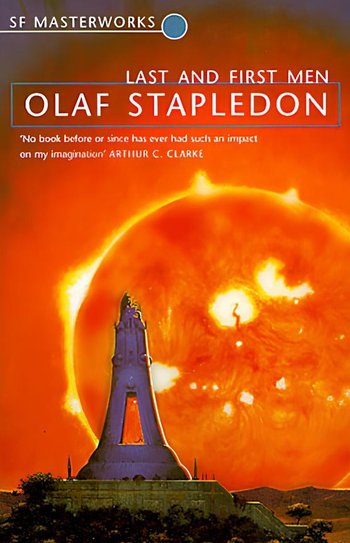
The Dark Forest
The Dark Forest
The Dark Forest
Cixin Liu
Three-Body Problem #2
In: 2025-09-27

The Dark Forest

  • Cixin Liu
  • 9781784971588
  • Three-Body Problem - Book #2
  • 5
  • 2025-09-27

Summary:

The universe is a forest, patrolled by numberless and nameless predators. In this forest, others are hell, a dire existential threat. Stealth is survival. Any civilisation that reveals its location is prey.

Earth has. And the others are on the way.

The Trisolarian fleet has left their homeworld and will arrive... in four centuries' time. But the sophons, their extra-dimensional emissaries, are already here and have infiltrated human society and and de-railed scientific progress. Only the individual human mind remains immune to the sophons. This is the motivation for the Wallfacer Project, a last-ditch defence that grants four individuals almost absolute power to design secret strategies, hidden through deceit and misdirection from Earth and Trisolaris alike. Three of the Wallfacers are influential statesmen and scientists, but the fourth is a total unknown. Luo Ji, an unambitious Chinese astronomer, is baffled by his new status. All he knows is that he's the one...

The Black Swan: Second Edition: The Impact of the Highly Improbable: With a New Section:
The Black Swan: Second Edition: The Impact of the Highly Improbable: With a New Section: "On Robustness and Fragility"
Nassim Nicholas Taleb
Pub: 2007
In: 2025-09-27

The Black Swan: Second Edition: The Impact of the Highly Improbable: With a New Section: "On Robustness and Fragility"

  • Nassim Nicholas Taleb
  • 081297381X
  • 5
  • 2007
  • 2025-09-27

Summary:

Review

The Black Swan changed my view of how the world works.”—Daniel Kahneman, Nobel laureate

“Hugely enjoyable—compelling . . . easy to dip into.”—Financial Times

“A masterpiece.”—Chris Anderson, author of The Long Tail

“Idiosyncratically brilliant.”—Niall Ferguson, Los Angeles Times

From the Trade Paperback edition.

Product Description

A black swan is a highly improbable event with three principal characteristics: It is unpredictable; it carries a massive impact; and, after the fact, we concoct an explanation that makes it appear less random, and more predictable, than it was. The astonishing success of Google was a black swan; so was 9/11. For Nassim Nicholas Taleb, black swans underlie almost everything about our world, from the rise of religions to events in our own personal lives.

Why do we not acknowledge the phenomenon of black swans until after they occur? Part of the answer, according to Taleb, is that humans are hardwired to learn specifics when they should be focused on generalities. We concentrate on things we already know and time and time again fail to take into consideration what we don’t know. We are, therefore, unable to truly estimate opportunities, too vulnerable to the impulse to simplify, narrate, and categorize, and not open enough to rewarding those who can imagine the “impossible.”

For years, Taleb has studied how we fool ourselves into thinking we know more than we actually do. We restrict our thinking to the irrelevant and inconsequential, while large events continue to surprise us and shape our world. Now, in this revelatory book, Taleb explains everything we know about what we don’t know. He offers surprisingly simple tricks for dealing with black swans and benefiting from them.

Elegant, startling, and universal in its applications The Black Swan will change the way you look at the world. Taleb is a vastly entertaining writer, with wit, irreverence, and unusual stories to tell. He has a polymathic command of subjects ranging from cognitive science to business to probability theory. The Black Swan is a landmark book–itself a black swan.

*2nd Edition, With a new essay: "On Robustness and Fragility"

From the Hardcover edition.

The River of Time
The River of Time
The River of Time
David Brin
Science Fiction, Fiction, General
Pub: 1987
In: 2025-09-27

The River of Time

  • David Brin
  • 9780553173987
  • 5
  • 1987
  • 2025-09-27
  • Science Fiction, Fiction, General
The Life-Changing Magic of Tidying Up: The Japanese Art of Decluttering and Organizing
Kondo, Marie
Pub: 2014
In: 2025-09-27

The Life-Changing Magic of Tidying Up: The Japanese Art of Decluttering and Organizing

  • Kondo, Marie
  • 978-1-60774-731-4
  • 5
  • 2014
  • 2025-09-27
The End of All Things
John Scalzi
Old Man's War #6
Science Fiction & Fantasy, Science Fiction, Adventure, Military, Space Fleet, Space Marine
Pub: 2015
In: 2025-09-27

The End of All Things

  • John Scalzi
  • 9781466849426
  • Old Man's War - Book #6
  • 5
  • 2015
  • 2025-09-27
  • Science Fiction & Fantasy, Science Fiction, Adventure, Military, Space Fleet, Space Marine

Summary:

Hugo-award winning author, John Scalzi returns to his best-selling Old Man's War universe with The End of All Things, the direct sequel to 2013's The Human Division
Humans expanded into space...only to find a universe populated with multiple alien species bent on their destruction. Thus was the Colonial Union formed, to help protect us from a hostile universe. The Colonial Union used the Earth and its excess population for colonists and soldiers. It was a good arrangement...for the Colonial Union. Then the Earth said: no more.

Now the Colonial Union is living on borrowed time-a couple of decades at most, before the ranks of the Colonial Defense Forces are depleted and the struggling human colonies are vulnerable to the alien species who have been waiting for the first sign of weakness, to drive humanity to ruin. And there's another problem: A group, lurking in the darkness of space, playing human and alien against each other-and against their own kind -for their own unknown reasons.

In this collapsing universe, CDF Lieutenant Harry Wilson and the Colonial Union diplomats he works with race against the clock to discover who is behind attacks on the Union and on alien races, to seek peace with a suspicious, angry Earth, and keep humanity's union intact...or else risk oblivion, and extinction-and the end of all things.

**

Axis
Axis
Axis
Robert Charles Wilson
Spin #2
Science Fiction, Fantasy
Pub: 2007
In: 2025-09-27

Axis

  • Robert Charles Wilson
  • 9781429934312
  • Spin - Book #2
  • 5
  • 2007
  • 2025-09-27
  • Science Fiction, Fantasy

Summary:

Wildly praised by readers and critics alike, Robert Charles Wilson's Spin won science fiction's highest honor, the Hugo Award for Best Novel.

Now, in Axis, Spin's direct sequel, Wilson takes us to the "world next door"—the planet engineered by the mysterious Hypotheticals to support human life, and connected to Earth by way of the Arch that towers hundreds of miles over the Indian Ocean. Humans are colonizing this new world—and, predictably, fiercely exploiting its resources, chiefly large deposits of oil in the western deserts of the continent of Equatoria.

Lise Adams is a young woman attempting to uncover the mystery of her father's disappearance ten years earlier. Turk Findley is an ex-sailor and sometimes-drifter. They come together when an infall of cometary dust seeds the planet with tiny remnant Hypothetical machines. Soon, this seemingly hospitable world will become very alien indeed—as the nature of time is once again twisted, by entities unknown.

At the Publisher's request, this title is being sold without Digital Rights Management Software (DRM) applied.

Spin
Spin
Spin
Robert Charles Wilson
Spin #1
Science Fiction, Fantasy
Pub: 2005
In: 2025-09-27

Spin

  • Robert Charles Wilson
  • 9781429915434
  • Spin - Book #1
  • 5
  • 2005
  • 2025-09-27
  • Science Fiction, Fantasy

Summary:

From the author of Axis and Vortex, the first Hugo Award-winning novel in the environmental apocalyptic Spin Trilogy...One night in October when he was ten years old, Tyler Dupree stood in his back yard and watched the stars go out. They all flared into brilliance at once, then disappeared, replaced by a flat, empty black barrier. He and his best friends, Jason and Diane Lawton, had seen what became known as the Big Blackout. It would shape their lives. The effect is worldwide. The sun is now a featureless disk--a heat source, rather than an astronomical object. The moon is gone, but tides remain. Not only have the world's artificial satellites fallen out of orbit, their recovered remains are pitted and aged, as though they'd been in space far longer than their known lifespans. As Tyler, Jason, and Diane grow up, space probe reveals a bizarre truth: The barrier is artificial, generated by huge alien artifacts. Time is passing faster outside the barrier than inside--more than a hundred million years per day on Earth. At this rate, the death throes of the sun are only about forty years in our future. Jason, now a promising young scientist, devotes his life to working against this slow-moving apocalypse. Diane throws herself into hedonism, marrying a sinister cult leader who's forged a new religion out of the fears of the masses.

Earth sends terraforming machines to Mars to let the onrush of time do its work, turning the planet green. Next they send humans...and immediately get back an emissary with thousands of years of stories to tell about the settling of Mars. Then Earth's probes reveal that an identical barrier has appeared around Mars. Jason, desperate, seeds near space with self-replicating machines that will scatter copies of themselves outward from the sun--and report back on what they find. Life on Earth is about to get much, much stranger.

At the Publisher's request, this title is being sold without Digital Rights Management Software (DRM) applied.

Rework
Rework
Rework
Jason Fried, David Heinemeier Hansson
Business, Self Help
Pub: 2010
In: 2025-09-27

Rework

  • Jason Fried, David Heinemeier Hansson
  • 9780307463760
  • 5
  • 2010
  • 2025-09-27
  • Business, Self Help

Summary:

Most business books give you the same old Write a business plan, study the competition, seek investors, yadda yadda. If you're looking for a book like that, put this one back on the shelf.

Rework shows you a better, faster, easier way to succeed in business. Read it and you'll know why plans are actually harmful, why you don't need outside investors, and why you're better off ignoring the competition. The truth is, you need less than you think. You don't need to be a workaholic. You don't need to staff up. You don't need to waste time on paperwork or meetings. You don't even need an office. Those are all just excuses.

What you really need to do is stop talking and start working. This book shows you the way. You'll learn how to be more productive, how to get exposure without breaking the bank, and tons more counterintuitive ideas that will inspire and provoke you.

With its straightforward language and easy-is-better approach, Rework is the perfect playbook for anyone who’s ever dreamed of doing it on their own. Hardcore entrepreneurs, small-business owners, people stuck in day jobs they hate, victims of "downsizing," and artists who don’t want to starve anymore will all find valuable guidance in these pages.

From the Hardcover edition.

Remote: Office Not Required
Jason Fried, David Heinemeier Hansson
Business
Pub: 2013
In: 2025-09-27

Remote: Office Not Required

  • Jason Fried, David Heinemeier Hansson
  • 9780804137515
  • 5
  • 2013
  • 2025-09-27
  • Business

Summary:

The classic guide to working from home and why we should embrace a virtual office, from the bestselling authors of Rework   “A paradigm-smashing, compulsively readable case for a radically remote workplace.”—Susan Cain, New York Times bestselling author of Quiet Does working from home—or anywhere else but the office—make sense? In Remote, Jason Fried and David Heinemeier Hansson, the founders of Basecamp, bring new insight to the hotly debated argument. While providing a complete overview of remote work’s challenges, Jason and David persuasively argue that, often, the advantages of working “off-site” far outweigh the drawbacks. In the past decade, the “under one roof” model of conducting work has been steadily declining, owing to technology that is rapidly creating virtual workspaces. Today the new paradigm is “move work to the workers, rather than workers to the workplace.” Companies see advantages in the way remote work increases their talent pool, reduces turnover, lessens their real estate footprint, and improves their ability to conduct business across multiple time zones. But what about the workers? Jason and David point out that remote work means working at the best job (not just one that is nearby) and achieving a harmonious work-life balance while increasing productivity. And those are just some of the perks to be gained from leaving the office behind. Remote reveals a multitude of other benefits, along with in-the-trenches tips for easing your way out of the office door where you control how your workday will unfold. Whether you’re a manager fretting over how to manage workers who “want out” or a worker who wants to achieve a lifestyle upgrade while still being a top performer professionally, this book is your indispensable guide.

Redshirts
Redshirts
Redshirts
John Scalzi
Science Fiction, Humour, Fantasy
Pub: 2012
In: 2025-09-27

Redshirts

  • John Scalzi
  • 9780765316998
  • 5
  • 2012
  • 2025-09-27
  • Science Fiction, Humour, Fantasy

Summary:

Ensign Andrew Dahl has just been assigned to the Universal Union Capital Ship Intrepid , flagship of the Universal Union since the year 2456. It’s a prestige posting, and Andrew is thrilled all the more to be assigned to the ship’s Xenobiology laboratory.

Life couldn’t be better…until Andrew begins to pick up on the fact that:
(1) every Away Mission involves some kind of lethal confrontation with alien forces
(2) the ship’s captain, its chief science officer, and the handsome Lieutenant Kerensky always survive these confrontations
(3) at least one low-ranked crew member is, sadly, always killed.

Not surprisingly, a great deal of energy below decks is expended on avoiding, at all costs, being assigned to an Away Mission. Then Andrew stumbles on information that completely transforms his and his colleagues’ understanding of what the starship Intrepid really is…and offers them a crazy, high-risk chance to save their own lives.

Luna: New Moon
Luna: New Moon
Luna: New Moon
Ian McDonald
Luna #1
Science Fiction, Fantasy, Adult, Politics
Pub: 2015
In: 2025-09-27

Luna: New Moon

  • Ian McDonald
  • 9781473202252
  • Luna - Book #1
  • 4
  • 2015
  • 2025-09-27
  • Science Fiction, Fantasy, Adult, Politics

Summary:

The Moon wants to kill you. It might not get there first.

Luna is a gripping thriller about five corporate families caught in a bitter battle for supremacy in the harsh environment of the moon. It's very easy to die on the moon, but with its vast mineral wealth it's also easy to make your fortune. Following the fortunes of a handful of disparate characters, from one of the lowliest workers on the moon to the heads of one of the most powerful families, LUNA provides a vast mosaic of life on this airless and terrifying new home for humanity.

This is SF that will be perfect for fans of Kim Stanley Robinson and Ken Macleod alike.'McDonald is one of the best world builders I've ever read' - Tamora PierceReaders are being swept away by LUNA: NEW MOON:'It's a great epic read. It's also filled to the brim with imminently plausible science. Not a single thing was out of place'- Goodreads reviewer, ⭐ ⭐ ⭐ ⭐ ⭐'Luna: New Moon gets an undisputed 5* from me. It is a perfect sci-fi' - Goodreads reviewer, ⭐ ⭐ ⭐ ⭐ ⭐'Masterful science fiction and highly recommended' - Goodreads reviewer, ⭐ ⭐ ⭐ ⭐ ⭐'What. A. Book . . . it leaves you wanting more - and promises to be able to sustain more' - Goodreads reviewer, ⭐ ⭐ ⭐ ⭐ ⭐'Ian McDonald never fails to disappoint, and he never repeats himself . . . This book is not boring. It has no weaknesses and takes no prisoners' - Goodreads reviewer, ⭐ ⭐ ⭐ ⭐ ⭐'The sci-fi of my dreams, it hit all of my buttons. This family! The moon! World building!' - Goodreads reviewer, ⭐ ⭐ ⭐ ⭐ ⭐

Presto!: How I Made Over 100 Pounds Disappear and Other Magical Tales
Penn Jillette
Health, Biography, Humour
Pub: 2016
In: 2025-09-27

Presto!: How I Made Over 100 Pounds Disappear and Other Magical Tales

  • Penn Jillette
  • 9781501139529
  • 4
  • 2016
  • 2025-09-27
  • Health, Biography, Humour

Summary:

Penn Jillette’s New York Times bestselling account of his “extremely funny and somewhat profane journey to discovering a healthy lifestyle…that will motivate others to seek weight-loss solutions” (The Washington Post). More than three hundred and thirty pounds and saddled with a systolic blood pressure reading at dangerous heights, legendary magician Penn Jillette found himself at a crossroads. He needed a drastic lifestyle change if wanted to see his small children grow up. Enter Crazy Ray. A former NASA scientist and unconventional, passionate innovator, Ray Cronise changed Penn Jillette’s life with his wild “potato diet.” In Presto, Jillette takes us along on his journey from skepticism to the inspiring, life-changing momentum that transformed the magician’s body and mind. He describes the process in hilarious detail, as he performs his Las Vegas show, takes meetings with Hollywood executives, hangs out with his celebrity friends and fellow eccentric performers, all while remaining a dedicated husband and father. Throughout, he weaves in his views on sex, religion, and pop culture, making his story a refreshing, genre-busting account. Outspoken, frank, and bitingly clever, Presto is an incisive, rollicking read. In the end, it is “undeniably inspiring” (Booklist).

How We Got to Now: Six Innovations That Made the Modern World
Steven Johnson
History, Science, Business
Pub: 2014
In: 2025-09-27

How We Got to Now: Six Innovations That Made the Modern World

  • Steven Johnson
  • 9781846148569
  • 4
  • 2014
  • 2025-09-27
  • History, Science, Business

Summary:

From the New York Times –bestselling author of Where Good Ideas Come From and Everything Bad Is Good for You , a new look at the power and legacy of great ideas.

In this illustrated volume, Steven Johnson explores the history of innovation over centuries, tracing facets of modern life (refrigeration, clocks, and eyeglass lenses, to name a few) from their creation by hobbyists, amateurs, and entrepreneurs to their unintended historical consequences. Filled with surprising stories of accidental genius and brilliant mistakes—from the French publisher who invented the phonograph before Edison but forgot to include playback, to the Hollywood movie star who helped invent the technology behind Wi-Fi and Bluetooth— How We Got to Now investigates the secret history behind the everyday objects of contemporary life.

In his trademark style, Johnson examines unexpected connections between seemingly unrelated fields: how the invention of air-conditioning enabled the largest migration of human beings in the history of the species—to cities such as Dubai or Phoenix, which would otherwise be virtually uninhabitable; how pendulum clocks helped trigger the industrial revolution; and how clean water made it possible to manufacture computer chips. Accompanied by a major six-part television series on PBS, How We Got to Now is the story of collaborative networks building the modern world, written in the provocative, informative, and engaging style that has earned Johnson fans around the globe.

Old Man's War Boxed Set #1
John Scalzi
Old Man's War #1
Pub: 2014
In: 2025-09-27

Old Man's War Boxed Set #1

  • John Scalzi
  • Old Man's War - Book #1
  • 5
  • 2014
  • 2025-09-27

Summary:

New York Times bestselling author John Scalzi takes readers on an epic romp of galactic conquest and exploration in the Old Man’s War series.

This box set includes: Old Man's War, The Ghost Brigades, and The Last Colony

Earth itself is a backwater. The bulk of humanity's resources are in the hands of the Colonial Defense Force, which shields the home planet from too much knowledge of the situation. What's known to everybody is that when you reach retirement age, you can join the CDF. They don't want young people; they want people who carry the knowledge and skills of decades of living.

Old Man’s War

John Perry did two things on his 75th birthday. First he visited his wife's grave. Then he joined the army, with only the vaguest idea what to expect. Because the actual fight is far more difficult than he can imagine—and what he will become is far stranger.

The Ghost Brigades

At first, Jared is a perfect soldier, but as another man's memories slowly surface, Jared begins to intuit the reasons for their betrayal. Time is running out: The alliance is preparing its offensive, and some of them plan worse things than humanity's mere military defeat.

The Last Colony

Retired from his fighting days, John Perry and his wife, Jane, are pulled back into the political arena, and into the thick of interstellar politics, betrayal, and war.

Old Man's War Series

#1 Old Man’s War

#2 The Ghost Brigades

#3 The Last Colony

#4 Zoe’s Tale

#5 The Human Division

#6 The End of All Things

Pattern Recognition
Pattern Recognition
Pattern Recognition
William Gibson
Mystery, Science Fiction, Thriller, Fantasy, Suspense, Business, Politics
Pub: 2003
In: 2025-09-27

Pattern Recognition

  • William Gibson
  • 9781101146415
  • 4
  • 2003
  • 2025-09-27
  • Mystery, Science Fiction, Thriller, Fantasy, Suspense, Business, Politics

Summary:

“One of the first authentic and vital novels of the 21st century.”—The Washington Post Book WorldThe accolades and acclaim are endless for William Gibson's coast-to-coast bestseller. Set in the post-9/11 present, Pattern Recognition is the story of one woman's never-ending search for the now...Cayce Pollard is a new kind of prophet—a world-renowned “coolhunter” who predicts the hottest trends. While in London to evaluate the redesign of a famous corporate logo, she’s offered a different assignment: find the creator of the obscure, enigmatic video clips being uploaded to the internet—footage that is generating massive underground buzz worldwide.

Still haunted by the memory of her missing father—a Cold War security guru who disappeared in downtown Manhattan on the morning of September 11, 2001—Cayce is soon traveling through parallel universes of marketing, globalization, and terror, heading always for the still point where the three converge. From London to Tokyo to Moscow, she follows the implications of a secret as disturbing—and compelling—as the twenty-first century promises to be...

Dark Matter
Dark Matter
Dark Matter
Blake Crouch
Mystery, Fantasy, Adult, Literature & Fiction, United States, Mystery; Thriller & Suspense, Thrillers & Suspense, Suspense, Technothrillers, Science Fiction & Fantasy, Thrillers, Time Travel, Science Fiction, Thriller
Pub: 2016
In: 2025-09-27

Dark Matter

  • Blake Crouch
  • 9781101904220
  • 5
  • 2016
  • 2025-09-27
  • Mystery, Fantasy, Adult, Literature & Fiction, United States, Mystery; Thriller & Suspense, Thrillers & Suspense, Suspense, Technothrillers, Science Fiction & Fantasy, Thrillers, Time Travel, Science Fiction, Thriller

Summary:

A mindbending, relentlessly surprising thriller from the author of the bestselling Wayward Pines trilogy.

Jason Dessen is walking home through the chilly Chicago streets one night, looking forward to a quiet evening in front of the fireplace with his wife, Daniela, and their son, Charlie—when his reality shatters.

"Are you happy with your life?"

Those are the last words Jason Dessen hears before the masked abductor knocks him unconscious.

Before he awakens to find himself strapped to a gurney, surrounded by strangers in hazmat suits.

Before a man Jason's never met smiles down at him and says, "Welcome back, my friend."

In this world he's woken up to, Jason's life is not the one he knows. His wife is not his wife. His son was never born. And Jason is not an ordinary college physics professor, but a celebrated genius who has achieved something remarkable. Something impossible.

Is it this world or the other that's the dream?

And even if the home he remembers is real, how can Jason possibly make it back to the family he loves? The answers lie in a journey more wondrous and horrifying than anything he could've imagined—one that will force him to confront the darkest parts of himself even as he battles a terrifying, seemingly unbeatable foe.

** Dark Matter is a brilliantly plotted tale that is at once sweeping and intimate, mind-bendingly strange and profoundly human--a relentlessly surprising science-fiction thriller about choices, paths not taken, and how far we'll go to claim the lives we dream of.**

Death’s End
Death’s End
Death’s End
Liu Cixin
Three-Body Problem #3
Science Fiction, Fantasy
Pub: 2010
In: 2025-09-27

Death’s End

  • Liu Cixin
  • 9781784971625
  • Three-Body Problem - Book #3
  • 5
  • 2010
  • 2025-09-27
  • Science Fiction, Fantasy

Summary:

Read the award-winning, critically acclaimed, multi-million-copy-selling science-fiction phenomenon – now a Netflix Original Series from the creators of Game of Thrones. Half a century after the Doomsday Battle, the uneasy balance of Dark Forest Deterrence keeps the Trisolaran invaders at bay.

Earth enjoys unprecedented prosperity due to the infusion of Trisolaran knowledge and, with human science advancing and the Trisolarans adopting Earth culture, it seems that the two civilizations can co-exist peacefully as equals without the terrible threat of mutually assured annihilation. But peace has made humanity complacent.

Cheng Xin, an aerospace engineer from the 21st century, awakens from hibernation in this new age. She brings knowledge of a long-forgotten program dating from the start of the Trisolar Crisis, and her presence may upset the delicate balance between two worlds. Will humanity reach for the stars or die in its cradle?Praise for The Three-Body Problem: 'Your next favourite sci-fi novel' Wired 'Immense' Barack Obama 'Unique' George R.R. Martin 'SF in the grand style' Guardian 'Mind-altering and immersive' Daily Mail Winner of the Hugo and Galaxy Awards for Best Novel

Getting Real: The Smarter, Faster, Easier Way to Build a Successful Web Application
37signals, Jason Fried, David Heinemeier Hansso
Business & Economics, General, Computers, Software Development & Engineering, Internet, Web Design, Web Programming
Pub: 2006
In: 2025-09-27

Getting Real: The Smarter, Faster, Easier Way to Build a Successful Web Application

  • 37signals, Jason Fried, David Heinemeier Hansso
  • 9780578012810
  • 5
  • 2006
  • 2025-09-27
  • Business & Economics, General, Computers, Software Development & Engineering, Internet, Web Design, Web Programming

Summary:

Getting Real details the business, design, programming, and marketing principles of 37signals. The book is packed with keep-it-simple insights, contrarian points of view, and unconventional approaches to software design. This is not a technical book or a design tutorial, it's a book of ideas. Anyone working on a web app - including entrepreneurs, designers, programmers, executives, or marketers - will find value and inspiration in this book. 37signals used the Getting Real process to launch five successful web-based applications (Basecamp, Campfire, Backpack, Writeboard, Ta-da List), and Ruby on Rails, an open-source web application framework, in just two years with no outside funding, no debt, and only 7 people (distributed across 7 time zones). Over 500,000 people around the world use these applications to get things done. Now you can find out how they did it and how you can do it too. It's not as hard as you think if you Get Real.

La Generación Ansiosa
Jonathan Haidt
Psychology, Self Help, Sociology, Science, Health
Pub: 2024
In: 2025-10-01

La Generación Ansiosa

  • Jonathan Haidt
  • 9788423437290
  • 5
  • 2024
  • 2025-10-01
  • Psychology, Self Help, Sociology, Science, Health

Summary:

El libro que desvela las causas del colapso psicológico de la Generación Z

La salud mental de los niños y adolescentes se derrumba. Desde 2010, en los países desarrollados se ha observado un inquietante y pronunciado aumento en el número de jóvenes diagnosticados con ansiedad, depresión y otros trastornos psicológicos. Pero ¿qué es lo que ha ocurrido?

El reputado psicólogo social y autor bestseller Jonathan Haidt ha dedicado su carrera a exponer verdades incómodas apoyadas en la evidencia científica dentro de los espacios más delicados: desde comunidades polarizadas por la política y la religión hasta campus universitarios enfrentados en guerras culturales.

En este nuevo libro, Haidt se ocupa de la emergencia de salud pública que afecta a los adolescentes. La generación que llegó a la pubertad alrededor de 2009 desarrolló su autopercepción en el marco de cambios tecnológicos y culturales profundos, como el uso extendido de los smartphones y de unas redes sociales adictivas. Como consecuencia de ello, les ha tocado crecer en una especie de mundo virtual sin interacciones con personas de carne y hueso; y mientras los adultos comenzaron a sobreproteger a esos niños en la vida real, los dejaron involuntariamente desamparados en el brutal universo online.

A partir de las últimas investigaciones psicológicas y biológicas, La generación ansiosa ofrece a los padres, profesores, compañías tecnológicas y gobiernos orientación sobre las medidas que se pueden tomar para convertir a una adolescencia sobreprotegida en una más humana y libre.

Encyclopedia of Electronic Components, Volume 3
Charles Platt, Fredrik Jansson
Pub: 2016
In: 2025-10-01

Encyclopedia of Electronic Components, Volume 3

  • Charles Platt, Fredrik Jansson
  • 2016
  • 2025-10-01
Encyclopedia of Electronic Components Volume 2
Charles Platt, Fredrik Jansson
Pub: 2014
In: 2025-10-01

Encyclopedia of Electronic Components Volume 2

  • Charles Platt, Fredrik Jansson
  • 2014
  • 2025-10-01
Encyclopedia of Electronic Components Volume 1
Charles Platt
V413HAV
Pub: 2012
In: 2025-10-01

Encyclopedia of Electronic Components Volume 1

  • Charles Platt
  • 5
  • 2012
  • 2025-10-01
  • V413HAV
Anabasis
Anabasis
Anabasis
Xenophon., Henry Graham Dakyns
History, Ancient, Greece, Military, Europe, Classical literature, Iran -- History -- To 640, Cyrus, the Younger, approximately 423 B.C.-401 B.C., Greece -- History -- Expedition of Cyrus, 401 B.C.
Pub: 2025
In: 2025-10-01

Anabasis

  • Xenophon., Henry Graham Dakyns
  • 9781022974708
  • 2025
  • 2025-10-01
  • History, Ancient, Greece, Military, Europe, Classical literature, Iran -- History -- To 640, Cyrus, the Younger, approximately 423 B.C.-401 B.C., Greece -- History -- Expedition of Cyrus, 401 B.C.

Summary:

Xenophon's "Anabasis" recounts one of history's most remarkable military expeditions. This gripping firsthand account details the arduous journey of the Ten Thousand, a Greek mercenary army, deep into the heart of the Persian Empire. Hired by Cyrus the Younger to challenge his brother for the throne, the Greeks found themselves stranded in hostile territory after Cyrus's death in battle. Facing overwhelming odds and navigating treacherous landscapes, Xenophon emerged as a leader, guiding the remaining soldiers through perilous trials. "Anabasis" vividly portrays the challenges of survival, the complexities of ancient warfare, and the unwavering determination of the Greek warriors. A cornerstone of Greek history and military literature, this classic text offers a timeless perspective on courage, leadership, and the resilience of the human spirit in the face of adversity. It remains a compelling read for anyone interested in ancient Greece and the history of warfare.

This work has been selected by scholars as being culturally important, and is part of the knowledge base of civilization as we know it.

This work is in the public domain in the United States of America, and possibly other nations. Within the United States, you may freely copy and distribute this work, as no entity (individual or corporate) has a copyright on the body of the work.

Scholars believe, and we concur, that this work is important enough to be preserved, reproduced, and made generally available to the public. We appreciate your support of the preservation process, and thank you for being an important part of keeping this knowledge alive and relevant.

The Collapsing Empire
John Scalzi
In: 2025-10-01

The Collapsing Empire

  • John Scalzi
  • 2025-10-01

Summary:

"John Scalzi is the most entertaining, accessible writer working in SF today." —Joe Hill, author of The Fireman

Our universe is ruled by physics. Faster than light travel is impossible—until the discovery of The Flow, an extradimensional field available at certain points in space-time, which can take us to other planets around other stars.

Riding The Flow, humanity spreads to innumerable other worlds. Earth is forgotten. A new empire arises, the Interdependency, based on the doctrine that no one human outpost can survive without the others. It's a hedge against interstellar war—and, for the empire's rulers, a system of control.

The Flow is eternal—but it's not static. Just as a river changes course, The Flow changes as well. In rare cases, entire worlds have been cut off from the rest of humanity. When it's discovered that the entire Flow is moving, possibly separating all human worlds from one another forever,...

Cult of the Dead Cow
Menn, Joseph;
Pub: 2019
In: 2025-10-01

Cult of the Dead Cow

  • Menn, Joseph;
  • 2019
  • 2025-10-01
Expanse 02 - Caliban's War
James S. A. Corey
Pub: 2012
In: 2025-10-01

Expanse 02 - Caliban's War

  • James S. A. Corey
  • 9780748122974
  • 2012
  • 2025-10-01
Expanse 03 - Abaddon’s Gate
James S. A. Corey
Pub: 2013
In: 2025-10-01

Expanse 03 - Abaddon’s Gate

  • James S. A. Corey
  • 2013
  • 2025-10-01
The Family Jewels
The Family Jewels
The Family Jewels
John Prados
Pub: 2013
In: 2025-10-01

The Family Jewels

  • John Prados
  • 9780292752924
  • 2013
  • 2025-10-01

Summary:

This powerful accounting of intelligence abuses committed by the CIA from the Cold War through the war on terror reveals why such abuses and attempts to conceal them are endemic to spying and proposes how a democratic nation can rein in its spymasters.

Foundations Of Mechanical Accuracy
Unknown
machine shop
In: 2025-10-01

Foundations Of Mechanical Accuracy

  • Unknown
  • 2025-10-01
  • machine shop

Summary:

precision accuracy
Heavy Water: And Other Stories
Martin Amis
Contemporary, Modern, Anthologies
Pub: 1998
In: 2025-10-01

Heavy Water: And Other Stories

  • Martin Amis
  • 9780307787392
  • 3
  • 1998
  • 2025-10-01
  • Contemporary, Modern, Anthologies

Summary:

A wickedly delightful collection of stories establishing Amis as one of the most versatile and gifted writers of his generation"Amis applies his comic timing, his perfect pitch and his curatorial eye to some of the burning issues of our time.

" —The New York Times Book Review"Martin Amis is a force unto himself.... There is, quite simply, no one else like him.

"—The Washington Post Martin Amis once again demonstrates why he is a modern master of the short story form. In "Career Move," screenwriters struggle for their art, while poets are the darlings of Hollywood. In "Straight Fiction," the love that dare not speak its name calls out to the hero when he encounters a forbidden object of desire—the opposite sex. And in "State of England," Mal, a former "minder to the superstars," discovers how to live in a country where "class and race and gender were supposedly gone.

"

The Making of Prince of Persia: Journals 1985-1993
Jordan Mechner
Pub: 2012
In: 2025-10-01

The Making of Prince of Persia: Journals 1985-1993

  • Jordan Mechner
  • 2012
  • 2025-10-01
Halo: Mortal Dictata
Traviss, Karen
Pub: 2014
In: 2025-10-01

Halo: Mortal Dictata

  • Traviss, Karen
  • 5
  • 2014
  • 2025-10-01
Science in the Soul
Science in the Soul
Science in the Soul
Richard Dawkins
Pub: 2017
In: 2025-10-01

Science in the Soul

  • Richard Dawkins
  • 2017
  • 2025-10-01

Summary:

The legendary biologist, provocateur, and bestselling author mounts a timely and passionate defense of science and clear thinking with this career-spanning collection of essays, including twenty pieces published in the United States for the first time.
For decades, Richard Dawkins has been the world's most brilliant scientific communicator, consistently illuminating the wonders of nature and attacking faulty logic. Science in the Soul brings together forty-two essays, polemics, and paeans—all written with Dawkins's characteristic erudition, remorseless wit, and unjaded awe of the natural world.
Though it spans three decades, this book couldn't be more timely or more urgent. Elected officials have opened the floodgates to prejudices that have for half a century been unacceptable or at least undercover. In a passionate introduction, Dawkins calls on us to insist that reason take center stage and that gut feelings, even when they don't represent the...
Spycraft: The Secret History of the CIA's Spytechs, from Communism to Al-Qaeda
Robert Wallace, H. Keith Melton, Henry R. Schlesinger
Pub: 2008
In: 2025-10-01

Spycraft: The Secret History of the CIA's Spytechs, from Communism to Al-Qaeda

  • Robert Wallace, H. Keith Melton, Henry R. Schlesinger
  • 2008
  • 2025-10-01
The Disappearing Spoon
Sam Kean
SCI000000
Pub: 2011
In: 2025-10-01

The Disappearing Spoon

  • Sam Kean
  • 9780316089081
  • 3
  • 2011
  • 2025-10-01
  • SCI000000

Summary:

The Periodic Table is one of man's crowning scientific achievements. But it's also a treasure trove of stories of passion, adventure, betrayal, and obsession. The infectious tales and astounding details in THE DISAPPEARING SPOON follow carbon, neon, silicon, and gold as they play out their parts in human history, finance, mythology, war, the arts, poison, and the lives of the (frequently) mad scientists who discovered them.

We learn that Marie Curie used to provoke jealousy in colleagues' wives when she'd invite them into closets to see her glow-in-the-dark experiments. And that Lewis and Clark swallowed mercury capsules across the country and their campsites are still detectable by the poison in the ground. Why did Gandhi hate iodine? Why did the Japanese kill Godzilla with missiles made of cadmium? And why did tellurium lead to the most bizarre gold rush in history?

From the Big Bang to the end of time, it's all in THE DISAPPEARING SPOON.

The Woman Who Smashed Codes
Jason Fagone
In: 2025-10-01

The Woman Who Smashed Codes

  • Jason Fagone
  • 2025-10-01

Summary:

Joining the ranks of Hidden Figures and In the Garden of Beasts, the incredible true story of the greatest codebreaking duo that ever lived, an American woman and her husband who invented the modern science of cryptology together and used it to confront the evils of their time, solving puzzles that unmasked Nazi spies and helped win World War II.

In 1912, at the height of World War I, brilliant Shakespeare expert Elizebeth Smith went to work for an eccentric tycoon on his estate outside Chicago. The tycoon had close ties to the U.S. government, and he soon asked Elizebeth to apply her language skills to an exciting new venture: code-breaking. There she met the man who would become her husband, groundbreaking cryptologist William Friedman. Though she and Friedman are in many ways the "Adam and Eve" of the NSA, Elizebeth's story, incredibly, has never been told.

In The Woman Who Smashed Codes, Jason Fagone chronicles the life of this extraordinary woman, who played an...

This Idea Must Die: Scientific Theories That Are Blocking Progress
John Brockman
Science, Philosophy, Psychology
Pub: 2015
In: 2025-10-01

This Idea Must Die: Scientific Theories That Are Blocking Progress

  • John Brockman
  • 9780062374356
  • 4
  • 2015
  • 2025-10-01
  • Science, Philosophy, Psychology

Summary:

The bestselling editor of This Explains Everything brings together 175 of the world’s most brilliant minds to tackle Edge.org’s 2014 question: What scientific idea has become a relic blocking human progress?Each year, John Brockman, publisher of Edge.org—”The world’s smartest website” (The Guardian)—challenges some of the world’s greatest scientists, artists, and philosophers to answer a provocative question crucial to our time. In 2014 he asked 175 brilliant minds to ponder: What scientific idea needs to be put aside in order to make room for new ideas to advance? The answers are as surprising as they are illuminating. In : Steven Pinker dismantles the working theory of human behavior Richard Dawkins renounces essentialism Sherry Turkle reevaluates our expectations of artificial intelligence Geoffrey West challenges the concept of a “Theory of Everything” Andrei Linde suggests that our universe and its laws may not be as unique as we think Martin Rees explains why scientific understanding is a limitless goal Nina Jablonski argues to rid ourselves of the concept of race Alan Guth rethinks the origins of the universe Hans Ulrich Obrist warns against glorifying unlimited economic growth and much more.

Profound, engaging, thoughtful, and groundbreaking, This Idea Must Die will change your perceptions and understanding of our world today . . . and tomorrow.

Unlocked: An Oral History of Haden's Syndrome
John Scalzi
Lock In #2
Science Fiction, Fantasy, Adult
Pub: 2014
In: 2025-10-01

Unlocked: An Oral History of Haden's Syndrome

  • John Scalzi
  • 9781466871793
  • Lock In - Book #2
  • 4
  • 2014
  • 2025-10-01
  • Science Fiction, Fantasy, Adult

Summary:

Discover the history of Haden's Syndrome, the virus that created the world of John Scalzi's inventive near-future thrillers Lock In and Head On, in the prequel novella Unlocked.

Not long from now, a virus will sweep the globe. Most will suffer no worse than flu-like symptoms, but an unlucky one percent will be changed forever. Hundreds of millions become "locked in", awake, aware, but completely unable to control their bodies.

This is the story of the doctors, scientists, engineers, politicians, and heroes who remade the world. It is the story of the chaotic outbreak, the fight for a cure, the changes that followed. It is an oral history, straight from the mouths of those who survived the most dynamic period in human history.

At the Publisher's request, this title is being sold without Digital Rights Management Software (DRM) applied.

Wood-Working for Beginners, Vol. 1: A Workshop for Amateurs
Charles G. Wheeler
Woodwork, Carpentry
Pub: 2018
In: 2025-10-01

Wood-Working for Beginners, Vol. 1: A Workshop for Amateurs

  • Charles G. Wheeler
  • 9781330256794
  • 2018
  • 2025-10-01
  • Woodwork, Carpentry

Summary:

Excerpt from Wood-Working for Beginners, Vol. 1: A Workshop for Amateurs
The aim of this book is to suggest to amateurs of all ages many things which they can profitably make of wood, and to start them in way to work successfully. It is hoped that, in the case of boys, it may show them pleasant and useful ways to work off some of their surplus energy, and at the same time contribute toward their harmonious all-round development.
It is not an attempt to teach the arts of architecture, carpentry, cabinet-making, or boat-building. Although not intended primarily to impart skill in the use of tools (something which can only be acquired from experience and observation and cannot be taught by any book), still no one can go through the processes indicated without gaining at least some slight degree of manual skill as well as a fund of practical information and experience.
Many books which give directions for mechanical work (particularly those addressed to boys) have several serious faults, and can be grouped in three classes. Some seem to be written by practical workmen, who, however well fitted to do the work themselves, lack the pedagogical training or the psychological insight necessary to lay out such work with due regard to the mental and physical capacity, experience, and development of youth, or to the amateur's lack of experience in the rudiments of the subject. Others are written by teachers or amateurs who lack the trained mechanic's practical and varied knowledge and experience in serious work.

Rustic Carpentry: Woodworking With Natural Timber
Paul Nooncree Hasluck
Rustic woodwork
Pub: 1906
In: 2025-10-01

Rustic Carpentry: Woodworking With Natural Timber

  • Paul Nooncree Hasluck
  • 9781602391215
  • 3
  • 1906
  • 2025-10-01
  • Rustic woodwork

Summary:

With an introduction by master craftsman Ralph Kylloe, this manual on rustic carpentry is a superb resource for woodworkers, furniture makers, and carpenters of all skill levels. Here are clear and concise instructions for creating beautiful pieces with unfinished timber, utilizing the unique texture and shape of tree branches, trunks, and shrubs. In addition, rustic woodworking requires few tools and relatively little skill to make decorative and practical flower stands, tables, chairs, gates, porches, aviaries, footbridges, verandas, tool sheds, and more. All these projects are included here with detailed advice on collecting and drying sticks; what kind of wood works best for various items; how to varnish both indoor and outdoor pieces; using battens and mortises to secure furniture; and successfully employing a range of other techniques.

Carpentry for Boys
Carpentry for Boys
Carpentry for Boys
James Slough Zerbe
Carpentry
Pub: 2016
In: 2025-10-01

Carpentry for Boys

  • James Slough Zerbe
  • 9781360658506
  • 2016
  • 2025-10-01
  • Carpentry

Summary:

This work has been selected by scholars as being culturally important, and is part of the knowledge base of civilization as we know it. This work was reproduced from the original artifact, and remains as true to the original work as possible. Therefore, you will see the original copyright references, library stamps (as most of these works have been housed in our most important libraries around the world), and other notations in the work. This work is in the public domain in the United States of America, and possibly other nations. Within the United States, you may freely copy and distribute this work, as no entity (individual or corporate) has a copyright on the body of the work. As a reproduction of a historical artifact, this work may contain missing or blurred pages, poor pictures, errant marks, etc. Scholars believe, and we concur, that this work is important enough to be preserved, reproduced, and made generally available to the public. We appreciate your support of the preservation process, and thank you for being an important part of keeping this knowledge alive and relevant.

Mission Furniture: How to Make It, Part 3
H. H. Windsor
Mission Furniture: #3
Technology & Engineering, History, Furniture making -- Amateurs' manuals, Furniture, Mission -- Design and construction
Pub: 2023
In: 2025-10-01

Mission Furniture: How to Make It, Part 3

  • H. H. Windsor
  • 9789357391207
  • Mission Furniture: - Book #3
  • 2023
  • 2025-10-01
  • Technology & Engineering, History, Furniture making -- Amateurs' manuals, Furniture, Mission -- Design and construction

Summary:

Mission Furniture: How to Make It, Part 3 by H. H. Windsor has been regarded as significant work throughout human history, and in order to ensure that this work is never lost, we have taken steps to ensure its preservation by republishing this book in a contemporary format for both current and future generations. This entire book has been retyped, redesigned, and reformatted. Since these books are not made from scanned copies, the text is readable and clear.

The Joint Book: The Complete Guide to Wood Joinery
Terrie Noll
Reference
Pub: 2002
In: 2025-10-01

The Joint Book: The Complete Guide to Wood Joinery

  • Terrie Noll
  • 9781877082092
  • 4
  • 2002
  • 2025-10-01
  • Reference

Summary:

Featuring illustrated instructions for over 70 joints, this spiral-bound book is the perfect companion for any woodworker interested in improving their joint-making skills.

The Joint Book provides easy-to-follow directions for creating edge and scarf joints , lapped and housed joints , mortise-and-tenon joints , miters and bevels , dovetails , and dowels and biscuits , plus detailed descriptions of fasteners, hardware, and knockdown joints.

This hardcover book with internal spiral binding is 6.5” × 8” , the perfect size for carpenters and woodworkers to keep near their workbench or toolbox for quick access. The design of this book allows it to lay open flat for easy and frequent reference. The interior photographs , illustrations , and diagrams make the learning process simple and fun for beginners, while advanced readers will gain insight from the book’s useful tips.

Within, you’ll The Joint Book is the ultimate workshop reference , providing woodworkers with the knowledge to choose the right joint for the job.

Mission Furniture: How to Make It, Part 1
H. H. Windsor
Mission Furniture #1
Crafts & Hobbies, General, Technology & Engineering, Furniture making -- Amateurs' manuals, Furniture, Mission -- Design and construction
Pub: 2018
In: 2025-10-01

Mission Furniture: How to Make It, Part 1

  • H. H. Windsor
  • 9781727752410
  • Mission Furniture - Book #1
  • 2018
  • 2025-10-01
  • Crafts & Hobbies, General, Technology & Engineering, Furniture making -- Amateurs' manuals, Furniture, Mission -- Design and construction

Summary:

Mission Furniture: How to Make It, Part 1 by H. H. Windsor A mission chair for the dining room, a very comfortable and attractive porch chair, a well-proportioned mission library table, a beautiful roll top desk, a handsome settee, a mission sideboard - the projects go on and on, up to nearly 100 of the finest, most desirable pieces of mission furniture that you could ever want to make. Each project features accurate measured drawings and an illustration of the completed piece, while all the instructions have been prepared by experts and written in a clearly understandable style.

Mission Furniture: How to Make It, Part 2
H. H. Windsor
Mission Furniture #2
Architecture, General, Design, Furniture making -- Amateurs' manuals, Furniture, Mission -- Design and construction
Pub: 2020
In: 2025-10-01

Mission Furniture: How to Make It, Part 2

  • H. H. Windsor
  • 9798605080985
  • Mission Furniture - Book #2
  • 2020
  • 2025-10-01
  • Architecture, General, Design, Furniture making -- Amateurs' manuals, Furniture, Mission -- Design and construction

Summary:

Mission Furniture: How to Make It, Part 2 by H. H. Windsor. Mission style has withstood the test of time. In homes across America and around the world, Mission furniture creates a look and feel to a home that few others styles can--elegant and homey, all at once. This is a classic book of Mission-style furniture, filled with plans for the do-it-yourselfer and inspiration for architects and designers. Included are chairs, tables, desks, beds, shelves, and other more unusual items like wastepaper baskets, clocks, music stands, and even a porch swing. Each project includes a cutting list and detailed, measured drawings of each furniture piece, as well as the general order of work along with handy finishing tips.

Lock In
Lock In
Lock In
John Scalzi
Lock In #1
Science Fiction, Mystery, Thriller, Crime, Fantasy, Adult
Pub: 2014
In: 2025-10-02

Lock In

  • John Scalzi
  • 9781466849358
  • Lock In - Book #1
  • 5
  • 2014
  • 2025-10-02
  • Science Fiction, Mystery, Thriller, Crime, Fantasy, Adult

Summary:

A blazingly inventive near-future thriller from the best-selling, Hugo Award-winning John Scalzi.

Not too long from today, a new, highly contagious virus makes its way across the globe. Most who get sick experience nothing worse than flu, fever and headaches. But for the unlucky one percent - and nearly five million souls in the United States alone - the disease causes "Lock In": Victims fully awake and aware, but unable to move or respond to stimulus. The disease affects young, old, rich, poor, people of every color and creed. The world changes to meet the challenge.

A quarter of a century later, in a world shaped by what's now known as "Haden's syndrome," rookie FBI agent Chris Shane is paired with veteran agent Leslie Vann. The two of them are assigned what appears to be a Haden-related murder at the Watergate Hotel, with a suspect who is an "integrator" - someone who can let the locked in borrow their bodies for a time. If the Integrator was carrying a Haden client, then naming the suspect for the murder becomes that much more complicated.

But "complicated" doesn't begin to describe it. As Shane and Vann began to unravel the threads of the murder, it becomes clear that the real mystery - and the real crime - is bigger than anyone could have imagined. The world of the locked in is changing, and with the change comes opportunities that the ambitious will seize at any cost. The investigation that began as a murder case takes Shane and Vann from the halls of corporate power to the virtual spaces of the locked in, and to the very heart of an emerging, surprising new human culture. It's nothing you could have expected. Other Tor Books Lock In: Lock In / Head On Old Man's War: Old Man's War / The Ghost Brigades / The Last Colony / Zoe's Tale / The Human Division / The End of All ThingsThe Interdpendency: The Collapsing Empire / The Consuming Fire / The Last EmperoxThe Android’s DreamAgent to the StarsYour Hate Mail Will Be GradedFuzzy NationRedshirtsAt the Publisher's request, this title is being sold without Digital Rights Management Software (DRM) applied.

Alien Clay
Alien Clay
Alien Clay
Adrian Tchaikovsky
Science Fiction, Horror, Fantasy
Pub: 2024
In: 2025-10-06

Alien Clay

  • Adrian Tchaikovsky
  • 9781035013777
  • 4
  • 2024
  • 2025-10-06
  • Science Fiction, Horror, Fantasy

Summary:

Finalist for the 2025 Locus Awards, Best Science Fiction Novel Finalist for the 2025 Hugo Awards, Best Novel Nominated for the 2025 Philip K. Dick Award When xeno-biologist Arton Daghdev is exiled to an alien planet, he journeys through a dangerous and hostile wilderness. Yet on his expedition, he uncovers lost alien ruins--and the mysterious builders who abandoned them. Alien Clay is a page-turning standalone adventure from master of sci-fi Adrian Tchaikovsky. They travelled into the unknown and left themselves behind... On the distant world of Kiln lie the ruins of an alien civilization. It's the greatest discovery in humanity's spacefaring history. Yet, who were its builders, and where did they go? Professor Arton Daghdev had always wanted to study alien life up close. But his wishes become a reality in the worst possible way--his political activism sees him exiled from Earth to a penal colony on Kiln. There, he's condemned to work under an alien sky until he dies. Kiln boasts a ravenous, chaotic ecosystem like nothing seen on Earth. The monstrous alien life interacts in surprising and sometimes disturbing ways with the human body. Arton must risk death on a daily basis--though the camp's oppressive regime might just kill him first. But Kiln holds a wondrous, terrible secret. A secret that will redefine life and intelligence as we know it. And it might just set Arton free.

Leviathan Falls
Leviathan Falls
Leviathan Falls
James S. A. Corey
The Expanse #9
Fiction, Science Fiction, Space Opera, Action & Adventure, Space Exploration, Hard Science Fiction, Alien Contact
Pub: 2021
In: 2025-10-06

Leviathan Falls

  • James S. A. Corey
  • 9780316332934
  • The Expanse - Book #9
  • 2021
  • 2025-10-06
  • Fiction, Science Fiction, Space Opera, Action & Adventure, Space Exploration, Hard Science Fiction, Alien Contact

Summary:

With over 10 million copies sold, The Expanse has become one of the biggest science fiction phenomenons of the decade. The biggest science fiction series of the decade comes to an incredible conclusion in the ninth and final novel in James S.A. Corey’s Hugo-award winning space opera that inspired the Prime Original series.  The Laconian Empire has fallen, setting the thirteen hundred solar systems free from the rule of Winston Duarte. But the ancient enemy that killed the gate builders is awake, and the war against our universe has begun again.    In the dead system of Adro, Elvi Okoye leads a desperate scientific mission to understand what the gate builders were and what destroyed them, even if it means compromising herself and the half-alien children who bear the weight of her investigation. Through the wide-flung systems of humanity, Colonel Aliana Tanaka hunts for Duarte’s missing daughter. . . and the shattered emperor himself. And on the Rocinante, James Holden and his crew struggle to build a future for humanity out of the shards and ruins of all that has come before.    As nearly unimaginable forces prepare to annihilate all human life, Holden and a group of unlikely allies discover a last, desperate chance to unite all of humanity, with the promise of a vast galactic civilization free from wars, factions, lies, and secrets if they win. But the price of victory may be worse than the cost of defeat.

"Interplanetary adventure the way it ought to be written.

" —George R. R. Martin Hugo Award Winner for Best SeriesThe ExpanseLeviathan Wakes  Caliban's War  Abaddon's Gate  Cibola Burn  Nemesis Games  Babylon's Ashes  Persepolis  Rising Tiamat's Wrath ​ Leviathan Falls  Memory's LegionThe Expanse Short FictionDrive  The Butcher of Anderson Station Gods of Risk The Churn The Vital Abyss Strange Dogs Auberon  The Sins of Our Fathers​

Perelandra: (Annotated Edition)
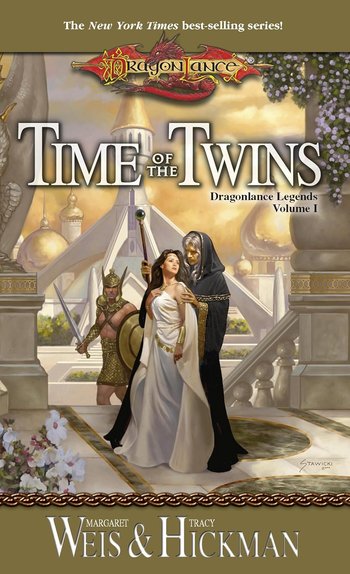
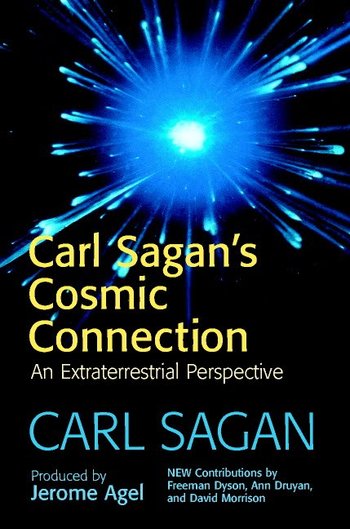
C. S. C. S. Lewis
The Space Trilogy #2
Fiction, Christian, Fantasy
Pub: 2021
In: 2025-10-06

Perelandra: (Annotated Edition)
  • C. S. C. S. Lewis
  • 9798538793570
  • The Space Trilogy - Book #2
  • 2021
  • 2025-10-06
  • Fiction, Christian, Fantasy

Summary:

Perelandra is the second novel in what is known as C.S. Lewis's "Space Trilogy" (the first being Out of the Silent Planet, and the conclusion being That Hideous Strength). These works of science fiction are notably out of keeping with the rest of Lewis's writing; most of his works are either children's fantasy (The Chronicles of Narnia) or theological nonfiction (The Problem of Pain, The Abolition of Man, etc.). Originally published in 1943, before The Chronicles of Narnia, Perelandra follows the intrepid Professor Elwin Ransom as he journeys to Venus, exploring the planet at the inception of human life and undertaking an attempt to save the Venusian Adam and Eve from a fall from grace à la Garden of Eden. This trilogy is some of Lewis's only fiction intended for adults (in the company of Till We Have Faces and The Pilgrim's Regress, arguably along with The Great Divorce). Interestingly, the concept for the trilogy emerged in a discussion with Lewis's friend J.R.R. Tolkien; the conversation concluded with an agreement for Lewis to write a "space travel" story and Tolkien a "time travel" one. Tolkien never completed The Lost Road, but Lewis's space trilogy came to fruition. Interestingly, the character of Elwin Ransom is at least partially based on Tolkien himself, by his own admission in his letters.

Out of the Silent Planet
C. S. Lewis
The Space Trilogy #1
Fiction, General
Pub: 2022
In: 2025-10-06

Out of the Silent Planet

  • C. S. Lewis
  • 9789357008914
  • The Space Trilogy - Book #1
  • 2022
  • 2025-10-06
  • Fiction, General

Summary:

Out of the Silent Planet is the first book of C. S. Lewis's renowned Space Trilogy, which also includes Perelandra and That Hideous Strength. It follows the exploits of the amazing Dr. Ransom. This honourable man is kidnapped by a megalomaniacal physicist and his accomplice and transported to the red planet of Malacandra via spaceship. The two men require a human sacrifice, and Dr. Ransom appears to be the ideal candidate. Ransom, however, eludes his captors while on the planet, risking his life and his prospects of returning to Earth, becoming a stranger in a place that is both captivating in its differences and instructional in its similarities to Earth. Out of the Silent Planet is a strange and frightening novel that was first published in 1943.

That Hideous Strength
C. S. Lewis
The Space Trilogy #3
Fiction, General
Pub: 2016
In: 2025-10-06

That Hideous Strength

  • C. S. Lewis
  • 9781536838503
  • The Space Trilogy - Book #3
  • 2016
  • 2025-10-06
  • Fiction, General

Summary:

The final book in C. S. Lewis's acclaimed Space Trilogy, which includes Out of the Silent Planet and Perelandra, That Hideous Strength concludes the adventures of the matchless Dr. Ransom. The dark forces that were repulsed in Out of the Silent Planet and Perelandra are massed for an assault on the planet Earth itself. Word is on the wind that the mighty wizard Merlin has come back to the land of the living after many centuries, holding the key to ultimate power for that force which can find him and bend him to its will. A sinister technocratic organization is gaining power throughout Europe with a plan to "recondition" society, and it is up to Ransom and his friends to squelch this threat by applying age-old wisdom to a new universe dominated by science. The two groups struggle to a climactic resolution that brings the Space Trilogy to a magnificent, crashing close.

Algorithms to Live By: What Computers Can Teach Us About Solving Human Problems
Brian Christian, Tom Griffiths
Science, Psychology, Self Help, Business, Philosophy
Pub: 2016
In: 2025-10-06

Algorithms to Live By: What Computers Can Teach Us About Solving Human Problems

  • Brian Christian, Tom Griffiths
  • 9781480560383
  • 4
  • 2016
  • 2025-10-06
  • Science, Psychology, Self Help, Business, Philosophy

Summary:

A fascinating exploration of how computer algorithms can be applied to our everyday lives, helping to solve common decision-making problems and illuminate the workings of the human mind

All our lives are constrained by limited space and time, limits that give rise to a particular set of problems. What should we do, or leave undone, in a day or a lifetime? How much messiness should we accept? What balance of new activities and familiar favorites is the most fulfilling? These may seem like uniquely human quandaries, but they are not: computers, too, face the same constraints, so computer scientists have been grappling with their version of such problems for decades. And the solutions they've found have much to teach us.

In a dazzlingly interdisciplinary work, acclaimed author Brian Christian and cognitive scientist Tom Griffiths show how the simple, precise algorithms used by computers can also untangle very human questions. They explain how to have better hunches and when to leave things to chance, how to deal with overwhelming choices and how best to connect with others. From finding a spouse to finding a parking spot, from organizing one's inbox to understanding the workings of human memory, "Algorithms to Live By" transforms the wisdom of computer science into strategies for human living.

Service Model
Service Model
Service Model
Adrian Tchaikovsky
Service Model #1
Science Fiction, Humour, Adult, Fantasy
Pub: 2024
In: 2025-10-06

Service Model

  • Adrian Tchaikovsky
  • 9781250290298
  • Service Model - Book #1
  • 4
  • 2024
  • 2025-10-06
  • Science Fiction, Humour, Adult, Fantasy

Summary:

Murderbot meets Redshirts in a delightfully humorous tale of robotic murder from the Hugo-nominated author of Elder Race and Children of Time.

To fix the world they must first break it, further.

Humanity is a dying breed, utterly reliant on artificial labor and service.

When a domesticated robot gets a nasty little idea downloaded into its core programming, they murder their owner. The robot discovers they can also do something else they never did before: They can run away.

Fleeing the household they enter a wider world they never knew existed, where the age-old hierarchy of humans at the top is disintegrating into ruins and an entire robot ecosystem devoted to human wellbeing is having to find a new purpose.

Sometimes all it takes is a nudge to overcome the limits of your programming.

At the Publisher's request, this title is being sold without Digital Rights Management Software (DRM) applied.

The Anxious Generation: How the Great Rewiring of Childhood Is Causing an Epidemic of Mental Illness
Jonathan Haidt
Psychology, Social Psychology, Developmental, Adolescent, Family & Relationships, Life Stages, Adolescence, Social Science, Disease & Health Issues, Mental Health, Technology & Engineering, Social Aspects, Child, Sociology, General
Pub: 2024
In: 2025-10-06

The Anxious Generation: How the Great Rewiring of Childhood Is Causing an Epidemic of Mental Illness

  • Jonathan Haidt
  • 9781802063288
  • 2024
  • 2025-10-06
  • Psychology, Social Psychology, Developmental, Adolescent, Family & Relationships, Life Stages, Adolescence, Social Science, Disease & Health Issues, Mental Health, Technology & Engineering, Social Aspects, Child, Sociology, General

Summary:

THE NO.1 INTERNATIONAL BESTSELLER A TIMES, FT, ECONOMIST AND INDEPENDENT BOOK OF THE YEAR‘Boundlessly wise . . . important and engrossing’ The New York Times‘One of the most important books I’ve read . . . It’s absolutely brilliant’ Dr Rangan Chatterjee'Urgent and essential' GuardianAcclaimed psychologist Jonathan Haidt reveals how the decline of free-play in childhood and the rise of smartphone use among adolescents is changing our worldFrom 2010, as teens traded in their flip phones for smartphones packed with social media apps, unsupervised time online soared while face-to-face conversations with friends and family plummeted, and so did mental health. This profound shift took place against a backdrop of diminishing childhood freedom and over-supervision in the real world, depriving children of the experiences they most need to become strong and self-governing adults.

The Anxious Generation delves into the latest research to show how this shift from free-play to smartphones disrupts development – from sleep deprivation to addiction – and lays the foundations of isolation and fear that define society today. Grounded in ancient wisdom and packed full of cutting-edge science and practical advice, this eye-opening book is a life-raft for anyone who wants to understand how the most rapid rewiring of human relationships and consciousness in human history has made it harder for all of us to think, focus, forget ourselves enough to care about others and build close relationships.

All Systems Red: The Murderbot Diaries
Martha Wells
The Murderbot Diaries #1
Fiction, Androids; Robots & Artificial Intelligences, Action & Adventure, Crime & Mystery, Science Fiction, Adult, Adventure
Pub: 2017
In: 2025-12-05

All Systems Red: The Murderbot Diaries

  • Martha Wells
  • 9780765397522
  • The Murderbot Diaries - Book #1
  • 4
  • 2017
  • 2025-12-05
  • Fiction, Androids; Robots & Artificial Intelligences, Action & Adventure, Crime & Mystery, Science Fiction, Adult, Adventure

Summary:

Winner of the Hugo, Nebula, and Locus Award for Best NovellaWinner of the Alex AwardA New York Times and USA Today BestsellerNow an Apple Original series from Academy Award nominees Paul Weitz and Chris Weitz and starring Emmy Award winner Alexander Skarsgård.

A murderous android discovers itself in All Systems Red, a tense science fiction adventure by Martha Wells that interrogates the roots of consciousness through Artificial Intelligence.

“As a heartless killing machine, I was a complete failure.”In a corporate-dominated spacefaring future, planetary missions must be approved and supplied by the Company. Exploratory teams are accompanied by Company-supplied security androids, for their own safety.

But in a society where contracts are awarded to the lowest bidder, safety isn’t a primary concern.

On a distant planet, a team of scientists are conducting surface tests, shadowed by their Company-supplied ‘droid—a self-aware SecUnit that has hacked its own governor module, and refers to itself (though never out loud) as “Murderbot.” Scornful of humans, all it really wants is to be left alone long enough to figure out who it is.

But when a neighboring mission goes dark, it's up to the scientists and their Murderbot to get to the truth.

The Murderbot DiariesAll Systems RedArtificial ConditionRogue ProtocolExit StrategyNetwork EffectFugitive TelemetrySystem CollapseAt the Publisher's request, this title is being sold without Digital Rights Management Software (DRM) applied.

Artificial Condition
Martha Wells
The Murderbot Diaries #2
Fiction, Action & Adventure, Hard Science Fiction, Science Fiction, Adventure, Adult
Pub: 2018
In: 2025-12-05

Artificial Condition

  • Martha Wells
  • 9780765397553
  • The Murderbot Diaries - Book #2
  • 4
  • 2018
  • 2025-12-05
  • Fiction, Action & Adventure, Hard Science Fiction, Science Fiction, Adventure, Adult

Summary:

The follow-up to the hugely popular All Systems RedIt has a dark past – one in which a number of humans were killed. A past that caused it to christen itself “Murderbot”.

But it has only vague memories of the massacre that spawned that title, and it wants to know more.

Teaming up with a Research Transport vessel named ART (you don’t want to know what the “A” stands for), Murderbot heads to the mining facility where it went rogue.

What it discovers will forever change the way it thinks...

The Secret of Secrets
Dan Brown
Robert Langdon #6
Thriller, Mystery, Suspense, Crime, Adventure, Historical, Contemporary
Pub: 2025
In: 2025-12-05

The Secret of Secrets

  • Dan Brown
  • 9780385546898
  • Robert Langdon - Book #6
  • 4
  • 2025
  • 2025-12-05
  • Thriller, Mystery, Suspense, Crime, Adventure, Historical, Contemporary

Summary:

The world’s most celebrated thriller writer and author of The Da Vinci Code returns with his most stunning novel yet—a propulsive, twisty, thought-provoking masterpiece that will entertain readers as only Dan Brown can do.

Robert Langdon, esteemed professor of symbology, travels to Prague to attend a groundbreaking lecture by Katherine Solomon—a prominent noetic scientist with whom he has recently begun a relationship. Katherine is on the verge of publishing an explosive book that contains startling discoveries about the nature of human consciousness and threatens to disrupt centuries of established belief. But a brutal murder catapults the trip into chaos, and Katherine suddenly disappears along with her manuscript. Langdon finds himself targeted by a powerful organization and hunted by a chilling assailant sprung from Prague’s most ancient mythology. As the plot expands into London and New York, Langdon desperately searches for Katherine . . . and for answers. In a thrilling race through the dual worlds of futuristic science and mystical lore, he uncovers a shocking truth about a secret project that will forever change the way we think about the human mind.

Rogue Protocol
Rogue Protocol
Rogue Protocol
Martha Wells
The Murderbot Diaries #3
Science Fiction, Adult, Fantasy
Pub: 2018
In: 2025-12-05

Rogue Protocol

  • Martha Wells
  • 9781250191786
  • The Murderbot Diaries - Book #3
  • 4
  • 2018
  • 2025-12-05
  • Science Fiction, Adult, Fantasy

Summary:

Rogue Protocol is the third entry in Martha Wells's Hugo, Nebula, Alex, and Locus Award-winning, New York Times and USA Today bestselling series, The Murderbot Diaries.

Starring a human-like android who keeps getting sucked back into adventure after adventure, though it just wants to be left alone, away from humanity and small talk. Who knew being a heartless killing machine would present so many moral dilemmas?Sci-fi’s favorite antisocial A.I. is back on a mission. The case against the too-big-to-fail GrayCris Corporation is floundering, and more importantly, authorities are beginning to ask more questions about where Dr. Mensah's SecUnit is.

And Murderbot would rather those questions went away. For good.

"I love Murderbot!"--New York Times bestselling author Ann Leckie The Murderbot DiariesAll Systems RedArtificial ConditionRogue ProtocolExit StrategyNetwork EffectFugitive TelemetrySystem Collapse

Sombras chinescas--Cómo obtener con la sombra de las manos animales, retratos y caricaturas
Attilio Mina
In: 2025-12-05

Sombras chinescas--Cómo obtener con la sombra de las manos animales, retratos y caricaturas

Summary:

Este libro le enseñará a proyectar sobre la pared o una pantalla la sombra de las manos o de diferentes objetos para crear imágenes fantásticas, dotadas incluso de movimiento. Además, le propone trucos para que pueda completar sus figuras con cordeles, siluetas recortadas y otros objetos domésticos a fin de que estas resulten más atractivas. Un libro que divertirá también a los pequeños y les proporcionará un pasatiempo creativo para desarrollar su movilidad manual y su imaginación. Un arte oriental que puede hacer renacer mágicamente en su propia casa.
El crimen es cosa de damas
Robin Stevens
Pub: 2024
In: 2025-12-05

El crimen es cosa de damas

  • Robin Stevens
  • 2024
  • 2025-12-05

Summary:

El día que Hazel descubre a la profesora de Ciencias muerta en el gimnasio ¡su vida cambia por competo! Al principio piensa que ha sufrido un accidente, pero cuando va a dar parte de lo sucedido, EL CADÁVER DE LA PROFESORA DESAPARECE. ¡Es el caso que llevaban tanto tiempo esperando! Cuando Daisy Wells y Hazel Wong fundaron su CLUB DE DETECTIVES, su mayor sueño era el de participar en alguna investigación SECRETA y por fin había llegado la oportunidad que estaban esperando. Como Holmes y Watson, Daisy y Hazel utilizarán todo su ingenio para DESCUBRIR AL ASESINO antes de que lo haga la policía. Porque ¿quién ha dicho que resolver crímenes no es cosa de damas?
Exit Strategy: The Murderbot Diaries
Martha Wells
The Murderbot Diaries #4
Fiction, Action & Adventure, Crime & Mystery, Science Fiction
Pub: 2018
In: 2025-12-05

Exit Strategy: The Murderbot Diaries

  • Martha Wells
  • 9781250185464
  • The Murderbot Diaries - Book #4
  • 4
  • 2018
  • 2025-12-05
  • Fiction, Action & Adventure, Crime & Mystery, Science Fiction

Summary:

Martha Wells returns to her Hugo, Nebula, Alex, and Locus Award-winning, New York Times and USA Today bestselling series, The Murderbot Diaries, in Exit Strategy.

Murderbot wasn’t programmed to care. So, its decision to help the only human who ever showed it respect must be a system glitch, right?Having traveled the width of the galaxy to unearth details of its own murderous transgressions, as well as those of the GrayCris Corporation, Murderbot is heading home to help Dr. Mensah—its former owner (protector? friend?)—submit evidence that could prevent GrayCris from destroying more colonists in its never-ending quest for profit.

But who’s going to believe a SecUnit gone rogue?And what will become of it when it’s caught?"I love Murderbot!" —New York Times bestselling author Ann LeckieThe Murderbot DiariesAll Systems RedArtificial ConditionRogue ProtocolExit StrategyNetwork EffectFugitive TelemetrySystem CollapseAt the Publisher's request, this title is being sold without Digital Rights Management Software (DRM) applied.

100 oficios para el recuerdo
Eugenio Monesma
Libros de arte
Pub: 2024
In: 2025-12-05

100 oficios para el recuerdo

  • Eugenio Monesma
  • 2024
  • 2025-12-05
  • Libros de arte

Summary:

LIBR11404423
Origin
Origin
Origin
Dan Brown
Robert Langdon #5
Thriller, Mystery, Adventure, Suspense, Crime, Science Fiction
Pub: 2017
In: 2025-12-05

Origin

  • Dan Brown
  • 9780593078754
  • Robert Langdon - Book #5
  • 4
  • 2017
  • 2025-12-05
  • Thriller, Mystery, Adventure, Suspense, Crime, Science Fiction

Summary:

Robert Langdon, Harvard professor of symbology and religious iconology, arrives at the ultramodern Guggenheim Museum Bilbao to attend a major announcement - the unveiling of a discovery that "will change the face of science forever." The evening's host is Edmond Kirsch, a forty-year-old billionaire and futurist whose dazzling high-tech inventions and audacious predictions have made him a renowned global figure. Kirsch, who was one of Langdon's first students at Harvard two decades earlier, is about to reveal an astonishing breakthrough... one that will answer two of the fundamental questions of human existence.

As the event begins, Langdon and several hundred guests find themselves captivated by an utterly original presentation, which Langdon realizes will be far more controversial than he ever imagined. But the meticulously orchestrated evening suddenly erupts into chaos, and Kirsch's precious discovery teeters on the brink of being lost forever. Reeling and facing an imminent threat, Langdon is forced into a desperate bid to escape Bilbao. With him is Ambra Vidal, the elegant museum director who worked with Kirsch to stage the provocative event. Together they flee to Barcelona on a perilous quest to locate a cryptic password that will unlock Kirsch's secret.

Navigating the dark corridors of hidden history and extreme religion, Langdon and Vidal must evade a tormented enemy whose all-knowing power seems to emanate from Spain's Royal Palace itself... and who will stop at nothing to silence Edmond Kirsch. On a trail marked by modern art and enigmatic symbols, Langdon and Vidal uncover clues that ultimately bring them face-to-face with Kirsch's shocking discovery... and the breathtaking truth that has long eluded us. Origin is stunningly inventive - Dan Brown's most brilliant and entertaining novel to date.

Compulsory
Compulsory
Compulsory
Martha Wells
The Murderbot Diaries #0.5
Fantasy, Adventure, Science Fiction, Adult
Pub: 2018
In: 2025-12-05

Compulsory

  • Martha Wells
  • 9781645241720
  • The Murderbot Diaries - Book #0.5
  • 4
  • 2018
  • 2025-12-05
  • Fantasy, Adventure, Science Fiction, Adult

Summary:

Murderbot—the sardonic, almost-homicidal, media-loving android created by Martha Wells—has proven to be one of the most popular characters in 21 st century science fiction. Everything that makes this protagonist (it would be wrong to call Murderbot a hero) beloved of fans is on display in Compulsory.

While trying to watch episode 44 of The Rise and Fall of Sanctuary Moon, Murderbot is—again, what is it with humans?—distracted by something that is technically outside its purview. A miner is suddenly in danger following a pointless (to Murderbot’s way of thinking) argument, and the choice is to risk discovery and leap into action, which would require hitting the pause button during a very exciting part of SanctuaryMoon, or to follow orders and stay still.

This is a tougher choice than it seems. But then, when has Murderbot ever been faced with an easy choice?

A shorter version of this story originally appeared in Wired magazine.

Fugitive Telemetry
Fugitive Telemetry
Fugitive Telemetry
Martha Wells
The Murderbot Diaries #6
Fiction, Science Fiction, Action & Adventure, Crime & Mystery
Pub: 2021
In: 2025-12-05

Fugitive Telemetry

  • Martha Wells
  • 9781250765383
  • The Murderbot Diaries - Book #6
  • 4
  • 2021
  • 2025-12-05
  • Fiction, Science Fiction, Action & Adventure, Crime & Mystery

Summary:

A standalone adventure in the New York Times and USA Today-bestselling, Hugo and Nebula Award-winning series!The security droid with a heart (though it wouldn't admit it!) is back in Fugitive Telemetry!Having captured the hearts of readers across the globe (Annalee Newitz says it's "one of the most humane portraits of a nonhuman I've ever read") Murderbot has also established Martha Wells as one of the great SF writers of today.

No, I didn't kill the dead human. If I had, I wouldn't dump the body in the station mall.

When Murderbot discovers a dead body on Preservation Station, it knows it is going to have to assist station security to determine who the body is (was), how they were killed (that should be relatively straightforward, at least), and why (because apparently that matters to a lot of people—who knew?) Yes, the unthinkable is about to happen: Murderbot must voluntarily speak to humans!Again!The Murderbot DiariesAll Systems RedArtificial ConditionRogue ProtocolExit StrategyNetwork EffectFugitive TelemetrySystem CollapseAt the Publisher's request, this title is being sold without Digital Rights Management Software (DRM) applied.

System Collapse
System Collapse
System Collapse
Martha Wells
The Murderbot Diaries #7
Science Fiction, Adult, Fantasy, Humour
Pub: 2023
In: 2025-12-05

System Collapse

  • Martha Wells
  • 9781250826978
  • The Murderbot Diaries - Book #7
  • 4
  • 2023
  • 2025-12-05
  • Science Fiction, Adult, Fantasy, Humour

Summary:

Am I making it worse? I think I'm making it worse.

Everyone's favorite lethal SecUnit is back.

Following the events in Network Effect , the Barish-Estranza corporation has sent rescue ships to a newly-colonized planet in peril, as well as additional SecUnits. But if there’s an ethical corporation out there, Murderbot has yet to find it, and if Barish-Estranza can’t have the planet, they’re sure as hell not leaving without something. If that something just happens to be an entire colony of humans, well, a free workforce is a decent runner-up prize.

But there’s something wrong with Murderbot; it isn’t running within normal operational parameters. ART’s crew and the humans from Preservation are doing everything they can to protect the colonists, but with Barish-Estranza’s SecUnit-heavy persuasion teams, they’re going to have to hope Murderbot figures out what’s wrong with itself, and fast.

Yeah, this plan is... not going to work.

Rapport: Friendship, Solidarity, Communion, Empathy
Martha Wells
The Murderbot Diaries #2.5
Science Fiction, Adult, Fantasy
Pub: 2025
In: 2025-12-05

Rapport: Friendship, Solidarity, Communion, Empathy

  • Martha Wells
  • 9781250425362
  • The Murderbot Diaries - Book #2.5
  • 4
  • 2025
  • 2025-12-05
  • Science Fiction, Adult, Fantasy

Summary:

Perihelion and its crew embark on a dangerous new mission at a corporate-controlled station in the throes of a hostile takeover...At the Publisher's request, this title is being sold without Digital Rights Management Software (DRM) applied.

Network Effect
Network Effect
Network Effect
Martha Wells
The Murderbot Diaries #5
Adult, Fantasy, Adventure, Humour, Science Fiction, Fiction
Pub: 2020
In: 2025-12-05

Network Effect

  • Martha Wells
  • 9781250229861
  • The Murderbot Diaries - Book #5
  • 4
  • 2020
  • 2025-12-05
  • Adult, Fantasy, Adventure, Humour, Science Fiction, Fiction

Summary:

WINNER of the Hugo, Nebula and Locus Awards!The first full-length novel in Martha Wells' New York Times and USA Today bestselling Murderbot Diaries series. Named a Best of the Year by NPR | Book Riot | Polygon “I caught myself rereading my favorite parts... and I can’t recommend it enough.” —The New York TimesYou know that feeling when you’re at work, and you’ve had enough of people, and then the boss walks in with yet another job that needs to be done right this second or the world will end, but all you want to do is go home and binge your favorite shows? And you're a sentient murder machine programmed for destruction? Congratulations, you're Murderbot.

Come for the pew-pew space battles, stay for the most relatable A.I. you’ll read this century.—I’m usually alone in my head, and that’s where 90 plus percent of my problems are.

When Murderbot's human associates (not friends, never friends) are captured and another not-friend from its past requires urgent assistance, Murderbot must choose between inertia and drastic action.

Drastic action it is, then.

The Murderbot DiariesAll Systems RedArtificial ConditionRogue ProtocolExit StrategyNetwork EffectFugitive TelemetrySystem Collapse

Home: Habitat, Range, Niche, Territory
Martha Wells
The Murderbot Diaries #4.5
Science Fiction, Adult, Fantasy
Pub: 2020
In: 2025-12-05

Home: Habitat, Range, Niche, Territory

  • Martha Wells
  • 9781250838865
  • The Murderbot Diaries - Book #4.5
  • 4
  • 2020
  • 2025-12-05
  • Science Fiction, Adult, Fantasy

Summary:

"Home: Habitat, Range, Niche, Territory" is a short story set in the world of Martha Well's bestselling and Hugo award-winning series, The Murderbot Diaries.

Told from the perspective of Dr. Mensah, the events of "Home: Habitat, Range, Niche, Territory" occurs just after the fourth novella, Exit Strategy.

At the Publisher's request, this title is being sold without Digital Rights Management Software (DRM) applied.